
In This Article
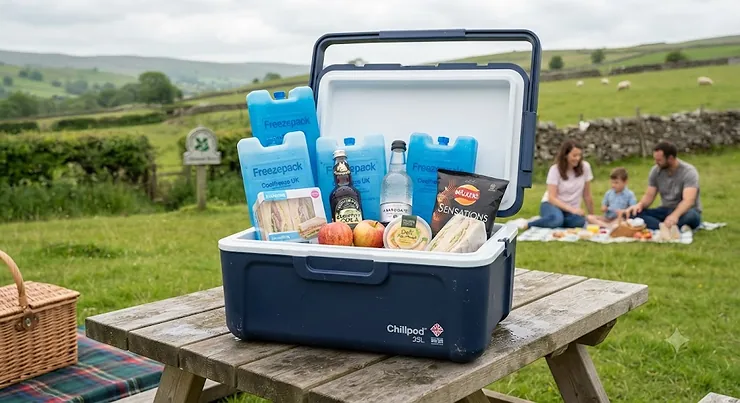
Here’s a scene you’ve probably lived through: a scorching August afternoon, a cool box packed with sausages and a six-pack, and by 2pm everything’s swimming in lukewarm meltwater. That’s the moment most people start googling ice packs for cool box options in a mild panic. It’s a fair question, because not all “ice packs” are created equal — some are little more than a plastic pouch of coloured water, while others use genuine phase-change chemistry to hold a stable temperature for the best part of two days.
This guide cuts through the marketing fluff. We’ve dug into real specs, real materials science, and real aggregated customer sentiment for seven ice packs actually sold on amazon.co.uk, spanning cheap-and-cheerful multipacks right up to premium blocks built for serious camping. You’ll get honest analysis of what each one does well (and where it falls short), a look at the sodium carboxymethylcellulose gel that makes modern packs so much better than a frozen milk bottle, and a practical framework for matching the right pack to your cool box, your trip length, and your budget. According to the Food Standards Agency, keeping perishables properly chilled during transport is a genuine food safety consideration, not just a comfort issue — so getting this right matters more than it might seem.
Whether you’re after long lasting ice packs for a three-day festival or something compact for the school run lunchbox, there’s a sensible option below. Let’s get into it.
Quick Comparison Table
| Product | Type | Freeze Time | Best For |
|---|---|---|---|
| YETI Ice Block | Rigid HDPE block, dense gel fill | 20-24 hrs to fully harden | Premium hard coolers, multi-day trips |
| schone Mega Ice Blocks 750ml | Large gel block, twin-pack | 18-22 hrs | Big cool boxes, family camping |
| Thermafreeze Reusable Sheets | Cut-to-size gel sheet | 10-14 hrs per sheet | Awkward-shaped or small cool boxes |
| Galvog Freezer Blocks 200ml x6 | Slim gel block, multipack | 8-10 hrs each | Mid-size cool boxes, day trips |
| 1ABOVE Family Pack | Multi-size gel blocks | 6-10 hrs (varies by size) | Budget family cool boxes |
| LIVIVO Slim Freezer Blocks 160g | Slim gel block, 4-pack | 5-7 hrs each | Lunch bags, small cool boxes |
| Milestone Camping Mini Blocks 100ml | Compact gel block, 3-pack | 3-5 hrs each | Packed lunches, tight gaps |
Independent testing from consumer group Which? measures cooler and ice pack performance over an eight-hour window, which lines up neatly with the freeze-time figures in the table above — a useful reality check against manufacturer marketing claims. A quick glance at that table tells its own story: freeze time scales almost directly with mass and gel density, not brand name. The YETI Ice Block and schone Mega Ice Blocks dominate on sheer staying power because they’re carrying more frozen gel per unit, which means more stored “cold energy” (thermodynamically speaking, more latent heat to absorb before they warm up). But bigger blocks eat into your packing space, so for smaller cool boxes the slimmer options like LIVIVO or Milestone Camping make more practical sense even though they don’t last as long on paper.
💬 Just one click — help others make better buying decisions too!😊
Top 7 Ice Packs for Cool Box: Expert Analysis
1. YETI Ice Block — longest-lasting, purpose-built for hard coolers
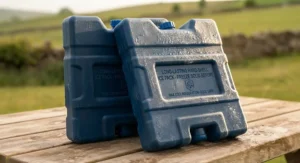
The YETI Ice Block is the pack most seasoned campers reach for when a trip stretches past a single day, and its rigid, break-resistant HDPE shell is the reason why. Inside, a dense saline-gel fill is engineered to freeze at a slightly lower point than plain water, which lets it draw heat out of loose ice around it and effectively “recharge” that ice rather than just melting alongside it. In practice this means a well-packed hard cooler with a couple of YETI Ice Blocks and some cubed ice can hold safe temperatures noticeably longer than ice alone. The flat, stackable shape is deliberately designed to slot into YETI’s own Tundra and Roadie ranges, though it works fine in any rigid cool box with flat internal walls.
Based on the spec comparison with cheaper multipacks, this is squarely aimed at people who own — or are buying alongside — a premium hard cooler and don’t want the weak link in their setup to be a flimsy ice pack. Reviewers consistently report that the YETI Ice Block genuinely outlasts supermarket freezer blocks by a wide margin, with several noting it stayed usably cold into a second day of use; a smaller number mention the outer shell developing a slow gel leak after extended freezer storage, which is covered by a five-year warranty. What most buyers overlook is that it needs a good 20-24 hours in a domestic freezer to fully harden through, so it’s not a same-day-purchase, same-day-trip solution — plan ahead.
Pros:
- ✅ Genuinely long cold retention in hard coolers
- ✅ Break-resistant, reusable shell built for rough use
- ✅ Backed by a five-year manufacturer warranty
Cons:
- ❌ Needs a full day in the freezer to harden properly
- ❌ Premium pricing compared with generic multipacks
Typically sitting in the £15-£25 range depending on size, it’s one of the pricier single packs on this list — but for anyone who camps or fishes regularly, the cost-per-trip works out favourably against buying bagged ice every weekend.
2. schone Mega Ice Blocks 750ml — biggest single-block capacity for large cool boxes
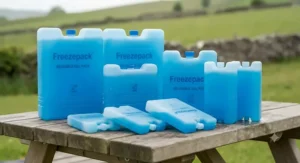
If you’ve ever opened a big family cool box on day two of a festival to find your ice packs have already turned to lukewarm jelly, the schone Mega Ice Blocks are aimed squarely at solving that. At 750ml each, sold as a twin-pack, these are among the largest gel blocks widely available on amazon.co.uk, and that extra mass is exactly why they’re marketed around a 16-hour-plus cold window. More gel mass means more latent heat has to be absorbed before the pack starts to fail, so in real terms you’re buying thermal “battery capacity” rather than any exotic chemistry.
Honestly assessed against the smaller multipacks further down this list, the schone Mega Ice Blocks make the most sense for 40-litre-plus cool boxes and family-sized coolers where there’s room to spare — cramming one into a compact 15-litre box will eat most of your usable space. Aggregated reviewer sentiment describes them as noticeably slower to fully thaw than standard freezer blocks, with several buyers specifically praising their performance on multi-day camping trips; a recurring criticism is that their bulk makes them awkward for anyone who also wants to pack food efficiently around them. If your priority is raw duration over packing flexibility, this is one of the strongest options here.
Pros:
- ✅ Very high thermal mass per block extends cold time
- ✅ Sold as a twin-pack for balanced cooling either side
- ✅ Strong value per hour of cold retention
Cons:
- ❌ Bulky — not suited to smaller cool boxes
- ❌ Long refreeze time given the size
Expect to pay in the mid-£10s to around £20 for the pair, at the time of research, which is competitive once you factor in how much ice you’d otherwise need to buy over a long weekend.
3. Thermafreeze Reusable Ice Pack Sheets — cut-to-size flexibility for awkward cool boxes
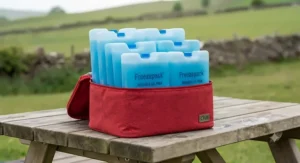
Not every cool box has neat, block-friendly dimensions, and this is where the Thermafreeze Reusable Ice Pack Sheets earn their place. Rather than a fixed block shape, you get a flexible gel sheet, divided into a grid of cells, that can be trimmed with scissors to fit oddly shaped gaps, curved cooler walls, or narrow bag pockets. The gel itself is a hydrated polymer compound — broadly the same family of thickening agents as the sodium carboxymethylcellulose used in many rival packs — that soaks up water, locks it into a flexible gel state, and then freezes as a sheet rather than a rigid brick.
Here’s what the spec sheet won’t tell you outright: because these sheets are thinner than a block pack of equivalent weight, they tend to freeze faster (typically ready to use within a few hours) but also cool down and warm up faster too, which is precisely why they’re marketed at 10-14 hours per sheet rather than the 20+ hours you’d get from a dense block. Reviewers on both Amazon and eBay repeatedly praise how easily they mould around food and bottles, and several specifically like being able to cut a sheet down for a small lunch cooler without wasting the rest of the pack, which stays usable once refrozen. The trade-off, based on the spec comparison, is that flexible sheets are more prone to accidental puncture from sharp packaging edges than a rigid block would be.
Pros:
- ✅ Can be trimmed to fit almost any cool box shape
- ✅ Faster freeze time than dense rigid blocks
- ✅ Reusable and non-toxic gel formulation
Cons:
- ❌ Shorter duration per sheet than large blocks
- ❌ Flexible design is more puncture-prone
At around £8-£14 for a multi-sheet pack, this is a genuinely different tool for a different job — buy it for flexibility and shape-fitting, not for outright marathon cold retention.
4. Galvog Freezer Blocks 200ml x6 — advanced gel tech in a practical multipack
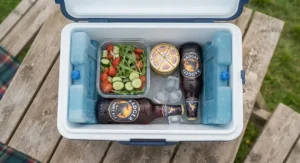
The Galvog Freezer Blocks sit in the sensible middle ground of this list: six 200ml slim blocks per pack, built around what the brand calls “advance cooling technology,” which in plain terms refers to a gel formulation designed to hold a lower stable temperature for longer than a plain water-filled equivalent of the same size. Because you get six separate blocks rather than one big one, you can distribute them around a cool box’s contents rather than relying on a single cold zone near one block — a detail that matters more than most buyers realise, since even cooling beats one super-cold corner and one lukewarm one.
What most people overlook about slim multipacks like this is that six smaller blocks, spread evenly, often out-perform one large block of equivalent total volume for evenness of chill, even though the largest single block wins on raw duration. Aggregated review sentiment for the Galvog range is broadly positive on leak resistance and slim-fit practicality, with buyers frequently mentioning them fitting neatly into narrow gaps that bulkier packs can’t reach; a minority of reviews note that individual blocks in the six-pack cool down faster than a single large block would, which is the expected trade-off for that distributed-cooling advantage. For a 20-30 litre cool box used for day trips and packed lunches on a rota, this is a genuinely well-balanced pick.
Pros:
- ✅ Six blocks allow even distribution of cold spots
- ✅ Slim shape fits narrow or irregular cool boxes
- ✅ Leakproof, reusable, BPA-free construction
Cons:
- ❌ Individual blocks cool down faster than one large block
- ❌ Less total duration than premium single blocks
Priced roughly in the £9-£13 range for the six-pack, at the time of research, it represents solid value for anyone who wants flexibility over a single long-duration block.
5. 1ABOVE Freezer Blocks Family Pack — budget-friendly multi-size set
The 1ABOVE Family Pack is aimed squarely at buyers who want decent everyday performance without paying premium-brand prices, and it does this by including a mix of block sizes in one pack rather than a uniform set. That variety means you can use a larger block against the cool box wall for base-level chilling and slot the smaller blocks in around individual items — a sandwich box, a bottle of squash — for more targeted cooling. It’s a sensible design choice for a family that uses one cool box for a mix of tasks, from the school run to weekend picnics.
Based on the spec comparison with the premium options above, the 1ABOVE range trades outright duration (typically 6-10 hours depending on which size block you’re using) for affordability and everyday versatility, and for most short trips — day at the beach, half-day picnic, packed lunches — that trade-off is entirely reasonable. Reviewers consistently describe them as solid value for money and note they hold up well to repeated freeze-thaw cycles without splitting, which matters given how often a family cool box gets used through summer. A recurring, honest criticism is that the smallest blocks in the set warm up noticeably faster than the largest one, so don’t expect uniform performance across the whole pack.
Pros:
- ✅ Mixed sizes suit varied packing needs
- ✅ Strong value for a multi-block family set
- ✅ Holds up well over repeated refreeze cycles
Cons:
- ❌ Smallest blocks warm up much faster than largest
- ❌ Not intended for multi-day cold retention
Typically found under £10 for the full set, this is one of the most budget-friendly entries here, and a sensible default pick for families who don’t camp overnight but do use a cool box constantly through the summer months.
6. LIVIVO Slim Freezer Blocks 160g (4-Pack) — compact, BPA-free everyday packs
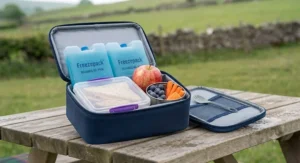
The LIVIVO Slim Freezer Blocks are built around a straightforward brief: fit into tight spaces — lunch bags, small soft coolers, the narrow gap beside a sandwich box — without adding bulk. At 160g each and sold in packs of four, they’re noticeably lighter and thinner than most of the blocks higher up this list, which is precisely why they’re better suited to compact cool boxes and daily lunch use than to a weekend camping trip. The BPA-free casing is a small but genuinely useful detail for anyone packing these directly against food.
Honestly, for a product at this price point, the performance-to-size ratio is reasonable rather than spectacular: expect somewhere in the region of 5-7 hours of useful chill per block before it starts softening, which comfortably covers a school day or a half-day outing but won’t stretch across a full day in direct sun. Aggregated customer sentiment is generally favourable on fit and reusability, with several reviewers specifically highlighting how well they slot into narrow lunch-bag pockets that bulkier packs can’t reach; a smaller number mention the thin casing feeling less durable long-term than the thicker-walled blocks used in premium ranges. For its intended job — everyday lunch and short-trip cooling — it does exactly what’s promised.
Pros:
- ✅ Slim profile fits tight lunch bags and small coolers
- ✅ BPA-free casing safe for direct food contact
- ✅ Affordable multipack for everyday use
Cons:
- ❌ Shorter cold window than larger blocks
- ❌ Thinner casing feels less rugged long-term
Usually priced under £10 for the four-pack, it’s one of the cheapest genuinely useful options on this list, best suited to lunchboxes and short outings rather than serious camping duty.
7. Milestone Camping Mini Ice Pack Cooler Blocks 100ml (3-Pack) — smallest footprint for packed lunches
Rounding out the list, the Milestone Camping Mini Blocks are the smallest packs featured here, at just 100ml capacity each and sold in threes. They’re designed less for keeping a whole cool box chilled and more for slotting into the last remaining gaps around food — the corner of a packed lunch tin, a small insulated bag, or a narrow soft-sided cooler where every centimetre counts. Given the compact size, freeze time is unsurprisingly the shortest on this list, typically in the 3-5 hour range before the gel starts to soften noticeably.
What the spec sheet doesn’t spell out is who this is actually for: not the multi-day camper, but the parent packing a child’s lunchbox, or anyone supplementing a larger ice pack with extra targeted cooling in a small gap. Reviewers broadly rate them as a handy, low-cost accessory rather than a primary cooling solution, with several specifically buying multiple packs to rotate through the freezer for daily lunchbox use; a fair criticism raised by more than one buyer is that on a genuinely hot day, three hours of useful chill isn’t enough on its own without pairing it with a bigger pack or actual ice. Used as intended — as a supplementary, compact chill source — it’s a sound, low-risk purchase.
Pros:
- ✅ Extremely compact, fits the smallest gaps
- ✅ Cheap enough to buy several packs for rotation
- ✅ Lightweight, easy for kids to handle
Cons:
- ❌ Shortest cold duration of any pack on this list
- ❌ Not sufficient alone for a full day’s cooling
Typically priced under £8 for the three-pack, this is best bought as a top-up product alongside a larger pack rather than as your cool box’s sole line of defence.
Top 7 Products: Specs & Value Comparison
| Product | Capacity | Freeze Time | Refreeze Cycles | Price Range | Best For |
|---|---|---|---|---|---|
| YETI Ice Block | ~0.9-1.8kg | 20-24 hrs | High (rated years of use) | £15-£25 | Premium hard coolers |
| schone Mega Ice Blocks | 750ml x2 | 18-22 hrs | High | £15-£20 | Large family cool boxes |
| Thermafreeze Sheets | Cut-to-size | 10-14 hrs | High | £8-£14 | Awkward-shaped coolers |
| Galvog Freezer Blocks | 200ml x6 | 8-10 hrs | Moderate-high | £9-£13 | Mid-size, distributed cooling |
| 1ABOVE Family Pack | Mixed sizes | 6-10 hrs | Moderate | Under £10 | Budget family use |
| LIVIVO Slim Blocks | 160g x4 | 5-7 hrs | Moderate | Under £10 | Lunch bags, small coolers |
| Milestone Camping Mini | 100ml x3 | 3-5 hrs | Moderate | Under £8 | Supplementary chilling |
Read across this table and the pattern holds: price broadly tracks freeze duration, but not perfectly — the Galvog Freezer Blocks, for instance, punch slightly above their price bracket for versatility thanks to the six-pack distribution advantage discussed earlier. If you’re chasing the longest single number in the “freeze time” column, the YETI Ice Block and schone Mega Ice Blocks are your two realistic contenders; if you’re optimising for cost-per-use across a whole summer of school lunches, the LIVIVO and 1ABOVE options make more financial sense than buying a premium block you’ll barely use half the time.
Benefits vs Traditional Ice Cubes
| Factor | Reusable Gel Ice Packs | Traditional Ice Cubes |
|---|---|---|
| Meltwater mess | None (sealed) | Significant, soaks food |
| Cost over a season | One-off purchase | Repeat buying every trip |
| Cold duration | 5-24+ hrs depending on type | Melts steadily, shorter effective window |
| Reusability | Reusable for years | Single use |
| Environmental impact | Lower long-term waste | Bags, plastic waste per trip |
The most obvious win for reusable packs is the absence of meltwater — anyone who’s fished a soggy sandwich out of a puddle at the bottom of a cool box already understands why that matters. Cost-per-use also favours reusable packs heavily once you look past the initial outlay: a £15 YETI Ice Block used across a full summer of trips works out far cheaper than buying bags of ice every weekend, and it avoids a steady stream of single-use plastic bags. That said, plain ice still has one advantage worth naming honestly — it’s the cheapest and most widely available option in a pinch, and mixing ice cubes with gel packs (rather than choosing one exclusively) is what most experienced campers actually do in practice.
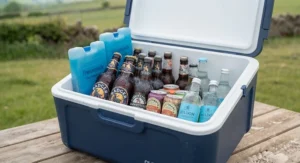
Practical Usage Guide: Getting the Most From Your Ice Packs
Buying the right pack is only half the job — how you use it changes performance more than most people expect. First, pre-chill your cool box itself for 15-20 minutes before packing, ideally in a cool, shaded spot; a cool box that starts warm forces your ice packs to do extra work in the first hour that they’ll never fully recover from. Second, freeze packs flat and fully solid for the full recommended time (often 12-24 hours for denser blocks) — a half-frozen pack has already lost a chunk of its cold-storage capacity before you’ve even left the house.
Positioning matters more than most buyers realise. Cold air sinks, so placing at least one pack on top of your food (not just underneath) actually cools the whole box more evenly, since the chill drifts downward through the contents rather than only radiating up from the base. Pack food tightly, with minimal air gaps — air is a poor conductor of cold, so a loosely packed cool box with lots of empty space performs noticeably worse than a tightly packed one of the same size. A common mistake in the first few uses is opening the lid repeatedly to check on drinks; every opening lets warm air flood in and undoes a meaningful chunk of your packs’ hard work, so try to batch your access.
For maintenance, rinse gel packs in cool water after use, dry the outer casing fully before refreezing, and inspect the seams every few uses for early signs of wear — a small puncture is far easier to spot (and stop using) before it leaks gel into your cool box than after.
Real-World Scenarios: Which Ice Pack Suits You
The weekend camper (2-3 nights, 40L+ cool box): Prioritise duration over flexibility here. A YETI Ice Block or pair of schone Mega Ice Blocks paired with a bag of cubed ice on day one gives you the best shot at food staying safely cold through to day two or three, particularly if you’re limiting how often the lid opens.
The family day-tripper (beach, picnic, half-day out): You don’t need marathon duration, you need reliable, even cooling for 6-8 hours. The Galvog Freezer Blocks or 1ABOVE Family Pack hit that window comfortably without the bulk or cost of premium blocks.
The daily lunchbox user (school or work, every weekday): Compact, fast-freezing, and cheap enough to own several is the priority. LIVIVO Slim Freezer Blocks or Milestone Camping Mini Blocks, rotated through the freezer, cover this use case at minimal cost — buy two or three sets so one is always ready.
How to Choose Ice Packs for Cool Box
- Match pack size to cool box size. A large block eats space you’d rather use for food in a small cooler; a tiny pack won’t touch a 50L box on a hot day.
- Check the freeze time against your trip length. A day trip doesn’t need 24-hour duration, and buying for it wastes money you could spend elsewhere.
- Consider shape flexibility. If your cool box has awkward corners, a cut-to-size sheet like Thermafreeze may outperform a rigid block that leaves gaps.
- Weigh reusability against refreeze speed. Denser gel blocks last longer per freeze but also take longer to refreeze between trips — a real constraint on back-to-back weekend outings.
- Look for leakproof, BPA-free casing. Especially important if packs sit directly against food rather than in a separate insulated pouch.
- Factor in cost-per-use, not just sticker price. A pricier pack used weekly across a whole summer often beats a cheap one bought repeatedly.
- Buy a mix, not just one type. Most experienced users combine a large-duration block with smaller top-up packs rather than relying on a single pack alone.
What is an Ice Pack for a Cool Box?
An ice pack for a cool box is a reusable, sealed container filled with a water-based gel — commonly thickened with a cellulose or polyacrylate compound — that’s frozen solid and placed inside a cool box to keep food and drinks cold for several hours without the meltwater mess of loose ice.
Ice Packs vs Dry Ice: What’s the Real Difference
For most cool box users, gel ice packs and traditional ice cubes cover every realistic scenario, but dry ice occasionally comes up as an alternative for serious multi-day cold storage, so it’s worth a clear comparison. Dry ice (solid carbon dioxide) sublimates directly into gas at roughly -78°C, which makes it dramatically colder than any gel pack and genuinely capable of keeping food frozen — not just chilled — for days at a time. The catch, and it’s a significant one, is safety and practicality: dry ice needs ventilation to avoid CO2 build-up in an enclosed vehicle or tent, it can cause cold burns on direct skin contact, and it’s simply overkill (and harder to source) for a typical weekend cool box.
Gel ice packs, by contrast, are designed to hold a stable temperature around freezing or just above it — ideal for keeping perishables safely chilled rather than rock solid — which is what most food actually needs during transport and short-term storage. Unless you’re specifically transporting something that must stay frozen (medical samples, for example), a well-chosen gel ice pack setup is the more practical, safer, and more widely available choice for cool box use.
The Science: Sodium Carboxymethylcellulose Gel and Why It Works
If you’ve ever wondered why modern gel ice packs outperform a frozen bottle of water, the answer usually comes down to the gel itself — most commonly a sodium carboxymethylcellulose (CMC) or similar cellulose-derivative formulation. When hydrated, CMC forms a viscous gel with notably high heat capacity and low thermal conductivity, which in plain terms means it can absorb and store a large amount of thermal energy while releasing it slowly rather than all at once. That’s genuinely different from plain frozen water, which tends to melt and release its stored cold more abruptly.
This isn’t just marketing language — it’s grounded in real materials chemistry: peer-reviewed research on cellulose-based thickening agents confirms their role in stabilising phase-change gel formulations for consistent, repeatable freeze-thaw performance, and the compound is biodegradable and food-safe, which explains why it’s the industry-standard choice for reusable cooling packs rather than more exotic (and often more toxic) alternatives. Some premium packs also blend in small amounts of salts or glycols to fine-tune the exact freezing point, giving manufacturers control over whether a pack is designed to hold close to 0°C or a slightly different target temperature depending on its intended use.
What this means practically for buyers: a denser, higher-gel-content pack (like the YETI Ice Block or schone Mega Ice Blocks) will genuinely outperform a thin, low-fill pack of similar external size, because the gel — not the plastic shell — is doing the thermal work. When you’re comparing packs on amazon.co.uk, weight per unit volume is a reasonable, if imperfect, proxy for how much cooling capacity you’re actually buying.
Common Mistakes When Buying Ice Packs
One of the most frequent errors is buying based purely on pack count rather than total gel volume — six tiny packs sound generous but may contain less total cooling capacity than two well-chosen large blocks. Another common misstep is ignoring your cool box’s actual internal dimensions; a pack that’s perfect for a 50L hard cooler will dominate a 15L soft bag, leaving no room for food. Buyers also frequently underestimate refreeze time, assuming a pack bought the night before a trip will be fully ready — dense gel blocks in particular often need considerably longer in the freezer than the box implies. Finally, it’s easy to overlook casing quality in favour of chasing the cheapest price per pack; a slightly pricier, genuinely leakproof pack is worth it once you consider what a gel leak does to the food sitting next to it.
Long-Term Cost & Maintenance
Reusable ice packs are, almost without exception, a better long-term financial bet than buying bagged ice every trip, but the maths depends on how often you actually use your cool box. A family that takes two or three trips a summer will recoup a £10-£15 pack’s cost within a season or two compared with buying ice each time; a regular camper or festival-goer sees that payback within a single busy month. Maintenance costs are minimal — rinse and dry packs after each use, store them flat in the freezer between trips, and replace any pack showing seam wear or slow leaking rather than risking gel contamination of food. Most quality gel packs are rated for hundreds of freeze-thaw cycles before performance meaningfully degrades, which for an average household easily translates into five-plus years of reliable service.
Features That Actually Matter (And Those That Don’t)
Genuinely useful: total gel mass (drives duration), leakproof seam construction, and a shape that fits your specific cool box. Genuinely secondary: colour, novelty shapes, and printed “hours” claims taken at face value — these are typically measured under ideal lab conditions, not a hot car boot in July, so treat any stated duration as an optimistic upper bound rather than a guarantee. Worth having but not deal-breaking: a carry handle or hole for easy handling, and BPA-free certification, which matters more for packs in direct food contact than those sitting in a separate insulated pouch.
Safety, Storage and Food Hygiene Guide
Ice packs are only doing half the job — proper use also depends on basic food safety habits. According to the Food Standards Agency, chilled food should generally be kept at 8°C or below to limit bacterial growth, and that guidance applies just as much to a cool box on a day out as it does to a fridge at home. Pack your cool box with pre-chilled food and drinks rather than room-temperature items, since ice packs are designed to maintain cold, not pull a large amount of heat out quickly. Keep raw meat separated from ready-to-eat food, ideally in its own sealed container at the bottom of the box, and try to limit how long the box sits open during serving. If in doubt about how long something has been above a safe temperature, the cautious option is always to discard it rather than risk it — a lesson public health bodies repeat every summer for good reason.
Buyer’s Decision Framework
If you’re planning a multi-day camping trip with a large hard cooler, choose a premium dense block like the YETI Ice Block because duration and reliability matter more than price at that point. If you’re a family doing regular day trips with a mid-size cool box, choose a distributed multipack like the Galvog Freezer Blocks because even cooling and flexibility beat raw duration for shorter outings. If you’re packing lunches daily on a budget, choose a slim, cheap multipack like LIVIVO or Milestone Camping because cost-per-use and freezer rotation matter more than maximum cold time. And if your cool box has awkward internal dimensions, prioritise a cut-to-size option like Thermafreeze over any rigid block, regardless of stated duration.
FAQ
❓ How long do ice packs stay frozen in a cool box?
❓ Are gel ice packs better than regular ice cubes?
❓ Can you refreeze ice packs multiple times?
❓ How many ice packs do I need for a cool box?
❓ Do ice packs work better than a frozen water bottle?
Conclusion
There’s no single “best” ice pack for every cool box — it genuinely comes down to how long your trip is, how big your cooler is, and how much you’re willing to spend upfront versus over time. For anyone chasing maximum duration on a serious camping trip, the YETI Ice Block and schone Mega Ice Blocks are the standout performers in this lineup, built around genuine thermal mass rather than marketing claims. For everyday family use, the Galvog Freezer Blocks and 1ABOVE Family Pack strike a sensible balance of cost, coverage and convenience, while LIVIVO and Milestone Camping cover the budget end nicely for lunchboxes and short outings. And if your cool box simply doesn’t play nicely with rigid blocks, the flexible Thermafreeze Reusable Sheets solve a problem none of the others can.
Whichever you choose, remember that even the best ice pack works harder when it’s paired with sensible packing habits — pre-chilled food, minimal lid-opening, and packs positioned both above and below your contents. Get those basics right and any of the seven picks above should keep your food and drinks properly cold for whatever the British summer throws at you.
✨ Don’t Miss These Exclusive Deals!
🔍 Take your cool box game to the next level with these carefully selected ice packs. Click on any highlighted product to check current pricing and availability on amazon.co.uk. The right pack will help you keep food and drinks properly chilled on every trip, without the meltwater mess.
Recommended for You
- Best 12V Camping Fridge: 7 Compressor Models Tested for 2026
- Best 100L Cool Box 2026: 7 Tested Picks That Actually Deliver
- Best Large Cool Box UK 2026: 7 Top Picks Tested & Compared
Disclaimer: This article contains affiliate links. As an Amazon Associate, I earn from qualifying purchases. If you purchase products through these links, we may earn a small commission at no additional cost to you.
✨ Found this helpful? Share it with your friends! 💬🤗
