
In This Article
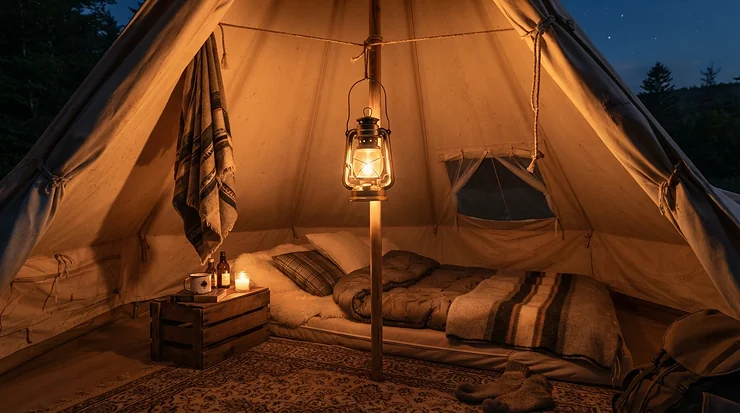
A hanging camping light is a portable lantern designed to be suspended from a tent ceiling loop, awning pole or tree branch, so light falls from above and spreads across the whole space instead of pooling at floor level. Most modern versions are LED, run on rechargeable or replaceable batteries, and range from pocket-sized to small-table-lamp bulky.
Picture the scene. It’s 9.40pm on a damp Saturday in the Peak District, the stove has gone cold, and your phone torch is doing a very poor impression of a chandelier. A hanging camping light fixes that in about four seconds. Clip it up, switch it on, and the tent becomes a room.
Light from above beats light from the floor. It spreads wider, shadows shrink, and nobody kicks the thing over at midnight. Even the Camping and Caravanning Club’s lighting guide treats a portable light source as essential kit, and it’s one of the cheapest upgrades you can make.
This guide covers seven real models. They run from a budget tent hanging lantern that costs less than a pub lunch to a premium option you’d only buy once. We’ll look at light spread, why a low-price lantern with hook lives or dies by that hook, how a humble carabiner hook solves awkward tent layouts, and what build quality at low prices actually looks like.
One honest note first. Everything here comes from spec sheets and aggregated review sentiment, not from me pretending to have slept in a field with seven lanterns.
Quick Comparison Table: 7 Hanging Camping Lights at a Glance
| Product | Claimed Max Light | Power | Hanging Method | Best For |
|---|---|---|---|---|
| LE 1000LM LED Camping Lantern | 1,000 lm | 3 × D cells (not included) | Top handle hook + base hook | Family tents on a tight budget |
| Blukar 2000 Lumen Camping Lantern | 2,000 lm | Rechargeable (USB) | Fold-out handle with hook | Soft, wide glow for little money |
| Glocusent 106 LED Camping Lantern | 1,200 lm | 5,000mAh, USB-C | Silicone hang band | Wet pitches and power cuts |
| Black Diamond Moji | 100 lm | 3 × AAA | Collapsible double-hook loop | Backpacking and small tents |
| Vango Lunar 250 Eco | 250 lm | 2,000mAh + solar panel | Folding handle with hook | Occasional campers who like solar |
| EZORKAS 2 Pack Collapsible Lantern | Not reliably stated | USB or 3 × AA | Hang loop, handles, magnet | Groups needing two light zones |
| Ledlenser ML6 | 750 lm (boost) | Built-in Li-ion | Rubber hook, magnet, stand | Buy-it-once reliability |
Looking at the table, LE 1000LM and Blukar deliver the most headline light for the least money, while Black Diamond Moji deliberately gives up brightness to save weight. Ledlenser ML6 is the outlier: it costs several times more than the budget pair but adds a power bank, a magnet and tougher construction. Treat every lumen figure on a budget listing as a manufacturer claim, a ranking of intent rather than a lab measurement.
💬 Just one click — help others make better buying decisions too!😊
Top 7 Hanging Camping Lights: Expert Analysis
Seven lanterns, three price tiers, one rule: every spec has to tell you something about a real evening in a real tent. Prices below are ranges at the time of research, so check the current price before you buy.
1. LE 1000LM LED Camping Lantern — cheapest dependable family tent light
This is the lantern that keeps surfacing whenever someone wants a budget tent hanging lantern, and the reason is simple: it asks very little of your wallet.
Listings describe 1,000 lumens, four dimmable modes, IPX4 splash resistance and up to roughly 12 hours of runtime from three D cells (not included). That battery appetite cuts both ways. It makes the lantern chunky at around 400g, but a spare set of D cells is a ten-second fix on day three, with no socket required. IPX4 means rain splashes are fine, while a dunking is not.
Based on the spec comparison, the real draw is the dual hanging arrangement: a top handle and a pop-out hook on the base. One reviewer removed the diffuser and hung the lantern upside down by the base hook to get proper overhead light, a trick no product page mentions. It suits families, first-time campers and anyone building a power-cut kit.
Across tens of thousands of ratings, the listings I found sit around 4.6 stars. Reviewers praise the brightness for the money. A recurring criticism is that the bottom hook feels like thin plastic and the battery compartment lacks a proper seal, so read “water resistant” as “rain-tolerant”.
Pros:
- ✅ Strong light output for the money
- ✅ Two hanging points: handle and base hook
- ✅ Easy battery swaps without a mains socket
Cons:
- ❌ Base hook feels flimsy to some reviewers
- ❌ D cells add weight and running cost
Expect around £15-£20 (check current price). Value verdict: the best pound-for-light deal here, provided you accept plastic.

2. Blukar 2000 Lumen Camping Lantern — warmest, widest glow for the money
Where the LE 1000LM is a torch-style cylinder, the Blukar 2000 Lumen Camping Lantern is a panel of LEDs wrapped around a body, built to throw light sideways in a wide, soft sheet.
Listings vary between 60-LED and 116-LED versions, but the common thread is seven modes (including a warm setting, SOS and strobe), a rechargeable lithium battery rated at roughly 3,600-4,800mAh depending on the version, and about 10 hours of runtime. It weighs around 234g and stands about 14cm tall, so it’s easy to carry. The 2,000-lumen figure is a headline claim. In a tent, the warm, lower settings are what you’ll actually live with.
My read: this is a living-space light rather than a reading light. One honest catch is that the listing describes it as not water resistant, so hang it under cover. It’s an excellent shout for a festival tent or a dry porch.
The listing I found averages about 4.7 stars from well over 13,000 reviews and ranks first in Amazon’s electric camping lanterns category. Reviewers describe a soft, comfortable light and a battery that holds charge well. One even hung it in an outdoor bin store. The hook is described as “little”, so expect a small loop rather than a beefy handle.
Pros:
- ✅ Soft, warm, wide light spread
- ✅ Rechargeable with a battery that lasts
- ✅ Light and compact at roughly 234g
Cons:
- ❌ Listed as not water resistant
- ❌ Small hook limits where it hangs
Expect around £13-£20 (check current price). Value verdict: superb for dry-weather camping and emergencies.
3. Glocusent 106 LED Camping Lantern — tough, waterproof-rated all-weather workhorse
This lantern is aimed at campers who’ve been rained on once too often.
Listings quote 1,200 lumens from 106 LEDs, five brightness levels, three colour temperatures, an SOS mode, a 5,000mAh battery with USB-C charging, and up to 80 hours on low. It weighs about 246g. The headline is the IP68 rating the manufacturer claims. On paper that means dust-tight and submersible, which is far beyond splash resistance, though it’s a manufacturer’s claim and I’d not test it with a dunk. The 80 hours is a low-mode figure, so plan on a lot less at full blast.
What the spec sheet won’t tell you, but reviewers note, is that the hanging solution is a silicone band rather than a rigid hook. It works with tent loops and branches, though one reviewer called it fairly cheap and wasn’t sure how it would age. Pair it with a small carabiner hook if you want a tidier hang.
Reviewers generally describe the lantern as solid and well built, easy to hang and good value, with long standby charge. A one-star review reports a defective unit, which hints at some quality-control variance. That’s why the return window matters.
Pros:
- ✅ Waterproof rating far above budget norms
- ✅ Long low-mode runtime with USB-C charging
- ✅ Multiple colour temperatures and brightness levels
Cons:
- ❌ Silicone hang band may age poorly
- ❌ Occasional defective-unit reports
Expect roughly £20-£30 (check current price). Value verdict: strong choice for wet pitches and storm-season home use.
4. Black Diamond Moji — lightest option for backpacking tents
The Black Diamond Moji is the anti-lumens lantern: small, simple and happy to be forgotten at the bottom of a rucksack.
It delivers 100 lumens maximum from three AAA batteries (not included), with a dimming switch, a frosted globe and a rubberised base. It weighs around 86g without batteries and roughly 122g with them. The burn time reported by retailers is around 70 hours on low, with some quoting longer. IPX4 splash resistance covers drizzle but not a downpour.
Here’s the spec translated: 100 lumens sounds feeble beside a 1,000-lumen claim, but a two-person tent is a tiny space. The frosted globe gives glare-free light, so you can read, sort kit and see faces without squinting. Its collapsible double-hook loop clips to a tent loop directly, or onto a small carabiner hook if the loop is out of reach.
Review pools for the Moji are small but positive, with ratings around 4.5 stars. One buyer said they’d owned several over the years and the old ones remain in service. Another wished the hanging loop were longer for hanging high.
Pros:
- ✅ Ultralight at roughly 86g without batteries
- ✅ Frosted globe gives even, glare-free light
- ✅ Dimmer stretches runtime on low
Cons:
- ❌ Too dim for large family awnings
- ❌ Hang loop can feel short
Expect roughly £15-£25 (check current price). Value verdict: the best choice if every gram counts.
5. Vango Lunar 250 Eco — solar top-up from a trusted UK tent brand
Vango is a camping name British buyers know, and the Vango Lunar 250 Eco wraps its pitch around a solar panel on top.
Specifications: up to 250 lumens of warm LED light, a 2,000mAh lithium-ion battery, a USB output so it can charge a phone, a four-hour charge time and a runtime of about 3.5 hours at full output. Some retailers quote five hours, so check the listing. It weighs about 540g, and one retailer lists splash-proof protection around IP53-IP54.
Based on the numbers, the 3.5-hour runtime is the catch: that’s a short evening at full power. The solar panel is a bonus rather than a plan, because this is Britain, after all. Dimmed down, it comfortably stretches through a weekend. The folding handle with built-in hook is chunky and easy to hang.
Retailer descriptions emphasise how simple it is for children and older campers to use. One UK round-up flags “budget looks” as its low point, which is fair, as this is a plain plastic lantern that does the job.
Pros:
- ✅ Warm light and a sturdy folding handle
- ✅ USB output can top up a phone
- ✅ Solar panel adds a little free charge
Cons:
- ❌ Short full-power runtime of about 3.5 hours
- ❌ Heavier than other rechargeables here
Expect roughly £20-£35 depending on retailer (check current price). Value verdict: solid for occasional campers who like a known brand.
6. EZORKAS 2 Pack Collapsible Lantern — two lights, three ways to hang
Two lanterns for roughly the price of one sounds suspicious until you see the design: collapsible, cheap to make, and surprisingly flexible.
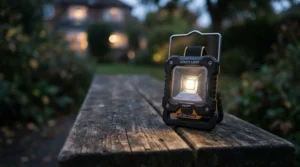
Listings describe COB LEDs giving 360° light, four modes including a red SOS strobe, power from a built-in rechargeable battery or three AA cells, a magnetic base with three magnets, a hang loop and handles, and ABS-and-metal construction. Lumen output isn’t reliably stated, though similar collapsible two-packs quote about 300 lumens each. The collapse-to-pocket size and AA backup are the key trade-offs for gram counters and cautious campers alike.
My take: the magnet is the sleeper feature. Stick one on a car door, a caravan frame or a metal pole and you have hands-free light where a hook has nothing to grab. Hang the second over the cooking area and you’ve solved the two-zone problem.
Reviewers report about 4.8 stars across more than 14,000 reviews. They like the hands-free mounting options and simple on-off behaviour in the dark. Criticisms are that the flashlight mode doesn’t throw far and AA batteries aren’t included. The listing promises 24-month support.
Pros:
- ✅ Two lanterns in one pack
- ✅ Magnet, loop and handles for flexible hanging
- ✅ USB charging with AA backup
Cons:
- ❌ Flashlight beam doesn’t project far
- ❌ AA batteries not included
Expect roughly £15-£25 for the pair (check current price). Value verdict: outstanding for groups and caravanners.
7. Ledlenser ML6 — premium buy-it-once lantern with real hanging options
The Ledlenser ML6 is the one that makes you wonder whether a pricier hanging camping light is worth it.
Key figures: 750 lumens on boost, 550 on high and 20 on low, about four hours on high and 70 on low (some listings quote up to 200 hours on the lowest mode), and a built-in Li-ion battery. Listings give the capacity as 2,500-3,200mAh. The weight is 280g, and water resistance is quoted as IP54 on most spec sheets, with some listings claiming IP66. A rubber top hook, a magnet and a removable stand cover most mounting needs, and a USB port turns it into a power bank.
The spec sheet won’t tell you this, but the dimming range matters more than the boost: being able to run low for 70 hours in a tent beats a 750-lumen mode you’ll rarely use. A red reading light and a transport lock that stops accidental switch-on in a rucksack are small details that separate premium from budget.
Review pools are small but glowing. One buyer called it a great lamp, “albeit heavy”, while praising the construction. Walks4all picked it as best overall for regular UK camping.
Pros:
- ✅ Wide dimming range with long low-mode runtime
- ✅ Rubber hook, magnet and stand
- ✅ Power bank function and red light
Cons:
- ❌ Heavy for ultralight backpacking
- ❌ Costs several times more than budget picks
Expect from the mid-£80s upwards (check current price). Value verdict: pay once if you camp every season.
Head-to-Head: Specs, Price Ranges and Value
| Product | Weight | Claimed Runtime | Water Rating (claimed) | Price Range | Review Snapshot |
|---|---|---|---|---|---|
| LE 1000LM LED Camping Lantern | ~400g | Up to ~12 hrs | IPX4 | £15-£20 | ~4.6★, tens of thousands |
| Blukar 2000 Lumen Camping Lantern | ~234g | 10+ hrs | Not water resistant | £13-£20 | ~4.7★, 13,000+ |
| Glocusent 106 LED Camping Lantern | ~246g | Up to 80 hrs (low) | IP68 | £20-£30 | Mostly positive, some defects |
| Black Diamond Moji | ~86g (bare) | ~70 hrs (low) | IPX4 | £15-£25 | ~4.5★, small pool |
| Vango Lunar 250 Eco | ~540g | ~3.5 hrs (full) | ~IP53-IP54 (retailer) | £20-£35 | Limited reviews found |
| EZORKAS 2 Pack Collapsible Lantern | Light, collapsible | Not reliably stated | Water-resistant ABS | £15-£25 (pair) | ~4.8★, 14,000+ |
| Ledlenser ML6 | ~280g | ~4 hrs high, ~70 hrs low | IP54 (varies) | From mid-£80s | ~5.0★, small pools |
The value picture is clear: Blukar, LE 1000LM and EZORKAS crowd the bottom of the price range, while Black Diamond Moji wins on weight and Glocusent on weather protection. The Ledlenser ML6 costs more up front, but spread over several seasons the gap narrows. If a budget lantern fails after one summer, you’ve paid twice.
How to Choose a Hanging Camping Light: 7 Steps
The best hanging camping light is a lantern with a hook you trust, a brightness range matched to your tent size, a power source you can refill in the field, and a water rating that suits British weather. Work through these steps in order.
- Decide where it will hang. A ridge-line loop, an awning pole and a tree branch demand different hooks, so picture the actual spot before comparing specs.
- Match brightness to space. A two-person tent needs roughly 100-300 lumens, while a family awning can use far more. Dimmability matters more than the maximum figure.
- Pick your power type. Rechargeable suits weekends and festivals, while replaceable batteries suit remote trips and cold nights.
- Inspect the hook, not just the lumens. A fold-out plastic hook, a silicone band and a rubber loop each age differently.
- Look for a diffuser or frosted globe. Bare LEDs glare, and glare is tiring in a small space.
- Read the water rating honestly. IPX4 handles splashes, while “water resistant” with no rating tells you little.
- Weigh the whole package. A 540g lantern is fine for a car boot and annoying in a rucksack.
Light Spread: Why Diffusers and Hanging Height Matter
Light spread is the unsung hero of any hanging camping light. Two lanterns with identical output can feel completely different: one lights the tent evenly, the other leaves a bright blob overhead and murky corners.
The unit of measure is the lumen, the total visible light a source emits in all directions. It doesn’t tell you how that light is distributed. A frosted globe, like the one on the Black Diamond Moji, scatters light evenly and reduces glare. The Blukar panel design throws a wide sideways sheet. The Ledlenser ML6 uses a prism-style diffuser, according to retailer descriptions, aimed at glare-free light without hotspots.
Height matters too. Hung at the centre of a ridge line, a 250-lumen lantern outperforms the same lantern sitting on a sleeping bag, because light comes from above and shadows fall behind you. In dome tents, hanging near the apex is best. In a tall family tent or awning, bring the light down to roughly head height for the main zone, so it lights faces rather than the roof.
✨ Don’t Miss These Handpicked Lanterns!
🔍 Take your tent lighting to the next level with these carefully selected products. Click on any highlighted item to check current pricing and availability. These tools will help you create authentic cosy evenings your family will love!
Budget Tent Hanging Lantern: What You Realistically Get
A budget tent hanging lantern in the £13-£25 bracket gets you more light than any campsite generation before ours enjoyed. The trade-offs are in the details, not the brightness.
At this level, expect plastic bodies, headline lumen claims, at most a splash-resistance rating, and hooks that are the weakest part of the build. The LE 1000LM and Blukar show the pattern: strong output and long reviews lists, with reviewer complaints clustering around hook feel and weather sealing. A budget tent hanging lantern isn’t a lifetime purchase, but it doesn’t have to be.
What do you actually lose by paying less? Mostly refinement: fewer dimming steps, no magnets, thinner seals, and little warranty beyond the retailer’s. What you don’t lose is usefulness. For a three-night festival or a school-holiday week in a campsite with a hook-up, a budget tent hanging lantern is hard to fault.
The smart move is to buy for your realistic use. If you camp twice a year, a budget tent hanging lantern rated around 4.5 stars or better is plenty. If you’re out monthly through winter, step up the tiers.
Low-Price Lantern With Hook: Which Hook Designs Survive
When you’re shopping for a low-price lantern with hook, the hook deserves more scrutiny than the LED. A great light on a hook that snaps in week two is a torch you balance on a camping chair.
There are four common designs. A fold-out plastic hook, as on the base of the LE 1000LM, is cheap and convenient but is the part reviewers say feels fragile. A silicone band, as on the Glocusent, is flexible and kind to tent fabric but can stretch or perish over time. A rubber hook, as on the Ledlenser ML6, is the best combination of grip and durability. A collapsible double-hook loop, as on the Black Diamond Moji, is compact and good for stringing several lights together, though short.
A simple tug test on day one tells you plenty. Hang your lantern from a doorframe, add a little extra weight, and give it a firm shake. A good low-price lantern with hook won’t creak, twist or pop loose. If it does, use your return window and look at the next one.
The cheapest upgrade of all is to ignore the built-in hook entirely and add a small carabiner hook or a loop of cord, which brings us to the practical guide below.
Carabiner Hook Tricks: Hanging Your Light Anywhere
This is practical, not theoretical. A £1 carabiner hook turns almost any lantern into a flexible hanging camping light, and solves problems Amazon listings never mention. Use a small aluminium or steel carabiner hook as a hardware bridge, never as a climbing device: for a sub-kilo lantern, a keyring-style one is fine, but nothing rated for body weight is needed or implied.
Setup in five steps:
- Clip the carabiner hook to the lantern’s handle or hook.
- Clip the other side to a tent loop, ridge line or awning pole.
- If the tent has no loop, tie a short cord loop around the pole and clip to that.
- Hang at roughly head height for living space, or near the apex for sleeping.
- Give the lantern a firm shake to check it won’t drop.
Tricks worth knowing. Clip two lanterns on one line to make a light “spine”. Use a carabiner hook to hang a lantern from a washing line outside the tent, a trick that works with the EZORKAS pair. Use a cord loop and carabiner hook with the Black Diamond Moji if its built-in loop is out of reach.
Maintenance. Check the gate closes cleanly each trip, rinse off salt and grit, and replace any carabiner hook that sticks. Never hang a lantern directly on tent fabric alone, since point loads can strain seams and encourage drips.
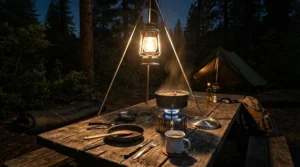
Build Quality at Low Prices: What to Check Before You Buy
Build quality at low prices is mostly a matter of knowing where manufacturers cut corners and checking those spots yourself. It isn’t about avoiding cheap lanterns altogether.
The water rating is a clue. The IP code is an international standard, defined under IEC 60529, for protection against dust and water. IPX4 means splashing water from any direction shouldn’t cause harm. IP68 means dust-tight and suitable for immersion, per the manufacturer’s claim. “Water resistant” with no rating tells you nothing.
Check the seals. One reviewer of the LE 1000LM noted the battery compartment lacked a proper O-ring, the rubber seal that keeps water out. If the compartment cover feels loose or the charging port is exposed, assume the water rating is optimistic.
Check the switches and hinges. A stiff, positive switch is a good sign. A wobbly hinge or hook is the first thing to fail.
Use your consumer rights. Under the Consumer Rights Act 2015, goods must generally be of satisfactory quality, and you typically have a short window to reject faulty goods. In practice, build quality at low prices means testing a lantern on day one rather than the night before a trip.
The wider lesson: low price doesn’t always mean low quality, but it does mean you should verify, not assume.
Hanging Camping Light vs Gas Lanterns and Other Alternatives
| Option | Heat / Fumes | Light Spread | Running Cost | Best For |
|---|---|---|---|---|
| Hanging LED lantern (e.g. Blukar) | None | Wide, even | Low | Tents, awnings, power cuts |
| Gas lantern | Heat and combustion fumes | Very wide | Gas canisters | Open-air base camps |
| Head torch | None | Narrow beam | Low | Walking, tasks, midnight loo trips |
| String lights | None | Soft, decorative | Low | Ambience around a pitch |
The key difference is safety inside the tent. A hanging camping light produces no flame and no fumes, so it suits sleeping and living spaces, whereas gas lanterns should never be used inside a tent because of fire and carbon monoxide risks. Gas still has a place outdoors, but it can’t match LED convenience.
Head torches are brilliant for tasks and awful for ambience: they light what you look at, not the room. A single Ledlenser ML6 or Blukar gives you a proper “room” of light, while a head torch lives in your pocket as a backup.
Real-World Scenarios: Three Campers, Three Picks
The festival student. Three nights, shared two-person tent, budget around £20, dry-ish weather. The Blukar gives a soft, wide glow and rechargeable convenience, though its listing says it isn’t water resistant, so keep it under the porch. A pair of EZORKAS lanterns would suit two friends splitting the cost.
The family of four. Six-berth tent with an awning, a week in August, budget up to £30. One LE 1000LM in the living area gives strong light from D cells you can swap mid-trip, and a Black Diamond Moji in the kids’ sleeping bay gives a gentle, dimmable night light. Total spend stays modest.
The all-year regular. Camping once a month, including cold, wet weekends, with space in the car. The Ledlenser ML6‘s long low-mode runtime and rugged build justify the cost across dozens of nights. The Glocusent is the cheaper alternative if rain protection matters most.
The ultralight walker. Solo wild camping, kit weighed to the gram. The Black Diamond Moji at around 86g bare is the answer, with a short cord and carabiner hook for the ridge line.
Problem → Solution Guide: Fixing Common Hanging Light Headaches
The light is too harsh in a small tent. Dim it, keep the diffuser fitted, or hang it above head height so it bounces off the tent roof. The Black Diamond Moji‘s frosted globe is built for exactly this.
The hook won’t fit any tent loop. Thread a cord through the hook, tie it to a pole, or use a carabiner hook as a bridge.
The battery dies mid-evening. Cold nights shrink lithium-ion capacity. Keep the lantern in your sleeping bag during the day, run it on a lower mode, and carry a power bank. D-cell and AAA lanterns like the LE 1000LM and Black Diamond Moji make spare batteries an easy fix.
Rain, spray or condensation. Hang it away from direct drips, check the water rating, and wipe it dry afterwards. The Glocusent is the most weather-ready option here on paper.
The lantern swings in the wind. Shorten the line, add a second tie-off point, or switch to a magnet mount with the EZORKAS or Ledlenser ML6 on a metal pole.
Long-Term Cost and Maintenance
Cost per use is where cheap lanterns can surprise you. A lantern in the £15-£20 range used for 60 nights over three seasons works out at roughly 25p-35p a night, which is hard to beat. The hidden cost is batteries: a LE 1000LM running on three D cells can quietly cost more in batteries than in the original purchase if you camp a lot, so rechargeable models like Blukar, Glocusent or EZORKAS often win over several seasons.
Maintenance is simple and cheap. Wipe the lantern dry after every trip, and keep it out of hot cars, since heat is hard on lithium-ion cells. For longer storage, leave rechargeables part-charged rather than full or flat, and top them up every couple of months.
Safe charging matters. The UK government’s OPSS lithium-battery safety message is aimed at e-bikes and e-scooters, but the habits translate directly: buy from known sellers, use the supplied charger, don’t charge unattended, and unplug when finished. Apply the same discipline to a Vango Lunar 250 Eco or Ledlenser ML6 and you’ve covered most of the risk.
FAQ
❓ Is it safe to leave a rechargeable hanging camping light charging overnight?
❓ Can I use a budget tent hanging lantern inside a small backpacking tent?
❓ What can I do if a low-price lantern with hook has no loop that fits my tent?
❓ Do hanging camping lights lose battery faster in cold weather?
❓ Are cheap camping lanterns worth it compared with premium ones?
Conclusion
A good hanging camping light turns a cramped, dim tent into somewhere you actually want to spend the evening. The right one depends on your camping style rather than the biggest lumen figure.
For the cheapest dependable light, choose LE 1000LM or Blukar. For backpacking, Black Diamond Moji is the weight-saving answer. For soggy pitches and storm-season home kit, Glocusent has the strongest weather claims. For groups and caravan frames, the EZORKAS pair’s magnet and loops are brilliant. For a familiar British brand with a solar top-up, Vango Lunar 250 Eco is straightforward, and for a lantern you’ll buy once, Ledlenser ML6 earns its price.
Whichever you pick, test the hook on day one, keep a spare carabiner hook in your kit, and check the water rating. Build quality at low prices is about verifying, not assuming.
✨ Ready to Light Up Your Next Pitch?
🔍 Compare the lanterns above, click any highlighted name to check current pricing and availability, and choose the hanging camping light that fits your tent, your budget and your idea of a perfect campsite evening. 🏕️
Recommended for You
- Battery Lantern For Festivals: 7 Top Picks That Beat The Mud (2026)
- Battery Lantern For Kids: 7 Best Safe, Tough Picks (2026)
- Battery Lantern Multipack: 7 Best Buys For UK Camps (2026)
Disclaimer: This article contains affiliate links. As an Amazon Associate, I earn from qualifying purchases. If you purchase products through these links, we may earn a small commission at no additional cost to you.
✨ Found this helpful? Share it with your friends! 💬🤗
