

In This Article
Here’s a scene most of us know too well: you’re three days into a trip, the tap water looks suspect, the hotel’s “filtered” jug tastes like a swimming pool, and the nearest shop only sells warm, overpriced bottled water in plastic you’ll feel guilty about for the rest of the holiday. This is exactly the gap a portable UV water purifier under £80 is built to fill — a device small enough to live in a side pocket that zaps waterborne nasties into oblivion in under two minutes, no chemicals, no aftertaste, no faff.

A portable UV water purifier is a battery or USB-powered wand or bottle cap that uses short-wavelength UV-C light to scramble the DNA of bacteria, viruses and protozoa in water, rendering them unable to reproduce or make you ill — all without changing how the water tastes or smells. It’s a genuinely clever bit of kit, but the market is smaller and pricier than you’d expect, and not every model that looks tempting on a search results page actually clears your budget once postage and batteries are factored in.
This guide digs into seven real, currently available UV purifiers spanning entry-level to genuine splurge territory, with honest analysis of where each one earns its keep and where it falls short. We’ll also cover the practical side that most Amazon listings skip entirely — how UV-C sterilisation actually works, why water clarity matters more than people realise, how to travel with battery-powered outdoor gear without getting stopped at security, and which of these count as a genuinely value UV water purifier rather than an overpriced gadget. According to NHS travel health guidance on water purification, water-borne illness remains one of the most common reasons travellers end up seeing a doctor abroad — so getting this kit choice right isn’t just about convenience.
Quick Comparison Table: 7 Portable UV Water Purifiers at a Glance
| Product | Power | Treatment Time | Best For |
|---|---|---|---|
| SteriPen Adventurer Opti | 2x CR123 batteries | 48–90 seconds | Best all-rounder under £80 |
| SteriPen Aqua | 4x AA batteries | 48–90 seconds | Tightest budget |
| SteriPen Classic 3 | 4x AA batteries | 48–90 seconds | Rugged, no-frills reliability |
| SteriPen Ultralight | USB rechargeable | 90 seconds | Minimalist packers |
| CrazyCap LYT | USB-C rechargeable | 60 seconds–3 minutes | Self-cleaning daily bottle |
| SteriPen Ultra | USB rechargeable | 48–90 seconds | Splurge pick, best display |
| LARQ Bottle PureVis | USB rechargeable | Auto every 2 hours | Lifestyle bottle upgrade |
Looking across the table, it’s obvious this category is dominated by one family of devices — the Katadyn-owned SteriPen range — which says something worth unpacking rather than skating past: patents on the optical water-sensing tech have kept genuine competitors thin on the ground for years. If pure budget is the priority, the SteriPen Adventurer Opti and SteriPen Aqua sit most comfortably under £80, while the CrazyCap LYT, SteriPen Ultra and LARQ Bottle PureVis are better thought of as “stretch” purchases that reward the extra spend with rechargeable convenience or a self-cleaning bottle format.
💬 Just one click — help others make better buying decisions too!😊
Top 7 Portable UV Water Purifiers: Expert Analysis
Coverage below spans budget, mid-range and genuine premium territory, plus one or two options you won’t have stumbled across on a generic “best water filters” roundup.
1. SteriPen Adventurer Opti — best all-rounder under £80
The standout here is the optical water sensor, a small detail that quietly solves the single most annoying thing about older UV pens: accidentally treating air instead of water. Running on two CR123 lithium batteries, the Adventurer Opti purifies 0.5 litres in 48 seconds or a full litre in 90, and Katadyn rates the lamp for roughly 8,000 activations before it needs replacing — enough for years of typical travel use.
What that spec sheet doesn’t spell out is how forgiving this makes the device for nervous first-time users. Because the sensor won’t activate the lamp unless it detects liquid, you can’t waste a treatment cycle by fumbling the button in a dark tent. Based on the spec comparison with rival models, this is genuinely the most beginner-proof UV purifier on the market, and it’s light enough (around 103g) to disappear into a daypack.
Reviewers consistently report that the CR123 batteries — while not something you’ll find in a UK corner shop — last far longer than expected, often outliving several trips before needing swapping, and a common complaint is that spare batteries are pricier and less widely stocked than standard AAs.
Pros:
- ✅ Optical sensor prevents accidental dry activation
- ✅ Genuinely pocketable at just over 100g
- ✅ Works on clear and moderately cloudy water
Cons:
- ❌ CR123 batteries aren’t sold on every UK high street
- ❌ No digital display to confirm remaining lamp life
Typically sitting in the £55–£75 range from UK outdoor retailers, this is comfortably the best value UV water purifier on this list for anyone who wants proven tech without paying for extras they won’t use.
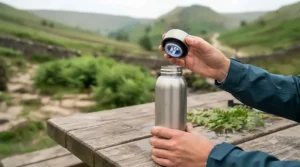
2. SteriPen Aqua — most affordable entry point
This is the model Katadyn built specifically to undercut its own range, and the standout feature is straightforward: it runs on four ordinary AA batteries, which means you can restock it in literally any petrol station on earth. Treatment times mirror the rest of the family — 48 seconds for half a litre, 90 for a full one — and it carries the Water Quality Association’s Gold Seal for verified performance.
The lamp life is rated lower than the Opti at around 3,000 activations, which in practice means more frequent bulb replacement if you’re a heavy user, but for occasional travellers and emergency-kit duty this is plenty. What most buyers overlook about this model is that AA compatibility isn’t just convenience — it’s a genuine resilience advantage on a long trip where finding CR123s or a USB socket isn’t guaranteed.
Stock availability through UK retailers can be patchier than the newer Opti and Ultralight models, so it’s worth checking current listings rather than assuming it’ll always be there.
Pros:
- ✅ Uses widely available AA batteries worldwide
- ✅ Carries independent Gold Seal certification
- ✅ Genuinely the cheapest way into the SteriPen family
Cons:
- ❌ Shorter rated lamp life than pricier siblings
- ❌ UK stock availability can be inconsistent
Price typically sits under £60 when in stock, making the SteriPen Aqua the pick for anyone treating this as a one-off holiday purchase rather than long-term gear.
3. SteriPen Classic 3 — rugged, no-frills reliability
The Classic 3’s standout trait is exactly what its name implies: it’s the least fussy, most mechanically simple purifier in the lineup, with enhanced water resistance over the original Classic and a AA-battery format that’s aged well precisely because it never chased trends. It treats water at the same 48/90-second pace as the rest of the range and shares the 8,000-activation lamp life of the Opti.
Here’s what the spec sheet won’t tell you, but reviewers note repeatedly: the slightly chunkier housing that makes this less “ultralight” also makes it noticeably more comfortable to grip with cold, wet hands — a small thing that matters a lot at 6am on a canal boat or campsite tap. This is the purifier for buyers who prioritise durability over shaving off every last gram, particularly hunters, canoeists and anyone whose kit takes a genuine battering.
Aggregated review sentiment across outdoor retailers frames this as the “workhorse” of the range — dependable rather than exciting, which for a water safety device is arguably the highest compliment available.
Pros:
- ✅ Tougher housing built for rough handling
- ✅ Simple AA power with no charging cables needed
- ✅ Long-standing reputation for dependability
Cons:
- ❌ Heavier and bulkier than the Opti or Ultralight
- ❌ Frequently priced right at or just above £80
Current UK pricing tends to sit in the £75–£95 range depending on retailer, so budget-conscious shoppers should compare a few outlets before buying — this one occasionally dips under the £80 mark on sale, but isn’t guaranteed to.
4. SteriPen Ultralight — minimalist packer’s choice
At roughly 70–76 grams, the standout here is sheer physical size — this is the smallest, lightest purifier SteriPen makes, built specifically for people who weigh every gram before a trip. It’s USB rechargeable rather than battery-powered, treating up to 20 litres on a single charge, and the internal battery is designed to hold its charge for months of storage between trips.
Based on the spec comparison, the trade-off for that tiny footprint is a shorter per-charge capacity than the Ultra or the AA-powered models, which matters if you’re somewhere without reliable power for more than a few days. For weekend trips, city breaks and carry-on-only flying, though, that’s rarely a real-world problem — you’ll be back near a plug socket long before 20 litres runs dry.
A common theme in aggregated reviews is genuine surprise at how something this small performs identically to its bulkier siblings; the compromise is almost entirely about charge cycle length rather than water treatment quality.
Pros:
- ✅ Smallest, lightest purifier in the whole category
- ✅ No batteries to source or replace
- ✅ Long standby charge retention between trips
Cons:
- ❌ Lower per-charge capacity than mains-powered rivals
- ❌ Usually hovers right around, or just over, £80
Expect to pay somewhere in the £75–£90 range depending on the retailer — genuinely borderline for a strict under-£80 brief, so it’s worth watching for a sale if this is your pick.
5. CrazyCap LYT — self-cleaning UV bottle for daily use
Rather than a separate wand you dip into an open bottle, the standout feature of the CrazyCap LYT is that the UV-C hardware lives in the cap itself, built into a 17oz stainless steel insulated bottle. Tap the lid twice for a 60-second surface clean, or five times for a deeper roughly two-minute purification cycle, and NSF-certified testing behind the brand claims elimination rates above 99.9%.
What most buyers overlook about this model is that it’s solving a slightly different problem to the SteriPen range: it’s less about treating unknown wilderness water and more about keeping a daily-carry bottle genuinely hygienic and killing bacteria that builds up between refills — genuinely useful if you’re the sort of person who forgets to wash a bottle for a week at a time. As a case-in-point of honest transformation content, this is a device that changes a daily habit rather than solving an occasional emergency.
UK stock through Amazon has fluctuated between “in stock” and “currently unavailable” across different colour variants, so availability is genuinely worth checking before you commit to this one over a UK-stocked SteriPen.
Pros:
- ✅ Cap and bottle combined — one less thing to carry
- ✅ Insulation keeps drinks cold up to 24 hours
- ✅ NSF-certified UV-C purification claims
Cons:
- ❌ UK stock availability is genuinely inconsistent
- ❌ Pricier than SteriPen once postage is added
UK pricing typically lands in the £55–£90 range depending on which retailer currently has stock, so this is one to price-check carefully rather than assume is always a bargain.

6. SteriPen Ultra — splurge pick with the best display
The standout advantage on the SteriPen Ultra is its high-contrast OLED display, which shows treatment progress and battery status at a glance — a genuinely useful upgrade over the blink-based indicator lights on cheaper models. It’s USB rechargeable, treats up to 8,000 litres over its lifespan, and completes a half-litre treatment in around 48 seconds.
Here’s the honest trade-off: this is priced well above the “under £80” brief, usually landing somewhere between £85 and £115 depending on retailer and current promotions. Based on the spec comparison, you’re not getting dramatically better water purification for that extra money — the underlying UV-C technology is functionally identical to the Adventurer Opti. What you are paying for is the clearer feedback display and the convenience of USB charging over specialist batteries, which for some travellers genuinely is worth the premium.
Aggregated reviewer sentiment is mixed on value for money specifically, with several buyers noting the display is nice but not essential, while others say it’s the reason they’d never go back to a button-and-light model.
Pros:
- ✅ Clear OLED display for treatment status
- ✅ USB rechargeable — no specialist batteries needed
- ✅ Highest treatment lifespan rating in the range
Cons:
- ❌ Regularly priced well above the £80 mark
- ❌ Marginal functional gain over cheaper siblings
If your budget genuinely stretches to the £85–£115 range, this remains the most user-friendly SteriPen available — just go in aware you’re paying for polish, not purification power.
7. LARQ Bottle PureVis — lifestyle bottle upgrade
The standout feature setting the LARQ Bottle PureVis apart from everything else on this list is that it’s built primarily as a self-cleaning everyday bottle rather than a wilderness water-treatment tool — its UV-C LED automatically self-cleans the interior roughly every two hours, and the insulated stainless steel body keeps drinks cold for up to 24 hours or hot for 12.
Based on the spec comparison, this device is genuinely solving bottle hygiene rather than raw-water purification the way the SteriPen family does; it’s not marketed or designed for dipping into a stream. What most buyers overlook is that this distinction matters enormously for anyone choosing based on the “UV water purifier for travel” search intent — if your travel involves questionable tap water in unfamiliar countries, this bottle format is a poorer fit than a dip-style pen, even though the underlying UV-C science is comparable.
Aggregated customer sentiment sits around 4 out of 5 stars across thousands of reviews, with praise for build quality and design and recurring criticism around the price relative to what a bottle “does” compared with a dedicated purifier pen.
Pros:
- ✅ Attractive, well-built insulated design
- ✅ Automatic self-cleaning needs no manual activation
- ✅ Strong brand reputation and 2-year warranty
Cons:
- ❌ Not designed for treating untreated wilderness water
- ❌ Comfortably the most expensive option here
Typically priced in the £85–£99 range, this is best understood as a premium daily-carry upgrade rather than a genuine like-for-like alternative to a SteriPen for travel water safety.
Practical Usage Guide: Setup, First Use & Maintenance
Getting a new UV purifier right in the first month makes a real difference to how much you trust — and actually use — the thing. Start by fully charging or fitting fresh batteries before your first trip, then run one “practice” treatment cycle at home in tap water so the button sequence and any indicator lights become second nature before you need them for real. It sounds obvious, but a surprising number of first-time buyers only read the instructions standing in a hostel bathroom at midnight.
The single most common early mistake is treating cloudy or sediment-heavy water straight away and assuming the purifier has failed when it hasn’t fully cleared the pathogens — UV-C needs the light to actually reach the microorganisms, so visibly murky water should always be pre-filtered through a cloth or coffee filter first. Store the device somewhere it won’t get crushed (a hard case or a sock works fine), and for battery-powered models, remove batteries before long storage periods to avoid corrosion damage to the contacts.
A quick maintenance habit worth adopting: wipe the UV bulb or lamp housing gently after each trip, since mineral residue can build up and reduce output over time without you noticing until treatment times start creeping up.
Real-World Scenarios: Who Should Buy Which Purifier
Picture three very different travellers, because the “best” purifier genuinely depends on who’s holding it. First, a college student backpacking through Southeast Asia on a tight budget, refilling from hostel taps and the occasional dubious well: the SteriPen Adventurer Opti fits best here, combining low upfront cost with the optical sensor’s forgiveness for less experienced users.
Second, a family preparing an emergency kit for the UK home — perhaps after seeing news about water outages — who want something dependable that will still work if it sits in a drawer untouched for two years: the SteriPen Classic 3‘s AA-battery format wins out, since AAs are easy to rotate and replace without the device itself degrading.
Third, a frequent business traveller who wants something genuinely low-effort for hotel rooms in countries where tap water is iffy, and who doesn’t mind paying more for convenience: the SteriPen Ultra‘s USB charging and clear display suit a routine of topping up overnight alongside a phone charger, no batteries to remember or source abroad.
Problem → Solution: Common UV Purifier Issues Solved
Problem: the water still tastes off after treatment. UV-C kills pathogens but does nothing for chlorine taste, minerals, or existing odours — that’s a filtration job, not a UV one. Solution: pair your purifier with a simple activated-carbon travel filter or bottle for taste, using UV purely for pathogen safety.
Problem: treatment seems to be taking longer than the stated time. This is almost always down to weak or ageing batteries rather than a faulty lamp. Solution: swap to fresh batteries (or a full charge) before assuming the device itself has failed, and keep a spare set for CR123 or AA models specifically because these aren’t always available locally.
Problem: the device won’t activate at all. On optical-sensor models like the SteriPen Adventurer Opti, this is frequently caused by a dirty or wet sensor window rather than a genuine fault. Solution: gently dry and clean the sensor lens before troubleshooting further.
Problem: uncertainty about whether cloudy water is safe to treat. Solution: pre-filter through a bandana, coffee filter, or dedicated pre-filter accessory — UV disinfection is only reliable once light can actually penetrate the water.
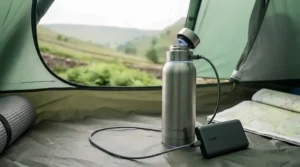
How to Choose a Portable UV Water Purifier Under £80
- Decide battery type first. AA-powered models like the SteriPen Aqua and SteriPen Classic 3 are easiest to keep running anywhere in the world, while USB-rechargeable options like the SteriPen Ultralight suit trips with regular power access.
- Check the treatment volume you actually need. Solo travellers rarely need more than the standard 0.5–1 litre cycle most models offer; groups should look at total litres treatable per battery set or charge.
- Weigh portability against display features. A tiny device like the Ultralight sacrifices the reassurance of an OLED screen — decide which matters more for your travel style.
- Factor in genuine UK price, not the US list price. Several models marketed as “under £80” in the US routinely cross that line once converted and shipped to the UK.
- Consider water clarity where you’re headed. If your destination involves murky rivers or lakes rather than tap water, prioritise a model with strong sensitivity even in cloudy conditions, or plan to pre-filter.
- Read aggregated review sentiment, not just star ratings. A 4.2-star average tells you less than the recurring specific complaints underneath it.
- Check current stock and price before committing, since availability shifts between retailers month to month in this fairly niche category.
Common Mistakes to Avoid
Buyers frequently assume any UV device works instantly on any water — cloudy, salty, or chemically contaminated water all defeat or reduce UV effectiveness, something no listing photo will warn you about. Another recurring mistake is buying a battery-powered model without checking whether that specific battery type is sold at your destination, only to discover CR123s aren’t stocked anywhere near a remote trailhead.
Top Rated UV Water Purifiers for Travel
For genuine travel use — as opposed to home emergency-kit storage — the shortlist narrows considerably. The SteriPen Adventurer Opti consistently ranks among the top rated UV water purifiers for travel specifically because its compact size and optical sensor suit unpredictable conditions abroad, from hostel taps to hiking trail streams.
For travellers prioritising minimal packing weight, the SteriPen Ultralight edges ahead despite its higher price, purely on the basis of how little space and weight it demands from an already-full bag. And for anyone whose travel water risk is really about hotel and café water sitting around rather than untreated wild sources, the LARQ Bottle PureVis offers a genuinely different value proposition worth considering alongside — rather than instead of — a dedicated purifier pen.
What ties these together, based on aggregated review patterns across UK and US retailers, is that travellers consistently rate battery or charge reliability above raw treatment speed — nobody complains that 90 seconds is too slow, but plenty complain about a dead battery on day one.
UV-C Sterilisation: How It Actually Works
UV-C sterilisation uses short-wavelength ultraviolet light, roughly in the 200–280 nanometre range, to damage the genetic material inside bacteria, viruses and protozoa so they can no longer reproduce or cause infection. According to Wikipedia’s overview of ultraviolet germicidal irradiation, this disinfection technique has been used across food, air and water treatment for decades precisely because it inactivates a broad range of pathogens without leaving chemical residue behind.
What the marketing copy on most purifier boxes won’t explain is that UV-C doesn’t physically remove anything from the water — it disables pathogens in place rather than filtering them out, which is why UV purifiers are typically paired with, rather than positioned as a replacement for, a basic filter when sediment or heavy metals are a concern. On paper this means UV is best understood as the final safety step, not the entire water treatment solution, particularly for genuinely dirty source water.
This also explains why treatment time matters so much across every product in this guide: the UV dose delivered has to be sufficient to reach every organism in the water, which is a function of both light intensity and exposure time — cut either one short and effectiveness drops, regardless of how expensive the device is.
Water Clarity Requirements for UV Treatment
This is the section most Amazon listings conveniently skip, and it matters enormously. UV disinfection relies on light physically reaching microorganisms suspended in the water, so turbidity — cloudiness caused by suspended particles — directly reduces effectiveness by shielding pathogens from exposure. Peer-reviewed research on UV disinfection of contaminated tap water confirms that water clarity is a genuine, measurable variable in treatment success, not just a manufacturer disclaimer added for legal cover.
In practice, this means visibly clear tap or filtered water is exactly what every device in this guide is designed for, while genuinely murky river, lake or puddle water needs pre-filtering — through a cloth, bandana, or dedicated pre-filter accessory — before UV treatment stands a realistic chance of working properly. Reviewers across multiple SteriPen models consistently flag this same point: the device didn’t “fail,” the water simply needed a filtering step first that nobody told them about.
The honest takeaway here is that a portable UV water purifier under £80 is best thought of as a final disinfection step for reasonably clear water, not a standalone solution for genuinely dirty water sources — pairing it with a cheap pre-filter closes that gap for a few extra pounds.
Portable UV Water Purifier vs Water Filters & Filter Straws
| Method | Removes Sediment | Kills Viruses | Speed | Best For |
|---|---|---|---|---|
| UV Purifier (e.g. SteriPen Adventurer Opti) | No | Yes | 48–90 sec | Clear water, fast turnaround |
| Filter Straw / Bottle Filter | Yes | Usually not | Instant while drinking | Murky outdoor water sources |
| Purification Tablets | No | Yes | 30+ minutes | Backup or emergency kit |
| Boiling | No | Yes | 5–10+ minutes | No power or batteries needed |
The comparison above makes the trade-offs fairly stark: filter straws excel at physically removing sediment and larger parasites but generally can’t touch viruses, which is exactly where UV purifiers step in. Boiling remains the gold-standard backup with zero equipment cost beyond fuel, but it’s slow and impractical mid-hike or mid-flight, while purification tablets solve the “no power source” problem at the cost of a strong chemical aftertaste and a lengthy wait.
For most UK travellers, the practical answer isn’t choosing one method exclusively — it’s carrying a UV purifier as the primary tool for speed and taste, with tablets as a lightweight backup for the rare occasion a battery dies at the worst possible moment.
Value & Long-Term Cost: Getting the Most for Under £80
| Product | Approx. Price Range | Lamp/Cost Life | Cost Per Litre (rough) |
|---|---|---|---|
| SteriPen Adventurer Opti | £55–£75 | ~8,000 activations | Lowest in range |
| SteriPen Aqua | Under £60 | ~3,000 activations | Slightly higher, still low |
| SteriPen Classic 3 | £75–£95 | ~8,000 activations | Low, given durability |
| SteriPen Ultralight | £75–£90 | Ongoing (rechargeable) | No lamp replacement cost |
Spreading the purchase price across thousands of treatment cycles reframes what looks like a steep upfront cost into genuinely cheap-per-use water safety — even the pricier SteriPen Classic 3, at an 8,000-activation lamp life, works out to a tiny fraction of a penny per litre once amortised. That’s the real argument for calling any of these a value UV water purifier: the sticker price is almost irrelevant next to years of avoiding bottled water purchases.
The genuine long-term cost variable isn’t the device price at all — it’s battery type. AA and CR123 models mean an ongoing, if modest, running cost every time cells need replacing, while USB-rechargeable models like the Ultralight and Ultra shift that cost to essentially nothing beyond electricity, at the expense of needing regular access to a power source. Buyers prioritising total cost of ownership over five-plus years of occasional travel should lean rechargeable; those prioritising reliability in genuinely remote settings should lean battery-powered, batteries in hand.
Battery-Powered Outdoor Gear: Care, Charging & Flight Rules
Every device on this list runs on lithium batteries in some form — CR123 cells, AA lithiums, or internal rechargeable lithium-ion packs — and that has real implications for how you pack for flights. Under current UK Civil Aviation Authority guidance on packing batteries, spare lithium batteries and power banks must travel in cabin baggage rather than the hold, and devices with batteries installed generally need to be protected from accidental activation during transit.
For UV purifiers specifically, this is genuinely simple to comply with: keep the device and any spare CR123 or AA cells in your carry-on, not checked luggage, and if your model has a lock or button-guard feature, use it to prevent the lamp triggering accidentally against other items in your bag. For USB-rechargeable models, there’s no separate battery to worry about since it’s built into the device itself, which slightly simplifies airport security questions.
Beyond flight rules, good battery-powered outdoor gear habits extend to storage between trips: remove replaceable batteries during long gaps to prevent corrosion, and for rechargeable models, top up to roughly 50% charge before storing for months at a time rather than leaving them fully drained or fully charged, which extends internal battery lifespan considerably.

Frequently Asked Questions
❓ What is the best portable UV water purifier under £80?
❓ Do UV water purifiers work on cloudy water?
❓ How long do UV water purifier batteries last?
❓ Can I take a UV water purifier in hand luggage?
❓ Are UV water purifiers safe for international travel?
Conclusion
Choosing a portable UV water purifier under £80 really comes down to answering one honest question first: are you buying for occasional travel reassurance, or genuine remote reliability? For the former, the SteriPen Adventurer Opti or budget-friendly SteriPen Aqua cover nearly every realistic scenario without stretching your wallet. For heavier, more frequent use, models like the SteriPen Classic 3 and SteriPen Ultralight justify sitting closer to — or occasionally just over — that £80 line through added durability or rechargeable convenience.
The premium options here, the SteriPen Ultra, CrazyCap LYT and LARQ Bottle PureVis, aren’t better at the core job of killing pathogens so much as better at making the experience feel effortless, whether through a clearer display, a self-cleaning bottle format, or daily-carry design. None of that is wasted money if it means you’ll actually use the thing consistently — the best purifier, ultimately, is the one that ends up in your bag rather than left in a drawer because it felt like a hassle.
Whichever you land on, remember that UV-C sterilisation works best as part of a routine, not a one-off purchase: check water clarity before treating, keep spare batteries where flight rules allow, and treat this as genuinely cheap insurance against a ruined trip.
Recommended for You
- 7 Best Chlorine Dioxide Water Tablets UK 2026
- Water Purification Tablets for Travel: 7 Best Picks (2026)
- Water Purification Tablets Under £15: 7 Best UK Picks (2026)
Disclaimer: This article contains affiliate links. As an Amazon Associate, I earn from qualifying purchases. If you purchase products through these links, we may earn a small commission at no additional cost to you.
✨ Found this helpful? Share it with your friends! 💬🤗
