
In This Article
There’s a particular flavour of dread that comes with turning on a tap and getting nothing, or worse, a text from your water company telling you to boil everything before you drink it. It happened to roughly 16,000 households in Brixham in 2024, and it will happen again somewhere in Britain before this year is out. Water purification tablets under £15 are the cheapest, lightest insurance policy against that scenario, and against the dodgier taps you’ll meet on a canal towpath, a Munro summit, or a hostel in a country where “safe tap water” is more suggestion than guarantee.

This guide is built around one deliberately narrow filter: every single tablet featured here retails for under £15 a pack. That price ceiling matters because it rules out the premium filter jugs, UV pens, and gravity-fed systems that dominate most “water treatment” round-ups, and focuses purely on the pocket-sized, foil-wrapped, boil-water-notice-proof option that belongs in a rucksack, a glovebox, and a kitchen drawer. We’ve dug into real specs, real aggregated review sentiment, and genuine head-to-head comparisons — not a rewritten Amazon listing — so you can pick the tablet that actually suits your situation rather than the one with the loudest packaging.
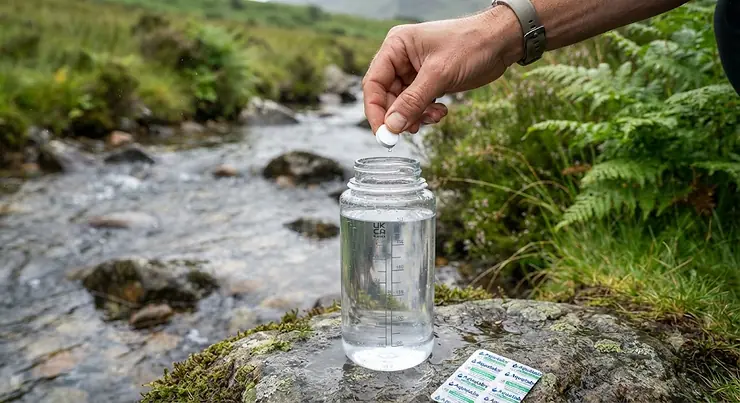
Water purification tablets work by releasing a disinfecting agent, usually chlorine, chlorine dioxide, or iodine, into water to neutralise bacteria, viruses, and (in the better formulations) protozoan cysts like Giardia and Cryptosporidium. They don’t filter out grit, silt, or heavy metals, and they’re not a substitute for boiling when boiling is possible — the NHS travel health service Fit for Travel is refreshingly blunt about that. What tablets do brilliantly is cover the gaps: no power for the kettle, no time to wait for a rolling boil, or a water source so far from a socket that boiling simply isn’t an option.
Quick Comparison Table
| Product | Technology | Treats | Price Range | Best For |
|---|---|---|---|---|
| Aquatabs 8.5mg x100 | NaDCC (chlorine) | Up to 100 litres | £7–£9 | All-round budget backup |
| Oasis 67mg (200 tablets) | NaDCC (chlorine) | Up to 2,000 litres | £6–£7 | Bulk emergency storage |
| Lifesystems Chlorine Tablets | Chlorine | 60 litres | £4–£5 | Cheapest way in |
| Lifesystems Chlorine Dioxide | Chlorine dioxide | 30 litres | £9–£11 | Best taste on the trail |
| Coghlan’s Drinking Water Tablets | Iodine | ~25 litres | £7–£9 | Lightweight classic backup |
| Katadyn Micropur Forte MF 1T | Silver ions + chlorine | 50 litres | £12–£14 | Long-term water storage |
| Katadyn Micropur MP1 | Chlorine dioxide | 20 litres | £9–£11 | Cryptosporidium-heavy water |
Looking at the table above, there’s a clear split between tablets built for occasional emergency use and ones built for repeated outdoor treatment. Oasis and Aquatabs win on cost-per-litre if you’re stocking a household emergency box, while Katadyn Micropur MP1 earns its slightly higher price by covering Cryptosporidium — a parasite most cheaper chlorine tablets don’t reliably touch. If taste is your dealbreaker rather than budget, Lifesystems Chlorine Dioxide consistently comes out ahead in reviewer sentiment for leaving the least aftertaste.
💬 Just one click — help others make better buying decisions too!😊
Top 7 Water Purification Tablets Under £15: Expert Analysis
1. Aquatabs 8.5mg x100 — best-selling all-rounder for daily backup
Global market position counts for something, and Aquatabs is the tablet most humanitarian agencies and NGOs reach for when a community needs safe water fast, which says a lot about how it performs outside a laboratory. Each 8.5mg tablet uses sodium dichloroisocyanurate (NaDCC) to treat roughly one litre of clear water, working in about 30 minutes, with a pack of 100 giving you a genuinely useful 100 litres of backup capacity for not much outlay. Because the active chemistry is NaDCC rather than raw chlorine gas, the taste is noticeably milder than older-style chlorine tablets — a small thing that matters a lot when you’re drinking treated water for days on end.
Based on the spec comparison with rival NaDCC tablets, Aquatabs sits in the middle of the pack on speed and strength but pulls ahead on brand trust and shelf stability, with a foil-sealed shelf life that comfortably runs to several years unopened. This makes it the sensible default for someone who wants one product for camping, travel, and the household grab-bag rather than three specialised tablets for three scenarios. Aggregated Amazon review sentiment consistently praises the lack of a strong chemical aftertaste compared with older iodine-based tablets, though a handful of reviewers note the tablets fizz vigorously and can stain light-coloured bottles if left in direct contact too long.
Pros:
- ✅ Trusted worldwide by aid agencies and NGOs
- ✅ Mild taste compared with older chlorine tablets
- ✅ Long, foil-sealed shelf life for stockpiling
Cons:
- ❌ Doesn’t reliably neutralise Cryptosporidium
- ❌ 30-minute wait feels slow when you’re desperately thirsty
At around £7–£9 for a 100-pack, Aquatabs works out to just a handful of pence per litre, making it one of the best value-for-money picks in this whole line-up.
2. Oasis 67mg (200 tablets) — best bulk value for a grab bag
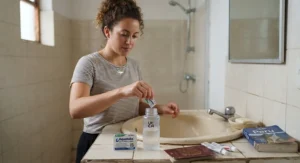
If your priority is stocking enough tablets to genuinely see a household through a multi-week boil-water notice, Oasis water purification tablets are hard to beat on sheer volume. The 67mg formulation is designed to treat up to 10 litres per tablet, so a single 200-tablet tub theoretically covers up to 2,000 litres — vastly more than smaller packs aimed at solo hikers, and manufactured in the UK to ISO 9001 standards rather than imported in bulk from an unknown source.
What most buyers overlook about this model is that its dosing is built for volume containers — water butts, jerry cans, camper van tanks — rather than a single 500ml bottle, so you’ll need to dilute or measure carefully for smaller quantities. On paper, this means it’s a poor match for a single day hike where Aquatabs or Lifesystems single-litre dosing is far more convenient, but an excellent match for anyone filling multiple containers ahead of a forecast storm or planned works notice. Reviewers on Amazon repeatedly mention buying Oasis specifically after living through a previous supply interruption, describing it as cheap peace of mind rather than a product they expect to use often, and several note it does leave a noticeable chlorine smell when first dissolved.
Pros:
- ✅ Enormous capacity per tub — up to 2,000 litres
- ✅ Manufactured in the UK to ISO 9001 standard
- ✅ Very low cost per litre treated
Cons:
- ❌ Dosing is fiddly for small, single-bottle quantities
- ❌ Noticeable chlorine smell on first mixing
At roughly £6–£7, Oasis is arguably the best value pick in this entire round-up if bulk household storage — not backpack portability — is your main goal.
3. Lifesystems Chlorine Water Purification Tablets — cheapest way into a grab bag
Sometimes the honest answer to “which tablet should I buy” is simply the cheapest one that still does the job properly, and that’s exactly the role Lifesystems Chlorine Water Purification Tablets play. A 60-tablet pack treats up to 60 litres, with an unopened shelf life stretching to five years, and a UK high-street brand behind it that’s been kitting out Duke of Edinburgh groups and Munro baggers for decades.
Reviewers consistently note that plain chlorine leaves more of an aftertaste than the chlorine dioxide alternative further down this list, which is the trade-off you’re accepting for the lower price — chemically it’s a straightforward, no-frills disinfectant rather than a taste-optimised formula. What the spec sheet won’t tell you, but a look at the aggregated review data suggests, is that pairing it with the matching Lifesystems neutralising tablets largely solves the taste complaint, at a small extra cost. For a first-aid kit, glovebox, or spare bag that just needs “something” in case of an unexpected outage, this is the tablet that lets you tick the box without overspending.
Pros:
- ✅ Lowest price point in this entire round-up
- ✅ Five-year shelf life when unopened
- ✅ Trusted UK outdoor brand
Cons:
- ❌ Stronger chlorine aftertaste than pricier alternatives
- ❌ Basic chlorine chemistry, less effective on tougher cysts
At around £4–£5, this is the tablet to buy in multiples — one for the car, one for the camping kit, one for the emergency drawer — without denting the household budget.
4. Lifesystems Chlorine Dioxide Water Purification Tablets — best taste on the trail
Anyone who has grimaced through a bottle of chlorine-treated stream water will understand exactly why Lifesystems Chlorine Dioxide Water Purification Tablets attract such loyal reviewer sentiment. Chlorine dioxide is chemically a cousin of ordinary chlorine but produces almost no aftertaste, works against a broader range of pathogens, and is the same active ingredient used by many municipal water treatment plants. Each tablet in the 30-pack treats up to a litre, and Amazon reviewers frequently mention using them on multi-day wild camping trips specifically because the taste doesn’t put them off drinking enough water.
Based on the spec comparison with plain chlorine tablets, the extra cost here buys genuinely improved palatability rather than a marketing gimmick — several reviewers who’ve used both describe switching to chlorine dioxide permanently after one unpleasant chlorine-tablet trip. Here’s what to weigh: the pack size is smaller (30 litres of coverage versus 60 for the cheaper Lifesystems chlorine option), so per-litre cost is noticeably higher, and the shelf life once opened is shorter at roughly three years rather than five. For anyone hiking Scotland’s West Highland Way or trekking abroad where good taste genuinely affects hydration habits, that trade-off is usually worth it.
Pros:
- ✅ Minimal aftertaste compared with standard chlorine
- ✅ Effective against a wider pathogen range
- ✅ Compact and lightweight for backpacking
Cons:
- ❌ Higher cost per litre than basic chlorine tablets
- ❌ Shorter three-year shelf life
Priced in the £9–£11 range, this is the pick for serious hikers and travellers who rate drinkability as highly as disinfection power.
5. Coghlan’s Drinking Water Tablets — classic iodine-based backup
Coghlan’s has been making camping essentials since 1959, and its iodine-based drinking water tablets are the sort of old-school product that quietly outlasts flashier newcomers. The formulation uses tetraglycine hydroperiodide rather than chlorine, dissolving to disinfect roughly one pint of water per two tablets within about five minutes of contact time, with a 50-tablet pack giving a compact, ultralight backup option for a first-aid kit or glovebox.
What most buyers overlook about iodine tablets is that they’re genuinely one of the fastest-acting options here, but the trade-off is a distinctive medicinal taste that many people find harder to mask than chlorine, even with a neutraliser. Reviewers repeatedly describe stashing a bottle in food storage or a bug-out bag specifically because it’s cheap, small, and rarely needs replacing — several mention using them successfully during hurricane and flood relief efforts abroad. One honest caveat worth flagging clearly: iodine-based purification isn’t recommended for pregnant women, people with thyroid conditions, or for continuous long-term use, so it suits occasional emergency backup far better than a daily camping routine.
Pros:
- ✅ Very fast contact time, around five minutes
- ✅ Compact, ultralight bottle for grab bags
- ✅ Decades-long trusted brand heritage
Cons:
- ❌ Strong iodine aftertaste many find unpleasant
- ❌ Not suitable for pregnant women or thyroid conditions
Typically priced around £7–£9, Coghlan’s earns its place as the classic “just in case” tablet rather than an everyday hiking companion.
6. Katadyn Micropur Forte MF 1T — premium pick for long-term storage
Swiss outdoor brand Katadyn built its reputation on filtration systems, and its Micropur Forte tablets bring some of that engineering pedigree to the tablet format. The technology combines silver ions with chlorine, which means treated water stays protected against bacterial regrowth for up to six months rather than needing to be used within a day or two — genuinely useful if you’re pre-treating a camper van tank, boat freshwater system, or emergency storage drum rather than a single day’s hiking supply.
On paper this means Micropur Forte solves a problem none of the cheaper chlorine tablets in this list address: long-term preservation rather than one-off disinfection. Contact time is around 30 minutes for bacteria and viruses, extending to two hours for Giardia in clear water, and reviewers on outdoor forums consistently rate it highly for multi-week expedition use where refilling containers with fresh treatment daily simply isn’t practical. The honest downside is price — this is the most expensive tablet in our round-up, and it’s genuinely a poor fit for someone who just wants to treat a single bottle on a day walk.
Pros:
- ✅ Preserves treated water for up to six months
- ✅ Trusted Swiss engineering and safety testing
- ✅ Ideal for tanks, drums, and long-term storage
Cons:
- ❌ Most expensive tablet in this comparison
- ❌ Overkill for single-day, single-bottle use
At roughly £12–£14, Micropur Forte sits right at the edge of our £15 ceiling, but for boat owners, campervan owners, and long-expedition planners, that premium buys a genuinely different feature set.
7. Katadyn Micropur MP1 — toughest against Giardia and Cryptosporidium
Reviewers consistently note is that not every tablet on the market is proven against Cryptosporidium, the hardy parasite behind the 2024 Brixham outbreak — and this is exactly where Katadyn Micropur MP1 distinguishes itself. Built on chlorine dioxide chemistry and EPA registered as a microbiological water purifier, it’s specifically tested against viruses, bacteria, Giardia, and Cryptosporidium in a way many cheaper NaDCC tablets simply aren’t rated to match, with each tablet pre-measured for one litre so there’s no guesswork on dosing.
Based on the spec comparison with our other chlorine dioxide entry, Katadyn Micropur MP1 typically needs around 30 minutes in warmer, cleaner water but can stretch to four hours in cold or turbid conditions — a wait worth building into your plans if you’re treating water straight from a stream rather than a tap. Sectionhiker-style outdoor reviewers frequently recommend it specifically for backcountry water sources where Cryptosporidium risk is genuinely plausible, rather than for routine travel use where a cheaper tablet would do the job just as well. The smaller 20-count pack size keeps the price under our ceiling, but also means frequent users will be reordering more often than with the bulkier Aquatabs or Oasis packs.
Pros:
- ✅ Proven effective against Cryptosporidium and Giardia
- ✅ EPA registered as a microbiological purifier
- ✅ Pre-measured, no-fuss single-tablet dosing
Cons:
- ❌ Smaller 20-tablet pack means faster reordering
- ❌ Longer four-hour wait in cold or dirty water
At around £9–£11, this is the specialist’s choice for anyone treating genuinely questionable backcountry or overseas water rather than a routine top-up.
Practical Usage Guide: Setting Up Your Water Purification Kit
Buying the right tablets is only half the job — using them properly is what actually keeps you well. Start by matching your pack to your container: most tablets are dosed per litre, so decant water into a marked bottle rather than guessing volumes in an irregular flask or bladder, since under-dosing is the single most common first-time mistake. Always let the treated water sit for the full stated contact time, even when you’re desperately thirsty; cutting a 30-minute wait to ten minutes genuinely undermines the disinfection process, particularly against tougher cysts like Giardia and Cryptosporidium.
Store your tablets somewhere cool and dry, ideally in their original foil strips rather than a decanted pill box, since exposure to air and humidity degrades the active chlorine or iodine faster than the printed expiry date suggests. A simple maintenance habit worth adopting in the first 30 days of owning any pack: write the purchase date on the tub in permanent marker, because manufacturer batch codes are notoriously hard to decode later. If you’re treating visibly cloudy or silty water, pre-filter it through a cloth or coffee filter first — tablets disinfect, they don’t remove sediment, and cloudy water dramatically reduces how effectively the active chemical can reach every pathogen.
Real-World Scenarios: Matching Tablets to Your Situation
Picture three very different people reaching for this article. First, a Peak District weekend hiker who wants something light enough to forget it’s in the side pocket of their pack — Aquatabs or Lifesystems Chlorine Dioxide both fit neatly here, treating a litre at a time without adding meaningful weight. Second, a family in a flood-prone part of Yorkshire who wants enough capacity to see three people through a week-long supply interruption without a daily shopping run — Oasis in its 200-tablet tub, backed up by a smaller pack of Aquatabs for portability, covers that brief comfortably and cheaply.
Third, imagine a couple planning a six-month campervan trip through rural Europe, refilling a 40-litre onboard tank from mixed-quality sources along the way. For them, Katadyn Micropur Forte‘s six-month preservation window matters far more than price per litre, because it means the tank stays safe between fill-ups rather than needing daily redosing. None of these three profiles is “wrong” to choose differently — the honest answer to “which tablet is best” always depends on how much water you’re treating, how often, and how long it needs to stay safe once dosed.
What Is Water Purification Tablets, and How Do They Work?
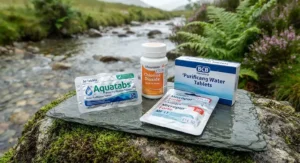
Water purification tablets are small, dissolvable chemical treatments — usually based on chlorine, chlorine dioxide, or iodine — that release a disinfecting agent into water to kill bacteria, viruses, and, in stronger formulations, protozoan cysts like Giardia. They don’t remove sediment or chemical contamination, which is why they’re best used on visually clear water or paired with a basic pre-filter for cloudy sources.
The mechanism is straightforward chemistry rather than mystery: chlorine-based tablets, including NaDCC formulations like Aquatabs and Oasis, release hypochlorous acid, which disrupts the cell walls of pathogens on contact. Chlorine dioxide tablets, such as Lifesystems Chlorine Dioxide and Katadyn Micropur MP1, work through a gentler oxidation process that tends to leave less of an aftertaste while still covering a broad pathogen range, including cysts that plain chlorine sometimes struggles against. Iodine tablets like Coghlan’s use a different halogen entirely, working faster in many cases but with a stronger taste and specific health caveats that limit long-term use.
Water Purification Tablets for Camping: What Changes Outdoors
Camping and backpacking introduce variables a kitchen tap simply doesn’t have: cold water slows chemical reaction times, murky stream water blunts effectiveness, and pack weight genuinely matters when you’re carrying everything on your back. Reviewers consistently note that contact times listed on the packet assume relatively clear, room-temperature water — drop that water to near-freezing straight from a Scottish burn and you should roughly double the recommended wait time, particularly with chlorine dioxide options like Katadyn Micropur MP1.
For multi-day trips, weight-to-capacity ratio becomes the deciding factor rather than raw price. A strip of Lifesystems Chlorine Dioxide tablets weighs next to nothing and slips into a hip pocket, while a 200-tablet tub of Oasis is far better suited to a static camp or campervan than a rucksack. What to expect in real-world performance: treated water from a genuinely clear upland stream, disinfected correctly, tastes only mildly different from tap water — it’s cloudy, warm, or stagnant sources where both taste and effectiveness suffer most, and where pre-filtering through a cloth genuinely earns its five minutes of effort.
Top Water Purification Tablets for Emergency Kits: What to Prioritise
When you’re building an emergency kit rather than a camping bag, the calculus shifts towards shelf life, capacity, and simplicity over taste and portability. Reviewers building UK household preparedness kits after events like the Brixham cryptosporidiosis outbreak consistently prioritise two things: enough tablets to genuinely last a multi-week disruption, and a formulation proven against the specific pathogens that caused recent local incidents. That’s precisely why Katadyn Micropur MP1‘s Cryptosporidium coverage earns it a place in a well-stocked emergency box even though it’s pricier per litre than basic chlorine options.
A sensible emergency-kit approach layers two products rather than relying on one: a bulk, long-shelf-life option like Oasis for baseline household coverage, paired with a smaller, fast-acting pack like Aquatabs for a grab-bag or car boot in case you need to evacuate. The gov.uk guidance on preparing for water supply interruptions recommends storing enough water for several days per person as the first line of defence, with tablets as the backup for when stored water runs out rather than the sole plan.
Backup Water Treatment: Tablets vs Filters vs Boiling
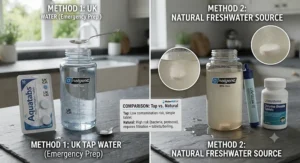
Tablets aren’t the only backup water treatment worth understanding, and an honest comparison means being upfront about where they lose to the alternatives. Boiling remains the gold-standard, zero-cost method whenever you have power or fuel available, killing essentially all waterborne pathogens including Cryptosporidium within a minute at a rolling boil. Portable filters, by contrast, physically strain out sediment and larger organisms but often struggle with viruses unless paired with a chemical step — which is precisely where tablets and filters complement rather than compete with each other.
| Method | Removes Sediment | Kills Viruses | Kills Cryptosporidium | Speed |
|---|---|---|---|---|
| Purification tablets | No | Yes (most formulations) | Only some (e.g. Katadyn Micropur MP1) | 30 min–4 hrs |
| Boiling | No | Yes | Yes | 1–5 min |
| Portable filter | Yes | Not always | Yes (mechanical) | Instant |
Interpreting that table honestly: no single method covers every scenario perfectly, which is why experienced hikers and preppers often carry two methods rather than relying on tablets alone. Tablets win decisively on weight, cost, and shelf life when boiling isn’t practical — no power, no time, or a source too murky to want to drink even after treatment — while a filter earns its keep against sediment that tablets simply can’t touch.
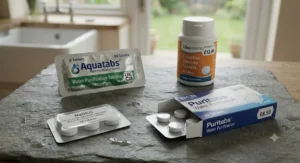
Emergency Kit Contents Beyond the Tablets Themselves
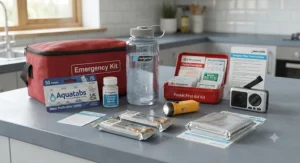
Water purification tablets are only useful alongside the right supporting kit, and it’s a section of the emergency-preparedness conversation that gets far less attention than it deserves. A clean, wide-necked bottle or collapsible container is essential, since tablets are dosed per litre and guessing volumes leads to under-treatment. A basic cloth or coffee filter for pre-straining cloudy water, a permanent marker for logging treatment times, and a small torch for reading instructions in a power cut round out the practical basics that turn a tub of tablets into an actually usable system.
Beyond water treatment specifically, a well-stocked UK household emergency kit typically includes several days of shelf-stable food, a battery or wind-up radio, spare medication, and a written contact plan for family members — the sort of checklist the gov.uk Prepare campaign has been actively encouraging households to build since 2024. Problem: many people buy tablets in a moment of anxiety after a news story and then never check them again. Solution: pair your tablet purchase with a six-monthly kit review, checked alongside your smoke alarm battery test, so expired tablets get rotated out before an actual emergency reveals the gap.
Shelf Life of Purification Tablets: Storage and Expiry Explained
Shelf life varies more between formulations than most buyers expect, and it’s a genuinely important factor when deciding which product suits a “buy once, forget about it” emergency kit. NaDCC-based tablets like Aquatabs and Oasis typically hold their potency for around five years when stored unopened in their original foil, while chlorine dioxide tablets such as Lifesystems Chlorine Dioxide and Katadyn Micropur MP1 are usually rated closer to three years. Iodine-based Coghlan’s tablets sit in a similar multi-year window, though the tell-tale sign of degradation — a faded or missing iodine colour when dissolved — is worth checking visually before relying on an older pack in a genuine emergency.
Long-term cost and maintenance matter here too: a five-year-shelf-life tablet that costs a little more upfront can work out cheaper per year of “readiness” than a shorter-lived option you’ll need to replace twice as often. Practically, that means storing tablets away from direct sunlight, damp bathroom cabinets, and hot car gloveboxes, all of which accelerate the breakdown of the active chlorine or iodine compound well before the printed expiry date. If in doubt, buy from a retailer with reasonable turnover — Amazon’s Amazon’s Choice and best-seller labels are a rough proxy for stock freshness, since a slow-moving product has likely sat on a shelf for longer before reaching you.
How to Choose Water Purification Tablets Under £15
- Identify your primary use case first. A day hike, a household emergency box, and a campervan tank all favour different pack sizes and dosing formats, so match the product to the scenario before comparing price.
- Check the pathogen coverage, not just the price. If Cryptosporidium risk is plausible — rural streams, post-flood water, some overseas destinations — prioritise a chlorine dioxide tablet like Katadyn Micropur MP1 over a basic chlorine option.
- Weigh taste tolerance honestly. If you or your family are likely to avoid drinking treated water because of the aftertaste, a chlorine dioxide option is worth the extra pound or two — dehydration is a real risk if people simply refuse to drink.
- Match pack size to storage need. Bulk 200-tablet tubs like Oasis suit household stockpiles; slim 20–30 tablet strips suit rucksacks and glovebox kits.
- Factor in shelf life for “forget about it” kits. Five-year NaDCC tablets need less maintenance than three-year chlorine dioxide packs if you’re not planning to check the kit often.
- Read the contact time carefully. A tablet that needs four hours in cold water is a poor fit for someone who wants a drink in the next thirty minutes.
- Confirm it stays comfortably under your budget ceiling. Every product in this guide sits under £15, but pack size varies hugely, so check cost-per-litre rather than shelf price alone.
Common Mistakes When Buying Water Purification Tablets
The single most common mistake is buying based on price-per-pack rather than price-per-litre, which makes a tiny 20-tablet pack look like a bargain until you realise a bulk tub of Oasis actually costs a fraction as much per litre treated. A close second is ignoring pathogen coverage entirely — plenty of buyers assume “water purification tablet” means blanket protection, when in reality several budget chlorine formulations aren’t reliably tested against Cryptosporidium, the parasite behind real UK incidents like the Devon cryptosporidiosis outbreak.
A third mistake is treating tablets as a substitute for basic pre-filtering rather than a complement to it; dropping a tablet into visibly muddy water and expecting municipal-tap-quality results afterwards is a recipe for disappointment and, in genuinely contaminated water, a health risk. Finally, plenty of buyers stash a single pack in a drawer for years without checking the expiry date, only to discover during an actual emergency that the tablets have degraded past usefulness — a problem entirely avoidable with the six-monthly kit check mentioned earlier in this guide.
Safety, Regulations and Compliance for UK Buyers
All the products in this guide are classed as biocidal products under UK and EU regulation, which means manufacturers must follow strict labelling and safety-testing requirements before a tablet can legally claim to disinfect drinking water. That’s genuinely reassuring context: it’s why every pack carries warnings around skin and eye contact, storage away from children, and correct dosing — these aren’t overcautious marketing add-ons but legal requirements tied to how the active chlorine, chlorine dioxide, or iodine compound behaves.
For UK buyers specifically, it’s worth understanding that a formal boil water notice issued by your water supplier is a public health measure, and the Drinking Water Inspectorate — the regulator that pursued South West Water following the Brixham incident — treats supplying unfit water as a serious offence. Purification tablets are a sensible personal backup for exactly these situations, but they don’t replace following official guidance from your water company or local authority during an active incident; always prioritise their instructions over any general advice in this article, including boiling water even after tablet treatment if officially advised to do so.
FAQ
❓ Are water purification tablets under £15 as effective as expensive filters?
❓ How long do water purification tablets last once opened?
❓ Can I use water purification tablets on tap water during a boil water notice?
❓ Do water purification tablets remove chlorine taste from treated water?
❓ Which water purification tablets work against Cryptosporidium?
Conclusion
If there’s one honest takeaway from comparing seven real products head-to-head, it’s that “best” depends entirely on what you’re actually planning to do with the water. For a lightweight day-hike backup, Aquatabs or Lifesystems Chlorine Dioxide cover the basics without adding noticeable weight to a pack. For a household emergency box built to outlast a genuine supply interruption, Oasis‘s bulk capacity and UK manufacturing make it hard to argue with on value. And for anyone treating water where Cryptosporidium is a realistic risk — rural streams, post-flood taps, some overseas travel — Katadyn Micropur MP1 is the one product here specifically proven against it.
None of these seven tablets is objectively “the best” in isolation; they’re seven honest answers to seven slightly different questions. What matters is matching pack size, contact time, and pathogen coverage to your real situation rather than grabbing whatever’s cheapest on the page. Keep your tablets in date, store them properly, and treat them as one layer of a wider preparedness plan rather than a single silver bullet — because even the best £9 tablet can’t undo a habit of ignoring the expiry date on the tub.
Recommended for You
- Filter Water Bottle for International Travel: 7 Best Picks (2026)
- 7 Best Filter Bottle for Backpacking in 2026 (UK Tested Picks)
- Filter Water Bottle Under £30: 7 Top Picks for 2026 (UK)
Disclaimer: This article contains affiliate links. As an Amazon Associate, I earn from qualifying purchases. If you purchase products through these links, we may earn a small commission at no additional cost to you.
✨ Found this helpful? Share it with your friends! 💬🤗
