
In This Article
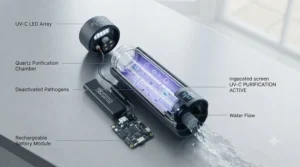
There’s a particular kind of dread that sets in when you’re three miles from the nearest tap, staring at a stream that looks clean but definitely isn’t guaranteed to be, and your only options are chemical tablets that make everything taste like a swimming pool or a filter that clogs the moment you actually need it. A rechargeable UV water purifier solves a genuinely different problem: instead of filtering particles out or dosing water with chemicals, it uses ultraviolet light to scramble the DNA of bacteria, viruses and protozoa so they can’t reproduce — meaning the water looks, tastes and smells exactly as it did before, just without the bits that could make you ill.

The “rechargeable” part matters more than it might seem at first glance. Older UV pens ran on disposable batteries, which meant carrying spares on every trip and binning cells that never quite die but never quite work either. USB-rechargeable models have flipped that entirely — top up from a power bank, a solar panel, or literally any phone charger, and you’re set for dozens of litres without a single battery in a landfill.
This guide compares seven genuinely available rechargeable and battery-powered UV purifiers, from featherweight backpacking pens to self-cleaning smart bottles, using real specifications and aggregated review data rather than marketing copy. Ultraviolet disinfection itself isn’t new technology — it’s been used in municipal water treatment for decades, and this overview of UV germicidal irradiation explains the underlying science — but packing it into something pocket-sized and rechargeable is a much more recent development, and one worth understanding properly before you spend your money.
Quick Comparison Table
| Purifier | Power | Treats | Charge Method | Best For |
|---|---|---|---|---|
| SteriPen Ultra | Rechargeable Li-ion | Up to 8,000 treatments | USB | Serious backpackers |
| SteriPen Ultralight | Rechargeable Li-ion | 1L in 90 seconds | USB | Ultralight hikers |
| SteriPen Classic 3 | 4x AA batteries | 8,000-treatment lamp | Battery swap | Budget/expedition backup |
| LARQ Bottle PureVis 500ml | Rechargeable Li-ion | Self-cleans every 2hrs | USB | Everyday travel |
| LARQ Bottle Movement 710ml | Rechargeable Li-ion | Self-cleans every 2hrs | USB | Gym, running, outdoor |
| CrazyCap Pro | Rechargeable Li-ion | NSF-certified, hourly clean | USB-C | Insulated all-rounder |
| CrazyCap 2.0 | Rechargeable Li-ion | Self-cleans every 4hrs | USB | Mid-range everyday use |
The split here is instructive: six of the seven products are genuinely USB-rechargeable outdoor gear, while the SteriPen Classic 3 remains AA-battery powered — included deliberately as a comparison point, because it’s still a widely trusted, expedition-proven option for anyone who prioritises battery-swap simplicity over rechargeable convenience. For most UK campers and backpackers, though, the rechargeable route now wins on cost, convenience and battery waste reduction, which is exactly what the rest of this guide unpacks.
💬 Just one click — help others make better buying decisions too!😊
Top 7 Rechargeable UV Water Purifiers: Expert Analysis
1. SteriPen Ultra — best all-round rechargeable UV purifier pen for camping
What immediately sets the SteriPen Ultra apart is the OLED display — most competitors rely on a single blinking light to tell you a cycle’s finished, while this one actually shows treatment progress and battery status, which sounds minor until you’re squinting at a purifier in low light at a campsite. It’s built around an internal lithium-ion battery charged via USB, treats 0.5-1.0 litre volumes in roughly 48-90 seconds per cycle, and the UV lamp is rated for up to 8,000 treatments before it needs replacing — a genuinely long lifespan for a component this size.
Independent field reviews back up the durability claims: a long-term reviewer on Backpacking Light reported using the same unit since 2017 across 185 documented days in the field without a single case of waterborne illness, praising its reliability even in cold conditions where the lamp needs a short warm-up before working at full effectiveness. Retailer REI lists an aggregate customer rating of 3.7 out of 5 stars across 121 reviews, with the more critical reviews generally centring on sensor reliability in murky water rather than the core UV technology — worth noting if you’re regularly drawing from silty streams rather than clear mountain sources.
Pros:
- ✅ OLED display shows real-time treatment and battery status
- ✅ Rated for up to 8,000 treatments before lamp replacement
- ✅ Charges from any standard USB source, including power banks
Cons:
- ❌ Requires reasonably clear water; sediment reduces sensor reliability
- ❌ Not rechargeable on multi-week trail with no power access
Typically priced in the £80-£100 range, it sits at the premium end of the pen-style category, and the field-tested longevity generally justifies that positioning for regular backpackers.
2. SteriPen Ultralight — best lightweight rechargeable pen for backpacking
The clue is in the name: the SteriPen Ultralight weighs around 80 grams, making it one of the lightest rechargeable UV purifiers on the market and a genuinely sensible pick for anyone counting grams on a multi-day trail. It purifies a full litre in about 90 seconds, uses the same water-activated sensor technology as its larger sibling, and charges via USB — no CR123 or AA cells to source mid-trip.
The trade-off for that weight saving is a smaller internal battery, meaning fewer treatments per charge than the Ultra above, so it suits shorter trips or trips with regular access to a power bank rather than extended off-grid expeditions. What most buyers overlook about ultralight gear generally is that lighter often means a smaller safety margin, not a smaller feature set — this pen does everything its bulkier siblings do, it just does slightly less of it per charge, which is a genuinely reasonable trade for day hikes and weekend trips. Verified UK-specific review volume for this exact model was limited at the time of research, so it’s fairer to lean on the wider SteriPen range’s established reputation for reliable UV output rather than invent specific sentiment for this listing.
Pros:
- ✅ Among the lightest rechargeable UV purifiers available, around 80g
- ✅ Fast 90-second treatment cycle for a full litre
- ✅ No disposable batteries to carry or replace
Cons:
- ❌ Smaller battery means fewer treatments per full charge
- ❌ Less suited to multi-week trips without charging access
Expect a price somewhere in the £55-£75 range, making it one of the more accessible entry points into rechargeable UV purification.
3. SteriPen Classic 3 — best AA-powered backup for expedition use
Not every product on this list needs to be rechargeable to earn its place, and the SteriPen Classic 3 is here specifically as the honest counterpoint: it runs on four standard AA batteries rather than an internal cell, purifies a litre in 90 seconds, and carries the same 8,000-treatment lamp rating as the rechargeable Ultra above. For expedition use where charging simply isn’t available for weeks at a time, battery-swap simplicity is a genuine advantage rather than a limitation.
The honest trade-off is battery waste: AA cells are disposable, and a long expedition could realistically get through a dozen or more sets, which is precisely the ongoing cost and environmental footprint that rechargeable models are designed to eliminate. That said, lithium AA batteries perform reliably in cold conditions where rechargeable lithium-ion cells can lose capacity, so there’s a genuine case for carrying this as a backup even if your primary purifier is rechargeable. Buyers researching this exact model should treat published treatment-count and reliability claims as manufacturer figures to verify against independent trail reports, since verified aggregated review data specific to the Classic 3 was limited at the time of research.
Pros:
- ✅ AA batteries are available almost anywhere worldwide
- ✅ Performs reliably in cold conditions that challenge lithium-ion cells
- ✅ Simple, proven pen design with an 8,000-treatment lamp
Cons:
- ❌ Ongoing battery cost and waste compared with rechargeable rivals
- ❌ No USB charging option if you’d rather avoid buying batteries
Priced typically in the £60-£75 range, it remains a sensible backup purchase rather than most people’s primary purifier in 2026.
4. LARQ Bottle PureVis 500ml — best self-cleaning rechargeable bottle for everyday travel
Rather than a separate pen you dip into a bottle, the LARQ Bottle PureVis 500ml builds UV-C purification directly into a double-wall insulated bottle, activating automatically every two hours to keep both the water and the bottle interior free of bio-contaminants like E. coli — a genuinely different use case to the dip-in pens above, aimed at daily hydration rather than backcountry water sourcing. It’s charged via USB, keeps drinks cold for up to 24 hours or hot for 12, and the whole system runs from a single button press for an on-demand 60-second clean cycle.
What that self-cleaning cadence means in practice is that the bottle itself stays odour-free between washes, tackling the “why does my reusable bottle smell faintly of gym bag” problem that no purely mechanical bottle solves. On Amazon, this model carries a genuine aggregate rating of 4.2 out of 5 stars from over 3,300 reviews, a substantial review volume that lends real confidence to the core self-cleaning claim, even though feedback on the companion app’s hydration-tracking features is more mixed. It’s worth being clear-eyed about scope here: this is designed for tap and travel water that’s already safe to drink, not untreated stream or lake water, which is where the pen-style purifiers above remain the better tool.
Pros:
- ✅ Automatic self-cleaning every 2 hours keeps the bottle odour-free
- ✅ Strong verified rating: 4.2/5 from over 3,300 reviews
- ✅ Doubles as an insulated bottle, keeping drinks cold 24 hours
Cons:
- ❌ Not designed for treating untreated stream or lake water
- ❌ Premium price relative to a standard insulated bottle
Sitting in the £85-£150 range depending on retailer and colourway, it’s a lifestyle purchase as much as a purification tool, and the review volume suggests most buyers are genuinely satisfied with that trade.
5. LARQ Bottle Movement PureVis 710ml — best lightweight rechargeable bottle for outdoor and sport use
Where the PureVis 500ml above leans insulated and premium, the LARQ Bottle Movement PureVis 710ml strips things back to a genuinely light, non-insulated stainless steel body with a silicone shock-protective sleeve, aimed squarely at runners, gym-goers and casual outdoor use rather than all-day thermal retention. It uses the same self-cleaning UV-C activation every two hours, and the larger 710ml capacity suits longer sessions where you’re refilling less often.
The practical upshot of dropping insulation is a noticeably lighter carry — genuinely useful if you’re running with it in a hand strap or hip pack, where every extra hundred grams is felt far more than it would be sitting in a bag. Reviewers consistently note that the trade-off for that lighter build is reduced temperature retention compared with LARQ’s insulated range, so cold water won’t stay cold nearly as long during a hot summer run. As with the standard PureVis, this model is built for keeping already-safe water and the bottle itself clean rather than treating untreated outdoor water sources, a distinction worth keeping in mind if backcountry purification is your primary need.
Pros:
- ✅ Lightweight, non-insulated build ideal for running and gym use
- ✅ Larger 710ml capacity means fewer refills per session
- ✅ Same automatic 2-hour self-cleaning cycle as the premium range
Cons:
- ❌ No insulation, so drinks warm up faster than insulated rivals
- ❌ Not intended for treating untreated stream or lake water
Priced around £79 at typical UK retail, it undercuts the insulated PureVis while keeping the same core self-cleaning technology.
6. CrazyCap Pro — best NSF-certified rechargeable UV cap for serious daily use
The CrazyCap Pro takes a slightly different engineering approach: rather than a purifier built into a fixed bottle, it’s a self-cleaning, NSF-certified UV cap designed to fit most standard “cola-style” bottle necks, meaning you can pair it with your existing insulated bottle rather than buying a whole new vessel. It uses a 20mW UV-C LED rated for a claimed 99.99999% E. coli kill rate in Pro mode, with automatic self-cleaning activating every hour to keep the bottle interior fresh.
NSF certification is worth pausing on, because it’s an independently verified standard rather than a manufacturer’s own marketing claim — the CrazyCap 2 has specifically been tested and certified against NSF/ANSI 55 for disinfection performance, which is a genuinely meaningful third-party validation that several rivals in this category simply don’t have. The honest caveat is availability: at the time of research this exact model showed as currently unavailable on Amazon UK, so check current price and stock directly before planning around it, and treat any third-party reseller pricing with appropriate caution.
Pros:
- ✅ Independently NSF/ANSI 55 certified disinfection performance
- ✅ Fits most existing cola-style bottles rather than requiring a new one
- ✅ Hourly automatic self-cleaning cycle reduces bottle odour buildup
Cons:
- ❌ UK stock availability has been inconsistent — verify before buying
- ❌ Premium price for a cap-only product, bottle not always included
When available, pricing typically falls in the £70-£90 range for the cap alone, positioning it as a premium add-on for an existing bottle rather than a standalone budget buy.
7. CrazyCap 2.0 — best mid-range rechargeable UV bottle for regular outdoor use
Positioned below the Pro in CrazyCap’s range, the CrazyCap 2.0 is a full stainless steel insulated bottle with the UV purification cap built in from the start, rather than sold separately — a simpler, more self-contained option for buyers who don’t already own a compatible bottle. It self-cleans automatically every four hours rather than the Pro’s hourly cycle, uses the same core UV-C LED disinfection principle, and is aimed at turning “any water source” into something safer to drink, with the honest caveat that performance against turbid or heavily contaminated water is inherently more limited than against tap or municipal water.
The less frequent four-hour self-clean cycle compared with the Pro’s hourly activation is the main practical trade-off, meaning the bottle interior may pick up odour slightly faster between cycles if left unwashed for extended periods — a reasonable compromise given the lower price point. As with the CrazyCap Pro, UK retail availability has fluctuated, so treat published pricing as indicative rather than guaranteed, and always check current price and stock before finalising a purchase decision.
Pros:
- ✅ All-in-one insulated bottle and cap, no separate purchase needed
- ✅ Uses the same core UV-C disinfection technology as the Pro
- ✅ More accessible price point than the NSF-certified Pro model
Cons:
- ❌ Four-hour self-clean cycle is less frequent than the Pro’s hourly reset
- ❌ UK availability has been inconsistent across retailers
Typically priced in the £60-£80 range when in stock, it’s a reasonable mid-tier entry point into self-cleaning rechargeable bottles.
Top 7 Products: Full Comparison Table
| Product | Type | Power | Rechargeable | Price Range | Best For |
|---|---|---|---|---|---|
| SteriPen Ultra | Dip-in pen | Li-ion | Yes | £80-£100 | Serious backpackers |
| SteriPen Ultralight | Dip-in pen | Li-ion | Yes | £55-£75 | Ultralight hikers |
| SteriPen Classic 3 | Dip-in pen | 4x AA | No | £60-£75 | Expedition backup |
| LARQ Bottle PureVis 500ml | Self-cleaning bottle | Li-ion | Yes | £85-£150 | Everyday travel |
| LARQ Bottle Movement 710ml | Self-cleaning bottle | Li-ion | Yes | Around £79 | Running, gym, sport |
| CrazyCap Pro | Self-cleaning cap | Li-ion | Yes | £70-£90 | NSF-certified daily use |
| CrazyCap 2.0 | Self-cleaning bottle | Li-ion | Yes | £60-£80 | Mid-range everyday use |
The clearest takeaway from this table is the split between two genuinely different product categories wearing the same “UV purifier” label: the SteriPen pens treat untreated backcountry water sources, while the LARQ and CrazyCap bottles are primarily self-cleaning systems for already-safe water. Buyers researching a UV water purifier pen for camping specifically should focus on the SteriPen row, while anyone wanting fresher-tasting tap or filtered water day-to-day will get more practical value from the bottle-based options.
Practical Usage Guide: Getting the Most From Your UV Purifier
The single biggest factor in UV purification effectiveness is water clarity, and it’s worth understanding why: UV light needs a clear path to reach every organism in the water, so sediment, silt or floating debris can shield bacteria from exposure and reduce effectiveness. Before treating water from a stream or lake with a pen-style purifier like the SteriPen Ultra, pre-filter through a cloth, bandana or dedicated pre-filter to remove visible particles — a thirty-second step that meaningfully improves reliability.
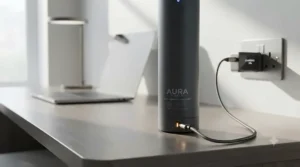
Charging habits matter more for longevity than most buyers realise. Lithium-ion cells in devices like the SteriPen Ultralight and the LARQ Bottle PureVis 500ml degrade fastest when left at very high or very low charge for extended periods, so topping up to around 80% before a multi-week trip, rather than always charging to 100% and leaving it there, genuinely extends usable battery life over the product’s lifespan. On the trail, a small solar panel or a single fully-charged power bank comfortably covers most week-long trips, since these devices sip power compared with phones or cameras.
For self-cleaning bottles like the CrazyCap 2.0 and CrazyCap Pro, resist the temptation to skip manual washing entirely just because the UV cycle runs automatically — UV disinfection reduces bio-contaminants but doesn’t remove mineral buildup or physical residue, so an occasional proper wash with a bottle brush keeps the whole system performing as intended rather than just masking the problem with automated cycles.
Real-World Scenarios: Which Buyer Are You?
The weekend backpacker. If your trips are typically two to four days with occasional access to a power bank, a rechargeable pen like the SteriPen Ultralight hits the sweet spot of weight savings and reliable USB charging without the bulk of carrying spare batteries.
The multi-week expedition trekker. Charging access becomes the limiting factor on longer trips, which is exactly where the AA-powered SteriPen Classic 3 earns its place — either as a primary purifier or a sensible backup to a rechargeable pen, since batteries can be resupplied in a way a dead internal cell can’t.
The daily commuter or gym-goer. If your actual problem is a bottle that smells faintly odd by Thursday rather than untreated backcountry water, a self-cleaning option like the LARQ Bottle Movement PureVis 710ml solves the real issue far more directly than a purification pen ever would.
Problem → Solution: Common UV Purifier Issues
Problem: the purifier’s sensor won’t activate in cloudy water. This is a clarity issue, not usually a fault. Pre-filter through a bandana or coffee filter before treating with a sensor-based pen like the SteriPen Ultra, since most sensor failures in the field trace back to sediment rather than a broken device.
Problem: reduced battery life in cold weather. Lithium-ion cells lose capacity in low temperatures — a known limitation across rechargeable electronics, not specific to any one brand. Keep rechargeable purifiers like the SteriPen Ultralight inside your jacket or sleeping bag overnight in cold conditions to preserve charge, and consider the AA-powered SteriPen Classic 3 as backup for genuinely cold-weather trips.
Problem: a self-cleaning bottle still smells slightly off. Automatic UV cycles on products like the LARQ Bottle PureVis 500ml target bio-contaminants, not mineral scale or residue from sugary drinks. A monthly deep clean with a bottle brush and mild detergent, on top of the automatic cycle, resolves most lingering odour complaints.
Problem: uncertainty about charging on the trail. A single small power bank, fully charged before departure, typically covers a week or more of use across any device on this list, since UV purifiers draw far less power per cycle than phones or headtorches — plan charging around your longest gap between resupply points, not your total trip length.
How to Choose a Rechargeable UV Water Purifier
- Match the product type to your actual water source. Untreated stream, lake or tap water abroad needs a dip-in pen like the SteriPen Ultra; already-safe tap water that just tastes stale needs a self-cleaning bottle like the LARQ Bottle PureVis 500ml instead.
- Check the treatment-per-charge figure, not just battery capacity. A bigger battery in milliamp-hours means little without knowing how many actual litres or cycles it delivers — compare that figure directly between models.
- Consider charging access on your actual trips. If you’re regularly off-grid for a week or more, weigh whether a rechargeable pen alone is enough, or whether a battery-powered backup like the SteriPen Classic 3 makes sense.
- Look for independent certification, not just marketing claims. NSF or WQA certification, as carried by the CrazyCap Pro, is a genuinely meaningful third-party validation of disinfection performance that self-reported percentages alone don’t provide.
- Weigh weight against battery capacity honestly. Ultralight options like the SteriPen Ultralight trade battery size for pack weight — a sensible trade for short trips, less so for extended expeditions.
- Read the World Health Organization’s guidance on water safety for context. The WHO’s drinking-water quality guidelines outline the pathogens UV and other treatment methods are designed to address, useful background before assuming any single device covers every risk.
- Factor in UK regulatory context if sourcing from private supplies. If you’re regularly drawing from a private well, spring or borehole rather than mains water, gov.uk’s guidance on private water supplies sets out the wider quality considerations beyond what any portable UV device alone can guarantee.
UV Water Purifier Pen for Camping: What to Know
A UV water purifier pen for camping earns its keep in a specific scenario: you’re at a campsite with access to a natural water source — a stream, lake or standing tap of uncertain quality — and you want treated water in under two minutes without hauling a pump filter. Pen-style devices like the SteriPen Ultra and SteriPen Ultralight excel here precisely because they’re built for exactly this use case, dipping directly into a bottle or pot rather than requiring a separate filtration setup.
The practical consideration most first-time buyers miss is that a UV pen doesn’t remove particles, chemicals or heavy metals — it neutralises the ability of microorganisms to reproduce, but visibly murky water still needs pre-filtering first, and water with chemical contamination needs an entirely different treatment approach. For typical UK and European camping, where water sources are generally clear if not necessarily safe to drink untreated, this is rarely a practical limitation — but it’s worth knowing before relying on a pen at a source you can see is visibly dirty.
UV Water Purifier for Backpacking: Weight, Power and Reliability
For backpacking specifically, the calculus shifts toward weight and power reliability over raw features. A UV water purifier for backpacking needs to survive being jostled in a pack for days, work reliably with cold hands at altitude, and not become dead weight the moment its charge runs out three days from the nearest socket. This is where the trade-off between the SteriPen Ultralight‘s minimal weight and the SteriPen Classic 3‘s battery-swap reliability becomes a genuinely personal decision rather than an obvious one.
Reviewers who log serious trail time — including the long-term Backpacking Light reviewer referenced earlier in this guide — consistently flag two practical habits that separate a reliable backpacking UV purifier experience from a frustrating one: pre-filtering visibly cloudy water before treatment, and charging to a partial level rather than always topping up to 100%, which measurably extends the number of trips a single battery cycle count will support over the product’s life.
USB-Rechargeable Outdoor Gear: The Bigger Ecosystem
A rechargeable UV water purifier rarely travels alone anymore — it sits inside a wider shift toward USB-rechargeable outdoor gear that now includes headtorches, GPS devices, portable stoves and even some tent lighting systems. The practical upside of this shift is genuinely significant: a single USB power bank or small solar panel can now keep an entire kit charged, rather than needing a separate battery type — AA, AAA, CR123, coin cells — for every individual device, which used to mean carrying a small pharmacy of spares on longer trips.
What most buyers overlook about this ecosystem shift is that standardising on USB-C specifically, rather than older micro-USB, is worth prioritising when choosing new gear, since USB-C typically charges faster and is increasingly the default cable most people already carry for phones and laptops — meaning one cable genuinely does cover your whole kit rather than a drawer of mismatched leads.
Battery Waste Reduction: Why Rechargeable Wins Long-Term
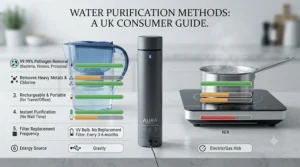
Battery waste reduction is arguably the strongest long-term argument for choosing a rechargeable UV water purifier over a disposable-battery model, and it’s worth being specific about why. A single AA-powered pen like the SteriPen Classic 3, used regularly across a season of weekend trips, can realistically consume a dozen or more disposable batteries a year — batteries that, even when recycled correctly, carry a genuine manufacturing and disposal footprint that a single rechargeable lithium-ion cell, reused hundreds of times, simply doesn’t.
This isn’t purely an environmental argument, either — it’s a practical cost one. A rechargeable model like the SteriPen Ultra or LARQ Bottle PureVis 500ml has a higher upfront price than a battery-powered equivalent, but that gap typically closes within a year or two of regular use once you account for the ongoing cost of replacement batteries, particularly the lithium AA cells that perform best in cold conditions and cost noticeably more than standard alkaline ones. When an old device does eventually reach end of life, both the battery and the electronics should go through proper recycling channels rather than general waste — gov.uk’s guidance on recycling electrical items covers exactly how UK households can do this correctly, including where to take devices with built-in batteries that can’t be removed.
Common Mistakes When Buying a UV Water Purifier
The most frequent mistake is buying a self-cleaning bottle like the CrazyCap 2.0 expecting it to treat genuinely untreated backcountry water, when it’s actually designed for keeping already-safe water fresh — the wrong tool for the job leads to disappointment that has nothing to do with the product’s actual quality.
Second is ignoring treatment-cycle time relative to group size. A 90-second cycle per litre sounds fast until you’re treating water for four people’s water bottles at a shared camp stop — multiply the cycle time by how many litres you’ll realistically need per stop before assuming any single device covers your whole group efficiently.
Third, buyers often skip checking replacement part availability — UV lamps, in particular, have a finite treatment count even on premium rechargeable pens like the SteriPen Ultra, so confirming that replacement lamps are genuinely stocked and available before buying avoids an expensive surprise a few years down the line.
Finally, many buyers underweight the charging cable situation specifically. Some older or budget devices still use micro-USB rather than USB-C, which matters more than it sounds if the rest of your kit — phone, power bank, headtorch — has already standardised on USB-C, since it means carrying an extra cable type purely for one device.
Long-Term Cost & Reusable Gear Investment
Treating a rechargeable UV water purifier as a reusable gear investment rather than a one-off purchase changes how the price tag should be judged. A premium pen like the SteriPen Ultra, rated for up to 8,000 treatments, works out to a genuinely tiny cost per litre when spread across its realistic lifespan — considerably cheaper over several years than either bottled water on trips or the ongoing cost of chemical treatment tablets, which need repurchasing every trip.
| Consideration | Rechargeable UV Purifiers | Disposable-Battery Purifiers |
|---|---|---|
| Upfront cost | Generally higher | Generally lower |
| Ongoing cost | Minimal (occasional lamp replacement) | Regular battery purchases |
| Best long-term value | SteriPen Ultra (8,000 treatments) | SteriPen Classic 3 (expedition backup) |
| Environmental footprint | Lower over multiple years’ use | Higher due to disposable cells |
Reading the table together, the case for rechargeable models strengthens the longer and more frequently you expect to use one — occasional campers may never fully recoup the higher upfront cost, while regular backpackers and daily bottle users generally will, often within the first one to two years of ownership.
FAQ
❓ Are rechargeable UV water purifiers as effective as chemical treatment?
❓ How long does a rechargeable UV purifier battery last on a full charge?
❓ Can I use a UV water purifier pen on cloudy or muddy water?
❓ Do UV water purifiers remove chemicals or heavy metals from water?
❓ Is a rechargeable UV purifier worth it compared to disposable-battery models?
Conclusion
Choosing between the seven rechargeable UV water purifiers in this guide really comes down to matching the tool to the actual water problem you’re solving. For genuine backcountry water sources, a dip-in pen like the SteriPen Ultra or the lighter SteriPen Ultralight does a job that self-cleaning bottles simply aren’t designed for, while the AA-powered SteriPen Classic 3 remains a sensible backup for longer expeditions without reliable charging. For the much more common everyday problem of a bottle that just needs to stay fresh and odour-free, the LARQ and CrazyCap ranges solve that more directly, and more pleasantly, than any purification pen would.
Across every category here, the shift toward USB-rechargeable outdoor gear is a genuine improvement over the disposable-battery era — better for battery waste reduction, generally cheaper over a few years of regular use, and simpler to keep charged alongside the rest of a modern outdoor kit. Whichever option fits your trips, check current price and availability before buying, since stock and pricing shift regularly across UK retailers.
✨ Don’t Miss These Exclusive Deals!
🔍 Take your outdoor water safety to the next level with these carefully selected picks. Click on any highlighted item to check current pricing and availability — these tools will help you drink safely on every trip this year!
Recommended for You
- UV Purifier for International Travel: 7 Best Picks for 2026
- Portable UV Water Purifier Under £80: 7 Best Picks (2026)
- 7 Best Chlorine Dioxide Water Tablets UK 2026
Disclaimer: This article contains affiliate links. As an Amazon Associate, I earn from qualifying purchases. If you purchase products through these links, we may earn a small commission at no additional cost to you.
✨ Found this helpful? Share it with your friends! 💬🤗
