
In This Article
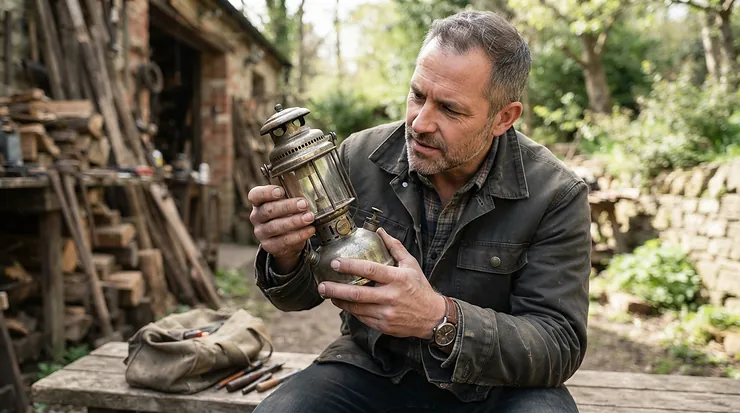
A gas camping lantern is a portable light that burns butane, propane or a blend from a small cartridge. It either heats a mantle until it glows white or produces a candle-style flame. It needs no batteries or mains, throws warm light across a pitch, and is designed for outdoor use.
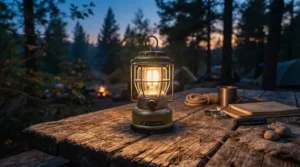
LEDs have taken over most campsites, so why bother? Because a gas camping lantern does things a rechargeable can’t. It keeps burning when the power bank is flat. It gives off a warm, flickering glow that makes a plastic folding table feel like a bistro. And it slips into your kit alongside the stove, since many models run on the same cartridges. Brands such as Campingaz built their reputation on small disposable canisters feeding stoves and lamps, and the format has barely changed.
The catch is that the category is confusing. Some lanterns clip onto valve cartridges, others screw onto EN417 canisters. Some need fragile mantles and others burn like a candle. Prices swing from “pocket money” to “proper investment”.
This guide sorts it out. You’ll find seven real models compared on specs, honest review themes and value. You’ll also get plain-English advice on cartridges, mantle replacement and gas lantern safety, plus ways to find an affordable gas lantern UK campers can rely on.
Gas Camping Lantern Quick Comparison Table
| Lantern | Fuel format | Light type | Weight (listed) | Best For |
|---|---|---|---|---|
| Campingaz Lumostar Plus PZ | Campingaz valve cartridge | Mantle, piezo | 370g | Families and first-timers |
| Campingaz Lumogaz Plus | Campingaz valve cartridge | Mantle | 280g | Budget car camping |
| Primus EasyLight Duo | Screw-on or valve (Duo) | Mantle, piezo | About 190-205g | Travellers and trekkers |
| Robens Snowdon Gas Lantern | Screw-on EN417 | Candle flame, no mantle | 122g | Long runtime, low fuss |
| Kovea Observer | Screw-on | Mantle, piezo | About 138-168g | Compact backpacking |
| Fire-Maple Orange | Screw-on EN417 | Candle flame | 140g | Ambience and gifts |
| Campingaz Stellia PerfectFlow | Campingaz valve cartridge | Two mantles, piezo | 1.5kg | Big awnings and base camps |
Looking at the table, the Campingaz Lumostar Plus PZ and Campingaz Lumogaz Plus share a fuel format, so the choice between them is mostly about convenience versus saving money. If weight is your enemy, the Robens Snowdon Gas Lantern and Fire-Maple Orange do their job without the delicate mantle. The Campingaz Stellia PerfectFlow is the only one here that really competes with a mains-style light, and you pay for it in grams.
💬 Just one click — help others make better buying decisions too!😊
Top 7 Gas Camping Lantern Options: Expert Analysis
1. Campingaz Lumostar Plus PZ — the easy all-rounder with piezo ignition
The standout is a fully detachable head, which puts the mantle within easy reach. That is the one part of any mantle lantern you’ll handle most.
On paper you get up to 80W, a globe guard, a hanging chain and a 370g weight. One retailer lists the output as steplessly adjustable from 10 to 80W. In practice that means enough light for a table and cooking area, with a dimmer setting for the evening wind-down. The quoted runtime is about 6 hours 20 minutes on a CV300 Plus and up to 12 hours on a CV470 Plus. At the stated 38g an hour, a 240g cartridge works out at roughly six hours, so the claim holds up.
Based on the spec comparison, this suits families and first-timers who want to press a button and get light. Ultralight hikers will find it hefty.
Review sentiment is encouraging but thin. A small eBay sample (two ratings) averaged 4.5, with tags such as “good value” and “good quality”. Larger review pools weren’t verifiable, so treat that as a nudge rather than a verdict.
Pros:
- ✅ Piezo ignition means no matches needed
- ✅ Detachable head makes mantle access simple
- ✅ Dimmable output suits cooking and chilling
Cons:
- ❌ Needs Campingaz-style valve cartridges
- ❌ Heavier than screw-on backpacking options
Price: around £20-£37 depending on retailer, so check current price. Verdict: the best-balanced pick for most campsites.
2. Campingaz Lumogaz Plus — simplest way into valve-cartridge lighting
Think of this as the stripped-back sibling. The headline is its 280g weight, about 90g lighter than the Lumostar Plus PZ.
The specification matches the Lumostar on output (80W) and runtime (over 6 hours 20 minutes on a CV300 Plus, 12 hours on a CV470 Plus). You also get Easy Clic Plus connection, an integrated hanging handle and a globe guard. The listings I found don’t mention piezo ignition, so assume you’ll light it with a lighter or match. That is a minor trade-off, but worth knowing before you pack.
My read: if you camp from a car, pitch for a week and just want warm light over the table, this does the job. The lower weight is a bonus, not a reason to take it backpacking.
On reviews, I couldn’t verify a large pool for the lantern itself. The only feedback I found concerned replacement mantles for the family, with one buyer noting the mantle fitted after a bit of gentle persuasion. So the honest summary is “limited data”. Check recent buyer comments before purchasing.
Pros:
- ✅ Lightest of the Campingaz valve models here
- ✅ Same runtime figures as pricier siblings
- ✅ Hanging handle and globe guard included
Cons:
- ❌ No piezo ignition mentioned in listings
- ❌ Limited verifiable owner reviews
Price: usually at the budget end, so check current price. Verdict: sensible value if you don’t mind a lighter.
3. Primus EasyLight Duo — lightweight luxury for travellers
The Duo valve is the hook. It fits most valve cartridges as well as threaded canisters, so you can keep it working abroad.
Stated specs include up to 490 lumens, an 80W maximum, piezo ignition and a patented near-silent burner. Weight is listed at roughly 187-205g depending on retailer. Burn time runs from about 4 hours on full to 36 hours on low. Translated: it sips fuel when dimmed and gulps when you run it flat out. That’s a flexible range, but plan your cartridge accordingly.
Here’s what to weigh. This is the lantern for people who fly, roam or swap stoves between trips and don’t want to be tied to one cartridge type. It packs to roughly the size of an orange, according to one retailer.
Review themes lean positive. A US retailer page showed 4.9 stars across 114 reviews, and a European site’s reviewers highlighted brightness that is easy to adjust. Both samples are from outside the UK, so treat them as a guide only.
Pros:
- ✅ Duo valve fits many cartridge types
- ✅ Wide burn-time range from dim to full
- ✅ Light enough for hiking kit
Cons:
- ❌ Mantle is delicate and needs care
- ❌ Priced above basic valve lanterns
Price: broadly £25-£45, so check current price. Verdict: premium value for people who travel.
4. Robens Snowdon Gas Lantern — a candle flame that outlasts the weekend
No mantle at all. That is the standout, and it removes the most annoying maintenance job on this list.
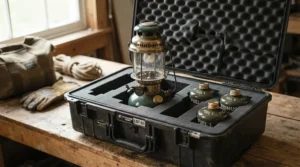
The listed weight is 122g, and it screws straight onto a standard EN417 cartridge. Retailers quote 56 hours on a 230g canister at medium, with consumption of 27g an hour on high and about 4g on medium. In practice you can leave it glowing every evening of a fortnight and barely dent the can. A hard case is included. The trade-off is brightness: this is a mood light, not a work light.
Based on the spec comparison, it suits anyone who wants low running cost and no spares to carry, including bikepackers and wild campers. It is poor for cooking by.
Review sentiment is small but consistent. Three buyers on a European retailer’s page all recommended it, mentioning robustness, value and brightness that is easy to adjust. That’s a tiny sample, so read it as a hint.
Pros:
- ✅ No mantle to fit or replace
- ✅ Extremely frugal on medium setting
- ✅ Very light at 122g
Cons:
- ❌ Softer glow than mantle lanterns
- ❌ No piezo igniter in the listings
Price: around £25-£45 across retailers, so check current price. Verdict: superb running-cost value.
5. Kovea Observer — compact brightness for the trail
The quirky bit is size: roughly 6 x 6 x 11cm. That’s tiny for something with a proper mantle.
Specs are listed as 35 lux, piezo ignition, a hanging ring and chain, a plastic case and fuel consumption of 38g an hour. Weight is shown as 138g on one listing and 168g on another, so check what you’re buying. It fits most generic screw-type isobutane canisters. Thirty-eight grams an hour is the same appetite as the much bigger Lumostar Plus PZ, so don’t expect miracles on runtime from a small canister.
Here’s the practical angle. It suits backpackers who want real mantle light in a pocket-sized package, as long as they accept that a small cartridge means a short evening.
A US retailer page showed 4.3 stars from 106 ratings, with 80% giving five stars and about one in ten giving one star. That split suggests most owners are happy but a minority have trouble, so inspect the unit on arrival.
Pros:
- ✅ Mantle brightness in a pocketable size
- ✅ Piezo ignition for quick lighting
- ✅ Fits common screw-on canisters
Cons:
- ❌ Small mantle needs careful handling
- ❌ Fuel use is high for its size
Price: typically under £35, so check current price. Verdict: handy compact option.

6. Fire-Maple Orange — vintage looks with feather-light weight
This one is about charm. A rotating glass shade lets you light the flame without lifting the globe.
It weighs 140g, uses stainless steel, anodised aluminium and borosilicate glass, and screws onto standard EN417 isobutane-propane canisters. Listed consumption is just 4g an hour, and one retailer quotes about 24 hours of burn. The wickless design means no mantle. Low gas draw plus no spares equals a tidy, cheap-to-run light.
Honestly, it’s a lovely table companion rather than a task light. Treat it as ambience for two people and a bottle of something, not a reading lamp.
Buyer comments I found were mixed in a helpful way. Some said it isn’t very bright but is perfect for mood lighting, and one owner uses it to burn off the last of a nearly empty canister. Another noted the plastic case lets the lantern rattle. Those are real, repeated themes rather than invented quotes.
Pros:
- ✅ Pretty flame and borosilicate glass shade
- ✅ No mantle, very low gas use
- ✅ Light at 140g
Cons:
- ❌ Gentle light, not for tasks
- ❌ Basic case lets it rattle
Price: around £25-£35, so check current price. Verdict: great ambience, modest light.
7. Campingaz Stellia PerfectFlow — big light for big awnings
The headline is output: 160W across two mantles. That’s double the Lumostar Plus PZ.
The listed features include PerfectFlow regulation for steady output as the cartridge empties, piezo ignition, an extendable stabiliser, a reflector and a carry bag. Weight is 1.5kg. Runtime is quoted at over 6 hours 10 minutes on a CV470 Plus, which is roughly half the Lumostar’s figure on the same cartridge. In plain terms, you buy brightness with fuel and kilograms.
Based on the spec comparison, this is the one for group pitches, large awnings and caravan-side evenings where a smaller lantern would feel gloomy. It’s wasteful for solo camping.
I couldn’t verify a meaningful pool of recent reviews for this model, so I won’t characterise buyer sentiment. Look for fresh feedback and stock before ordering.
Pros:
- ✅ 160W of light for large spaces
- ✅ PerfectFlow keeps output steady
- ✅ Stabiliser and reflector included
Cons:
- ❌ 1.5kg is heavy for carrying
- ❌ Burns through cartridges quickly
Price: broadly £40-£60, so check current price. Verdict: worthwhile only if you need the output.
Side-by-Side: Features, Review Signals and Price Ranges
| Lantern | Ignition | Mantle needed? | Review signal (aggregated) | Price range | Best For |
|---|---|---|---|---|---|
| Campingaz Lumostar Plus PZ | Piezo | Yes | Small sample, positive | £20-£37 | Families |
| Campingaz Lumogaz Plus | Not stated | Yes | Not verifiable | Budget end | Car campers |
| Primus EasyLight Duo | Piezo | Yes | Strongly positive, non-UK | £25-£45 | Travellers |
| Robens Snowdon Gas Lantern | Not stated | No | Very small sample, positive | £25-£45 | Bikepackers |
| Kovea Observer | Piezo | Yes | Mostly positive, some 1-star | Under £35 | Backpackers |
| Fire-Maple Orange | Manual | No | Mixed on brightness | £25-£35 | Ambience |
| Campingaz Stellia PerfectFlow | Piezo | Yes | Not verifiable | £40-£60 | Large groups |
The pattern is clear. Mantle lanterns win on brightness, while candle-style models win on simplicity and fuel economy. Where reviews are strong, they come from retailers outside the UK, so confirm with recent UK buyer comments. If you’re torn, the Primus EasyLight Duo has the best-documented praise, while the Campingaz Lumostar Plus PZ has the friendliest everyday design.
How to Choose a Gas Camping Lantern
- Decide how you’ll carry it. Car campers can accept 300-400g or more, but backpackers should look under 200g. The weight gap between Robens Snowdon Gas Lantern (122g) and Campingaz Stellia PerfectFlow (1.5kg) is the whole story.
- Match the fuel format to your kit. Valve cartridges like Campingaz’s CV range differ from EN417 screw-on canisters. Pick the format you already own for your stove and the choice gets easier.
- Pick your light style. Mantles give brighter white light but need care, while candle-style flames are rugged and quiet but dimmer.
- Check ignition. Piezo saves fumbling in the dark and is worth a few pounds more.
- Estimate runtime honestly. Divide cartridge grams by hourly consumption. A 240g canister at 38g an hour gives about six hours.
- Think about mantle availability. Confirm spares are easy to find for your model before you buy.
- Read the safety warnings. If the manual says outdoor use only, believe it. More on that below.
For rules on ventilation and campsite gas use, the Camping and Caravanning Club safety page is a sensible starting point.

Screw-On Gas Cartridge vs Valve Cartridge: Which Format Wins?
A screw-on gas cartridge follows the EN417 thread standard. One UK retailer describes Coleman’s C500 as a resealable threaded cartridge that works with any EN417 appliance, and it can be disconnected without leaking. That makes it universal, easy to find and good for swapping between stove and lantern.
Valve cartridges such as Campingaz CV300 Plus (240g) and CV470 Plus also have self-sealing valves. They’re designed for the Easy Clic Plus system, so they only pair with matching appliances.
Which is better? If you already cook with a screw-on gas cartridge stove, a threaded lantern like the Robens Snowdon Gas Lantern, Kovea Observer or Fire-Maple Orange lets you share fuel. If you’re loyal to Campingaz, the Campingaz Lumostar Plus PZ and Campingaz Lumogaz Plus keep everything in one ecosystem.
One practical wrinkle from a bushcraft forum: if you use one cartridge for both stove and lantern, you can run only one at a time. Carry a second cartridge if you want light while you cook. The Primus EasyLight Duo is the most flexible because its Duo valve fits both worlds.
Gas Lantern Safety: The Rules That Actually Matter
Gas lantern safety comes down to one theme: carbon monoxide. UK guidance from NI Direct warns that carbon monoxide can build up to levels that kill very quickly in enclosed spaces, including tents and awnings. It also advises never taking a gas stove, light or heater into a tent, caravan or cabin unless it’s a permanent, correctly installed fixture.
So here’s the short version:
- Use your gas camping lantern outdoors, hung from a pole or placed on a table well away from fabric.
- Keep the glass globe and hot metal clear of tent walls, sleeping bags and children.
- Turn off and disconnect the cartridge when you’ve finished.
- Don’t leave a lit lantern unattended or while you’re sleeping.
- Know the symptoms of carbon monoxide poisoning: headaches, dizziness, breathlessness, nausea and collapse.
It’s also worth running a soapy-water bubble check on connections when you fit a new cartridge. If bubbles appear, stop and replace the faulty part. Gas lantern safety isn’t about fear; it’s about habits that take five seconds. For indoor lighting in the tent, switch to LED and keep the gas for the pitch.
Mantle Replacement: A Calm Guide to Fragile Ash
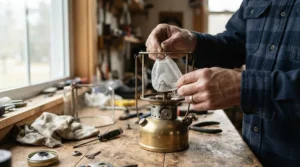
Mantle replacement is the one chore that puts people off mantle-style lanterns. The reason is simple: a new mantle is a fabric sock that must be burned off the first time you light it, leaving behind a delicate ash shell. That ash is what glows, and it can crumble if knocked, which is why one UK outdoor writer advises carrying spares.
Here’s a general routine. Always follow your manual.
- Turn the gas off and let the lantern cool fully.
- Remove the globe and clear any broken ash from the burner.
- Fit the new mantle on the nozzle and tie it securely so it can’t slip.
- Trim loose ends, refit the globe, then light on a low setting.
- Let the fabric burn away, then adjust to your usual brightness.
- Avoid touching the ash, and pack the lantern carefully.
Design makes a difference. The Campingaz Lumostar Plus PZ has a detachable head for easy access. The Kovea Observer takes small double-tie mantles, and spare packs exist for it. The Primus EasyLight Duo needs mantling before first use. Meanwhile the Robens Snowdon Gas Lantern and Fire-Maple Orange skip the whole business.
First 30 Days: Setup, Habits and Maintenance
The first month shapes how long your lantern lasts. Treat it like a small stove, because that’s essentially what it is.
Week one: test at home. Fit the cartridge in the garden, light it, burn in a new mantle and practise dimming. Learning the controls in daylight beats guessing in the dark.
Week two: check the connections. Re-fit the cartridge a couple of times and do the soapy-water check. Make sure the globe sits properly and the guard isn’t loose.
Week three: practise packing. Store the lantern in its case or bag, and keep spare mantles in a small tin so they don’t crush. Remove the cartridge for transport.
Week four: learn your burn rate. Note how long a cartridge lasts at your usual setting. Compare that to the stated runtime and you’ll know exactly how many cartridges to pack.
Common first-month mistakes: cranking the lantern to maximum every night, forgetting a spare mantle, and storing it with a part-used cartridge attached. A dozen small habits make a gas camping lantern last for years.
Real-World Scenarios: Which Gas Camping Lantern Fits You?
The family on a UK campsite. Two adults, two children, a 4-berth tent and an awning, camping three nights a month in summer. The Campingaz Lumostar Plus PZ fits: easy lighting, dimmable output and a globe guard that tolerates small-person chaos. Pair it with a CV470 Plus for about 12 hours of light.
The bikepacker. A solo rider counting every gram, using a stove with a screw-on gas cartridge. The Robens Snowdon Gas Lantern at 122g and 4g an hour is hard to beat, or the Primus EasyLight Duo if you want mantle brightness and plan to travel abroad.
The group pitching a big awning. Six friends, a shared kitchen area and a long weekend. The Campingaz Stellia PerfectFlow gives 160W of light, and you can pack two cartridges. Accept the weight as the price of brightness.
✨ Don’t Miss These Great Gas Lantern Picks!
🔍 Take your campsite evenings to the next level with these carefully selected lanterns. Click any highlighted product name to check current pricing and availability. They’ll help you create warm, safe, memorable nights your whole group will love!
Affordable Gas Lantern UK Buyers Can Trust: Where the Savings Are
An affordable gas lantern UK shoppers will actually keep is rarely the cheapest on the shelf. Running costs matter more than purchase price. A lantern that sips gas will beat a cheap one that guzzles it within a season.
| Lantern | Stated runtime / gas draw | Value reading |
|---|---|---|
| Campingaz Lumostar Plus PZ | 6h 20m on CV300 Plus, 12h on CV470 Plus | Good all-round value |
| Campingaz Lumogaz Plus | Same as above | Best entry price |
| Primus EasyLight Duo | 4-36 hours depending on setting | Flexible, mid-priced |
| Robens Snowdon Gas Lantern | 56 hours on 230g (medium) | Cheapest to run |
| Kovea Observer | 38g an hour | Short evenings per can |
| Fire-Maple Orange | 4g an hour, up to about 24 hours | Cheap to run |
| Campingaz Stellia PerfectFlow | Over 6h 10m on CV470 Plus | Only for big spaces |
The numbers make the case: the Robens Snowdon Gas Lantern uses roughly a tenth of the gas per hour that the Campingaz Lumostar Plus PZ does, but it gives a softer light. If brightness matters, the Campingaz Lumogaz Plus is the cheaper way into mantle lighting.
Another tip: buy multi-pack cartridges. One UK retailer sells a six-pack of Coleman C500 cartridges at a discount compared to buying singles. Check current price, because stock and offers change.

Value Gas Lantern for Tents: Matching Output to Your Pitch
A value gas lantern for tents has to light the area around your tent, not the inside. That distinction matters for safety, so let’s be precise. NI Direct says to never take a gas light into a tent unless it’s a permanent, correctly installed fixture, and a Gas Safe leaflet from Leicestershire Fire and Rescue gives the same warning. So treat gas as your outdoor light and use LED inside.
How much output do you need? For a small two-person tent and a camping table, 80W is plenty. The Campingaz Lumostar Plus PZ or Campingaz Lumogaz Plus will do. For ambience between pitches, the Fire-Maple Orange or Robens Snowdon Gas Lantern is enough. For a large family tent with an awning kitchen, step up to the Campingaz Stellia PerfectFlow.
Look for these value features: a globe guard, a hanging chain so you can get light above the table, and a stable base. For cost control, choose a lantern that matches the fuel you already buy. That is the simplest route to a value gas lantern for tents.
Gas Camping Lantern vs LED: An Honest Comparison
| Factor | Gas camping lantern | LED lantern |
|---|---|---|
| Light quality | Warm, flickery, gives off heat | Clean, steady, cool or warm |
| Runtime | Cartridge-limited, easy to swap | Battery-limited, needs charging |
| Weight | 122g to 1.5kg in this list | Varies widely |
| Safety in tent | Outdoor only | Safe indoors |
| Fragility | Glass and mantles | More robust |
| Best For | Pitch and table ambience | Inside the tent |
The table shows that neither type “wins”. Gas adds warmth and independence from chargers, while LED wins on safety and robustness. A Kovea listing even notes that its lantern radiates a little heat to warm your fingertips in cold weather. That’s a nice perk, but not a heating system. Many campers carry both: gas outside, LED inside.
Common Mistakes When Buying a Gas Camping Lantern
Buying the wrong cartridge format. The most common slip. Check whether the lantern wants a valve cartridge or a screw-on gas cartridge before you add anything to the basket.
Ignoring mantle supply. If you can’t find spares, a mantle lantern becomes a paperweight. Check availability first, or choose a mantle-free model.
Chasing maximum output. More watts means more gas and more weight. Most pitches don’t need 160W.
Bringing it inside the tent. UK guidance, including NI Direct’s carbon monoxide advice, is clear that gas lights stay out of tents.
Forgetting the glass. Gas lanterns are more vulnerable to water ingress and knocks because of their glass lenses, so look for a guard and a case.
Skipping the soapy-water check. It takes a minute and prevents a lot of worry.
FAQ
❓ Can I use the same cartridge for my stove and my gas camping lantern?
❓ Do gas lanterns work in cold weather?
❓ How often does a mantle replacement need doing?
❓ What does EN417 mean on a gas cartridge?
❓ Which gas lantern is cheapest to run?
Conclusion
A good gas camping lantern is part tool, part atmosphere machine. The Campingaz Lumostar Plus PZ is the safest recommendation for most people thanks to its piezo ignition, detachable head and friendly runtime. If budget is tight, the Campingaz Lumogaz Plus gives the same fuel format for less. Travellers and weight-watchers should look hard at the Primus EasyLight Duo, while the Robens Snowdon Gas Lantern and Fire-Maple Orange are the picks for low fuel use and zero mantle fuss. The Kovea Observer squeezes mantle light into a tiny frame, and the Campingaz Stellia PerfectFlow is for big groups with big awnings.
Whichever you choose, remember the three habits that matter: match the cartridge format, keep spare mantles if you need them, and keep every gas camping lantern outdoors and away from fabric.
Recommended for You
- Lightweight LED Lantern For Backpacking: 7 Proven Picks (2026)
- Waterproof LED Lantern: 7 Proven Picks For Soggy UK Camps (2026)
- LED Lantern For Caravan: 7 Brilliant Picks For 2026
Disclaimer: This article contains affiliate links. As an Amazon Associate, I earn from qualifying purchases. If you purchase products through these links, we may earn a small commission at no additional cost to you.
✨ Found this helpful? Share it with your friends! 💬🤗
