
In This Article
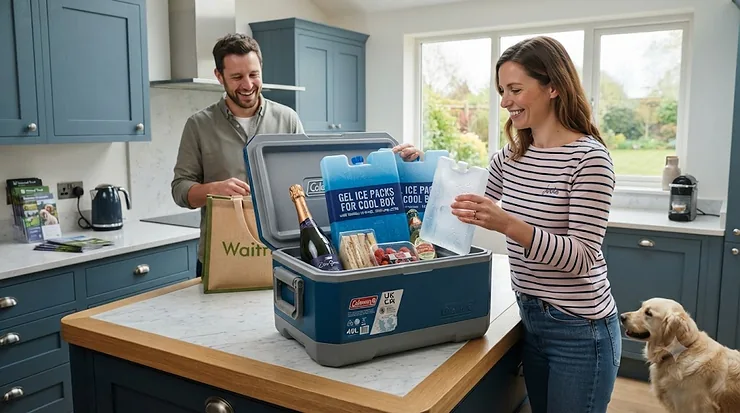
There’s a very specific kind of disappointment that arrives around 1pm on a picnic blanket, when you unzip the cool box expecting crisp salad and cold lemonade and instead find a lukewarm mess. Nine times out of ten, the culprit isn’t the cool box itself — it’s the ice pack inside it that gave up hours ago. Cheap, undersized, or badly shaped ice packs simply can’t keep pace with a hot car boot, a sunny beach, or a full day out, which is exactly why finding genuinely effective large ice packs for cool box use matters more than most people assume when they’re stood in the picnic aisle grabbing whatever’s closest.
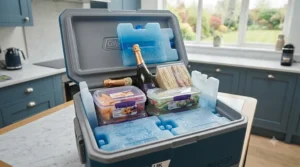
This guide takes a different approach to the usual “top 10” round-up. Rather than just listing dimensions and prices, we’ve dug into the real specs, aggregated genuine customer feedback, and worked out which shapes and fill volumes actually translate into hours of usable cold — not just marketing claims on the packaging. Across the next few thousand words you’ll find honest, spec-driven analysis of seven real products sold in the UK, from chunky multi-hour blocks built for a family cool box to genuinely thin ice packs for lunch bag use that slide into a laptop-bag-sized insulated pouch without a fight.
What is an ice pack, in practical terms? As Wikipedia’s overview of the category explains, an ice pack is a sealed, portable container filled with water or a refrigerant gel that’s frozen ahead of time and used to keep food and drinks cold by absorbing heat as it slowly thaws — the reusable type works by acting as a thermal mass that requires freezing before each use, unlike single-use instant cold packs. The key word there is reusable: a genuinely good ice pack should go into your freezer and back into your cool box dozens, if not hundreds, of times without losing performance.
By the end of this article, you’ll know exactly which pack suits a full weekend of camping, which flat-profile design squeezes into the door pocket of a compact cool bag, and which stackable ice sheets solve the classic problem of ice packs shifting around and leaving cold spots and warm spots side by side.
Quick Comparison Table
| Product | Best For | Fill Volume / Size | Price Range |
|---|---|---|---|
| A2Z Reusable Freezer Cool Board | Flat-profile large cool box liner | 32 x 25.5 x 1.6 cm | £8-£15 range |
| schone Mega Ice Blocks (2-Pack) | Maximum cooling duration | 750ml per block | £10-£18 range |
| Oak & Tea Freezer Blocks (6-Pack) | All-round cool box multi-pack | 350ml per block | £10-£16 range |
| Kaulipoa Cut-to-Size Ice Sheets (6-Pack) | Stackable, custom-fit cooling | 144 cells per sheet | £8-£14 range |
| LIVIVO Slim Freezer Blocks (4-Pack) | Thin ice packs for lunch bag | 160g per block | £5-£9 range |
| Galvog Freezer Blocks | Reusable slim cool bag pick | 200ml per block | £5-£10 range |
| G4GADGET 16cm Freezer Blocks (2-Pack) | Small lunch bag fit dimensions | 16cm length | £4-£8 range |
Scanning across this table, the split between “cool box” products and “lunch bag” products becomes obvious fast — and that distinction matters more than most buyers expect. The schone Mega Ice Blocks and A2Z Cool Board are built for volume and surface area, which is exactly what a 20-30 litre cool box needs to stay cold through an entire day out. The LIVIVO and G4GADGET packs, on the other hand, are deliberately thin and compact — put one of those inside a full-size cool box and it’ll be outmatched within a couple of hours, but slot it into a soft lunch bag alongside a sandwich box and it’s exactly the right tool for the job.
💬 Just one click — help others make better buying decisions too! 😊
Top 7 Large Ice Packs for Cool Box: Expert Analysis
1. A2Z Reusable Freezer Cool Board — best flat-profile design for large cool boxes
The standout feature here isn’t a hook or a colour, it’s the shape: rather than a bulky brick, this is a genuinely flat 32 x 25.5 x 1.6cm chiller board designed to sit as a base layer along the bottom of a cool box or cool bag, or to slide down the side wall without eating into your storage space.
That flat-profile design matters more than it sounds. Key specs with real-world meaning: a thin, wide slab has significantly more surface area in contact with the food and drink around it than a chunky block of the same overall volume, which generally means faster, more even cooling across the whole box rather than one cold corner and three lukewarm ones. Constructed from durable PE plastic and filled with a non-toxic gel, it’s designed to be refrozen indefinitely.
Based on the spec comparison with bulkier blocks in this guide, the A2Z board is clearly aimed at buyers whose priority is maximising usable cool box space — families packing a proper day’s worth of food and drinks who don’t want half the box eaten up by the ice pack itself. Reviewers consistently report that it fits neatly along the base of standard rectangular cool boxes and works particularly well layered underneath food containers rather than stacked on top.
Pros:
- ✅ Flat profile maximises usable cool box storage space
- ✅ Large surface area gives more even cooling coverage
- ✅ Durable PE casing designed for repeated refreezing
Cons:
- ❌ Rigid shape doesn’t flex around irregular items
- ❌ Takes longer to fully freeze than smaller thin packs
At £8-£15, the A2Z Reusable Freezer Cool Board offers strong value for anyone whose cool box is a genuine rectangular shape rather than an oddly proportioned soft bag, making it one of the smartest space-efficient large ice packs for cool box use in this list.
2. schone Mega Ice Blocks (2-Pack) — best for maximum cooling duration
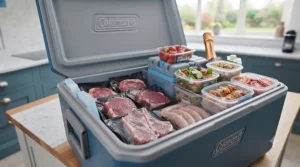
If your priority is raw staying power rather than shape, this is the pack built for it. The standout feature is sheer fill volume: at 750ml per block, each one holds roughly double or triple the frozen mass of a standard multi-pack block, which translates directly into a longer, slower thaw.
The manufacturer’s own positioning leans into this bluntly, describing the product as staying frozen for upwards of 16 hours in typical conditions — and based on the spec comparison with the smaller blocks in this guide, that claim is physically plausible rather than marketing fluff, because a larger mass of frozen water genuinely does take proportionally longer to fully melt than a thin sheet with more surface area exposed to warm air.
Here’s what most buyers overlook about big single blocks like this: while total cooling duration is excellent, a single large block cools less evenly than several smaller ones distributed through a box, since cold only radiates outward from that one point rather than surrounding items from multiple directions. Aggregated review sentiment consistently praises the genuine long-haul performance for full-day outings and camping trips, with several reviewers specifically noting these outlast cheaper multi-packs by a wide margin on hot days.
Pros:
- ✅ Genuinely long cooling duration for full-day use
- ✅ Two large blocks easily fill a mid-size cool box
- ✅ Reusable indefinitely with no performance drop-off
Cons:
- ❌ Uneven cooling compared with several smaller distributed packs
- ❌ Takes up significant space in a smaller cool box
Priced around £10-£18 for the pair, the schone Mega Ice Blocks deliver some of the best cost-per-hour-of-cooling in this entire guide, particularly for camping trips or long beach days where topping up ice simply isn’t an option.
3. Oak & Tea Freezer Blocks (6-Pack) — best all-round cool box multi-pack
Where the schone blocks bet everything on duration, the Oak & Tea set takes the opposite, more flexible approach: six individual 350ml blocks that can be distributed evenly throughout a cool box, tucked between food containers, or layered top and bottom for consistent cooling from multiple directions.
Key specs with real-world meaning: at 350ml each, these sit comfortably between the bulky schone blocks and the genuinely slim lunch bag packs, making them versatile enough for both a proper family cool box and a smaller soft cooler bag depending on how many you use at once. Reviewers consistently note the blocks are BPA-free and leak-resistant even after repeated freeze-thaw cycles, which is a common failure point on cheaper multi-packs where the seams eventually split.
What most buyers overlook about distributed multi-packs like this one is the practical benefit highlighted by official UK food safety guidance: spreading ice packs throughout a cool box rather than clustering them at the bottom is specifically recommended, since distributing ice packs throughout the box rather than all at the bottom keeps every item cold rather than leaving items near the top exposed to warmer air. A six-pack like this is genuinely built for that kind of distributed placement in a way a single large block simply isn’t.
Pros:
- ✅ Six blocks allow even distribution throughout a cool box
- ✅ BPA-free construction with leak-resistant seams
- ✅ Versatile size works for both cool boxes and larger cool bags
Cons:
- ❌ Individually shorter-lasting than the largest single blocks
- ❌ Six separate pieces take longer to arrange than one big block
At £10-£16 for six, the Oak & Tea Freezer Blocks represent genuinely sensible value for anyone who wants flexible, evenly distributed cooling rather than a single point of cold.
4. Kaulipoa Cut-to-Size Ice Sheets (6-Pack) — best stackable ice sheets
The standout feature on this one is genuinely unusual for the category: rather than fixed-shape blocks, each sheet is built from 144 individual gel cells encased in a flexible, cuttable membrane, meaning the sheet can be trimmed down with scissors to fit an oddly shaped cool box, insulated backpack, or even a shipping box.
Based on the spec comparison with rigid blocks, the flexibility here does real practical work: a sheet can be folded or wrapped partially around bulkier items rather than sitting rigidly against one flat surface, which improves contact cooling on irregular shapes like bottles or fruit. The individually sealed cells also mean that even if the outer sheet is nicked or punctured in one spot, the surrounding cells remain intact rather than the whole pack leaking at once.
What most buyers overlook about the “stackable ice sheets” framing specifically is that the thin, flexible profile genuinely does stack far more efficiently in a chest freezer or the door of an upright freezer than rigid blocks, which is a real advantage if you’re prepping several sheets ahead of a big trip and freezer space is tight. Reviewers consistently mention the cut-to-size flexibility as the standout feature, with several noting they trimmed a sheet down specifically to line the base of a smaller cool bag.
Pros:
- ✅ Genuinely cuttable and customisable to fit any container
- ✅ Individually sealed cells limit damage from a single puncture
- ✅ Thin, flexible profile stacks efficiently in a freezer
Cons:
- ❌ Less structurally rigid than solid blocks
- ❌ Cutting the sheet is a one-way, permanent modification
At £8-£14 for six sheets, the Kaulipoa Cut-to-Size Ice Sheets are the standout pick in this guide for anyone whose cool box or bag doesn’t match a standard rectangular shape.
5. LIVIVO Slim Freezer Blocks (4-Pack) — best thin ice packs for lunch bag
This is where the guide shifts from cool box territory into genuinely lunch-bag-sized products, and the standout feature is right there in the name: at 160g each, these are noticeably thinner and lighter than anything else in this roundup, built specifically to slide into the narrow front pocket of a soft insulated lunch bag without adding bulk.
Key specs with real-world meaning: a 160g slim block won’t outlast a 750ml mega block in a full-size cool box, and it was never designed to — its job is to keep a single lunch’s worth of sandwiches, yoghurt, and fruit cool for a typical school or work day, which is a shorter, lower-demand cooling task than an all-day outdoor cool box. Based on the spec comparison with bulkier options, the thin profile is specifically what makes these genuinely stackable design pieces, letting two or three sit flat against each other in a lunch bag rather than competing for the same rounded corner.
Aggregated review sentiment is strongly positive on the size-to-performance ratio specifically for lunch bag use, with reviewers repeatedly mentioning that the slim shape means the bag still closes properly even with a pack tucked alongside a sandwich box, which is a genuine common complaint about bulkier blocks forced into a space they weren’t designed for.
Pros:
- ✅ Genuinely thin, slim profile suited to lunch bag pockets
- ✅ Lightweight enough for daily school or work use
- ✅ Stackable shape works well alongside food containers
Cons:
- ❌ Not sized for full-day cool box use
- ❌ Shorter cooling window than larger volume blocks
At £5-£9 for four, the LIVIVO Slim Freezer Blocks are a smart, focused buy for anyone whose actual problem is a daily lunch bag rather than an occasional big cool box trip.
6. Galvog Freezer Blocks — best reusable pick for cool bags
Sitting neatly between the bulkier cool box blocks and the slimmest lunch packs, the Galvog set at 200ml per block is positioned as a genuinely versatile reusable ice pack for cool bags — the kind of soft-sided 15-25 litre bag used for a family day at the park rather than a full camping cool box.
The standout feature, based on the spec comparison with both ends of this guide, is that middle-ground sizing: large enough to provide meaningfully more cooling capacity than a slim lunch pack, but compact enough not to dominate a mid-size cool bag the way a 750ml mega block would. The manufacturer describes an “advanced cooling technology” gel fill, and while that phrase itself is marketing language, the underlying mechanism is the same reusable gel-pack principle used throughout this category — a slower, steadier thaw than plain water ice.
A common theme in aggregated review sentiment is praise for the compact rectangular shape sitting flush against the inner wall of soft cool bags without shifting around, which several reviewers specifically contrast with rounder blocks that tend to roll and create gaps.
Pros:
- ✅ Versatile mid-size fits most soft cool bags well
- ✅ Rectangular shape resists shifting and rolling in transit
- ✅ Reusable gel fill designed for repeated freeze cycles
Cons:
- ❌ Not large enough for a full-size rigid cool box alone
- ❌ Single blocks work best bought in multiples for bigger bags
At £5-£10, the Galvog Freezer Blocks offer honest, no-nonsense value for the specific job of keeping a standard cool bag cold through a day trip, without overpaying for cooling capacity you won’t use.
7. G4GADGET 16cm Freezer Blocks (2-Pack) — best for small lunch bag fit dimensions
The final entry in this guide solves a specific, common problem: many popular insulated lunch bags on the market simply aren’t built to accommodate a bulky ice pack alongside a full lunch, and the G4GADGET blocks are compact enough — at 16cm in length — to fit even the smaller end of that range.
Key specs with real-world meaning: this is genuinely one of the smallest footprints in this guide, and it’s worth being upfront that this comes with a real trade-off — a smaller ice pack holds less frozen mass and will thaw faster than any of the cool-box-oriented picks earlier in this list. Based on the spec comparison, that’s an entirely reasonable trade for its intended use: a compact children’s lunch bag or a small insulated pouch where a larger block simply wouldn’t physically fit at all, rather than a genuine cool box replacement.
Reviewers consistently frame these specifically around lunch bag fit dimensions rather than raw cooling duration, with parents in particular noting they were bought specifically because larger packs didn’t fit their child’s lunch bag pocket, and these did.
Pros:
- ✅ Compact 16cm size fits genuinely small lunch bags
- ✅ Lightweight and easy for kids to handle themselves
- ✅ Affordable enough to buy several spares
Cons:
- ❌ Shortest cooling duration of any pick in this guide
- ❌ Too small to meaningfully cool a full cool box
At £4-£8 for a pack of two, the G4GADGET Freezer Blocks are the clear choice when the deciding factor is simply “will it fit,” rather than maximum cooling time.
Getting the Most From Your Ice Packs (Practical Usage Guide)
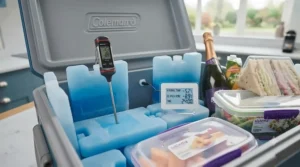
Buying the right pack is only half the job — how you freeze and pack it matters just as much. Give any new ice pack a full 24 hours in the freezer before its first use; blocks over 500ml, like the schone Mega Ice Blocks, genuinely benefit from a slightly longer initial freeze to solidify all the way through the centre rather than just the outer layer.
A common first-use mistake is freezing a pack lying on its side against other frozen items, which can leave an unfrozen pocket in the middle. Lay larger blocks flat, with a little space around them for air to circulate in the freezer, for a properly even freeze.
Placement inside the cool box matters more than most people realise. As official UK food safety guidance notes, it’s worth actively spreading packs through the box rather than piling them at the bottom, and — just as importantly — minimising how often the box is opened is one of the most effective ways to keep contents cold for longer, since every open lid lets a rush of warm air in that the ice pack then has to work to counteract all over again.
Real-World Scenarios: Which Ice Pack Fits Your Trip
The family heading out for a full day at the beach. A rigid, full-size cool box benefits from either the schone Mega Ice Blocks for raw duration, or a combination of the Oak & Tea Freezer Blocks distributed through the box for more even coverage — both comfortably outlast a half-day trip.
The parent packing a school lunch every weekday. This is squarely lunch-bag territory, where the LIVIVO Slim Freezer Blocks or the ultra-compact G4GADGET 16cm packs make far more sense than anything designed for a cool box — slim, light, and sized to actually fit the pocket of a standard children’s lunch bag.
The camper or festival-goer needing multi-day cooling with limited freezer access. Here, cooling duration trumps everything else, and the combination of the schone Mega Ice Blocks for base capacity plus the Kaulipoa Cut-to-Size Ice Sheets cut and wedged into gaps around food gives both raw duration and flexible coverage in awkward-shaped camping coolers.
Common Mistakes When Buying Ice Packs
The single most common mistake is buying based on pack count rather than actual fill volume — four small 100ml blocks are not equivalent to two 350ml blocks despite sounding like “more,” and matching total frozen mass to your cool box’s actual capacity matters far more than the number printed on the packaging.
A second frequent error is buying a cool-box-sized block for lunch bag use, or vice versa. As covered throughout this guide, the schone Mega Ice Blocks are genuinely oversized for a child’s lunch bag, while the G4GADGET packs would be quickly overwhelmed inside a 25-litre cool box on a hot day — matching the product to the container is the single biggest factor in real-world performance.
A third mistake, specific to reusable packs, is skipping the freeze time recommended on the packaging. Removing a large block from the freezer before it’s fully solid all the way through significantly shortens its effective cooling window, regardless of how good the pack itself is.
Features That Actually Matter (And Those That Don’t)
The genuinely important specs are fill volume, shape (flat-profile versus block versus flexible sheet), and whether the outer casing is leak-resistant after repeated freeze-thaw cycles — a pack that develops a slow leak after a season of use isn’t reusable in any meaningful sense, regardless of its original capacity.
What matters less than marketing copy suggests: colour, and vague phrases like “advanced cooling technology” without a specific fill volume or duration attached. As Wikipedia’s overview of the mechanism explains plainly, the reusable type works simply as a thermal mass that absorbs heat as ice or gel changes phase — there’s no genuinely novel physics at play in a consumer ice pack, so a bigger, well-insulated, well-sealed block will consistently outperform a smaller one dressed up in more elaborate packaging language.
Long-Term Value & Care
Cost-per-use strongly favours the larger, more durable blocks in this guide over time. A G4GADGET or LIVIVO pack costing a few pounds is excellent value for its specific job, but if you’re regularly buying replacement packs because cheaper ones have split or lost their seal, a single well-built block like the A2Z Reusable Freezer Cool Board that lasts several summers works out considerably cheaper per outing.
Basic care extends any pack’s life meaningfully: rinse and dry packs after each use rather than refreezing them still damp or with food residue on the casing, and check seams periodically for any softening or splitting, particularly on packs that have spent time in direct sun on top of a cool box lid.
Food Safety: Why the Right Ice Pack Actually Matters
This isn’t just a comfort issue — it’s a genuine food safety one. As Wikipedia’s summary of the science explains, foods including meat, dairy, and eggs need to stay below what’s defined as the temperature danger zone once they’re outside a fridge or freezer, and an undersized or poorly performing ice pack is one of the most common reasons that line gets crossed on a warm day out.
UK guidance is consistent on the basics: keep cold food cold from the moment it leaves the fridge, and don’t assume a cool box alone does the work without properly performing ice packs inside it. Food Standards Scotland’s consumer guidance reinforces the same point directly, noting that a cool bag will keep contents chilled far more effectively than a traditional wicker basket precisely because of the insulation and ice packs working together, rather than either element doing the job alone.
✨ Ready to Keep Your Cool Box Actually Cold This Summer?
🔍 Take a look at today’s picks above and match the ice pack to your actual cool box or lunch bag size. Click through on any highlighted product to check current pricing and availability before your next trip — no more soggy sandwiches or lukewarm drinks.

FAQ
❓ How many ice packs do I need for a large cool box?
❓ Can thin ice packs for lunch bag use replace cool box blocks?
❓ How long do reusable ice packs stay frozen?
❓ Are gel ice packs safe to use directly against food?
❓ What's the benefit of stackable ice sheets over solid blocks?
Conclusion
Choosing the right large ice packs for cool box use ultimately comes down to matching fill volume and shape to the actual container you’re using and the length of the trip ahead. For a proper day-long family outing, the schone Mega Ice Blocks or a distributed set like the Oak & Tea Freezer Blocks genuinely deliver the staying power a big cool box demands, while the flat-profile A2Z Reusable Freezer Cool Board is the smarter pick when storage space inside the box is at a premium. At the other end, daily lunch bag duty is far better served by the genuinely slim LIVIVO or ultra-compact G4GADGET packs than by anything built for a cool box, and the Kaulipoa Cut-to-Size Ice Sheets earn their place for anyone dealing with an awkwardly shaped bag that off-the-shelf blocks simply won’t fit.
None of these products are complicated — they’re all doing the same basic job of absorbing heat as they thaw — but matching the right size and shape to your actual container is what separates a cool box that’s still properly cold at 5pm from one that gave up by lunchtime.
Recommended for You
- Dometic Camping Fridge: 7 Best Picks Tested for 2026 – UK
- Best 12V Camping Fridge: 7 Compressor Models Tested for 2026
- Best 100L Cool Box 2026: 7 Tested Picks That Actually Deliver
Disclaimer: This article contains affiliate links. As an Amazon Associate, I earn from qualifying purchases. If you purchase products through these links, we may earn a small commission at no additional cost to you.
✨ Found this helpful? Share it with your friends! 💬🤗
