
In This Article
Picture this: you’ve packed the car for a weekend camping trip in the Lake District, the weather forecast promises sunshine, and you’re dreaming of sizzling sausages under open skies. But here’s the question that stops many UK outdoor enthusiasts in their tracks—which portable barbecue should you actually bring?
If you’re searching for a Weber portable bbq, you’re already on the right track. Weber has been crafting exceptional grills since 1952, when George Stephen Sr. revolutionised outdoor cooking by transforming marine buoy halves into the world’s first kettle grill. According to the Smithsonian Institution, Stephen’s innovative dome-shaped design solved the persistent problems of open braziers—wind blowing ash onto food, rain extinguishing flames, and uneven cooking temperatures. His portable range today combines that legendary quality with genuine go-anywhere convenience. Whether you’re after the smoky flavour of charcoal or the swift efficiency of gas, Weber’s camping range delivers authentic grilling experiences that rival your back garden setup.
The UK market for portable barbecues has exploded in recent years, with more Brits embracing outdoor cooking beyond the traditional garden patio. From beach trips in Cornwall to mountain hikes in Snowdonia, a quality portable grill transforms any outdoor adventure into a proper feast. Weber understands this perfectly—their portable models aren’t scaled-down compromises but proper barbecues engineered for mobility.
In this comprehensive guide, we’ll examine seven standout models from Weber’s portable collection, comparing everything from cooking surface area to fuel efficiency. You’ll discover which Weber Go-Anywhere charcoal review ratings justify the investment, understand why the Weber Q portable gas bbq remains a festival favourite, and learn whether the Weber Smokey Joe review uk consensus matches the hype. We’ll also explore premium camping bbq options for those seeking professional-grade performance on the road.
Quick Comparison Table
| Model | Fuel Type | Cooking Area | Weight | Price Range (£) | Best For |
|---|---|---|---|---|---|
| Weber Go-Anywhere Charcoal | Charcoal | 42 x 26 cm | 6.5 kg | £65-£79 | Beach trips, festivals |
| Weber Smokey Joe Premium | Charcoal | Ø 37 cm | 5.1 kg | £79-£103 | Solo camping, balconies |
| Weber Go-Anywhere Gas | Gas | 42 x 26 cm | 6.6 kg | £153-£170 | Quick park BBQs |
| Weber Q1000 | Gas | 43 x 32 cm | ~9 kg | £180-£220 | Family camping |
| Weber Traveler | Gas | 52 x 36 cm | ~20 kg | £350-£415 | Regular travellers |
| Weber Traveler Compact | Gas | Smaller than standard | 17 kg | £365-£400 | Car camping |
| Weber Compact Kettle | Charcoal | Ø 47 cm | ~10 kg | £95-£110 | Garden & camping hybrid |
💬 Just one click – help others make better buying decisions too! 😊
Top 7 Weber Portable BBQ Models: Expert Analysis
1. Weber Go-Anywhere Charcoal BBQ – The Festival Champion
The Weber Go-Anywhere Charcoal represents everything brilliant about Weber’s portable philosophy. This rectangular powerhouse has become synonymous with UK festivals and beach gatherings, and for good reason—it delivers authentic charcoal flavour whilst folding into a remarkably compact package.
Key Specifications:
- Cooking area: 42 x 26 cm (enough for 4-6 burgers)
- Porcelain-enamelled lid and bowl
- Adjustable dampers for precise heat control
- Triple-plated steel cooking grate
UK Price: £65.00-£79.00
Customer feedback from UK buyers consistently praises its robust construction and surprising cooking capacity. One verified Amazon purchaser noted: “Used small bags of coal and it worked a treat. Much lower price than garden centres and absolutely solid quality.”
✅ Pros:
- Compact when folded
- Excellent heat retention
- Weatherproof enamel coating
- Legs lock lid for transport
- Affordable entry point
❌ Cons:
- Charcoal cleanup required
- Takes 15-20 minutes to reach cooking temperature
This model excels for anyone seeking that irreplaceable charcoal taste without hauling around a full-sized kettle. The adjustable dampers provide surprising temperature control for such a compact unit—you can achieve anything from gentle warming to searing heat.
2. Weber Smokey Joe Premium – The Iconic Miniature Kettle
The Weber Smokey Joe Premium brings Weber’s legendary kettle design down to portable proportions, and UK campers absolutely adore it. Available in four vibrant colours (spring green, smoke grey, crimson red, and slate blue), this diminutive dome packs serious grilling capability into a 37-cm diameter.
Key Specifications:
- Cooking surface: Ø 37 cm (holds up to 5 burgers)
- Tuck-N-Carry lid locking handle
- Porcelain-enamelled lid and bowl
- Aluminium ash catcher
- Triple-plated cooking grate
UK Price: £79.20-£102.99
According to the Food Standards Agency, proper temperature control is crucial for outdoor cooking safety. The Smokey Joe’s design facilitates this beautifully—its kettle shape creates even heat distribution that larger portable grills often struggle to match.
UK customers particularly appreciate the lid lock feature, which transforms the barbecue into a secure carry package. The handle’s heat shield prevents burnt fingers, whilst the compact 46 x 36 x 42 cm dimensions fit easily in car boots alongside camping gear.
✅ Pros:
- Classic kettle performance
- Secure lid lock system
- Available in multiple colours
- Excellent heat distribution
- 10-year warranty on bowl and lid
❌ Cons:
- Smaller cooking area than rectangular models
- Requires separate chimney starter for best results
This represents the sweet spot for solo campers or couples who refuse to compromise on grilling quality. The iconic design isn’t just aesthetically pleasing—it’s functionally superior for achieving restaurant-quality sears on portable equipment.
3. Weber Go-Anywhere Gas – Convenience Meets Portability
For those who prioritise speed and simplicity, the Weber Go-Anywhere Gas delivers premium camping bbq performance without charcoal faff. This model uses standard EN417 gas cartridges (the same 445g canisters that power camping stoves), making it brilliantly convenient for multi-day adventures.
Key Specifications:
- Cooking area: 42 x 26 cm (identical to charcoal version)
- Push-button ignition system
- Infinite control valve for precise temperature
- Porcelain-enamelled lid and bowl
- Triple-plated steel cooking grate
UK Price: £152.99-£169.99
Weber designed the folding leg system to serve dual purposes: when deployed, legs lift the barbecue clear of surfaces to prevent scorching; when folded upwards, they lock the lid securely for transport. This clever engineering eliminates the need for separate carrying cases, though Weber does offer an optional premium bag (£33.56-£37.29).
UK buyers particularly value the gas option for parks and beaches where disposable barbecues face increasing restrictions. Following guidance from GOV.UK on outdoor fire safety, many local councils now prohibit disposable BBQs in public spaces—making reusable gas models like this increasingly sensible choices.
✅ Pros:
- Instant ignition (no lighter fluid needed)
- Precise temperature control
- Clean burning (no ash disposal)
- Quick 5-minute heat-up time
- Suitable for smoke control areas
❌ Cons:
- Higher initial investment
- Gas cartridges add ongoing cost
- Some users report cartridge removal difficulties in hot weather
This barbecue suits anyone who values convenience over charcoal authenticity. It’s perfect for impromptu park gatherings where you want quality results without extensive preparation.
4. Weber Q1000 Portable Gas BBQ – The Compact Powerhouse
Step up to the Weber Q1000 and you’re entering Weber’s Q Series territory—where portable doesn’t mean compromised. This distinctive titanium-coloured beauty combines cast-aluminium construction with genuinely impressive cooking performance, all whilst remaining genuinely portable at approximately 9 kg.
Key Specifications:
- Cooking area: 43 x 32 cm (1,355 cm²)
- Cast-aluminium lid and body
- Porcelain-enamelled cast iron cooking grates
- Built-in thermometer
- Glass-reinforced nylon frame with carry handles
- Uses EN417 gas cartridges or patio gas (with adapter)
UK Price: £180-£220 (prices vary by retailer; temporarily out of stock on Amazon UK as of April 2026)
One VW campervan owner reviewed on the official Weber site: “Take my Q1000 everywhere in my VW campervan. Compact yet big enough for a BBQ for 4—great product!” This sentiment echoes across UK customer feedback—the Q1000 punches well above its weight class.
The cast iron cooking grates represent a significant upgrade from steel alternatives. They retain heat magnificently, creating those professional sear marks that charcoal purists typically claim as exclusive territory. Combined with the infinite control valve, you can achieve anything from pancake-friendly low heat to steak-searing intensity.
✅ Pros:
- Premium cast iron grates
- Surprisingly large cooking area
- Excellent heat retention
- Adapter available for patio gas bottles
- Built-in lid thermometer
- 5-year warranty on key components
❌ Cons:
- Heavier than simpler portable models
- Higher price point
- Requires optional cart for optimal height
This quality portable grill appeals to serious outdoor cooks who refuse to accept “good enough for camping” as their standard. It’s equally at home on a balcony for weeknight dinners as it is at a Scottish loch for weekend adventures.
5. Weber Traveler Portable Gas BBQ – The Game-Changing Folder
When Weber introduced the Weber Traveler, they fundamentally reimagined what portable barbecues could achieve. This isn’t a scaled-down compromise—it’s a full-featured gas barbecue that happens to fold into a wheeled cart for transport. UK campers and caravanners have embraced it enthusiastically since its launch.
Key Specifications:
- Cooking area: 52 x 36 cm (320 square inches / 2,064 cm²)
- Single powerful stainless steel burner (13,000 BTU)
- Porcelain-enamelled cast iron cooking grates
- Built-in lid thermometer
- Automatic lid lock when folded
- Side table included
- All-terrain wheels
UK Price: £350-£415
According to a verified UK Amazon review from March 2025: “Absolutely fantastic and I absolutely positively recommend getting one of these. The BBQ itself is nice and light and easy to fold, the only thing that makes this heavy is the cast iron grill that comes with it—luckily it’s removable.”
The engineering deserves proper appreciation. The Traveler stands at comfortable cooking height when deployed, yet collapses into a package that fits in most car boots. The automatic lid lock prevents accidental opening during transport—a safety feature that’s genuinely thoughtful rather than marketing fluff.
Weber purposefully designed the gas usage optimisation on this model. Whether you’re cooking a quick lunch mid-hike or preparing a full feast for family and friends, the efficient burner ensures you’re not wasting fuel. It accepts both 445g disposable cartridges and full-size patio gas bottles (with appropriate adapter).
✅ Pros:
- Full-sized cooking performance
- One-handed setup and fold-down
- Integrated wheels for easy transport
- Generous side table
- Safety lock prevents folding with gas attached
- Feeds up to 15 burgers or 20 sausages
❌ Cons:
- Significant initial investment
- Weighs approximately 20 kg
- Some users report adapter compatibility issues with certain gas bottles
This represents the pinnacle of weber camping range engineering for those who regularly cook outdoors. If you’re caravanning, attending weekend rallies, or simply refuse to compromise on BBQ quality away from home, the Traveler justifies its premium price.
6. Weber Traveler Compact – Downsized Excellence
Following the original Traveler’s success, Weber launched the Traveler Compact—a 20% smaller variant that maintains the innovative folding design whilst fitting more compact cars. At 81 cm wide and just 17 kg, it strikes a brilliant balance between capability and convenience.
Key Specifications:
- Cooking area: Smaller than standard Traveler (exact dimensions vary)
- Single stainless steel burner
- Porcelain-enamelled lid and cook box
- Cast iron cooking grates
- One-hand raise and collapse
- Automatic lid lock
- All-terrain wheels
UK Price: £365-£400
This model emerged from customer feedback—Weber recognised that whilst many loved the Traveler concept, some found it slightly too large for compact European vehicles. The Compact version addresses this perfectly, fitting easily into smaller car boots whilst still providing enough cooking space for a family of four (12 burgers or 15 sausages).
UK reviewers particularly appreciate the one-handed operation. As one customer noted: “Very happy with my purchase—used many times so far with great results.” The simplified setup means you can be cooking within minutes of arriving at your destination, which matters enormously when hungry children or friends are waiting.
✅ Pros:
- Fits compact car boots
- Lighter than full-sized Traveler
- One-handed operation
- All Traveler features in smaller package
- Feeds 4 people comfortably
❌ Cons:
- Smaller cooking area than standard Traveler
- Still relatively expensive
- Limited UK availability
For couples or small families who love the Traveler concept but need something more compact, this variant delivers brilliantly. It’s particularly popular with motorhome owners who need to maximise limited storage space.
7. Weber Compact Kettle 47cm – The Hybrid Solution
Technically sitting on the edge of “portable” territory, the Weber Compact Kettle deserves mention for UK buyers seeking a barbecue that works equally well in the garden and at campsites. At 47 cm diameter, it’s genuinely transportable whilst providing cooking capacity that approaches full-sized kettles.
Key Specifications:
- Cooking surface: Ø 47 cm
- Porcelain-enamelled bowl and lid
- Chrome-plated three-layer grate
- Tripod stand with wheels
- Rust-proof aluminium ash catcher
- One-Touch cleaning system
- Built-in lid thermometer
UK Price: £94.99-£110
One UK customer drilled into the engineering quality: “When I found out what this Weber is made of whilst drilling a 20mm hole for a temperature gauge—tough as old boots! I suspect this Compact will last for years.” This durability represents Weber’s commitment to quality materials across their entire range.
The wheeled tripod stand transforms this from purely garden equipment into something you can roll across campsites or load into larger vehicles. Unlike smaller portables, the 47 cm cooking surface accommodates whole chickens, racks of ribs, or enough burgers for proper gatherings.
✅ Pros:
- Substantial cooking area
- Excellent value
- Wheeled for easy repositioning
- Full kettle performance
- Accessories compatible with larger Weber models
- 10-year warranty
❌ Cons:
- Requires larger vehicle for transport
- Heavier than true portables (~10 kg)
- Takes longer to heat than gas models
This bridges the gap between portable and permanent barbecues beautifully. It’s ideal for UK families who want garden versatility with occasional camping capability, rather than a dedicated portable-only unit.
✨ Don’t Miss These Exclusive Deals!
🔍 Take your outdoor cooking to the next level with these carefully selected products. Click on any highlighted item to check current pricing and availability on Amazon.co.uk. These tools will help you create authentic barbecue experiences your family will love!
Understanding Weber’s Portable BBQ Technologies
Porcelain-Enamelled Excellence
Weber’s signature porcelain enamel coating isn’t mere aesthetics—it’s functional engineering that British weather demands. This multi-layer finish creates a glass-like surface that resists rust, cracks, and peeling far better than painted alternatives. When your barbecue lives in a damp garden shed between Scottish camping trips, this durability proves invaluable.
The enamel serves three crucial purposes: first, it protects the underlying steel or cast aluminium from moisture damage; second, it creates a non-porous surface that prevents flavour transfer between cooking sessions; third, it retains heat efficiently, reducing fuel consumption. Many cheaper portable barbecues skip this treatment, leading to rust damage within a single season.
Heat Retention and Distribution
Weber employs different grate materials across their portable range, each serving specific purposes. The triple-plated steel grates found on Go-Anywhere models provide excellent heat distribution at minimal weight—crucial for genuinely portable equipment. Meanwhile, the cast iron grates on Q Series and Traveler models deliver restaurant-quality heat retention that creates those coveted sear marks.
The lid design matters enormously for portable cooking. Weber’s kettle-style lids (on Smokey Joe and Compact Kettle) create convection currents that cook food more evenly than open grills. This becomes particularly valuable when weather turns windy—the enclosed cooking environment maintains temperature regardless of conditions.
Gas Efficiency Engineering
Weber’s gas models demonstrate thoughtful fuel optimisation. The Q-shaped burner design (hence “Q Series”) maximises heat coverage across the cooking surface whilst minimising gas consumption. This matters significantly when you’re relying on small cartridges rather than unlimited mains supply.
The infinite control valves on Weber gas models provide genuinely precise temperature adjustment. Unlike cheaper alternatives with simple high/medium/low settings, these allow continuous adjustment from barely-there warming heat to maximum searing power. This flexibility transforms cooking possibilities—you can start pancakes on gentle heat, then switch to high for searing steaks minutes later.
Charcoal vs Gas: Which Fuel Suits Your Adventures?
The Charcoal Case
Charcoal barbecuing delivers that unmistakable smoky flavour that gas simply cannot replicate. When fat drips onto hot coals, it vaporises and infuses rising smoke with complex compounds that flavour your food. This is why serious barbecue enthusiasts often prefer charcoal despite its inconveniences. Research from food scientists has documented over 100 distinct flavour compounds created during charcoal grilling, contributing to that irreplaceable taste.
According to London Fire Brigade safety guidance, charcoal barbecues require careful handling—coals remain dangerously hot for hours after cooking finishes. However, for UK campers who enjoy the ritual of fire-building and don’t mind the cleanup, charcoal models like the Go-Anywhere and Smokey Joe provide unmatched authenticity.
Charcoal also offers genuine high-heat searing capability. A properly prepared charcoal bed can reach temperatures exceeding 260°C (500°F), perfect for achieving steakhouse-quality crusts on meats. Gas barbecues struggle to match these peak temperatures, particularly in portable formats.
The Gas Advantage
Gas wins decisively on convenience. Push a button, wait five minutes, and you’re cooking—no lighter cubes, no waiting for coals to ash over, no charcoal dust coating everything in your boot. For quick park lunches or weeknight camping dinners, this efficiency proves transformative.
Modern gas cartridges also simplify logistics. The EN417 standard means Weber gas models work with widely available camping gas canisters sold at petrol stations, outdoor shops, and supermarkets across the UK. No need to source specific charcoal bags or worry about damp briquettes.
Temperature control represents gas’s other major advantage. The infinite adjustment valves on Weber models allow precise cooking that charcoal struggles to match. Want to keep sausages warming whilst vegetables finish? Easy with gas, challenging with charcoal.
Making Your Choice
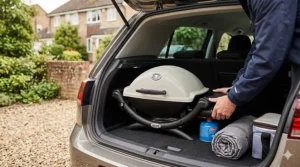
Consider your typical usage scenario. Weekend camping trips where cooking becomes part of the experience? Charcoal’s ritual and flavour justify the extra effort. Quick after-work park gatherings where you want to eat within 30 minutes? Gas eliminates waiting time. Many serious outdoor cooks eventually own both types, selecting based on specific situations.
Charcoal vs Gas: Key Differences
| Factor | Charcoal Models | Gas Models |
|---|---|---|
| Heat-Up Time | 15-20 minutes | 5 minutes |
| Temperature Control | Moderate (via dampers) | Excellent (infinite valve) |
| Flavour Profile | Authentic smoky taste | Clean, subtle flavour |
| Cleanup | Ash disposal required | Minimal (drip tray only) |
| Fuel Availability | Widely available | Gas cartridges/bottles needed |
| Running Costs | £3-5 per session | £2-4 per session (cartridges) |
| Legal Restrictions | Some parks prohibit | More widely permitted |
| Peak Temperature | 260°C+ (500°F+) | 230°C (450°F) typical |
Essential Features to Prioritise
Cooking Surface Area
Don’t underestimate how cooking area impacts real-world usability. A 37 cm diameter Smokey Joe comfortably handles 4-5 burgers, perfect for couples or small families. But attempting to cook for six people means multiple batches, keeping early diners waiting whilst later portions cook. The larger 47 cm Compact Kettle or Traveler models eliminate this frustration for regular group cooking.
Calculate based on burger quantity—most portable Webers specify how many standard burgers fit. Add 20% to this number for realistic capacity accounting for accompaniments (vegetables, mushrooms) sharing grill space.
Portability vs Performance Trade-offs
True portability requires compromises. The lightest models (Smokey Joe at 5.1 kg) genuinely qualify as “grab and go” equipment. The heavier Traveler at 20 kg demands two-person lifting and dedicated boot space—but delivers full-sized barbecue performance anywhere.
Assess honestly how you’ll transport your barbecue. Boot-to-picnic-table scenarios tolerate heavier models. Hikes requiring hand-carrying demand ultra-lightweight options. Caravan owners with dedicated storage space can embrace larger portables.
Weather Resistance
British weather punishes outdoor equipment mercilessly. Weber’s porcelain enamel finish withstands coastal salt spray, Scottish drizzle, and Welsh dampness far better than painted competitors. The 10-year warranty on bowls and lids reflects this durability confidence.
Consider storage between uses. If your portable lives permanently outdoors, invest in Weber’s fitted covers (typically £30-50) to prevent weathering. Indoor storage extends lifespan indefinitely, making covers optional.
Temperature Control Mechanisms
Adjustable dampers on charcoal models like the Go-Anywhere provide surprising control over cooking temperature. Closing vents restricts airflow, lowering heat; opening them increases oxygen supply, raising temperatures. This simple mechanism offers more nuanced control than many realise.
Gas models with infinite control valves allow continuous adjustment between minimum and maximum heat. This proves invaluable for recipes requiring specific temperatures or when simultaneously cooking items needing different heat levels.
✨ Ready to Transform Your Outdoor Cooking?
🔥 Whether you’re planning a beach barbecue or weekend camping adventure, the right Weber portable bbq makes all the difference. Browse our featured products above to discover current deals and exclusive offers on Amazon.co.uk. Your perfect outdoor cooking companion awaits!
Safety Considerations for UK Outdoor Cooking
Legal Requirements and Restrictions
UK barbecue regulations vary significantly by location and ownership. According to GOV.UK fire safety guidance, whilst barbecues are generally permitted, specific locations impose restrictions. Many London parks prohibit all barbecues due to grassfire risks, whilst others designate specific areas for controlled use.
Before heading to public spaces, check local council websites for current barbecue policies. These change seasonally—dry summer periods often trigger temporary bans even in normally-permitted areas. The Countryside Code advises against barbecues in open countryside unless specifically designated areas exist.
Private property barbecuing faces fewer restrictions, but courtesy matters. Position barbecues away from boundaries to avoid smoke drifting into neighbours’ gardens, particularly during evening hours when people have windows open. Excessive smoke can technically constitute nuisance under Environmental Protection Act provisions, though enforcement remains rare for reasonable barbecue use.
Fire Safety Best Practices
The Food Standards Agency provides comprehensive barbecue safety guidance beyond just food hygiene. Key principles include positioning barbecues on stable, level, non-flammable surfaces at least 3 metres from buildings, fences, trees, or garden waste. This buffer zone prevents accidental ignition of surrounding materials.
Never leave barbecues unattended whilst lit. Assign one responsible adult as designated “grill master” who remains vigilant throughout cooking. Keep children, pets, and anyone who’s consumed alcohol away from the cooking area—accidents happen rapidly around hot equipment.
Have emergency equipment readily available. A bucket of water or sand provides quick response capability if flames escape control. For gas barbecues, ensure you know how to shut off gas supply rapidly—turn cylinder valve first, then barbecue controls to purge remaining gas from lines.
Post-Cooking Procedures
Charcoal barbecues pose particular post-cooking risks. Coals remain dangerously hot for several hours after finishing cooking—long enough to cause serious burns or ignite materials. Never dispose of apparently-cold ash in plastic bins or near flammable materials. Wait until coals are completely cold to touch, or douse with water and dispose on bare soil.
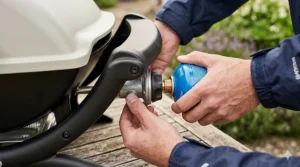
Gas barbecues cool more quickly but still demand respect. After cooking, turn off the gas cylinder first, then the barbecue controls—this sequence purges gas from feed lines, preventing leaks. Check connections regularly for leaks using soapy water applied to joints; bubbles indicate escaping gas requiring immediate attention.
Maintenance and Care for Longevity
Cleaning Protocols
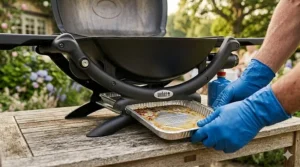
Proper maintenance dramatically extends barbecue lifespan. After each use, brush cooking grates whilst still warm—residue removes more easily before cooling completely. Wire brushes work effectively, but inspect bristles regularly for loosening; lost bristles embedding in food cause genuine health hazards.
Deep cleaning should occur monthly during heavy use periods. Remove cooking grates and soak in hot soapy water. Clean the cook box interior with appropriate cleaners—porcelain enamel tolerates most standard cleaners, but avoid abrasive scrubbers that might damage the finish. Wipe down exterior surfaces with damp cloths.
Gas burners require particular attention. Spider webs and debris frequently block burner ports, causing uneven flames or ignition failures. Remove burners annually, clear ports with wire or stiff brushes, and check for corrosion. Replace burners showing significant rust or damage—Weber provides replacement parts for all models.
Seasonal Storage
UK winters demand protective storage for portable barbecues. Ideally, store indoors in sheds, garages, or utility rooms where temperature remains above freezing and moisture stays controlled. If outdoor storage proves unavoidable, invest in quality covers and elevate barbecues off ground level to prevent moisture pooling.
Before winter storage, clean thoroughly and ensure complete dryness—trapped moisture promotes rust formation during storage months. Apply light cooking oil to cast iron grates to prevent oxidation. Remove gas cylinders and store separately in well-ventilated outdoor locations away from direct sunlight.
Replacement Parts and Upgrades
Weber’s commitment to replacement parts availability distinguishes them from cheaper competitors. Every model has dedicated schematic diagrams showing individual components with part numbers. This means a 10-year-old Smokey Joe remains fully repairable rather than disposable when parts wear.
Common replacement items include cooking grates (typically lasting 3-5 years with regular use), ignition systems on gas models, and ash catchers on charcoal versions. Weber’s online parts finder simplifies identification—enter your model number and it displays compatible components.
Comparison: Weber vs Alternative Portable Brands
| Feature | Weber | George Foreman Portable | Budget Supermarket BBQs | Cadac Safari Chef |
|---|---|---|---|---|
| Build Quality | Premium cast aluminium/steel | Mid-range | Basic painted steel | Good quality |
| Warranty | 5-10 years components | 2 years | 1 year typical | 2-3 years |
| Price Range | £65-£415 | £30-£70 | £15-£40 | £80-£150 |
| Replacement Parts | Comprehensive availability | Limited | Rarely available | Moderate availability |
| Heat Distribution | Excellent | Good | Variable | Good |
| UK Availability | Widespread | Widespread | Widespread | Specialist retailers |
Whilst Weber commands premium pricing, the quality justifies investment for regular users. Budget alternatives work adequately for occasional use but often suffer rust damage within 1-2 seasons of British weather exposure. The middle ground—brands like Cadac—offer reasonable quality at lower prices but lack Weber’s extensive parts ecosystem.
Accessories to Enhance Your Weber Portable BBQ
Essential Add-Ons
A quality chimney starter transforms charcoal barbecue experience entirely. The Weber Rapidfire Compact Chimney Starter (£15-20) lights charcoal in 15-20 minutes without lighter fluid, producing evenly-heated coals ready for cooking. UK buyers consistently rate this as must-have equipment for charcoal models.
For gas models using disposable cartridges, the adapter kit enabling patio gas bottle connection (part 8482/8483, approximately £25-35) dramatically reduces operating costs. Disposable cartridges cost roughly £4-6 for 3-4 hours cooking; patio gas bottles provide equivalent cooking for under £1 per session.
Protective covers specific to each model prevent weather damage during storage. Weber’s premium covers (£30-50 depending on model) feature UV-resistant, breathable materials that prevent moisture accumulation whilst blocking sunlight degradation.
Performance Upgrades
The Weber Gourmet BBQ System (GBS) cooking grate transforms compatible portable models into multi-functional cookers. The centre section lifts out, accepting various inserts: wok for stir-fries, griddle for pancakes, pizza stone for authentic wood-fired flavour. This modularity massively expands cooking possibilities beyond standard grilling.
Rotisserie attachments suit larger portables like the Compact Kettle. Whilst adding bulk to transport requirements, motorised rotisseries enable proper spit-roasting of whole chickens or joints—cooking methods impossible on standard grates.
Temperature monitoring becomes precise with aftermarket digital thermometers. Whilst some Weber models include basic lid thermometers, dual-probe digital units (approximately £20-40) monitor both grill temperature and internal food temperature simultaneously, eliminating guesswork from cooking times.
Regional Considerations Across the UK
Scottish Highlands and Islands
Scotland’s midges present unique challenges for outdoor cooking. These tiny biting insects swarm during calm, damp conditions—precisely when barbecuing becomes appealing. Gas models with quick setup minimise midge exposure compared to charcoal’s extended preparation ritual.
Scottish weather variability demands robust wind protection. Weber’s lid-equipped models cope far better than open grills when Highland breezes arrive unexpectedly. The kettle design specifically creates stable cooking environments regardless of wind conditions.
Coastal Areas
Salt air accelerates corrosion on exposed metal surfaces. Weber’s porcelain enamel finish provides exceptional protection, but hinges, bolts, and other uncoated components still require regular inspection and occasional replacement. Rinse barbecues with fresh water after coastal use to remove salt deposits before storage.
Beach barbecuing faces increasing restrictions across UK coastal areas. Many councils now prohibit disposable barbecues on beaches due to injury risks from buried hot metal and wildfire concerns during dry periods. Portable gas models like the Go-Anywhere Gas navigate these restrictions more successfully whilst delivering cleaner beach experiences.
Urban Balconies and Small Spaces
London Fire Brigade explicitly prohibits barbecues on flat balconies due to fire spread risks. However, ground-level patios, private gardens, and some ground-floor balconies with appropriate clearances permit barbecue use. Compact models like the Smokey Joe Premium excel in these confined spaces.
Urban smoke control areas technically restrict emissions from chimneys but specifically exempt barbecues according to government guidance. This means even charcoal models remain legal in smoke control zones, though consideration for neighbouring residents remains advisable.
Weber Portable BBQ Price vs Value Analysis
| Model | Price Range (£) | Cost Per Use (3 Years)* | Best Value For |
|---|---|---|---|
| Go-Anywhere Charcoal | £65-£79 | £1.08-£1.32 | Budget-conscious buyers |
| Smokey Joe Premium | £79-£103 | £1.32-£1.72 | Solo/couple camping |
| Go-Anywhere Gas | £153-£170 | £2.55-£2.83 | Convenience seekers |
| Q1000 | £180-£220 | £3.00-£3.67 | Quality-focused families |
| Traveler | £350-£415 | £5.83-£6.92 | Serious outdoor cooks |
| Compact Kettle | £95-£110 | £1.58-£1.83 | Garden + occasional camping |
*Based on estimated 60 uses over 3 years; excludes fuel costs
✨ Your Next Adventure Starts Here!
🌟 Don’t let another sunny weekend pass without the perfect portable bbq. Check current stock levels and customer reviews on our recommended models above. UK delivery available on all featured Weber products. Start creating unforgettable outdoor memories today!
Frequently Asked Questions
❓ Can I use Weber portable BBQs in UK national parks and forests?
❓ How long do Weber gas cartridges last during typical cooking sessions?
❓ Are Weber portable barbecues suitable for year-round UK use?
❓ Which Weber portable model works best for caravan and motorhome owners?
❓ Do Weber portable BBQs require special cleaning products or techniques?
Conclusion: Choosing Your Perfect Weber Portable BBQ
The Weber portable bbq range demonstrates that “portable” needn’t mean compromised. Whether you’re drawn to the festival-ready Go-Anywhere Charcoal, the iconic Smokey Joe Premium’s kettle charm, the convenient Go-Anywhere Gas, the impressive Q1000, or the transformative Traveler series, Weber offers genuinely excellent outdoor cooking solutions for UK adventurers.
Your choice ultimately depends on three primary factors: how you’ll transport it, what fuel preference suits your cooking style, and how many people you typically feed. Solo campers and couples find the Smokey Joe Premium or Go-Anywhere models perfectly sufficient. Families and regular group cooks should seriously consider the Q1000 or Traveler options despite higher initial investment—their increased capacity and performance justify the premium.
The quality portable grill distinction matters tremendously in British weather conditions. Cheaper alternatives might save £30-50 initially, but typically fail within 1-2 seasons when rust damage renders them unsafe. Weber’s engineering, materials quality, and comprehensive warranty support deliver genuine long-term value that budget options simply cannot match.
For those still uncertain, the Go-Anywhere Charcoal represents the lowest-risk entry point. At under £80, it delivers authentic Weber quality and performance whilst remaining genuinely portable. Success with this model often leads to expanding collections—many Weber enthusiasts eventually own both charcoal and gas portables for different scenarios.
The UK outdoor cooking revolution continues accelerating, driven by our increasing appreciation for alfresco dining regardless of weather. A Weber portable transforms this enthusiasm into genuine capability—enabling you to create restaurant-quality meals whether you’re perched on a Yorkshire hillside, relaxing at a Norfolk beach, or simply enjoying your own garden on a Tuesday evening.
Recommended for You
- 7 Best Portable BBQs UK 2026: Expert Camping & Beach Guide
- Kelly Kettle vs Ghillie Kettle: 7 Best Volcano Kettles UK 2026
- 7 Best Wood Burning Camping Stoves UK 2026
Disclaimer: This article contains affiliate links. If you purchase products through these links, we may earn a small commission at no additional cost to you. Prices shown are approximate and may vary.
✨ Found this helpful? Share it with your mates! 💬🤗
