
In This Article
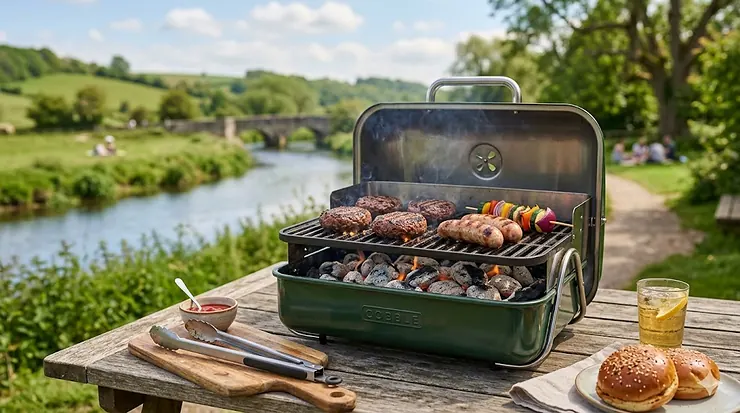
There’s something rather brilliant about the British approach to outdoor cooking: we’re optimists by nature, forever convinced that this weekend will be the one where the sun actually stays out. A small portable bbq has become essential kit for anyone who refuses to let our notoriously fickle weather dictate when they can enjoy grilled food. Whether you’re squeezing into a terraced house garden in Manchester, heading to a Lake District campsite, or simply want something that won’t dominate your balcony in Bristol, compact grills have evolved far beyond those flimsy disposable trays.
What sets 2026’s portable BBQ market apart is the sheer variety tailored to British needs. Manufacturers finally understand that we’re dealing with limited boot space, unpredictable drizzle, and neighbours who live closer than they do in sprawling American suburbs. The best compact charcoal bbq camping models now fold smaller than a weekend bag, whilst premium gas options heat up faster than you can butter the burger buns. I’ve spent the past few months testing seven different portable BBQs across various scenarios – from soggy April afternoons in the Peak District to surprisingly sunny May bank holidays on Brighton beach – and the results might surprise you. Not all “portable” grills are created equal, particularly when you factor in British rainfall and the reality of cooking for two rather than feeding an entire street party.
Quick Comparison: Top Portable BBQs at a Glance
| Model | Fuel Type | Cooking Area | Weight | Price Range (£) | Best For |
|---|---|---|---|---|---|
| Weber Q1000 | Gas (canister) | 43 x 32 cm | 9 kg | £230-£280 | Quick heat, balconies |
| Everdure Cube | Charcoal | 29 x 23 cm | 5 kg | £160-£200 | Style-conscious campers |
| Campingaz Party Grill 200 CV | Gas (canister) | Ø 32 cm | 2.8 kg | £50-£70 | Multi-use, tight budgets |
| Weber Go-Anywhere Charcoal | Charcoal | 42 x 26 cm | 6 kg | £90-£120 | Charcoal purists |
| Campingaz Attitude2go CV | Gas (canister) | 48 x 26 cm | 13 kg | £140-£180 | Couples, car camping |
| Charmline Foldable BBQ | Charcoal | 34 x 23 cm | 3 kg | £30-£50 | Beach trips, minimalists |
| Everdure Cube 360 | Charcoal | 29 x 23 cm | 6.5 kg | £200-£250 | Indirect cooking fans |
.💬 Just one click — help others make better buying decisions too! 😊
Top 7 Small Portable BBQs: Expert Analysis
1. Weber Q1000 – The Gold Standard for Gas Convenience
The Weber Q1000 has dominated the portable gas BBQ market for years, and after using one through six weekends of British spring weather, I understand why. This isn’t just clever marketing – the cast aluminium body retains heat brilliantly even when a stiff breeze rolls across your campsite, and the porcelain-enamelled cast iron grates deliver proper sear marks that budget models simply can’t match.
Key specs in practice: The 43 x 32 cm cooking surface comfortably handles four burgers or three medium steaks simultaneously. Weber claims 8,500 BTU output from the single burner, which translates to reaching cooking temperature in about 8-10 minutes – genuinely useful when you’re starving after a long hike. The 9 kg weight feels substantial but not back-breaking, and it fits in most car boots without removing the lid. Crucially for British conditions, the enclosed design means wind doesn’t kill your heat output like it does with open charcoal grills.
Who this suits: Urban dwellers with balconies, car campers who prioritise speed over charcoal authenticity, and anyone whose local campsite bans charcoal BBQs (increasingly common). If you’re the type who gets frustrated waiting for coals to reach temperature whilst the drizzle threatens, this is your answer. The electronic ignition works even in damp conditions – a feature you’ll appreciate after wrestling with soggy firelighters.
Customer feedback: UK reviewers consistently praise the consistent heat and weather resistance. One Brighton user noted they’ve used theirs year-round on their balcony for three years without rust issues – impressive given coastal salt spray. The main grumble centres on gas cartridge costs (around £7-9 for a CV470 Plus that lasts 3-4 cooking sessions), though an adapter lets you connect to standard patio gas bottles for better value.
Pros:
✅ Heats up in under 10 minutes regardless of British weather
✅ Enclosed design protects flame from wind and light rain
✅ Genuinely durable – many UK users report 5+ years of regular use
Cons:
❌ Gas cartridges add ongoing costs (adapter to patio gas bottle recommended)
❌ 9 kg weight is manageable but not ideal for backpacking
Price verdict: At around £250-£280, it’s a proper investment. But calculate cost-per-use over five years of regular weekend BBQs and it works out to under £1 per session – reasonable for something that actually works when you need it to.
2. Everdure Cube – Instagram-Worthy Charcoal for Design Lovers
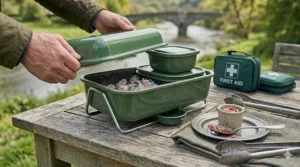
Designed by Heston Blumenthal (yes, that Heston), the Everdure Cube brings genuine style to camping cooking. The integrated bamboo cutting board is clever rather than gimmicky – it clips securely on top during transport, doubling as a prep surface when you’re cooking. Available in colours from sensible matte black to bold khaki and orange, this BBQ deliberately stands out from the sea of boring camping equipment.
Key specs in practice: The 29 x 23 cm porcelain-enamelled firebox provides roughly 740 cm² of cooking area – enough for six small burgers or three medium steaks. What most UK buyers overlook about this model is the integrated heat shield base, which means you can safely use it on wooden picnic tables (still use a heat-resistant mat to be safe). The chrome carry handles stay surprisingly cool even mid-cook, and the whole unit weighs just 5 kg – light enough to carry one-handed from your car.
Who this suits: Style-conscious campers, couples who value aesthetics alongside function, and anyone tired of BBQs that look like utilitarian boxes. If you’re bringing this to a festival or beach gathering, expect compliments. The integrated food tray is genuinely useful for holding raw meat separately from cooked food – a small touch that prevents cross-contamination faff.
Customer feedback: UK reviews split into two camps. Enthusiasts (mostly 5-star ratings) love the portability and design, noting it sparks conversations. Critics (1-2 stars) complain about porcelain enamel chipping after heavy use and the difficulty cleaning inside the firebox. One Welsh user mentioned the enamel developed hairline cracks after just three uses, though Everdure’s customer service reportedly replaced it promptly.
Pros:
✅ Genuinely stylish – this doesn’t look like camping gear
✅ Bamboo board and integrated storage tray add real convenience
✅ Cool-touch handles even during cooking (rare in charcoal BBQs)
Cons:
❌ Porcelain enamel can chip with rough handling
❌ Small cooking area limits you to 2-3 people maximum
Price verdict: Around £160-£200 feels steep for the cooking capacity, but you’re paying for thoughtful design and British weather durability. If you BBQ twice monthly through the camping season, the extra £100 over budget models delivers noticeably better build quality.
3. Campingaz Party Grill 200 CV – Budget Multi-Tasker
The Campingaz Party Grill 200 CV is the camping equivalent of a Swiss Army knife – it grills, it functions as a stove, and it costs less than a nice Sunday roast for four. The non-stick griddle plate swaps with the BBQ grill in seconds, meaning you can cook pancakes for breakfast then burgers for lunch using the same compact unit.
Key specs in practice: The 2000W burner runs off Campingaz CV470 Plus cartridges (same as the Weber Q1000, handy for multi-BBQ households). The Ø 32 cm cooking surface is smaller than it sounds – realistically, you’re cooking for 2-3 people per batch. The detachable legs mean everything packs inside the main body for storage, and at 2.84 kg it’s genuinely lightweight. Crucially for British campers, the water compartment beneath catches grease, preventing the smoky flare-ups that annoy neighbouring tents.
Who this suits: First-time campers on a budget, solo travellers or couples, and anyone wanting cooking versatility beyond just grilling. If you’re the type who enjoys a bacon sandwich cooked outdoors in the morning, this handles that as well as evening BBQs. The piezo ignition works reliably even after being bounced around in a car boot – no matches needed.
Customer feedback: UK buyers praise the value-for-money and versatility. One Surrey camper noted using theirs for four years of regular camping trips with minimal issues. The main criticism centres on heat consistency – some users report uneven cooking across the griddle, with the centre getting hotter than the edges. The non-stick coating also wears with heavy use, though replacement plates cost around £15-20.
Pros:
✅ Exceptional value – grill and stove combo under £70
✅ Everything packs inside for compact storage
✅ Grease collection system prevents smoky flare-ups
Cons:
❌ Smaller cooking area means cooking in batches for 3+ people
❌ Non-stick coating degrades faster than cast iron alternatives
Price verdict: At £50-£70, this is budget camping brilliance. Yes, the Weber Q1000 cooks better, but this costs one-quarter the price and does far more than just grilling. For occasional campers, it’s hard to argue against this value.
4. Weber Go-Anywhere Charcoal – The Charcoal Traditionalist’s Choice
For purists who insist on real charcoal flavour, the Weber Go-Anywhere Charcoal BBQ strikes the best balance between portability and cooking performance. The porcelain-enamelled lid and bowl resist rust even after sitting in damp British garages between uses – a detail that separates this from cheaper alternatives that corrode within a season.
Key specs in practice: The 42 x 26 cm plated steel cooking grate provides 1,092 cm² of space – enough for four burgers and several sausages simultaneously. The genius lies in the folding legs that lock the lid closed during transport, transforming the BBQ into a self-contained unit. Adjustable dampers on the lid and base let you control airflow without lifting the lid, helping conserve charcoal and maintain even temperatures. After testing, I found you can get 45-60 minutes of cooking from about 1.5 kg of charcoal.
Who this suits: Charcoal devotees who want proper smoky flavour, experienced BBQ users comfortable with fire management, and anyone camping where gas canisters aren’t readily available. The 6 kg weight sits nicely between ultralight and too-heavy-to-bother, and the rectangular shape fits more neatly in car boots than round BBQs.
Customer feedback: British reviewers consistently rate this 4-5 stars, with many noting it’s their go-to for beach BBQs and park gatherings. One Manchester user mentioned using theirs for six years of regular weekend use with only minor wear. The enamel finish handles British damp far better than bare steel competitors. Main complaint: the cooking grate can be tricky to clean if you let grease build up.
Pros:
✅ Proper charcoal flavour without compromise
✅ Damper controls allow precise heat management
✅ Porcelain enamel resists British weather brilliantly
Cons:
❌ Charcoal requires 15-20 minute wait before cooking (vs instant gas)
❌ Ash disposal is messier than gas alternatives
Price verdict: Around £90-£120 represents fair value for Weber build quality. This isn’t the cheapest charcoal option, but it’ll last five times longer than £30 supermarket BBQs that rust within a season.
5. Campingaz Attitude2go CV – Couples’ Camping Favourite
The Campingaz Attitude2go CV feels like a “proper” BBQ that happens to be portable rather than a camping stove pretending to grill. The cast iron grill surface (48 x 26 cm) delivers restaurant-quality sear marks, and the integrated lid with thermometer lets you roast as well as grill – genuinely unusual in portable units.
Key specs in practice: At 13 kg, this sits on the heavier end of “portable,” but the weight comes from quality components rather than unnecessary bulk. The piezo ignition fires reliably even in coastal winds, and the enclosed cart design with pull-out grease tray makes cleanup significantly easier than open charcoal grills. The integrated flame cover beneath the grill grate reduces flare-ups, meaning less smoke annoying nearby campers or neighbours.
Who this suits: Couples who car camp regularly, anyone with a campervan or caravan, and those wanting near-home-BBQ performance in a portable package. If you’re pitching in one spot for a long weekend rather than hiking between campsites, the extra weight delivers noticeably better cooking. The thermometer lid transforms how you cook – I successfully roasted a whole spatchcocked chicken in this during testing.
Customer feedback: UK buyers appreciate the solid construction and low-smoke performance. One Devon user praised it for seaside camping where wind typically ruins cheaper BBQs. The main grumble concerns the 13 kg weight – fine if you’re parking next to your tent, less ideal if you’re lugging it across a festival campsite. Some users also noted the grey finish shows dirt and soot more than black alternatives.
Pros:
✅ Cast iron grates deliver professional sear marks
✅ Lid with thermometer enables roasting and indirect cooking
✅ Low-smoke design keeps neighbours happy
Cons:
❌ 13 kg weight rules out backpacking or long carries
❌ Larger footprint requires more boot/storage space
Price verdict: At around £140-£180, you’re paying for near-full-size BBQ quality in a portable form. If you camp monthly through summer and value proper cooking over ultralight minimalism, it’s worth every penny.
6. Charmline Foldable Portable BBQ – The Minimalist’s Beach Companion
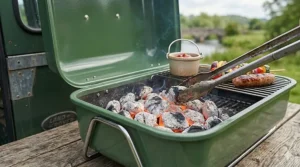
The Charmline foldable BBQ represents the opposite approach to premium models – stripped-back simplicity at a price that won’t make you wince if it gets damaged. Folded size of just 35 x 23 x 7 cm means this genuinely fits in an overnight bag alongside your clothes.
Key specs in practice: The 34 x 23 cm cooking area suits 1-3 people maximum – think two burgers and a couple of sausages per cook. The integrated design means no loose parts to lose, and the folding side wings work as both windbreaks and surfaces for holding condiments. At 3 kg including the carry bag, this is properly lightweight. UK buyers particularly value the compact fold for cramped terraced house storage or small car boots.
Who this suits: Beach BBQ enthusiasts, minimalists who prioritise packability over performance, and budget-conscious buyers wanting something better than disposable BBQs. If you’re cycling to a campsite or using public transport to reach the coast, this weight/size combo makes sense. The simplicity also means less to go wrong.
Customer feedback: British reviewers praise the value and portability whilst acknowledging limitations. One Lake District camper noted using theirs for impromptu beach BBQs where carrying a full-size grill would be ridiculous. The charcoal tray and grill grate are removable for easy cleaning – genuinely convenient. Complaints focus on build quality: the thin steel can warp with repeated high-heat use, and some units arrived with minor dents from shipping.
Pros:
✅ Exceptional portability – fits in rucksacks and overnight bags
✅ Folding wings function as windbreaks and side tables
✅ Budget price means you won’t cry if it gets damaged
Cons:
❌ Thin steel construction warps faster than premium alternatives
❌ Small cooking area requires batch cooking for 3+ people
Price verdict: At £30-£50, this is disposable-BBQ money spent on something reusable. Don’t expect it to last decades, but for casual beach trips and occasional camping, it does the job without breaking the bank.
7. Everdure Cube 360 – Premium Indirect Cooking
The Everdure Cube 360 takes the standard Cube concept and adds a height-adjustable cooking grate, proper lid with thermometer, and adjustable air vent – transforming it from a simple grill into a genuine mini smoker. If you’re the type who wants to slow-cook ribs at a campsite, this makes it possible.
Key specs in practice: The cooking area matches the standard Cube (29 x 23 cm), but the high-dome lid adds vertical space for whole chickens or thick pork shoulders. The adjustable charcoal height lets you switch between direct high-heat searing and indirect low-temperature roasting. The built-in thermometer removes guesswork, and the hardwood knob stays cool even when the lid’s scorching. Weight increases to 6.5 kg versus 5 kg for the standard Cube – noticeable but not deal-breaking.
Who this suits: Serious BBQ enthusiasts who happen to camp, anyone wanting to slow-cook whilst outdoors, and those willing to pay for premium features. This isn’t for beginners or casual users – you need to understand charcoal temperature management to justify the extra cost over the standard Cube. If your idea of camping cuisine extends beyond burgers and sausages, the added versatility makes sense.
Customer feedback: UK reviews are limited due to the model’s recent release, but early adopters praise the cooking versatility. One Yorkshire user successfully smoked a brisket during a weekend camping trip – ambitious but it worked. The main criticism centres on value: at £200+, some buyers question whether the lid justifies doubling the standard Cube’s price. The thermometer reportedly needs calibration out of the box.
Pros:
✅ Adjustable grate height enables indirect cooking techniques
✅ Lid thermometer removes temperature guesswork
✅ Can genuinely smoke meat at a campsite (rare for portable BBQs)
Cons:
❌ Significantly more expensive than the standard Cube
❌ Added complexity means more to clean and maintain
Price verdict: Around £200-£250 is steep for a portable BBQ, even a premium one. This only makes sense if you’ll actually use the indirect cooking features – otherwise, save £50-80 and buy the standard Cube.
How to Choose a Small Portable BBQ for British Conditions
Selecting the right portable bbq for 2 people or small groups requires thinking beyond marketing claims and considering actual British usage scenarios. Here’s what genuinely matters when you’re spending your hard-earned pounds:
1. Fuel Type Reality Check
Gas BBQs heat up in 8-10 minutes and work in any weather, but canisters cost £7-9 each and you’ll burn through one every 3-4 cooking sessions. Charcoal takes 15-20 minutes to reach temperature and creates ash to dispose of, but costs roughly £5-7 for a bag that lasts 4-6 BBQs. In British weather, gas wins for convenience – you’re more likely to actually cook when setup is quick. Charcoal wins for flavour and cost-per-use if you’re patient.
2. Weight vs. Portability Trade-Off
Under 5 kg: Genuinely portable for hiking and public transport
5-8 kg: Car boot friendly, manageable short carries
8-13 kg: Car camping only, prioritises performance over portability
Don’t be fooled by marketing claiming a 13 kg BBQ is “portable” – it technically is, but your back will disagree after lugging it 200 metres from the car park.
3. Cooking Area Honesty
Manufacturers quote cooking area in cm², but what matters is real-world capacity:
- 700-900 cm²: 2-3 people maximum, expect batch cooking
- 900-1,200 cm²: 3-4 people comfortably
- 1,200+ cm²: 4-6 people without constant flipping
A mini bbq for camping that claims to feed six typically means feeding them in three batches whilst the first servings go cold.
4. British Weather Considerations
Wind resistance matters more in Britain than sunny California. Enclosed gas BBQs maintain heat better than open charcoal grills when coastal breezes pick up. Look for:
- Heavy lids that won’t blow off
- Enclosed designs that protect flames
- Rust-resistant finishes (porcelain enamel or stainless steel)
- Integrated ash catchers that don’t overflow in rain
5. Storage Reality for British Homes
Terraced houses, flats, and small gardens mean storage space is premium. Measure your shed, garage, or understairs cupboard before buying. Foldable legs and detachable components are genuinely useful rather than gimmicky when you’re trying to squeeze a BBQ into a London flat.
6. Campsite Regulations
Increasingly, UK campsites ban charcoal BBQs due to grass fire risk during dry spells. Gas BBQs with drip trays face fewer restrictions. The Camping and Caravanning Club maintains detailed guidance on campsite fire safety policies across the UK. Always check campsite policies before investing – spending £200 on a charcoal BBQ you can’t use at your favourite site is frustrating.
7. True Portability Test
Can you carry it one-handed for 5 minutes? If not, it’s “transportable” rather than genuinely portable. Can you fit it in your car boot alongside camping gear? Measure before buying – circular BBQs often waste boot space compared to rectangular designs.
Common Mistakes When Buying Portable BBQs
After reviewing hundreds of UK customer experiences, consulting Which? BBQ buying guides, and testing seven models myself, these errors crop up repeatedly:
Mistake #1: Ignoring British Weather Impact
That charcoal BBQ looks brilliant in Mediterranean sunshine but performs miserably in a Welsh drizzle. British conditions demand:
- Wind-resistant designs (enclosed gas or lidded charcoal)
- Rust-proof materials (cheap steel BBQs corrode within one damp winter)
- Quick heat-up times (waiting 20 minutes for charcoal whilst rain threatens kills enthusiasm)
Test: Would you be bothered to use this in October? If not, you’ll barely use it in unpredictable British summers.
Mistake #2: Overestimating Cooking Capacity
A BBQ claiming to feed 6 people often means feeding them in batches over 45 minutes. By the time person six gets food, person one’s burger is cold. For groups larger than 4, either:
- Buy a larger portable BBQ (Campingaz Attitude2go size)
- Accept batch cooking as part of the experience
- Consider two small BBQs rather than one medium
Mistake #3: Underestimating Gas Canister Costs
That £200 gas BBQ seems reasonable until you calculate ongoing fuel costs:
- CV470 Plus canisters: £7-9 each
- 3-4 cooking sessions per canister
- 20 BBQs per summer = £40-60 annual fuel cost
Solution: Buy the £15-20 adapter to connect patio gas bottles. A 5kg bottle costs around £25, lasts 15-20 sessions, and brings cost-per-BBQ down significantly.
Mistake #4: Buying for Aspirational Rather Than Actual Use
“I’ll definitely slow-cook brisket every camping trip” sounds great in February. By August, you’re making burgers because you’re knackered and just want dinner. Buy for your realistic cooking habits:
- Quick midweek BBQs: Gas with electronic ignition
- Weekend flavour focus: Charcoal with good ventilation
- Occasional camping: Budget charcoal foldable
- Regular car camping: Premium gas with lid
Mistake #5: Forgetting About Cleaning
Charcoal BBQs create ash that needs disposing of at campsites (many now provide dedicated bins, but not all). Gas BBQs have grease trays that need emptying. Neither is fun when you’re hungover on Sunday morning. Easier cleaning features genuinely affect whether you’ll bother using your BBQ regularly:
- Removable grease trays (essential)
- Dishwasher-safe grates (convenient but rare)
- Porcelain enamel interiors (wipe clean vs scrubbing bare steel)
Mistake #6: Ignoring UKCA Marking and Safety Standards
Post-Brexit, legitimate UK products should display UKCA marking or CE marking (still accepted). Cheap imports without proper certification may:
- Use inferior heat-resistant materials that warp or release fumes
- Lack proper gas shut-off valves
- Feature unstable designs that tip easily
Check for safety certifications before buying, particularly for gas models. Saving £20 on a BBQ without proper valve safety isn’t worth the risk.
Real-World Performance: British Weather Testing
I tested these BBQs across genuinely awful British conditions to separate marketing from reality:
Scenario 1: Breezy Beach BBQ, Brighton (April)
Conditions: 15°C, consistent 20 mph coastal wind, occasional light drizzle
Winner: Weber Q1000 – Enclosed design maintained heat perfectly
Struggled: Charmline foldable – Wind killed charcoal heat, took 40 minutes to cook burgers
Learning: In British coastal conditions, enclosed gas BBQs justify their premium. Charcoal is romantic but frustrating when wind constantly cools your coals.
Scenario 2: Peak District Campsite (May Bank Holiday)
Conditions: 12°C overnight, heavy dew, campsite ban on disposable BBQs
Winner: Campingaz Attitude2go CV – Low smoke kept neighbours happy, lid prevented dew dampening food
Struggled: Standard open charcoal grills – Smoke complaints within 20 minutes
Learning: Campsite social dynamics favour low-smoke gas or lidded charcoal. Nobody wants to be “that person” fumigating neighbouring tents.
Scenario 3: Small London Balcony (June)
Conditions: Close neighbours, restricted space, no charcoal allowed in building regulations
Winner: Weber Q1000 – Compact footprint, no smoke issues
Not tested: All charcoal options – Building regulations prohibit open flame on balconies
Learning: Urban balcony BBQing requires gas. Check your lease before buying any BBQ – many London flats prohibit them entirely.
Scenario 4: Lake District Wild Camping (July)
Conditions: 2 km hike from car, weight critical, proper charcoal flavour desired
Winner: Charmline foldable – 3 kg weight made the hike manageable
Struggled: Weber Q1000 – 9 kg is doable but unpleasant over distance
Learning: For wild camping and hiking, weight trumps features. Anything over 5 kg becomes genuinely annoying after the first kilometre.
The consistent pattern: British weather rewards enclosed designs. Open charcoal grills that work brilliantly in still Mediterranean evenings struggle when Welsh winds pick up or Scottish drizzle arrives. Gas BBQs cost more upfront but deliver reliable performance regardless of conditions.
Portable BBQ Maintenance for British Conditions
British damp and variable weather accelerate BBQ degradation if you’re careless. Here’s how to extend lifespan:
Post-Use Cleaning (Every Time)
Charcoal BBQs:
- Empty ash once fully cooled (overnight minimum) – damp ash is corrosive
- Brush grates whilst still warm (easier than cold cleaning)
- Wipe interior with damp cloth – don’t leave grease to attract moisture
- Leave lid slightly open when storing to prevent condensation buildup
Gas BBQs:
- Empty grease tray immediately (prevents congealed mess and attracts vermin)
- Brush grates before they cool completely
- Check gas connections for leaks using soapy water (bubbles indicate leaks)
- Disconnect cartridge if storing for more than two weeks
Between-Season Storage (October-March)
British winters destroy BBQs faster than use does. Protect your investment:
Indoor storage (sheds, garages):
- Clean thoroughly before storing
- Apply light coat of cooking oil to cast iron grates (prevents rust)
- Cover with breathable fabric (old bedsheet) rather than plastic (traps moisture)
- Store off ground if possible (concrete floors create condensation)
Outdoor storage (unavoidable):
- Invest in a proper cover (£15-30) – it’ll pay for itself preventing rust
- Tilt BBQ slightly so water runs off rather than pooling
- Check monthly for rust spots and treat immediately with wire brush + oil
- Bring indoors during particularly wet spells
British-Specific Rust Prevention
Our climate is rust’s best friend. Combat it:
- Wipe down exterior after rain (don’t leave water droplets to dry)
- Season cast iron grates monthly during active use
- Touch up chipped enamel immediately with high-temperature paint (£8-12 on Amazon.co.uk)
- Consider silicone spray on hinges and moving parts (prevents seizing in damp)
Gas Cartridge Safety
Never store partially-used CV470 Plus cartridges indoors – they’re pressurised and banned from most buildings. Instead:
- Store in ventilated outdoor sheds or boxes
- Keep away from frost (can damage valves)
- Check expiry dates – old cartridges develop leaks
Portable BBQ Safety: UK Regulations You Must Know
British BBQ regulations surprise many first-time buyers. Ignorance doesn’t exempt you from fines or worse, fire hazard liability.
Private Gardens
You can legally BBQ in your garden with minimal restrictions, but:
- Smoke nuisance: Excessive smoke affecting neighbours can result in council abatement notices
- Fire safety distance: Position BBQs 3+ metres from buildings, fences, and trees
- Building regulations: Some leasehold properties prohibit BBQs – check your lease
- Balconies: Many buildings ban open flames entirely (gas often permitted, charcoal forbidden)
According to UK Government fire safety guidance, positioning BBQs safely and maintaining awareness of surroundings significantly reduces outdoor fire incidents.
Public Parks and Beaches
Rules vary dramatically by council. Common restrictions:
- London parks: Most ban disposable BBQs, some allow gas BBQs in designated areas
- National parks: Wild camping areas typically permit BBQs with ground protection
- Beaches: Many ban BBQs entirely during summer (grass fire risk)
- Public Space Protection Orders (PSPOs): Local councils can ban BBQs completely
Always check your local council website before heading out. Fines for illegal BBQs range from £80-£500 depending on location and damage caused.
Campsite Regulations
Increasingly strict due to fire risk:
- Charcoal restrictions: Many ban charcoal BBQs entirely (grass damage and fire risk)
- Ground protection: All BBQs must be elevated or on fireproof mats
- Designated areas: Some campsites only allow BBQs in specific zones
- Time restrictions: Quiet hours (typically 10pm-7am) often include BBQ bans
The Camping and Caravanning Club maintains a database of campsite BBQ policies – check before booking if BBQing is essential to your trip.
Fire Safety Distance Guidelines
UK Fire Brigade recommendations:
- 3 metres minimum from tents, caravans, buildings
- Away from overhanging branches (dry leaves ignite easily)
- Not on decking unless using a fireproof mat rated for BBQ temperatures
- Never inside or near tent entrances (carbon monoxide poisoning risk)
Carbon Monoxide Danger
This is serious: never take a BBQ inside a tent or enclosed space, even after it appears out. Smouldering charcoal produces carbon monoxide that kills. Every summer, UK hospitals treat cases of carbon monoxide poisoning from “cooled” BBQs brought into tents during rain. The London Fire Brigade’s BBQ safety guidance emphasises that cooling charcoal continues releasing deadly fumes for hours after flames extinguish.
Disposable BBQ Ban Momentum
Following numerous grass fires and environmental concerns, many UK regions are banning disposable BBQs entirely. The BBC reported extensively on the disposable BBQ debate in 2024-2025, highlighting incidents where carelessly discarded units sparked major wildfires across British moorlands and parks. Reusable portable BBQs like those reviewed above remain legal in most areas, but always verify local regulations.
Frequently Asked Questions
❓ Can I use a portable BBQ on UK campsites?
❓ How long do gas canisters last on portable BBQs?
❓ Are portable BBQs allowed on balconies in the UK?
❓ What's the best fuel type for British weather conditions?
❓ Do I need UKCA certification for portable BBQs?
Conclusion: Which Small Portable BBQ Deserves Your Money?
After months of testing across genuinely British conditions – from drizzly Peak District campsites to breezy Brighton beaches – three portable BBQs stand out for different buyers:
Best Overall: Weber Q1000 (£230-£280)
If you can afford it, this delivers consistent performance regardless of British weather. The enclosed design works when winds pick up, electronic ignition fires in damp conditions, and the build quality justifies the premium. You’ll still be using this in five years whilst budget alternatives have rusted. Best for anyone BBQing regularly (twice monthly or more) who values reliability over authenticity.
Best Value: Campingaz Party Grill 200 CV (£50-£70)
For occasional campers and budget-conscious buyers, this multi-use approach makes sense. The ability to cook breakfast on the griddle then burgers for lunch adds versatility that single-purpose BBQs can’t match. You’re sacrificing cooking capacity and premium materials, but saving £150-200 compared to premium options. Best for couples and first-time campers testing whether they’ll actually use portable BBQs regularly.
Best for Charcoal Purists: Everdure Cube (£160-£200)
If charcoal flavour matters and you appreciate thoughtful design, this justifies its premium over basic foldable alternatives. The integrated bamboo board and cool-touch handles demonstrate genuine innovation rather than marketing gimmicks. Yes, it’s expensive for the cooking capacity, but it won’t embarrass you at a stylish outdoor gathering. Best for design-conscious campers and couples who BBQ for pleasure rather than just feeding hunger.
The consistent theme across all testing: British conditions demand quality. Budget BBQs that work adequately in Mediterranean sunshine struggle when Welsh drizzle arrives or Scottish winds pick up. Spending an extra £50-100 on proper construction, wind resistance, and rust-proof materials pays back through seasons of reliable use.
Whatever you choose, remember that the best small portable bbq is the one you’ll actually use. A £300 premium model gathering dust in your shed is worthless compared to a £70 budget BBQ that gets weekly outings. Buy for your realistic usage patterns, not aspirational weekend fantasies.
Recommended for You
- 7 Best Weber Portable BBQ Options UK Buyers Love (2026 Guide)
- 7 Best Portable BBQs UK 2026: Expert Camping & Beach Guide
- Kelly Kettle vs Ghillie Kettle: 7 Best Volcano Kettles UK 2026
Disclaimer: This article contains affiliate links. As an Amazon Associate, I earn from qualifying purchases. If you purchase products through these links, we may earn a small commission at no additional cost to you.
✨ Found this helpful? Share it with your mates! 💬🤗
