
In This Article
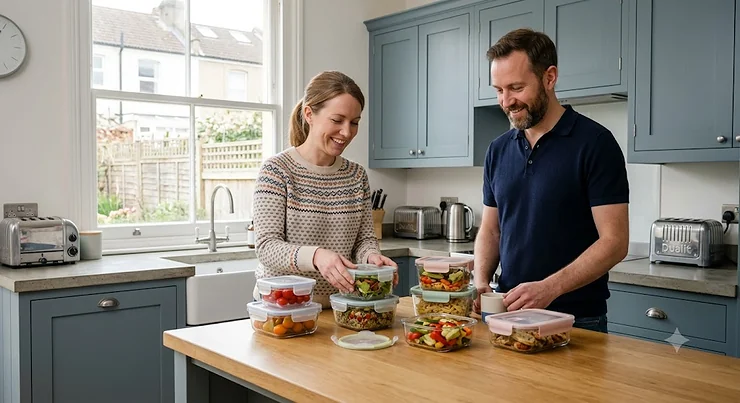
Open most UK kitchen cupboards and you’ll find the same crime scene: a lid-shaped avalanche waiting to happen the moment you reach for anything at the back. Mismatched boxes, missing lids, and that one container that’s gone slightly cloudy and smells faintly of last month’s curry no matter how many times it’s washed. It’s not really about storage at all — it’s about reclaiming a cupboard you can actually open without flinching.
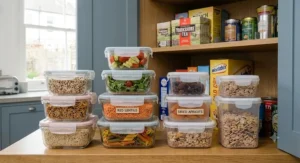
Stackable food storage containers are designed specifically to solve that problem: boxes and lids engineered to interlock or nest neatly, so a set that would otherwise sprawl across two shelves compresses down into one tidy column. The good ones go further, nesting empty containers inside each other and clipping lids together separately, so storage takes up a fraction of the space of use.
This guide skips the marketing fluff and works from real UK-available products, genuine specs, and honest material comparisons. We’ve covered plastic, glass and stainless steel options across seven real sets, plus practical guidance on cupboard space optimisation, what actually survives a camping trip, and which material genuinely suits which use case rather than just claiming to be “the best.” Whether you’re overhauling a small kitchen or packing for a weekend away, there’s a proper answer here rather than a sales pitch.
Quick Comparison Table: Stackable Food Storage Containers at a Glance
| Product | Best For | Material | Price Range |
|---|---|---|---|
| Sistema Klip It Plus | Budget all-rounder | Plastic | £8-£25 |
| Joseph Joseph Nest Lock | Genuine space-saving nesting | Plastic | £20-£35 |
| SmartStore Small Set | Small kitchen organisation | Plastic | £5-£12 |
| Vtopmart Glass 8-Piece Set | Camping and oven use | Borosilicate glass | £20-£30 |
| Misichao Stainless Steel Set | Durability without plastic | Stainless steel | £18-£28 |
| Black+Blum Stainless Lunch Box | Dedicated camping/picnic use | Stainless steel | £15-£22 |
| Lakeland Stack-a-Boxes | Lesser-known UK budget value | Plastic | £10-£18 |
Lined up together, the pattern is clear: genuine nesting design, where empty containers shrink down rather than just stacking lid-to-base, is what separates the Joseph Joseph Nest Lock from simpler stackable ranges like Sistema Klip It Plus. If cupboard space is your main headache rather than material preference, that nesting mechanism is worth paying extra for.
💬 Just one click — help others make better buying decisions too!😊
Top 7 Stackable Food Storage Containers: Expert Analysis
1. Sistema Klip It Plus — best budget all-rounder with a size for everything
The Sistema Klip It Plus range has become something of a default choice in UK kitchens, and its standout feature is genuinely modular sizing — the range runs from around 400ml right up to a substantial 5.5-litre container, all sharing the same stacking shape. That consistency matters more than it sounds: because every size in the range shares the same footprint proportions, a shelf of mixed sizes still stacks cleanly rather than leaving awkward gaps. Based on the spec sheet, the corner-shoulder base design is specifically built for compact nesting when empty, and the distinctive blue clip-lock lid creates a genuinely airtight seal rather than just a loose-fitting cover. Reviewers consistently rate the range highly, with aggregated feedback across tens of thousands of verified purchases pointing to reliable everyday performance, though a recurring theme in that same feedback notes the plastic can become more brittle with age and heavy dishwasher use over several years. What most buyers overlook is that buying into one consistent range, rather than mixing brands, is what actually delivers the stacking benefit — a single Klip It box dropped into a cupboard of mismatched containers won’t stack any better than anything else. This suits anyone starting from scratch who wants one dependable range covering everything from small leftovers to bulk dry goods.
Pros:
- ✅ Wide size range from 400ml to 5.5 litres
- ✅ Genuinely airtight clip-lock seal
- ✅ Large, well-established UK review base
Cons:
- ❌ Plastic can become brittle after years of heavy use
- ❌ Not a true nesting design like premium rivals
At around £8-£25 depending on set size, this is the sensible starting point for anyone building a stackable system from nothing.
2. Joseph Joseph Nest Lock — best for genuine nesting and cupboard space savings
The Joseph Joseph Nest Lock set earns its premium pricing through a standout feature most rivals only claim rather than deliver: containers that properly nest inside one another when empty, rather than merely stacking lid-on-top. On paper, that distinction is significant — a five-piece set ranging from 230ml to 3 litres collapses down to roughly the footprint of its largest single container when empty, which a simple stacking range simply can’t match. The colour-coded lids and bases are more than a styling choice; reviewers consistently highlight how the matching dots genuinely speed up finding the right lid, particularly useful in a busy kitchen where mismatched lids are the single biggest source of storage frustration. Based on the spec comparison with simpler rivals, the lockable clip-sides trade a small amount of speed for a noticeably more secure seal, since the design prevents the lid popping open accidentally the way looser designs sometimes can. What the spec sheet won’t tell you, but aggregated reviews suggest, is that the firmer locking mechanism takes slightly more hand strength to open than gentler designs, which is worth knowing if that’s a consideration for anyone in the household. This is the pick for anyone whose main frustration is cupboard space rather than price.
Pros:
- ✅ True nesting design collapses to minimal empty space
- ✅ Colour-coded lids genuinely speed up matching
- ✅ Secure locking mechanism prevents accidental spills
Cons:
- ❌ Noticeably pricier than basic stacking ranges
- ❌ Firmer clips need a bit more hand strength to open
Typically priced around £20-£35 for a five-piece set, this is worth the premium specifically if cupboard space, not just container count, is your real problem.
3. SmartStore Small Set — best for small kitchen organisation on a tight budget
The SmartStore Small Set of five 0.5-litre containers is built specifically around one job: organising a small kitchen where every centimetre of shelf and fridge door space matters. Its standout feature is that deliberately compact, uniform sizing — rather than a mixed range of large and small boxes, this set assumes you’ll be using multiple identical small containers, which on paper means far more predictable stacking in a tight fridge shelf or narrow cupboard than an assortment of differently sized boxes. Reviewers consistently note the set’s suitability for fridge and freezer use specifically, and the BPA-free construction covers the basics buyers expect at this price point without cutting corners on food safety. What most buyers overlook about uniform small-container sets like this is that they genuinely shine for portion control and batch-prepped meals, since identical containers stack far more predictably than assorted sizes ever will, even if they hold less per box than larger alternatives. Based on the spec sheet, this isn’t the set to reach for if you need to store a large casserole dish of leftovers, but for small kitchen organisation specifically, uniform sizing beats large capacity every time.
Pros:
- ✅ Uniform 0.5L sizing stacks predictably in tight spaces
- ✅ Genuinely budget-friendly for a five-piece set
- ✅ Well suited to fridge, freezer and portion control use
Cons:
- ❌ Too small for larger meals or bulk leftovers
- ❌ Less versatile than mixed-size ranges for varied storage needs
Priced around £5-£12, this is the pick specifically for small kitchens or anyone standardising around portion-controlled meal prep.
4. Vtopmart Glass 8-Piece Set — best for camping, oven use and odour resistance
The Vtopmart Glass 8-Piece Set stands apart from the plastic options on this list for one clear reason: genuine borosilicate glass construction rated from -20°C to 400°C, meaning it handles freezer, microwave and oven use without the temperature limitations plastic carries. That wide temperature range is the standout feature, and it matters specifically for anyone who wants to reheat leftovers directly in the same container they stored them in, something none of the plastic options on this list can safely do in an oven. Reviewers consistently praise the material’s stain and odour resistance compared with plastic, noting that strongly coloured or pungent foods like curry or tomato-based sauces don’t leave lingering marks or smells the way they eventually do in plastic equivalents. The set includes eight pieces ranging from roughly 150ml to just over a litre, with each lid featuring a removable silicone seal and four-hinge snap locks for a genuinely leak-resistant close. What the spec sheet won’t tell you, but user reports on similar glass sets suggest, is that the weight adds up quickly across a full set, making this noticeably heavier to carry than an equivalent plastic range — a real consideration if you’re packing for a camping trip rather than storing at home.
Pros:
- ✅ Oven, microwave and freezer safe from -20°C to 400°C
- ✅ Genuinely resists staining and odour retention
- ✅ Stackable and nestable for efficient storage
Cons:
- ❌ Noticeably heavier than plastic equivalents
- ❌ Glass risk means more caution needed for transport
At around £20-£30 for the eight-piece set, this is the pick for anyone prioritising versatility and long-term freshness over lightweight portability.
5. Misichao Stainless Steel Set — best for durability without plastic
The Misichao Stainless Steel Set targets buyers specifically looking to move away from plastic, and its standout feature is straightforward: genuine stainless steel construction that resists staining, scratching and the gradual cloudiness plastic develops over years of dishwasher cycles. On paper, stainless steel doesn’t absorb odours or colours from food the way plastic can, which reviewers consistently cite as the main reason for switching, particularly for anyone storing strongly flavoured leftovers regularly. The stackable design keeps the practical space-saving benefit of the plastic ranges on this list, and the set typically includes a spread of sizes suitable for both meal prep and general kitchen storage. What most buyers overlook about stainless steel food containers is that most models aren’t microwave-safe by nature of the material, so anyone relying on microwave reheating needs to factor in decanting food first, unlike the glass or plastic options here. Based on the spec comparison with plastic rivals, the trade-off is a genuinely higher price point and slightly less visibility into contents, since you can’t see through a metal container the way you can with glass or clear plastic.
Pros:
- ✅ Resists staining and odour absorption far better than plastic
- ✅ Durable build that withstands years of daily use
- ✅ Doesn’t leach anything into food, unlike ageing plastic
Cons:
- ❌ Not microwave-safe, unlike glass or plastic alternatives
- ❌ No visibility into contents without opening the lid
Priced around £18-£28, this is the pick for anyone specifically prioritising a genuine move away from plastic over convenience features like microwave use.
6. Black+Blum Stainless Lunch Box — best dedicated pick for camping and picnics
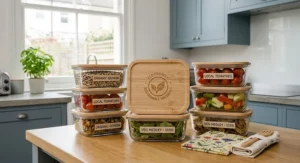
The Black+Blum Stainless Lunch Box is explicitly built and marketed for picnic and camping use rather than general kitchen storage, and its standout feature is a leak-proof lid genuinely designed to survive being thrown into a rucksack or car boot rather than sitting still on a shelf. Constructed from stainless steel and rated microwavable despite the metal body — a detail worth double-checking against your specific model before use — it’s built to handle the knocks and temperature swings that a day out inevitably brings. Reviewers consistently note the compact, portable proportions as a genuine strength for single-meal portions rather than bulk storage, positioning this as a complement to a full stackable kitchen set rather than a replacement for one. Based on the spec sheet, the smaller capacity compared with kitchen-focused ranges on this list is a deliberate trade-off for portability, not a shortcoming — this isn’t designed to store a week’s meal prep, it’s designed to survive one trip intact. What most buyers overlook is that a dedicated camping-rated container like this one is worth owning alongside a kitchen set rather than instead of one, since the two genuinely serve different purposes.
Pros:
- ✅ Purpose-built leak-proof lid for transport and travel
- ✅ Durable stainless build suited to outdoor knocks
- ✅ Compact, portable size ideal for single portions
Cons:
- ❌ Too small for household batch storage needs
- ❌ Premium pricing for a single-container purchase
At around £15-£22, this is worth adding specifically for camping trips or regular packed lunches rather than as your main kitchen storage solution.
7. Lakeland Stack-a-Boxes — best lesser-known UK budget value pick
The Lakeland Stack-a-Boxes range is the outlier on this list in brand recognition outside the UK rather than in quality, and its standout feature is genuinely solid, dependable performance from a long-established British homeware retailer at a price point that undercuts more heavily marketed rivals. At 750ml per box, the range is aimed at everyday portion storage rather than bulk quantities, and Lakeland’s own reputation for practical, no-nonsense kitchenware translates directly into straightforward stacking performance without unnecessary extras. Because this is a less internationally recognised name than Sistema or Joseph Joseph, the aggregated review pool available for direct comparison is smaller, and we’d flag that honestly rather than overstate its track record — but Lakeland’s decades of UK retail presence and the brand’s standard three-year guarantee on much of its range offer a reasonable proxy for confidence. What most buyers overlook about smaller UK homeware brands like Lakeland is that they frequently match bigger names on genuine build quality while competing more aggressively on price, precisely because they’re not spending as heavily on marketing. This suits UK-based buyers happy to try a dependable domestic brand over a more heavily advertised international name.
Pros:
- ✅ Competitive pricing against more heavily marketed rivals
- ✅ Backed by an established UK retailer’s guarantee
- ✅ Straightforward, dependable everyday stacking performance
Cons:
- ❌ Smaller review pool than major international brands
- ❌ Less brand recognition may affect resale or gifting appeal
Priced around £10-£18, this is worth serious consideration if you’re happy prioritising genuine value over brand familiarity.
Top 7 Products: Specs and Value Comparison
| Product | Material | Nesting Design | Oven/Microwave Safe | Price Range |
|---|---|---|---|---|
| Sistema Klip It Plus | Plastic | Partial | Microwave only | £8-£25 |
| Joseph Joseph Nest Lock | Plastic | Yes, true nesting | Microwave only | £20-£35 |
| SmartStore Small Set | Plastic | Partial | Microwave only | £5-£12 |
| Vtopmart Glass 8-Piece | Glass | Yes, nests | Oven and microwave | £20-£30 |
| Misichao Stainless Steel | Stainless steel | Yes, stacks | Neither | £18-£28 |
| Black+Blum Lunch Box | Stainless steel | No (single unit) | Model-dependent | £15-£22 |
| Lakeland Stack-a-Boxes | Plastic | Partial | Microwave only | £10-£18 |
The comparison makes an important point obvious: material choice directly determines how a container can actually be used, not just what it looks or feels like. If oven reheating matters to you, glass is genuinely the only option here that delivers it safely; if microwave convenience matters more, stainless steel drops out of contention entirely regardless of its durability advantages.
Cupboard Space Optimisation: Practical Usage Guide
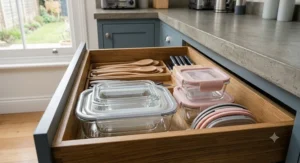
Getting genuine cupboard space optimisation from stackable containers starts before you even buy them: measure your actual shelf height, not just width, since most storage frustration comes from containers that are technically stackable but too tall to leave room for a second layer. Once you’ve bought a set, commit to storing lids separately from bases wherever the range supports it — nesting bases inside each other and clipping lids together in a single stack, as ranges like the Joseph Joseph Nest Lock are specifically designed to allow, saves dramatically more space than stacking complete, lidded boxes on top of one another.
A common mistake in the first few weeks of ownership is mixing container ranges from different brands and expecting them to stack together; different brands rarely share consistent base dimensions, so a genuinely optimised cupboard usually means committing to one range rather than accumulating odd pieces over time. One optimisation trick rarely mentioned on packaging: group containers by size on dedicated shelves rather than by how recently you used them, since a consistent size-based layout makes it far easier to spot the right container at a glance and return it to the correct stack afterwards. For further general guidance on keeping stored food safe as well as organised, the Food Standards Scotland guide to safe food storage covers practical storage principles that apply just as well in England, Wales and Northern Ireland.
Real-World Scenarios: Who Actually Benefits Most
The small-flat dweller with minimal cupboard space, budget around £25: Space, not price, is the real constraint here. The Joseph Joseph Nest Lock‘s true nesting design directly solves the core problem, collapsing an entire set down to roughly one container’s worth of shelf space.
The regular camper who wants durable, transportable food storage: Weight and durability under rough handling matter more than sheer capacity. The Black+Blum Stainless Lunch Box paired with the Vtopmart Glass 8-Piece Set‘s smaller pieces for dry goods covers both single-meal transport and pre-trip food prep.
The batch-cooking household moving away from ageing, stained plastic: Odour and stain resistance are the priority, not price. The Misichao Stainless Steel Set or Vtopmart Glass 8-Piece Set both solve this directly, since neither material absorbs smells or colours from strongly flavoured food the way older plastic does.
Problem → Solution Guide for Common Storage Complaints
Problem: Cupboards overflowing despite owning “stackable” containers. This usually means the containers stack but don’t genuinely nest when empty — switching to a true nesting design like the Joseph Joseph Nest Lock solves this directly rather than buying more shelving.
Problem: Plastic containers stained or smelling no matter how well washed. This is a material limitation, not a cleaning failure — moving to glass or stainless steel, such as the Vtopmart Glass 8-Piece Set or Misichao Stainless Steel Set, removes the problem at the source.
Problem: Containers cracking or leaking after being thrown in a rucksack for camping. Standard kitchen containers usually aren’t built for that kind of handling — a purpose-built option like the Black+Blum Stainless Lunch Box is specifically designed to survive it.
Problem: Constantly losing or mismatching lids. Colour-coded, range-consistent systems solve this far more reliably than mixed brands — the Joseph Joseph Nest Lock‘s matching dots are built specifically to address this.
Problem: A small kitchen where even modest containers feel oversized. This calls for uniform, compact sizing rather than a varied range — the SmartStore Small Set‘s consistent 0.5L containers are built precisely for this constraint.
How to Choose Stackable Food Storage Containers
Choosing the right stackable food storage containers comes down to matching material, nesting design and size range to your actual kitchen and lifestyle rather than simply buying whatever’s cheapest per piece. Here’s a practical, step-by-step approach:
- Measure your actual storage space first. Shelf height matters as much as width — a stackable set that’s technically compact can still be too tall for a second layer.
- Decide whether true nesting matters to you. If cupboard space is a genuine constraint, prioritise ranges like Joseph Joseph Nest Lock that collapse down when empty, not just stacking ranges.
- Match material to your reheating habits. Oven use needs glass; microwave-only needs plastic or glass; stainless steel suits cold storage and transport but not microwave reheating.
- Consider whether you need camping-specific durability. A dedicated, rugged single-container option is often better value than expecting a kitchen set to survive rough outdoor handling.
- Commit to one range rather than mixing brands. Stacking compatibility across different manufacturers is inconsistent at best, so consistency beats variety for genuine space savings.
- Set a realistic budget before browsing. Deciding on a £15-£25 ceiling before you start prevents premium nesting sets from talking you into overspending on features you may not need.
- Read aggregated review themes around lid durability and staining. Star ratings alone tell you little; recurring complaints about specific failure points over time tell you far more.
Plastic vs Stainless Steel Food Storage Containers: Which Wins?
The plastic versus stainless steel debate for food storage containers comes down to a genuine trade-off rather than one material being objectively better. Plastic wins decisively on price, weight and microwave convenience — sets like the Sistema Klip It Plus cost a fraction of an equivalent stainless steel range and can go straight from freezer to microwave without decanting anything. Stainless steel wins just as decisively on longevity and odour resistance; reviewers consistently note that stainless steel containers like the Misichao Stainless Steel Set simply don’t develop the staining, cloudiness or lingering smells that plastic eventually picks up after years of storing strongly flavoured food. On paper, the practical deciding factor is usage pattern rather than personal preference alone: households that reheat leftovers directly in their storage containers lean naturally toward plastic or glass, while households mainly using containers for cold storage, meal prep or transport get more genuine long-term value from stainless steel’s durability.
| Factor | Plastic | Stainless Steel |
|---|---|---|
| Upfront cost | Lower | Higher |
| Weight | Lighter | Heavier |
| Microwave use | Yes | No |
| Odour/stain resistance | Degrades over time | Excellent |
| Best For | Budget, everyday reheating | Longevity, durability |
This comparison reinforces a point worth repeating: there’s no universally “better” material here, only a better match for how a given household actually uses its containers day to day.
Material Choice for Food Storage: Glass, Silicone and Beyond
Beyond the plastic-versus-steel debate, material choice for food storage extends further than most buying guides acknowledge, and glass deserves particular attention as arguably the most versatile option across this entire list. Borosilicate glass, as used in the Vtopmart Glass 8-Piece Set, handles oven, microwave, freezer and dishwasher use within one material, something neither plastic nor stainless steel can fully match on their own. What most buyers overlook about food-grade plastic specifically is that not all plastics are created equal; UK regulations under food contact material rules require genuine food-grade plastic to avoid leaching chemicals, so checking for the recognised food-safe symbol matters more than simply assuming any container marketed for food storage meets the standard. Concerns around bisphenol compounds like BPA have pushed many manufacturers toward BPA-free formulations as standard, and it’s worth checking this is explicitly stated on any plastic range you’re considering, particularly older or unbranded sets — you can read more about the background on bisphenol A and its regulatory history for context on why this became a standard labelling point. Silicone, while less represented on this list, is worth a mention as a genuinely flexible, collapsible option for anyone prioritising minimal storage footprint over rigidity — it won’t stack in the traditional sense, but it solves the same underlying space problem from a different angle entirely.
Food Storage Containers for Camping: What Actually Works
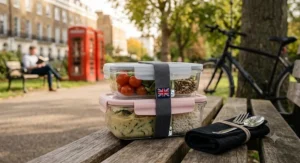
Food storage containers for camping face a genuinely different set of demands than kitchen storage, and buyers who simply pack their everyday plastic set often discover the difference the hard way after one trip. Durability under impact matters far more outdoors than at home — a container that survives years in a stationary kitchen cupboard can crack after a single drop onto a rocky campsite, which is exactly why purpose-built options like the Black+Blum Stainless Lunch Box are worth their premium over standard kitchen containers. On paper, weight becomes a genuine consideration too, particularly for backpacking rather than car camping, where the Vtopmart Glass 8-Piece Set‘s smaller pieces are practical for a short trip but the full set’s overall weight is worth thinking through if you’re carrying everything on your back. Leak-proofing deserves extra scrutiny for camping use specifically, since a leak inside a rucksack is a far bigger problem than one inside a stationary fridge — reviewers consistently flag genuinely reliable leak-proof seals as the single most important spec for outdoor use, ahead of capacity or material. What most buyers overlook is that a small, dedicated camping container is usually better value than trying to stretch a full kitchen range to cover both roles; the kitchen set optimises for cupboard space, while a camping-specific piece optimises for surviving transport, and the two priorities don’t always align.
Small Kitchen Organisation: Making Stackable Containers Work Harder
Small kitchen organisation puts genuinely different demands on stackable food storage containers than a spacious kitchen does, and the core principle is uniformity over variety. A mixed range of large and small containers, however individually well designed, creates awkward gaps and dead space in a tight cupboard or narrow fridge shelf — this is precisely why a uniform set like the SmartStore Small Set often outperforms larger, more varied ranges in genuinely small kitchens, despite offering less capacity per box. Based on the spec comparison across this list, vertical space matters as much as footprint in small kitchens specifically; a taller, narrower container often fits available shelf height better than a wider, shorter equivalent holding the same volume, so it’s worth measuring vertical clearance before assuming a container “should” fit based on its footprint alone. What most buyers overlook in small kitchens is that door-mounted or under-shelf storage racks, used alongside a genuinely compact container range, can reclaim space that stacking alone can’t address — the container choice and the storage location decision work together, not separately. Committing to fewer, more consistently sized containers, even if it means owning less total capacity, consistently outperforms a larger but more varied collection in genuinely space-constrained kitchens.
Common Mistakes When Buying Stackable Food Storage Containers
The most common mistake is buying based on individual container price rather than long-term stacking compatibility — a slightly cheaper set that doesn’t genuinely nest or stack cleanly costs more in wasted cupboard space than the money saved upfront. A second frequent mistake is ignoring material limitations until after purchase, then discovering a stainless steel set can’t go in the microwave or a plastic set can’t handle the oven, both of which are entirely predictable if checked beforehand. Buyers also regularly underestimate how quickly mismatched brands accumulate; picking up “just one more set” from a different manufacturer each time a container goes missing eventually undermines the entire stacking benefit the original purchase was meant to deliver. Finally, plenty of people overlook lid mechanism durability specifically — a firm, secure clip-lock lid that seems fiddly in the shop is often the same design that survives years of daily use, while a looser, easier-to-open lid can be the first thing to fail.
Long-Term Value & Care Guide
Genuine long-term value from stackable food storage containers depends heavily on how well the material and lid mechanism hold up to repeated dishwasher cycles, not just the upfront price. Plastic ranges like the Sistema Klip It Plus typically remain fully functional for several years of regular use, though clarity and seal tightness both gradually decline, particularly with high dishwasher heat settings. Glass and stainless steel options generally outlast plastic significantly in terms of visual condition and odour resistance, which is where their higher upfront cost gets recovered over a multi-year ownership period rather than in the first few months.
| Usage Pattern | Best Value Pick | Reasoning |
|---|---|---|
| Light, occasional use | SmartStore Small Set | Lower upfront cost matches lighter demands |
| Regular daily meal prep | Joseph Joseph Nest Lock | Durable lid mechanism suited to frequent use |
| Long-term, odour-heavy storage | Misichao Stainless Steel Set | Material resists degradation others can’t avoid |
To extend the life of any set regardless of material, hand-wash lids specifically where possible even if the containers themselves are dishwasher-rated, since lid seals and clip mechanisms are consistently the first component to wear out under repeated high-heat dishwasher cycles.
Frequently Asked Questions
❓ What's the difference between stackable and nesting food storage containers?
❓ Is plastic or stainless steel better for food storage containers?
❓ Are stackable food storage containers suitable for camping?
❓ How do I optimise cupboard space with stackable containers?
❓ How much do good stackable food storage containers cost in the UK?
Conclusion
There’s no single best stackable food storage container for every kitchen — only the right match for your space constraints, reheating habits and how roughly the containers need to be handled. If cupboard space is your main battle, the Joseph Joseph Nest Lock‘s genuine nesting design earns its higher price. If you’re moving away from ageing, stained plastic, the Vtopmart Glass 8-Piece Set or Misichao Stainless Steel Set solve that specific problem directly. And if you’re packing for a trip rather than organising a cupboard, a dedicated option like the Black+Blum Stainless Lunch Box will outlast anything pulled from your everyday kitchen set.
Whichever you choose, committing to one consistent range and matching material to your actual reheating and storage habits will do more for your kitchen than chasing the single “best” container on paper.
Recommended for You
- Airtight Food Storage Containers Under £20: 7 Best Picks (2026)
- Rechargeable UV Water Purifier: 7 Best Picks for Camping (2026)
- UV Purifier for International Travel: 7 Best Picks for 2026
Disclaimer: This article contains affiliate links. As an Amazon Associate, I earn from qualifying purchases. If you purchase products through these links, we may earn a small commission at no additional cost to you.
✨ Found this helpful? Share it with your friends! 💬🤗
