
In This Article
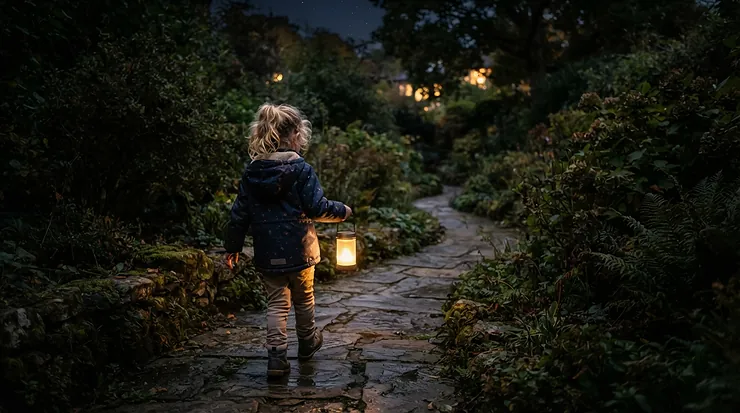
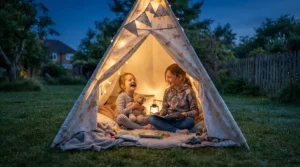
There’s a particular kind of darkness that arrives about twenty minutes after you zip up the tent. Small voices want to know where the loo is, whether owls are friendly, and why the light has gone off. A phone torch won’t cut it. A headtorch aimed at someone’s face definitely won’t. What you need is a battery lantern for kids: soft, sturdy and simple enough for sticky fingers to operate at nine o’clock at night, from inside a sleeping bag.

The shelves, however, are noisy. Lumen claims leap from 30 to 1,300 without a warning label. “Waterproof” can mean anything from drizzle-proof to fully dunkable. And plenty of lanterns guard their batteries behind a flimsy clip that a determined toddler can defeat in seconds.
So I compared seven real options against what matters when children are involved: gentle output, secure batteries, tough bodies, cool-touch LEDs, and light that won’t sabotage bedtime. Everything below rests on published specs and real review themes, and I’ve flagged the gaps where evidence runs thin. Expect a quick comparison, seven write-ups, and practical guides on tent safety, bedtime lighting and the headaches every parent meets sooner or later.
Prices are shown as ranges only and can change, so check current pricing and availability before buying.
What Is a Battery Lantern for Kids?
A battery lantern for kids is a portable, battery-powered LED light designed to be safe and simple for children to use. It typically offers soft, low-glare output, a lockable or sealed power source, a hanging hook, and a tough, splash-resistant body, so it can serve as a tent light, play-den lamp or bedside night light.
In plain terms, it’s a lantern you can hand over without hovering. Look for a splash-resistance rating such as IPX4 (the IP code system explains what each number promises), a hanging hook, and a low setting that is genuinely dim. That combination turns one small light into a tent lamp, a den lantern and a bedside glow, and it’s the benchmark every pick below is measured against.
Quick Comparison: Best Battery Lantern for Kids at a Glance
| Product | Power | Max output | Best For |
|---|---|---|---|
| Ledlenser KidCAMP6 | 3 × AAA (included) | 60 lm | Young children and bedtime |
| Eurohike 12 LED Lantern | 3 × AA (not included) | 30 lm | Tight budgets and den play |
| Lepro 3300007 | 3 × AA (not included) | About 190 lm (listing) | Family tents and power cuts |
| Luci Lux | Built-in Li-ion, solar or USB-C | 65 lm | Wet, rough, grubby adventures |
| Goal Zero Crush Light Chroma | Built-in Li-poly, solar or micro-USB | 60 lm | Pocket-sized travel and colour play |
| Black Diamond Moji+ | 3 × AAA or BD 1500 battery | 200 lm | Older kids who want dimming control |
| BioLite AlpenGlow Mini | Built-in, USB-C | 150 lm | Sealed-battery, premium feel |
Looking at the table, the Ledlenser KidCAMP6 is the only lantern designed specifically for children, which shows in its lockable battery compartment and 60 lm ceiling. If money is tight, the Eurohike 12 LED Lantern delivers a gentle 30 lm for very little outlay. The Lepro 3300007 and Black Diamond Moji+ offer far more output than small eyes need, so you’ll live on their lower settings. The sealed-battery Luci Lux and BioLite AlpenGlow Mini remove loose cells entirely, at the cost of a charging routine.
💬 Just one click — help others make better buying decisions too!😊
Top 7 Battery Lantern for Kids Picks for 2026: Expert Analysis
1. Ledlenser KidCAMP6 — built for children from the ground up
The Ledlenser KidCAMP6 is the only lantern in this round-up designed as a children’s product first, rather than an adult light that got borrowed.
It offers 10 lumens for 40 hours or 60 lumens for 8 hours, plus red, green and blue modes and a party blink. That low setting is a proper bedside glow rather than a token gesture, and the whole range sits inside the 20–80 lumen window Ledlenser’s own kids’ guide suggests for ages three to six. A screw-locked compartment holds the three included AAA batteries, and a 20-minute auto switch-off can be activated for falling-asleep duty.
Based on the spec sheet, this suits tent-dwelling under-sevens and parents who’d rather make one decision than six. Heed the manufacturer’s warning, though: it isn’t suitable for children under 36 months and needs adult supervision. Older kids may find 60 lumens underwhelming for reading.
Independent review data was too thin to summarise honestly, so treat the performance claims as manufacturer-stated rather than crowd-verified.
Pros:
- ✅ Screw-locked battery compartment
- ✅ Genuine 10 lm bedtime mode lasting 40 hours
- ✅ Reduced-glare optics plus a red light option
Cons:
- ❌ Only 60 lm at maximum
- ❌ Needs replacement AAA batteries
Price range: around £20, which is fair value for a purpose-built children’s lantern.
2. Eurohike 12 LED Lantern — gentle 30 lumens for pocket-money prices
The Eurohike 12 LED Lantern is the sort of children’s camping lantern you buy two of and then stop worrying about.
It pushes 30 lumens from 12 LEDs for up to 12 hours on three AA batteries (not included), with a rotating dimmer and fold-out carry-and-hang handles. Thirty lumens is soft enough to read a picture book by without the flashbulb effect, and a dimmer dial is far easier for small hands than clicking through hidden modes.
Based on the spec comparison, it’s ideal for garden sleepovers, den-building and as a spare. One caveat: the listings I found state neither a water-resistance rating nor whether the battery cover is screw-locked. Assume neither, and consider a strip of tape across the lid as cheap insurance.
Few independent reviews surfaced, mostly retailer deal listings, so I can’t give a reliable sentiment summary.
Pros:
- ✅ Simple dimmer dial for small hands
- ✅ 30 lm is gentle on young eyes
- ✅ Fold-out handles for hanging or carrying
Cons:
- ❌ No stated water-resistance rating
- ❌ Batteries not included
Price range: under £10, which is outstanding value for a fair-weather, supervised light.
3. Lepro 3300007 — collapsible family-tent workhorse
The Lepro 3300007 is the lantern you spot hanging in half the family tents on a British campsite, and there’s a reason.
It’s collapsible with adjustable height, runs on three AA batteries for up to 14 hours, carries an IPX4 splash rating and weighs around 200 g per the Currys listing. IPX4 means dew, drizzle and a leaky awning won’t trouble it. The Currys listing quotes 190 lumens, but other Lepro listings quote 350 or even 560, so confirm the exact model before you buy.
That’s more light than small eyes need. Hang it high, where it spreads across the tent roof, and check whether your version has a dimmer.
Reviewers consistently describe these as compact, lightweight and bright for three AAs, and one buyer noted the lamps pay back the cost of the batteries. A French-language reviewer said it looks like a toy but works well, though the modes confused them. A UK roundup also praised Lepro’s LE-branded lantern for wet weather and kid-friendly handling, though that may not be this exact model.
Pros:
- ✅ Collapsible design packs flat
- ✅ IPX4 splash resistance for damp pitches
- ✅ Strong brightness from three AAs
Cons:
- ❌ Brightness claims vary between listings
- ❌ Too bright for small eyes at full power
Price range: around £10–£20 per lantern, strong value for a whole-tent light.
4. Luci Lux — survives the bath, the puddle and the sat-on rucksack
The Luci Lux is an inflatable lantern that shrugs off the treatment children give gear.
It has ten warm-white LEDs giving 65 lumens, four modes (low, medium, high, flash) and up to 24 hours on low. The built-in 1,000 mAh battery recharges by solar in about seven hours or by USB-C in two to four. The IP67 rating means it’s submersible to a metre, and the maker says the body withstands 150 lb of pressure. At 125 g, it collapses to roughly an inch.
For drop resistance, that squashy body is the whole strategy. There’s no battery door to open either, which makes it a very safe tent light for kids who treat equipment as a chew toy. It’s a glow, not a reading lamp, and solar top-ups will be optimistic in British weather, so plan on USB-C.
Trailspace reviewers praised the waterproofing, light weight and quick charging, while a small set of REI reviews averaged only 3 out of 5, pulled down by one critical review. Sentiment is positive but thin.
Pros:
- ✅ IP67 waterproof and floats
- ✅ No battery compartment to open
- ✅ Warm, diffused glow
Cons:
- ❌ Solar charging is slow in UK gloom
- ❌ 65 lm limits reading for older kids
Price range: roughly £20–£30, which is good value for the toughest body here.
5. Goal Zero Crush Light Chroma — pocket-flat, with a colour party built in
The Goal Zero Crush Light Chroma folds almost flat, so it vanishes into a child’s daypack.
It gives 60 lumens for 3 hours, 25 for 6 hours and 6 lumens for 35 hours, with a candle-flicker mode, six colours and a colour fade. It’s 3000K warm, IPX4-rated, 91 g, and charges by solar or micro-USB. That 6-lumen setting makes it a proper nightlight lantern for camping, and the warm tone is easier on bedtime than a cold white beam.
Based on the specs, it’s a good fit for a tween’s own bag or a first solo tent. It’s small, though, and not built for lighting a whole family awning.
OutdoorGearLab scored it 60 out of 100, praising its weight and battery life (about seven hours measured on its brightest setting) while noting low lumens and limited features. One buyer found solar charging impractical, and Goal Zero itself cites roughly 20 hours of direct sun for a full recharge.
Pros:
- ✅ Featherlight at 91 g
- ✅ 6 lm low setting lasts 35 hours
- ✅ Warm light plus colour modes
Cons:
- ❌ Solar charging is impractical in the UK
- ❌ Older micro-USB charging port
Price range: roughly £20–£30, which is reasonable for a pocket-sized, long-lasting night light.
6. Black Diamond Moji+ — dual-fuel with real dimming control
The Black Diamond Moji+ is a pocket-sized lantern whose proper dimming makes it a grown-up choice that suits older children.
It produces 200 lumens on high, 100 on medium and 10 on low. On AAA batteries that’s 5.5 hours, 9.5 hours and 120 hours respectively. It weighs about 107 g, is rated IPX4, and runs on three AAAs or the rechargeable BD 1500 battery (sold separately). A frosted globe spreads the light and a collapsible double hook hangs it anywhere. Variants differ, since older Mojis offer 100 or 150 lumens, so check you’re buying the “+”.
Ten lumens for 120 hours is exceptional bedtime lighting. Treat 200 lumens as off-limits for younger children and keep it on low or medium. For eight-to-twelve-year-olds who want to control their own brightness, it’s a sound choice.
Reviews I found were mostly from adult backpackers praising the light-to-weight ratio, with little kid-specific feedback.
Pros:
- ✅ 10 lm low lasts about 120 hours
- ✅ Runs on AAA or rechargeable battery
- ✅ IPX4 body weighing about 107 g
Cons:
- ❌ 200 lm maximum is too bright for little ones
- ❌ Rechargeable battery sold separately
Price range: roughly £20–£30, good value for a long-lived, adaptable lantern.
7. BioLite AlpenGlow Mini — sealed battery, mood colours, premium feel
The BioLite AlpenGlow Mini is the one to choose if you never want to see a battery compartment again.
It switches between 5 and 150 lumens, with dimmable warm white, single-colour and colour-cycling modes. The built-in battery charges over USB-C, it’s IPX4-rated, and the body measures about 7.5 × 5 cm. A loop and bungee strap hang it from tent poles or branches. The 5-lumen setting works as a night light, but the maker quotes only about five hours at maximum output, enough for an evening rather than a weekend.
Because there’s no battery door, there’s nothing for small fingers to pry open, and USB-C means it shares a cable with your phone. Runtime at lower settings wasn’t stated in the sources I found, so don’t count on it for multiple nights without a recharge.
I couldn’t verify enough independent review data to summarise sentiment fairly.
Pros:
- ✅ Sealed battery with no compartment to open
- ✅ USB-C charging
- ✅ Dimmable warm white plus colour modes
Cons:
- ❌ Only about five hours at full output
- ❌ Premium price against AAA rivals
Price range: broadly £30–£45 (check current price), a premium for sealed-battery convenience.
Top 7 at a Glance: Specs, Water Protection and Value
| Product | Water protection | Runtime (low → high) | Price range | Review evidence | Best For |
|---|---|---|---|---|---|
| Ledlenser KidCAMP6 | Not stated | 40 h (10 lm) → 8 h (60 lm) | Around £20 | None verified | Under-sevens |
| Eurohike 12 LED Lantern | Not stated | Up to 12 h | Under £10 | None verified | Den play |
| Lepro 3300007 | IPX4 | Up to 14 h | £10–£20 | Positive retailer comments | Family tents |
| Luci Lux | IP67 | 24 h (low) → 6 h (high) | £20–£30 | Positive but thin | Wet weather |
| Goal Zero Crush Light Chroma | IPX4 | 35 h (6 lm) → 3 h (60 lm) | £20–£30 | Independent test | Travel |
| Black Diamond Moji+ | IPX4 | 120 h (10 lm) → 5.5 h (200 lm) | £20–£30 | Mostly adult feedback | Older kids |
| BioLite AlpenGlow Mini | IPX4 | About 5 h at max | £30–£45 | None verified | Sealed-battery fans |
The pattern is clear: nobody wins on every measure. The Luci Lux is unmatched for water and knocks, the Black Diamond Moji+ for dimming range, and the Ledlenser KidCAMP6 for child-specific safety design. The Eurohike 12 LED Lantern wins on price, but it states no water rating. If you want a single all-rounder for under-eights, the Ledlenser KidCAMP6 is where I’d start. For rough-and-tumble older kids, the Luci Lux is the safer bet.
How to Choose a Battery Lantern for Kids: 7 Steps That Matter
- Cap the brightness first. Ledlenser’s kids’ guide suggests roughly 20–80 lumens for ages three to six, rising towards 150 for older children. That’s a useful guardrail, since a lantern that dazzles the whole tent defeats its purpose.
- Inspect the battery door. Screw-locked or sealed power is the gold standard. Great Ormond Street Hospital’s guidance on button battery safety explains why swallowed batteries are emergencies. None of the seven lights here is listed as using button cells, but “can a child open this?” is the right question for any compartment.
- Demand a real low mode. Ten lumens or less is what turns a lantern into a night light. Without it, you’re gambling with sleep.
- Check the water rating, and its limits. IPX4 handles splashes, while IP67 handles dunking. Neither says anything about drops.
- Look for a hook and a stable base. A lantern hung overhead can’t be knocked over or tripped on, and that matters in a crowded tent.
- Prefer warm or red light for evenings. Cold white feels like a hospital corridor at bedtime.
- Match the power to your routine. AA or AAA suits occasional campers who can carry spares. Sealed rechargeables suit families who’ll actually remember to charge.

Cool-Touch LEDs and Drop Resistance: What Protects Small Hands
Cool-Touch LEDs: A Real Advantage, Not a Guarantee
LEDs waste far less energy as heat than bulbs or flames, which is why a battery lantern for kids beats gas and candle alternatives inside a tent. But “cool-touch LEDs” is a marketing phrase, not a certified rating. Housings can still warm at full output, especially in sealed or tightly packed enclosures. Before a trip, run your chosen lantern on its highest setting for an hour in the garden and feel the casing. If it’s uncomfortable to hold, keep it on low or hang it out of reach.
Drop Resistance: Why an IP Rating Won’t Save It
IP codes measure dust and water, not knocks. The old third digit for mechanical impact is no longer used. So look for stated drop heights, rubberised bumpers, or bodies that simply flex, like the inflatable Luci Lux, which its maker says withstands 150 lb of pressure. Drop resistance also depends on the battery cover staying shut when the lantern hits the floor, which is why the screw-locked door on the Ledlenser KidCAMP6 matters more than it sounds. The collapsible Lepro 3300007 and Goal Zero Crush Light Chroma are light enough that a fall carries little energy. A cheap home test: drop your lantern from table height onto grass or carpet, then check the cover and the light.
Battery Lantern for Kids vs Gas, Candle and Phone Torch
| Option | Heat and flame risk | Handling by children | Best For |
|---|---|---|---|
| LED battery lantern | Low heat at normal settings; no flame | Easy; many have lockable or sealed power | Tents, dens, bedtime |
| Gas lantern | Flame and hot mantle | Needs adult control, fuel and ventilation | Adult-run campsite lighting |
| Candle or paraffin lantern | Open flame and hot glass | Poor for unsupervised children | Adult-only atmosphere |
| Phone torch | No heat, but drains the battery | Narrow beam, dazzles, drops easily | Emergencies only |
The comparison above makes the case plainly. A battery lantern for kids removes flame from the equation, hands control to the child, and doesn’t hold your phone hostage when you need it for the 2 a.m. weather check. Gas and candle lanterns have their place at the adult end of the campsite, but they ask for supervision that a tired parent can’t always give.
Safe Tent Light for Kids: A Practical Setup Guide
A safe tent light for kids is mostly about where you put it. Follow this order on your first night out:
- Hang it high, near the centre. A ceiling hook spreads light and keeps the lantern out of reach of grabbing hands. The Black Diamond Moji+ and Ledlenser KidCAMP6 both include fold-out hooks.
- Use two low lights rather than one bright one. Two 30–60 lumen lanterns cast softer shadows and fewer glare spots than a single 200-lumen beam.
- Keep cords and charging leads off the floor. Rechargeable options such as the Luci Lux are easiest to top up outside the tent, in daylight.
- Stash spare batteries in a zipped pocket out of children’s reach, as the NHS-backed button-battery advice above recommends for any small cells.
- Leave gas indoors-out. Pitchup’s tent lighting guide notes that modern gas lanterns are far safer than older models but still aren’t recommended for long-term use inside tents with children.
In the first thirty days, the usual mistakes are leaving a lantern on full brightness all night, placing it where a sleeping child’s hand can reach it, and forgetting spare batteries. Fix those three and you’ve covered most of the risk.
Bedtime Lighting: Nightlight Lantern for Camping and Home
Good bedtime lighting is dim, warm and predictable. NHS Somerset’s sleep guidance says a night light is fine for children afraid of the dark, and recommends red or orange light. That points straight at low-lumen, warm or red modes, rather than the party colours that look great in the shop.
For a nightlight lantern for camping that also works at home, build a routine around four steps:
- Set it before the toothbrushing starts, so the light is already at its lowest setting when lights-out arrives.
- Choose red, amber or warm white over blue-tinted white.
- Use auto-off if you have it. The Ledlenser KidCAMP6 offers a 20-minute option that can be activated.
- Place it out of the child’s eyeline, hung overhead or behind a pillow wall rather than at face height.
On specs, the best bedtime lighting candidates are the Black Diamond Moji+ (10 lm for about 120 hours), the Goal Zero Crush Light Chroma (6 lm for 35 hours) and the BioLite AlpenGlow Mini (5 lm low setting). The Ledlenser KidCAMP6 brings red light plus a timer, which is arguably the most bedtime-focused feature set of the group.
Problem → Solution Guide: Five Lantern Headaches Parents Hit
1. “It’s too bright and they’re squinting.”
Drop to the lowest setting and hang the lantern high. Light bouncing off a tent roof is far gentler than a direct beam. Models with 150–200 lumens, like the Black Diamond Moji+ and Lepro 3300007, are best kept on low or medium for children.
2. “The batteries died mid-trip.”
Pack a spare set and live on low modes. The Ledlenser KidCAMP6 offers 40 hours at 10 lm, while the Black Diamond Moji+ offers about 120 on low.
3. “Little hands keep opening the battery cover.”
Choose the screw-locked Ledlenser KidCAMP6, a sealed unit like the Luci Lux or BioLite AlpenGlow Mini, or tape over the lid on the Eurohike 12 LED Lantern.
4. “It got soaked or dropped.”
The IP67 Luci Lux is the only one rated for dunking. The IPX4 lanterns cope with splashes but shouldn’t be submerged.
5. “It seems to act oddly out of the box.”
One retailer notes the Goal Zero Crush Light Chroma ships in demo mode, which you exit by holding the power button for 10–15 seconds. Check the manual for your own model first.
Children’s Camping Lantern Buying Guide by Age
Brightness and complexity should grow with the child. Ledlenser’s guide sets out a useful age ladder, and it fits the products here.
Toddlers (under three)
Treat any lantern as an adult-supervised item hung out of reach. The Ledlenser KidCAMP6 carries an explicit “not suitable for under 36 months” warning, and that logic applies to every children’s camping lantern here.
Ages three to six
Aim for roughly 20–80 lumens, simple controls and secure batteries. The Ledlenser KidCAMP6 and Eurohike 12 LED Lantern sit squarely in this range.
Ages seven to eleven
Children can handle modes and up to about 150 lumens for short bursts. The Goal Zero Crush Light Chroma and Luci Lux reward this age’s love of colour and durability, while the Black Diamond Moji+ offers more control.
Tweens and teens
They want a lantern that doesn’t look like a toy. The BioLite AlpenGlow Mini and Black Diamond Moji+ are the grown-up-feeling picks.
Features That Actually Matter (And Those That Don’t)
What matters: a genuinely dim low mode, a battery cover children can’t easily open, a hook, and warm or red light for evenings. These four decide whether a lantern works at 9 p.m. in a dark tent.
What doesn’t:
- Headline lumens. Lepro’s own range advertises 190, 350 and even 560 lumens depending on the listing. Treat any single number with suspicion and read the runtime table instead.
- Party strobes. They look brilliant in the shop and become irritating by night two.
- Solar panels in the UK. A 7-hour solar charge on the Luci Lux assumes strong sunshine. Plan on USB-C and consider solar a bonus.
- Giant brightness for a small tent. A 30–65 lumen lantern in a family tent beats a 500-lumen floodlight every time.
Long-Term Cost & Maintenance
Running costs hinge on how you use the low mode. A Ledlenser KidCAMP6 on its 10-lumen setting runs about 40 hours, which is dozens of bedtimes if you only use it for an hour at a time. The Black Diamond Moji+ claims about 120 hours on low, and that’s before you consider rechargeable AAAs or its BD 1500 battery option. Sealed lights like the Luci Lux and BioLite AlpenGlow Mini cost nothing to run beyond a few minutes on a USB charger.
For maintenance, take batteries out before long storage to avoid leaks, wipe the casing and lens dry after wet trips, and check hooks and straps for wear before each season. Replace any lantern with a cracked housing or a cover that no longer closes firmly. On value, the Eurohike 12 LED Lantern and Lepro 3300007 win for upfront cost, while the rechargeables win over years of regular use.
Safety, Regulations and Compliance: What to Check Before You Buy
Start with batteries. Advice from the Office for Product Safety and Standards says button and coin cell compartments on consumer products must be designed to resist accidental removal by children. None of the lanterns here is listed as using button cells, but the principle holds for any child-facing light.
Next, check the marking. Look for UKCA or CE marking and a UK or EU contact address on the packaging. Marking rules have shifted in recent years, so treat it as a minimum signal rather than proof of quality. Lanterns sold as toys fall under UK toy-safety rules, while general camping lights fall under general product safety law. Either way, heed the age warnings: the Ledlenser KidCAMP6 states it is not suitable for children under 36 months and must be used under adult supervision.
Finally, favour well-known sellers. If a listing makes bold claims without a brand, a model number or a stated runtime, move on.
FAQ
❓ How many lumens is safe for a children's camping lantern?
❓ Can I leave a battery lantern for kids on all night?
❓ Which colour is best for bedtime lighting?
❓ Is a nightlight lantern for camping safe near sleeping bags?
❓ How long do AAA batteries last in a kids' lantern?
Conclusion
The best battery lantern for kids isn’t the brightest or the cleverest. It’s the one a child can use without hurting themselves, their eyes or your sleep. For the youngest campers, the Ledlenser KidCAMP6 is the safest all-round bet, with its screw-locked batteries, gentle output and red light. For tight budgets, the Eurohike 12 LED Lantern offers 30 lumens of friendly light, though you’ll want to check the battery door yourself. Rough-and-tumble families should look at the waterproof Luci Lux, and anyone wanting a pocket-sized travel light should consider the Goal Zero Crush Light Chroma. Older kids who want control will enjoy the dimming range on the Black Diamond Moji+. Families who hate battery compartments might find the BioLite AlpenGlow Mini worth its premium, and the Lepro 3300007 is the practical choice for lighting a whole tent.
Whichever you pick, keep it low, keep it high up, and keep spare batteries where small hands can’t reach.
Recommended for You
- Battery Lantern Multipack: 7 Best Buys For UK Camps (2026)
- Battery Camping Lantern: 7 Proven Picks For UK Campers (2026)
- Solar Rechargeable Lantern: 7 Brilliant Picks For UK Camping (2026)
Disclaimer: This article contains affiliate links. As an Amazon Associate, I earn from qualifying purchases. If you purchase products through these links, we may earn a small commission at no additional cost to you.
✨ Found this helpful? Share it with your friends! 💬🤗
