
In This Article
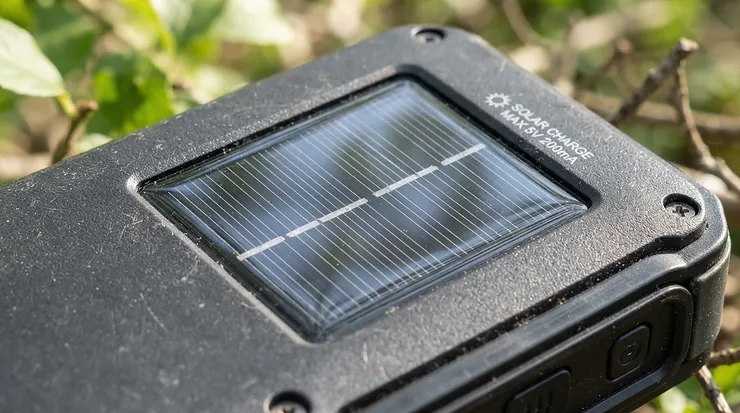
Every British camper knows the sound: the faint, defeated click of a torch whose batteries expired somewhere around night two. A solar rechargeable lantern fixes that at the root. It drinks daylight, stores it, and hands it back after dark. The catch, and it’s a big one, is that the UK isn’t exactly the Sahara. Choosing the right solar rechargeable lantern is therefore less about headline lumens and more about how a small photovoltaic panel behaves under a grey Pennine sky.

What Is a Solar Rechargeable Lantern?
A solar rechargeable lantern is a portable LED light with a built-in battery and a small photovoltaic panel that tops it up from daylight. Most also accept USB backup charging for grey days, and many double as emergency lights or phone chargers. Runtime depends on battery size, brightness setting and how much sun you actually get.
How much sun are we talking about? The Met Office’s long-term climate averages put the UK at roughly 1,400 hours of bright sunshine a year. January delivers only about 47 of them, barely an hour and a half a day. That gap between brochure and British reality is what this guide is built around.
Below are seven real lanterns, compared on published specs and aggregated reviewer themes. I haven’t slept in a tent with all seven and won’t pretend otherwise. What you get is honest analysis of what the numbers mean for you. We’ll cover solar charging time in UK weather, the quirks of each photovoltaic panel, USB backup charging and the eco camping light maths too.
Quick Comparison: Best Solar Rechargeable Lantern Options at a Glance
| Lantern | Max brightness | Charging | Water rating | Price range | Best For |
|---|---|---|---|---|---|
| Vango Lunar 250 Eco Recharge USB | 250 lm | Solar + USB | Not stated | £25–£45 | Big family tents |
| BioLite SunLight | 100 lm | Solar + micro-USB | IPX4 | £20–£30 | Pocket ambient light |
| Luci Outdoor 2.0 Pro | 150 lm | Solar + USB | IP67 | £45–£65 | Wet weather and phone top-ups |
| LuminAID PackLite Max 2-in-1 | 150 lm | Solar + USB | IP67 | £35–£50 | Flat-pack power lantern |
| Goal Zero Crush Light Chroma | 60 lm | Solar + micro-USB | Not stated | £25–£35 | Ultralight backpacking |
| Mesqool CL1000 | 200 lm | Solar + USB + hand crank | IPX4 (one listing) | Budget bracket | Power-cut backup |
| Outdoor Revolution Portable Solar Lantern | 100 lm | Solar + USB | IPX4 | Under £15 | Festivals and tent porches |
Prices are ranges at the time of research and will move, so check current price before buying. Looking at the table, the Vango Lunar 250 Eco Recharge USB is the brightness champion, while the Luci Outdoor 2.0 Pro and LuminAID PackLite Max 2-in-1 are the only two with IP67 protection. Weight-conscious walkers should look at the BioLite SunLight and Goal Zero Crush Light Chroma, both under 100g.
💬 Just one click — help others make better buying decisions too!😊
Top 7 Solar Rechargeable Lantern Picks: Expert Analysis
Every pick below earns its place through real specs and real reviewer themes. A solar powered camping lantern is only as good as its battery, panel and honesty about charge times, so I’ve interpreted each spec in plain English.
1. Vango Lunar 250 Eco Recharge USB — best for big family tents
The standout trait is raw room-filling output, a lantern that treats a six-berth tent like a small village hall.
Vango quotes up to 250 lumens from LG LEDs, a built-in 2000mAh lithium-ion battery, a 4-hour USB charge and a 3.5-hour runtime. Some retailers print 5 hours, so read it as one proper evening rather than a long weekend. At 540g and about 26cm tall, it’s a hang-from-the-ridge lantern, not a rucksack passenger. The USB output also tops up a phone in a pinch.
Based on the spec comparison, this is a family-tent workhorse. The warm light is gentler than the clinical white of many budget lanterns, and the folding handle doubles as a hook. What the spec sheet quietly admits is that Vango publishes only a USB charge time. The roof-mounted solar panel is a bonus trickle, not a primary supply, so plan on USB backup charging before you leave home.
Reviewer sentiment is broadly positive, at roughly 4 out of 5 across several dozen ratings on one marketplace listing. Buyers describe it lighting a six-person tent, and the recurring caveat is runtime.
Pros:
- ✅ Lights a large family tent comfortably
- ✅ Built-in USB output for phone top-ups
- ✅ Two-year manufacturer guarantee
Cons:
- ❌ Short 3.5-hour runtime at full output
- ❌ Heavy at 540g for backpacking
Expect the £25–£45 range depending on retailer, so check current price. It’s good value if one big light is the brief.

2. BioLite SunLight — best palm-sized lantern with a built-in sundial
That sundial isn’t a gimmick. It’s a charging aid that helps you angle the panel at the sun.
BioLite quotes 100 lumens, a 0.45W panel (5–7 hours of sun, 7 on its own sheets) and a 2-hour micro-USB top-up. The 750mAh (2.8Wh) battery runs 50 hours on low or 3 hours on high, plus about 4 hours in reserve mode. It’s IPX4 splash-resistant and weighs 95g, so it clips to a bag without you noticing.
Here’s the clever bit. Dividing BioLite’s own numbers, each hour of direct sun buys roughly seven hours of low-mode light, the best sun-to-light ratio in this roundup. It’s a personal light and tent-mood lamp, not a floodlight. The input-only micro-USB means no phone charging, but the white, colour and red night-vision modes suit festivals and keeping your eyes dark-adapted.
Retailer feedback averages around 4.5 stars over roughly 200 reviews on one US listing, praising the weight. The recurring negative theme is quality control, with a few buyers receiving units that wouldn’t charge. Stock is also patchy, so verify availability before planning a trip around it.
Pros:
- ✅ Superb sun-to-light ratio on low mode
- ✅ Featherlight at 95g
- ✅ Red night-vision mode preserves eyesight
Cons:
- ❌ Only 100 lumens on high
- ❌ Reports of faulty units and patchy stock
Roughly £20–£30, so check current price. It’s cheap enough to buy two.
3. Luci Outdoor 2.0 Pro — best waterproof inflatable with two-way USB
Squash it flat, pop it open, and you’ve got a lantern that laughs at puddles.
The Luci Outdoor 2.0 Pro offers 150 lumens from 10 LEDs, a 2000mAh battery, up to 50 hours on low, an IP67 rating and a two-way USB port. Brightness steps between roughly 22, 87 and 150 lumens, according to one retailer. It weighs around 156g and is rated from −10°C to 50°C. IP67 means it survives brief immersion, which is rare in a tent lantern.
The honest wrinkle is charge time. The rating is 14 hours of direct sun or 2–3 hours by USB, so its solar charging time in UK weather can stretch beyond a week in winter. Listings also disagree on colour: some retailers say warm white, others cool white, so expect cool and don’t buy it for candlelit ambience. The USB port can top a phone up by 30–50%, though that drains the lantern’s own runtime.
ZDNet’s roundup said it was hard to beat, and an outdoor-gear reviewer noted the 30–40% phone boost.
Pros:
- ✅ IP67 waterproofing survives UK downpours
- ✅ Two-way USB doubles as an emergency charger
- ✅ Packs to under 4cm thick
Cons:
- ❌ 14-hour rated solar charge is slow
- ❌ Cool-white light, not warm
Around £45–£65, so check current price. It’s a premium that buys durability.
4. LuminAID PackLite Max 2-in-1 — best flat-packing lantern and power bank
It folds to about an inch, then inflates into a 6-inch cube that doubles as a phone charger.
LuminAID lists 150 lumens on Turbo for 3–5 hours, 75 lumens on High, 18 on Medium, 15 on Low for up to 50 hours, and a flashing mode. The 2000mAh battery recharges in 12–14 hours of direct sun or 1–2 hours by USB, and a 5V/2.1A port feeds devices. It’s IP67, floats, and the cool-white LEDs stay cool enough for tents and kids. It weighs around 240g.
On paper, the jump from 75 to 18 lumens is steep, so Medium is the sweet spot for a long evening. The four-level battery indicator is a genuine quality-of-life feature, since you can see whether the sun did its job. As a sun-charged outdoor lantern for power cuts, it’s a smart glovebox resident.
Verifiable review data was thin in my research. One buyer on the brand’s own page praised the easy phone charging, so I’d treat sentiment as unverified and lean on the consistent spec sheet. The brand’s own site listed it as out of stock, pointing to Amazon, so confirm availability.
Pros:
- ✅ Packs flat to about an inch
- ✅ Five brightness settings with battery indicator
- ✅ Floats and survives immersion
Cons:
- ❌ 12–14-hour solar charge is slow in the UK
- ❌ Limited independent review evidence
Roughly £35–£50, so check current price. It’s good value for a lantern-plus-power-bank.
5. Goal Zero Crush Light Chroma — best ultralight with colour and candle modes
It collapses to 15mm, so it vanishes into a rucksack lid pocket.
Goal Zero lists 60 lumens at 3000K, 25 on medium and 6 on low. Runtimes are about 3 hours on high, 6 on medium and 35 on low, with a candle-flicker mode. The 500mAh (1.85Wh) battery takes 2.5 hours by micro-USB, but the built-in panel needs about 20 hours, the longest rated solar charge here. At 91g, it’s easy to carry.
What most buyers overlook is that 60 lumens is paperback-reading bright, enough to find your boots but not to cook by. With that panel, treat sun as a top-up and charge by USB before leaving. One practical tip from the manufacturer: it ships in Demo Mode, so hold the on/off button for 10–15 seconds to exit.
Reviewers on one outdoor retailer’s page praised reliability and charge retention, and one liked the warm medium setting for tent lighting. One complained about low output.
Pros:
- ✅ Warm 3000K light is easy on the eyes
- ✅ Folds to 15mm and 91g
- ✅ Candle and colour modes for ambience
Cons:
- ❌ 20-hour rated solar charge is poor for UK winters
- ❌ Modest 60-lumen maximum
Around £25–£35, so check current price and stock. It’s strong value for backpackers who charge by USB first.
6. Mesqool CL1000 — best triple-charging backup (solar, USB, hand crank)
When the sun, the power bank and the mains all fail, there’s always your arm.
The Mesqool CL1000 pairs a 3000mAh battery with about 200 lumens and a hand-crank dynamo alongside solar and USB. Listings quote up to 35–40 hours of runtime, and one UK roundup describes a brighter torch mode. It weighs around 300g, with an IPX4 rating on one listing and a power-bank function. A reviewer reported that 30 minutes of solar roughly equals 10 minutes of cranking, which hints at how modest the panel is.
This is a backup-first lantern. If you want one light that survives a power cut and a washed-out week, the crank is true insurance. Reviewers say it makes a brilliant camping light and night-light but isn’t great for charging phones. Another found the charging behaviour confusing: the light switches off once charged via USB, but not via solar. Check the charging port too, since listings say micro-USB while one reviewer reported USB-C.
Pros:
- ✅ Three charging methods including hand crank
- ✅ Large 3000mAh battery with long runtime
- ✅ Doubles as emergency torch and night-light
Cons:
- ❌ Poor reputation for phone charging
- ❌ No published solar charge time
Budget bracket, so check current price. It’s good value as an emergency light.
7. Outdoor Revolution Portable Solar Lantern — best under-£15 tent-porch light
It’s the cheapest way to try a solar rechargeable lantern without committing a weekend’s coffee budget.
This little square offers up to 100 lumens, a 1000mAh battery, a 2-hour USB charge and an IPX4 rating. Runtime is about 50 hours on low or 6 hours on high, and it weighs just 80g. The pivoting arm doubles as hook or kickstand, and low-mode longevity makes it a set-and-forget porch light.
The caveat is data. I couldn’t verify meaningful independent reviews, and no solar charge time is published, so assume the panel is a trickle and rely on USB. At this size, it’s best as a second light for the porch, bag or festival tent, not your main lamp.
Pros:
- ✅ Very low price of entry
- ✅ 50 hours on low mode
- ✅ Light at 80g with hook and stand
Cons:
- ❌ No published solar charge time
- ❌ Limited independent review evidence
Under £15, so check current price. It’s great value as a sidekick.
Side-by-Side Spec Showdown
| Lantern | Battery | Rated solar charge | USB charge | Runtime | Weight | Best For |
|---|---|---|---|---|---|---|
| Vango Lunar 250 Eco Recharge USB | 2000mAh | Not published | 4 h | 3.5 h | 540g | Family tents |
| BioLite SunLight | 750mAh | 5–7 h | 2 h | 50 h low / 3 h high | 95g | Pocket light |
| Luci Outdoor 2.0 Pro | 2000mAh | 14 h | 2–3 h | Up to 50 h | 156g | Wet weather |
| LuminAID PackLite Max 2-in-1 | 2000mAh | 12–14 h | 1–2 h | 50 h low / 3–5 h turbo | ~240g | Power cuts |
| Goal Zero Crush Light Chroma | 500mAh | 20 h | 2.5 h | 35 h low / 3 h high | 91g | Backpacking |
| Mesqool CL1000 | 3000mAh | Not published | Not stated | Up to 35–40 h | ~300g | Backup lighting |
| Outdoor Revolution Portable Solar Lantern | 1000mAh | Not published | 2 h | 50 h low / 6 h high | 80g | Budget second light |
Notice the pattern: the smallest batteries (BioLite SunLight, Goal Zero Crush Light Chroma) publish credible solar figures, while the biggest (Mesqool CL1000, Vango Lunar 250 Eco Recharge USB) stay silent. Every lantern publishes a USB time, which tells you where manufacturers expect real-world charging to happen. If solar charging time in UK weather matters to you, the BioLite SunLight is the clear efficiency leader.
How to Choose a Solar Rechargeable Lantern
The short answer is to match brightness to your space, judge the battery, then be sceptical about any rated solar charge. Here’s the seven-step shortlist.
- Pick lumens for the space. Around 100 lumens suits a pocket light or porch lamp, while 150–250 suits a family tent.
- Read low-mode runtime, not the headline. Fifty hours on low is a week of tent lighting. Three hours on high is one evening.
- Multiply rated solar charge by UK reality. A 14-hour rating is hours of direct sun, which Britain delivers sparingly.
- Demand USB backup charging. Every lantern here has it, and you’ll use it more than you’d admit.
- Check water ratings. IPX4 handles splashes and IP67 handles dunking.
- Weigh the weight. Under 100g clips to a rucksack, while 500g+ belongs in the car boot.
- Look for warranty and safety marks. CE or UKCA marks and a decent guarantee are signs of a serious solar powered camping lantern.
Solar Charging Time in UK Weather: What to Expect
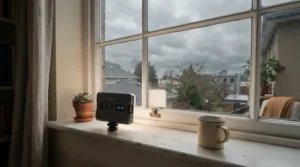
Rated solar charge times assume direct, strong sunlight. The Met Office’s UK averages show January at about 47 hours of bright sunshine, or roughly 1.5 hours a day. April manages about 155 hours, or around 5 hours a day. The Met Office also reported a slightly dull UK winter in 2024 at 145.6 hours, 90% of the long-term average.
The Sunshine Maths
These calculations are crude and ignore diffuse light, which still contributes on cloudy days. Panel angle and shade matter too.
- Luci Outdoor 2.0 Pro (14 h): about nine average January days, or roughly three in April.
- Goal Zero Crush Light Chroma (20 h): about 13 January days, or roughly four in April.
- BioLite SunLight (7 h): about five January days, or one to two in April.
Light Per Sun-Hour
Dividing low-mode runtime by rated solar hours gives a useful efficiency yardstick. The BioLite SunLight returns about seven hours of light per sun-hour, the Luci Outdoor 2.0 Pro and LuminAID PackLite Max 2-in-1 about 3.5–4, and the Goal Zero Crush Light Chroma about 1.75.
The takeaway is that from October to March, treat solar as maintenance, not the main supply. Charge fully by USB before you travel, then let the panel offset daily use.
Photovoltaic Panel Explained: Why Size Matters More Than Marketing
Photovoltaics convert light into electricity using semiconducting materials, and a photovoltaic panel’s output scales with its area and efficiency. Lantern panels are tiny, so every fraction of a watt counts.
The BioLite SunLight uses a 0.45W panel against a 2.8Wh battery, and the maths checks out at about six hours of full output. The Goal Zero Crush Light Chroma has a cell of about 0.12W for 1.85Wh, or roughly 15 hours before losses, which squares with its 20-hour rating. If the Luci Outdoor 2.0 Pro‘s 2000mAh is a typical 3.7V cell (about 7.4Wh), its 14-hour rating implies roughly half a watt of effective output, similar to the SunLight.
Panel performance also drops with heat, shade and dust. Keep the photovoltaic panel clean, angle it towards the south in the UK, and avoid parking it behind tent fabric. The BioLite SunLight‘s kickstand and sundial exist for exactly that reason.
USB Backup Charging: Your Insurance Policy for Grey Weeks
USB backup charging is the feature that turns a pretty solar gadget into a reliable light. Published USB times are short: the LuminAID PackLite Max 2-in-1 takes 1–2 hours, the BioLite SunLight and Outdoor Revolution Portable Solar Lantern 2 hours, the Luci Outdoor 2.0 Pro 2–3 hours, the Goal Zero Crush Light Chroma 2.5 hours and the Vango Lunar 250 Eco Recharge USB 4 hours.
A Simple USB Routine
Top up from a power bank or a car USB socket the night before, then let the sun maintain it. Carry a tiny cable kit, because mixed micro-USB and USB-C ports cause mischief (the Mesqool CL1000 is a reminder to check which port you have).
Don’t Treat Lanterns as Power Banks
Lanterns with USB output, such as the Luci Outdoor 2.0 Pro and LuminAID PackLite Max 2-in-1, give partial phone top-ups that shorten their own runtime. They’re emergency measures, not substitutes for a proper power bank.
Practical Usage Guide: Setting Up and Maintaining Your Solar Rechargeable Lantern
A new solar rechargeable lantern deserves a better start than “unbox and hang”.
- Charge fully by USB first. This sets the battery’s baseline, and most listings quote USB times of 1–4 hours.
- Exit demo mode if needed. The Goal Zero Crush Light Chroma ships in it, and holding the button for 10–15 seconds fixes that.
- Create a sun routine. Hang or stand the lantern facing south each morning, clear of shade and fabric.
- Use low mode by default. It stretches runtime to 35–50 hours on several models here.
- Store it half-charged and cool. Don’t leave it in a hot car or damp shed.
Common Mistakes in the First 30 Days
- Leaving the panel under the tent flysheet.
- Running everything on maximum brightness.
- Skipping a pre-trip USB top-up.
- Cranking the Mesqool CL1000 for ages instead of using the panel or USB.
Real-World Scenarios: Matching the Right Lantern to Your Trip
The Family of Four in the Lake District (October, Car Camping)
October brings roughly three hours of bright sunshine a day in England, so solar is a supplement. A Vango Lunar 250 Eco Recharge USB as the central light and an Outdoor Revolution Portable Solar Lantern for the porch suits a mid-range budget, three nights and USB backup charging from the car.
The Solo Backpacker in the Highlands (Weight-Obsessed)
Every gram counts, and Scottish winter sunshine is scarce. The Goal Zero Crush Light Chroma or BioLite SunLight, both under 100g, can be charged by USB at the start and by panel on bright days.
The Power-Cut Planner at Home
For a household drawer kit, the Mesqool CL1000 (with crank) and LuminAID PackLite Max 2-in-1 (IP67, phone top-up) offer redundancy. Charge them, stash them and forget them until you need them.
✨ Ready to Light Up Your Next Trip?
🔍 Take your campsite evenings to the next level with these carefully selected lanterns. Click on any highlighted product name to check current pricing and availability. These picks will help you create cosy, reliable lighting your whole crew will love!
Solar Powered Camping Lantern vs Battery and Gas Alternatives
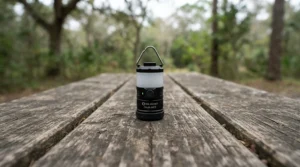
A solar powered camping lantern trades a higher upfront cost for lower running costs and no fuel logistics. Disposable-battery LED lanterns are cheap and bright but need a steady supply of cells. Gas and liquid-fuel lanterns give an atmospheric glow, but fire services and manufacturers advise against using combustion lights inside tents.
| Factor | Solar rechargeable | Disposable-battery LED | Gas or liquid-fuel |
|---|---|---|---|
| Running cost | Very low once bought | Ongoing battery purchases | Ongoing fuel purchases |
| Week of rain | Needs USB backup | Reliable if batteries packed | Reliable if fuel packed |
| Safety in tents | Cool LEDs | Cool LEDs | Heat and fumes, so avoid |
| Weight | 80g–540g in this guide | Varies | Often heaviest |
| Best For | Frequent campers and emergency kits | Occasional use | Open-air ambience |
The table shows why a solar rechargeable lantern wins for regular use: there’s nothing to restock, and USB backup charging covers the grey days. Disposable lanterns win for one-off trips. Gas belongs outside the tent, not in it.
Eco Camping Light: Long-Term Cost, Maintenance and the Green Maths
An eco camping light earns its label by replacing disposable batteries over many nights. A lantern in the £25–£45 range used 15 nights a year for four years works out at roughly 40p–75p a night. I can’t offer a verified carbon figure for any model, so treat eco claims as plausible rather than proven, and remember that lithium-ion batteries need proper recycling.
| Tier | Price range | Picks | What you get | Best For |
|---|---|---|---|---|
| Budget | Up to around £30 | Outdoor Revolution Portable Solar Lantern, BioLite SunLight, Mesqool CL1000 | Small batteries, basic modes | Spares and festivals |
| Mid-range | Around £25–£50 | Goal Zero Crush Light Chroma, Vango Lunar 250 Eco Recharge USB, LuminAID PackLite Max 2-in-1 | Better light and USB output | Regular campers |
| Premium | Around £45–£65 | Luci Outdoor 2.0 Pro | IP67 and two-way USB | Wet weather and emergencies |
The sweet spot for most people is mid-range, where brightness, features and durability meet. Budget buyers should still keep a USB cable handy, while premium shoppers are paying for waterproofing and the phone top-up.
Sun-Charged Outdoor Lantern Uses: Gardens, Festivals and Power Cuts
A sun-charged outdoor lantern isn’t only for tents. On a patio table, a BioLite SunLight gives ambient light without a plug. At festivals, a Goal Zero Crush Light Chroma or Outdoor Revolution Portable Solar Lantern hangs from the tent and survives a damp field. For power cuts, a LuminAID PackLite Max 2-in-1 or Mesqool CL1000 gives you light and a modest emergency charge.
The best sun-charged outdoor lantern for a garden is usually the one you won’t mind leaving out. Choose IPX4 or better, and bring it in on wet nights anyway.
Safety, Regulations and Battery Care
Lithium-ion batteries are generally safe, but fire services warn they can become dangerous if damaged or misused. The Cheshire Fire and Rescue guidance advises using the correct charger, charging on a hard, flat surface, never charging a damaged battery and not charging while asleep or away from home.
For lanterns, that means a few things:
- Use the supplied cable or a reputable charger.
- Avoid leaving a lantern in a sealed, hot car.
- Look for CE or UKCA marks, and buy from reputable sellers.
- Recycle old batteries rather than binning them.
Solar lanterns are designed to sit in daylight, but a sealed car on a hot day is a different matter. If a lantern swells, overheats or charges strangely, stop using it.
FAQ
❓ Is a solar rechargeable lantern worth buying for UK camping?
❓ Can a solar powered camping lantern charge through a window?
❓ Which solar rechargeable lantern can charge my phone?
❓ What waterproof rating does a sun-charged outdoor lantern need?
❓ Is it safe to leave a lantern in a hot car while it charges?
Conclusion
The best solar rechargeable lantern is the one whose strengths match your trips, and whose weaknesses you can live with. For family tents, the Vango Lunar 250 Eco Recharge USB brings the brightest light. For pockets and backpacks, the BioLite SunLight and Goal Zero Crush Light Chroma are featherlight, and the SunLight has the best sun-to-light ratio on paper. For wet weather and phone top-ups, the Luci Outdoor 2.0 Pro and LuminAID PackLite Max 2-in-1 are the IP67 pair. For emergencies, the Mesqool CL1000 adds a hand crank, and the Outdoor Revolution Portable Solar Lantern is a bargain sidekick.
The wider lesson is that solar charging time in UK weather is slower than the box suggests, so build USB backup charging into your routine. Treat the photovoltaic panel as a maintenance supply, and an eco camping light will earn its keep over many nights. A solar powered camping lantern is a wise buy when you choose with the sunshine maths in mind.
✨ Ready to bring a little sunshine to your next trip?
🔍 Click on any highlighted product name above to check current pricing and availability, and pick the lantern that fits your pitch. Your evenings are about to get a lot brighter!
Recommended for You
- Rechargeable Lantern With Power Bank Function: 7 Smart Picks (2026)
- Rechargeable Lantern For Power Cuts: 7 Best Reliable Picks (2026)
- Rechargeable Camping Lantern: 7 Best Budget Picks (2026)
Disclaimer: This article contains affiliate links. As an Amazon Associate, I earn from qualifying purchases. If you purchase products through these links, we may earn a small commission at no additional cost to you.
✨ Found this helpful? Share it with your friends! 💬🤗
