
In This Article
Picture the scene. It’s gone ten, the drizzle has settled in for the night, your phone is on 6%, and the nearest plug socket is a forty-minute drive away. A torch won’t fix that. Neither will a lantern that only makes light. But a rechargeable lantern with power bank function? That’s one bag, one cable, one problem solved.
The idea is simple. A single lithium-ion battery runs the LEDs and also feeds a USB port. Hang it from the tent pole and you get soft light plus a lifeline for your handset. Still, the category is awash with big numbers (1,500 lumens, 20,000mAh, “200 hours”) that don’t always mean what the box implies. The gap between a lantern that charges phone batteries properly and one that merely claims to is usually a single line on the spec sheet that nobody reads.
So this guide does the reading for you. I’ve compared seven real models across budget, mid-range and premium tiers, using manufacturer specifications and the aggregated sentiment from genuine reviews and editorial roundups. I haven’t hands-on tested any of them, and I won’t pretend otherwise. What you’ll get instead is honest analysis: what each spec means in a soggy field in Shropshire, which camping light and power bank combination suits which kind of trip, and where the marketing outruns the engineering.
We’ll cover the capacity maths, the USB-A output details that decide how fast your phone charges, a safety section worth skimming, and practical routines for charging phones off-grid. Prices are given as ranges because they move constantly, so always check current price on amazon.co.uk before you buy.
What Is a Rechargeable Lantern with Power Bank Function?
A rechargeable lantern with power bank function is a portable LED light with a built-in lithium-ion battery and a USB output port. It lights your camp, then lets you plug in a phone, torch or small gadget and charge it from the same battery. Think of it as a lantern and emergency power bank sharing one body.
The clever part is also the catch. Light and phone charging draw from one pot of energy, so every hour of bright light is energy your handset doesn’t get. That’s why capacity matters more here than on a plain lantern, and why the runtime figures on the box (almost always quoted on the dimmest setting) deserve a sceptical eye.
Because these lanterns rely on the same type of cell found in phones and vapes, a little battery literacy goes a long way. Fire Scotland’s guidance on lithium-ion batteries covers buying, charging and disposing of them sensibly, and we’ll build on it in the safety section later.
Who benefits most? Anyone pitching without an electric hook-up, festival-goers, families on a rainy week in the Lake District, and households that get the occasional storm-related power cut. Hillwalkers counting every gram are the exception: a separate lightweight power bank and a headtorch will usually win on weight.
Quick Comparison: 7 Lanterns with Power Bank Function at a Glance
| Lantern | Max lumens | Battery | Output port | Indicative price | Best For |
|---|---|---|---|---|---|
| Ledlenser ML6 | 750 | 2,500–3,200mAh (varies by listing) | USB-A, 1.5A | £70–£110 | Wet-weather durability |
| BioLite AlpenGlow 500 | 500 | 6,400mAh | USB-A, 2.4A | £60–£90 | Family tents, one full phone charge |
| Goal Zero Lighthouse 600 | 600 | 5,200mAh | USB-A, up to 1.5A | £60–£100 | Crank and solar backup |
| Duracell Tri-Power 3000 Lumen Lantern | 3,000 | 2,500mAh (UK listing) | USB-C (UK listing) | £30–£60 | Power cuts, big pitches |
| Glocusent 135 LED | 1,500 (claimed) | 5,000mAh | USB-C (per listings) | £20–£40 | Best-value all-rounder |
| Coleman Classic Rechargeable 800L | 800 | 4,800mAh | Device-charging port | £45–£75 | Rugged family use |
| LE 1000lm Rechargeable Camping Lantern | 1,000 | 4,400mAh | USB power bank port | Under £30 | Tight budgets |
Looking at the comparison above, the BioLite AlpenGlow 500 carries the largest battery, while the Glocusent 135 LED gives the most capacity per pound spent. Shoppers who prize a tough shell should note that the Ledlenser ML6 trades capacity for its IP66 build. The Duracell Tri-Power 3000 Lumen Lantern pairs headline brightness with a smaller built-in battery, so it suits emergencies more than heavy phone charging. Price bands are indicative, based on listings at the time of research.
💬 Just one click — help others make better buying decisions too!😊
Top 7 Rechargeable Lanterns with Power Bank Function: Expert Analysis
Every pick below is a real product with specifications drawn from retailer and manufacturer listings. Where sources disagreed, I’ve said so rather than guessing.
1. Ledlenser ML6 — tough IP66 shell with glare-free warm light
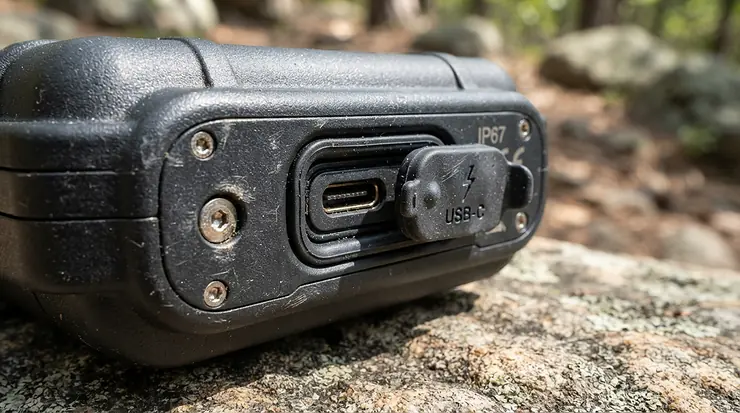
The standout is durability: the Ledlenser ML6 is rated IP66, meaning dust-tight and resistant to powerful water jets, where most rivals settle for IPX4 splash-proofing.
Output tops out at 750 lumens on boost, with smooth dimming rather than clunky steps. That matters, because 750 lumens at arm’s length inside a small tent is borderline interrogation lighting. The aluminium alloy body, rubber hook and built-in magnet give you several hanging options, and the USB-A port is rated at 1.5A. Battery capacity is listed at 3,200mAh by one UK retailer and 2,500mAh by another, so confirm on the listing you’re buying from.
On paper, that capacity means roughly half a phone charge, so treat it as a top-up tool rather than a power station. Based on the spec comparison, it suits campers who want one dependable lantern for years rather than the biggest numbers; the quoted 200-hour low-power runtime is generous for a week of tent evenings.
I couldn’t verify a large pool of customer reviews for the UK listing, so I won’t quote ratings. UK gear roundups do repeatedly rank it as their best overall pick, mainly for build quality and its dimmable warm light.
Pros:
- ✅ IP66 dust-tight, jet-proof aluminium body
- ✅ Smooth dimming with warm, glare-free light
- ✅ Hook, magnet and stand mounting options
Cons:
- ❌ Modest power bank capacity versus rivals
- ❌ Premium price for a 750-lumen maximum
Expect roughly £70–£110 depending on retailer: fair value if you want ruggedness, steep if you only need an occasional phone top-up.

2. BioLite AlpenGlow 500 — largest battery here from a well-known outdoor brand
At 6,400mAh, the BioLite AlpenGlow 500 holds more energy than any other branded lantern in this guide. A GearJunkie review reckons that’s enough to revive a modern phone once, but not much more.
It delivers 500 lumens on high for about five hours, and BioLite quotes up to 200 hours on low (one retailer lists a shorter figure, so treat it as a best case). The USB-A output is rated at 5V/2.4A, which is quicker than the 1.5A ports on some rivals. It weighs about 380g. The catch: charging input is micro-USB, which feels dated in a USB-C world.
The analytical take is that this suits family tents. The colour modes (shake to cycle) make it a friendly bedside light, and the bigger battery means one phone top-up per night without panic. Reviewers at Outside and Trailspace describe it as an everyday family lantern that has rescued phones on road trips, with the lack of USB-C the most common gripe.
Pros:
- ✅ Largest battery among the branded picks
- ✅ 2.4A USB-A output for quicker top-ups
- ✅ Warm, colour-rich modes suit tents and kids
Cons:
- ❌ Micro-USB input feels dated
- ❌ 500-lumen peak is dimmer than rivals
Budget roughly £60–£90. The price buys capacity and ambience rather than raw brightness.
3. Goal Zero Lighthouse 600 — hand-crank backup when sun and sockets fail
The Goal Zero Lighthouse 600 is the one to pack if “what if everything fails?” is your default mindset. It charges via USB, a separate solar panel (not included) or a built-in hand crank.
Two 3W warm-white LEDs give up to 600 lumens, and you can light just one side to stretch runtime: around 320 hours on low with one side lit, but only about 2.5 hours with both sides at full blast. The 5,200mAh battery feeds a USB-A port rated at up to 1.5A, and the whole thing weighs about 498g.
Here’s the honest analysis: a minute of cranking buys roughly ten minutes of low light, so the crank is an emergency light source, not a phone-charging method. The simultaneous charge-and-discharge ability is the practical win, because you can keep the lantern topped up from a solar panel while it runs.
GearJunkie flagged the permanently attached USB cable as a possible failure point and noted that the lack of a diffuser makes high output hard to look at. On retailer pages, one reviewer reported barely an hour at full power, so treat high-output claims cautiously.
Pros:
- ✅ Crank, solar and USB charging routes
- ✅ Charges and discharges at the same time
- ✅ Half-lit mode stretches runtime dramatically
Cons:
- ❌ Fixed USB cable is a potential wear point
- ❌ No diffuser makes high output harsh
Expect roughly £60–£100. Good value only if off-grid resilience genuinely matters to you.
4. Duracell Tri-Power 3000 Lumen Lantern — 3,000 lumens with solar and Qi charging
The headline act is the Duracell Tri-Power 3000 Lumen Lantern: 3,000 lumens, a solar panel on top, and a flip-open Qi wireless charging pad beneath it.
A gear write-up puts rechargeable runtime at roughly 1.5 hours at full output, 20 hours at 250 lumens and 50 hours at 65 lumens. It can also run on four D batteries as backup, which then gives about 12 hours at 1,000 lumens. The IPX4 rating and one-metre drop resistance suit rough handling. UK retailer listings describe a built-in 2,500mAh battery with USB-C in and out, although some overseas sources quote 4,400mAh and a USB-A port, so check the exact listing.
My take: 3,000 lumens is for emergencies and setting up in the dark; 250 lumens is the real campsite sweet spot. The smaller battery makes it a top-up device for phones, but the D-cell fallback means you’re never truly stranded. US retail buyers (a small sample of 26 ratings averaging 4.5 stars) say it matches its brightness claims, though I couldn’t verify UK-specific review data.
Pros:
- ✅ Solar, USB-C and Qi charging options
- ✅ D-battery backup for long outages
- ✅ Huge brightness for emergencies
Cons:
- ❌ Smaller built-in battery than most rivals
- ❌ Bulky body, thanks to the D-cell backup
Roughly £30–£60 is the range to expect, which is strong value for a power-cut lantern.
5. Glocusent 135 LED — 5,000mAh and USB-C at a friendly price
The Glocusent 135 LED makes its case on capacity per pound: a 5,000mAh battery, USB-C charging and 135 LEDs for a claimed 1,500 lumens.
It offers five brightness levels and three colour temperatures, weighs roughly 300g, and is listed as IPX4. Charging takes around 3.5 hours via USB-C, and the manufacturer claims up to 200 hours on low. Run the numbers and you get about 16–17mAh per gram, level with the BioLite AlpenGlow 500, at a fraction of the cost.
My analytical take is that it’s a sensible single-lantern solution for weekend car campers. The 1,500-lumen figure is a manufacturer claim and rarely the number you’ll use; the useful part is a roomy battery in a light body.
One caution about the evidence: I couldn’t find a large independent review pool. Many online roundups repeat the same specifications, so treat the 200-hour figure as a claim until you’ve read recent buyer feedback on amazon.co.uk.
Pros:
- ✅ 5,000mAh battery in a roughly 300g body
- ✅ Modern USB-C recharging
- ✅ Three colour temperatures, five brightness levels
Cons:
- ❌ Brightness and runtime claims largely unverified
- ❌ IPX4 splash protection only
Roughly £20–£40. It’s hard to beat on paper at that price, provided you verify recent reviews.
6. Coleman Classic Rechargeable 800L — a campsite classic that survives knocks
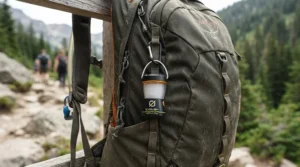
The Coleman Classic Rechargeable 800L borrows the silhouette of Coleman’s old fuel lanterns and adds a rugged, impact-resistant shell.
Its 4,800mAh battery supports 800 lumens on high for about five hours, 300 lumens on medium for about 15 hours, and 100 lumens on low for about 45. Beam distance reaches roughly 18 metres on high, and it’s rated IPX4 and impact-resistant to one metre. A USB cord stores in the base, and there’s a port for charging personal devices even while the lantern is lit.
What this means in practice: five hours on high is short, so you’ll live on medium, which is plenty for a picnic table and board games. The charging-while-lit design is the real attraction for families sharing one lantern and several phones. Roundups consistently describe it as the most durable option, with the short high-mode runtime the common flag. Some retail information I found is from overseas, so confirm UK availability and warranty on amazon.co.uk.
Pros:
- ✅ One-metre impact resistance for clumsy campers
- ✅ Charges devices while the lantern is lit
- ✅ Bail handle with built-in carabiner
Cons:
- ❌ Only about five hours on high
- ❌ Bulkier than slimmer cylindrical rivals
Roughly £45–£75: a fair price for brand familiarity and toughness.
7. LE 1000lm Rechargeable Camping Lantern — budget pick with a 4,400mAh battery
The LE 1000lm Rechargeable Camping Lantern proves you needn’t spend much to get a capable camping light and power bank combo.
It offers 1,000 lumens, four dimmable modes and a 4,400mAh battery (two 2,200mAh cells in some listings), plus a 360° beam, carry handle and D-ring for hanging. IPX4 splash protection covers drizzle. The same product family is also sold under the Lepro name, so double-check the model and mAh capacity on the listing you choose.
The practical value is in the battery rather than the lumens: 4,400mAh covers roughly three-quarters of a phone charge in typical conditions. Buyers on a UK retailer listing praise it for camping trips and power cuts, with some noting they charge the lantern from a larger battery while out camping and that it doubles neatly as a power bank. The listing also showed a high best-seller rank in electric camping lanterns at the time of research.
Pros:
- ✅ Strong battery capacity for a budget price
- ✅ Four dimmable modes including warm light
- ✅ Popular with power-cut buyers
Cons:
- ❌ Basic IPX4 splash protection only
- ❌ Listing details vary between LE and Lepro variants
Expect under £30. It’s the easiest recommendation for students and first-time campers.
How to Choose a Rechargeable Lantern with Power Bank Function
Short on time? Follow these seven steps in order.
- Check the mAh capacity first, then convert it. Multiply mAh by roughly 3.7V and divide by 1,000 to estimate watt-hours, then expect to get 70–80% of that into your phone. Capacity claims on the cheapest listings can be optimistic.
- Inspect the output port and amperage. A 1A output is a slow trickle, 1.5A is acceptable, and 2.4A is noticeably quicker.
- Judge usable lumens, not peak lumens. Most evenings are comfortable at 100–300 lumens, so a 3,000-lumen peak is a bonus rather than a need.
- Read runtime on the mode you’ll actually use. The “200 hours” headline is usually the dimmest setting, close to a night-light.
- Match the water rating to your weather. IPX4 means splash-proof from any direction, as explained in the IP code overview on Wikipedia, but it isn’t a licence to leave the lantern in a puddle. IP66 steps up to powerful jets.
- Look at charging inputs. USB-C is the most convenient; solar or crank suits longer off-grid stays.
- Check weight, warranty and safety marking. Buy from reputable sellers and look for UKCA or CE marking.
mAh Capacity Explained: What a Lantern That Charges Phone Batteries Can Really Deliver
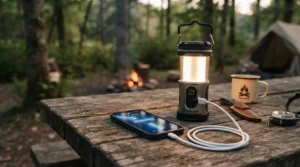
The mAh capacity printed on the box is the most quoted and least understood number in this category. It measures charge, not energy, so voltage and conversion losses mean you’ll never get a clean one-to-one transfer into your phone. A sensible rule of thumb is that real-world output lands at around 70–80% of the nominal figure. These estimates are my own arithmetic, so treat them as ballparks.
| Capacity band | Lanterns | Estimated phone charge | Best For |
|---|---|---|---|
| 2,500–3,200mAh | Duracell Tri-Power 3000 Lumen Lantern, Ledlenser ML6 | About 0.4–0.5 of a charge | Emergency top-ups |
| 4,400–5,200mAh | LE 1000lm Rechargeable Camping Lantern, Coleman Classic Rechargeable 800L, Glocusent 135 LED, Goal Zero Lighthouse 600 | About 0.7–0.9 of a charge | Weekend trips, one or two phones |
| 6,400mAh | BioLite AlpenGlow 500 | About one full charge | Families, longer stays |
Looking at the table, even the biggest lantern only manages about one phone charge per cycle, which echoes GearJunkie’s assessment of the BioLite AlpenGlow 500. Anything in the mid band suits a single phone on a two-night trip, provided you keep the light on its dimmer settings. If you need to power several handsets for days, add a dedicated power bank and let the lantern do what it does best: light the pitch.
✨ Ready to Light Up Your Next Trip?
🔍 Take your off-grid evenings to the next level with these carefully compared lanterns. Click on any highlighted product name to check current pricing and availability. A well-matched camping light and power bank means fewer dead-phone moments and a lot more marshmallow time! 🏕️
USB-A Output Explained: What a USB Output Camping Lantern Really Delivers
The port on a USB output camping lantern is more than a hole for a cable. Its voltage and current decide how quickly your phone fills up, and most lanterns are conservative.
Take the numbers: the Ledlenser ML6 and Goal Zero Lighthouse 600 both offer a USB-A output at around 1.5A, roughly 7.5 watts at 5V. The BioLite AlpenGlow 500 pushes 2.4A, about 12 watts. Modern fast chargers deliver 18 watts or more, so a lantern’s USB-A output will feel like a gentle trickle by comparison. That’s fine overnight and frustrating in a hurry.
Two practical details help. First, bring a short, good-quality cable, since a flimsy lead wastes energy as heat. Second, check whether your chosen model can charge while the light is on; the Coleman Classic Rechargeable 800L is marketed that way, and the Goal Zero Lighthouse 600 supports simultaneous charge and discharge.
USB-C ports are creeping into the category too. UK listings for the Duracell Tri-Power 3000 Lumen Lantern mention USB-C in and out, while the Glocusent 135 LED uses USB-C for charging. Always confirm what the port actually does, input only or output as well, before you buy. A single listing line can separate a useful power bank function from a decorative socket.
Camping Light and Power Bank in One: Is It Better Than Two Separate Devices?
It depends on how you camp. The combined approach wins on simplicity, while separates win on flexibility and raw capacity.
| Option | Capacity | Bulk | Failure risk | Best For |
|---|---|---|---|---|
| Combined lantern and power bank | 2,500–6,400mAh | One item to carry | One dead battery loses both functions | Weekend car campers, e.g. Glocusent 135 LED |
| Separate lantern plus 10,000mAh power bank | 10,000mAh+ | Two items, more cables | Failure of either leaves the other usable | Multi-day trips with several phones |
| Disposable-battery lantern | N/A | Spare cells to carry | Running cost and waste | Occasional use at home |
| Headtorch only | N/A | Lightest | No ambient light, no power bank | Hillwalkers on a weight budget |
Looking at the comparison above, a combined unit like the BioLite AlpenGlow 500 is the neater pick for a tent evening, because you’re carrying one object that earns its place twice. A separate 10,000mAh power bank offers roughly one and a half to two phone charges per Anker’s published estimates. If you regularly power several phones, that route is more robust. Budget buyers should note that the LE 1000lm Rechargeable Camping Lantern gets you into combined territory for very little outlay.
On long-term cost, lithium-ion cells gradually lose capacity with repeated charge cycles, so a lantern with a built-in battery will slowly give you less phone charging as the years pass. Even so, a rechargeable lantern avoids the recurring cost of disposable batteries, which makes it cheaper over a few seasons.

Charging Phones Off-Grid: A Practical Usage Guide
Amazon listings tell you what a lantern can do. This section tells you how to get more out of it when charging phones off-grid.
Before you leave:
- Charge the lantern to 100% the night before, and top it up from your car’s USB socket on the way.
- Pack a short USB cable you trust, plus a spare.
- Put your phone on low-power mode now; it’ll cut the amount of charge you need later.
At camp:
- Use the lowest comfortable light setting, since 100–300 lumens is plenty for most evenings.
- Charge your phone while the lantern is off or dimmed, when you can. Light and charging share one battery.
- Keep the lantern inside your tent at night. Cold air temporarily reduces lithium-ion capacity, so a lantern left outside in a frosty field will underperform.
Common mistakes in the first 30 days:
- Leaving the lantern on high “just to test it” and draining it before the trip.
- Storing it fully drained for months. A partial charge in a cool, dry place is kinder to the cell.
- Leaving it on a car dashboard in summer sunshine.
For a longer stay, pair the lantern with a small solar panel or a car socket top-up routine and ration the phone: airplane mode overnight, brightness down, and downloaded maps so you aren’t streaming.
Real-World Scenarios: Which Lantern Suits Which Camper?
If you’re a student heading to a festival on a tight budget: you need something cheap, bright enough to find your tent and capable of one rescue charge. The LE 1000lm Rechargeable Camping Lantern (under £30) fits, charged fully before you travel, with the light left on low overnight.
If you’re a family of four on a non-electric pitch in the Peak District for four nights: several phones, damp evenings and small children point towards the BioLite AlpenGlow 500 as the tent lantern, thanks to its 6,400mAh battery and gentle colour modes. Add the Coleman Classic Rechargeable 800L on the table outside for card games, because its impact-resistant shell tolerates being knocked about. Budget in the £100–£160 range for both.
If you’re in a storm-prone area and camp once or twice a year: the Duracell Tri-Power 3000 Lumen Lantern earns its keep during a power cut, lighting a living room at 3,000 lumens and falling back on D batteries if the built-in cell runs dry. It’s the cheapest insurance on this list.
If you’re a wet-weather purist who wants one lantern for a decade: the Ledlenser ML6‘s IP66 body and magnet mount suit a van, a bivvy shelter or a porch, and its premium price is spread across years of use.
Safety, UK Standards and Battery Care
Lithium-ion cells are generally safe when treated sensibly, but damaged or poorly made ones can overheat. Fire services are consistent on the basics, and West Yorkshire Fire and Rescue Service’s battery safety advice is a handy plain-English summary.
- Buy from reputable retailers. Avoid unfamiliar sellers with suspiciously huge capacities. UK fire services warn that cheap or counterfeit chargers and batteries may lack safety features.
- Look for UKCA or CE marking and sensible product documentation. Fire Scotland recommends checking that devices meet British or European safety standards.
- Never charge overnight or unattended, and never on a bed or sofa. Put the lantern on a hard, flat surface in sight.
- Stop using any lantern that swells, overheats, leaks or smells odd, and keep it away from flammable items.
- Don’t leave it in a hot car, and let it cool before recharging.
- Dispose of it properly. Built-in batteries mean the whole lantern should go to a recycling point, not the household bin.
Finally, remember that IPX4 means splash-resistant, not submersible. A lantern dropped into a stream is a different problem from one sitting in a drizzle.

FAQ: Rechargeable Lantern with Power Bank Function
❓ Can a rechargeable lantern with power bank function fully charge a modern phone?
❓ How long does a camping light and power bank take to recharge?
❓ Can I charge my phone while the lantern is switched on?
❓ Which USB output camping lantern suits a family tent best?
❓ Are cheap rechargeable lanterns safe to buy online?
Final Verdict
No lantern here will replace a proper power bank on a week-long expedition, and that’s fine. What they do brilliantly is make a rainy evening easier: light on demand, plus a phone rescue when the battery icon turns red.
If you want the biggest battery from a well-known brand, the BioLite AlpenGlow 500 is the pick. For value, the Glocusent 135 LED delivers serious capacity at a low price, provided you check recent reviews. Budget campers should look at the LE 1000lm Rechargeable Camping Lantern, while anyone planning for outages will appreciate the Duracell Tri-Power 3000 Lumen Lantern. The Goal Zero Lighthouse 600 suits those who want crank and solar resilience, the Coleman Classic Rechargeable 800L is the tough family choice, and the Ledlenser ML6 is the long-term, wet-weather workhorse.
Whichever you choose, check the mAh capacity, confirm the USB-A output or USB-C behaviour on the listing, and treat headline lumen counts with a pinch of salt. Prices shift constantly, so check current price and availability before you commit.
Recommended for You
- Rechargeable Lantern For Power Cuts: 7 Best Reliable Picks (2026)
- Rechargeable Camping Lantern: 7 Best Budget Picks (2026)
- Gas Lantern For Night Fishing: 7 Smart Picks For UK Anglers (2026)
Disclaimer: This article contains affiliate links. As an Amazon Associate, I earn from qualifying purchases. If you purchase products through these links, we may earn a small commission at no additional cost to you.
✨ Found this helpful? Share it with your friends! 💬🤗
