
In This Article
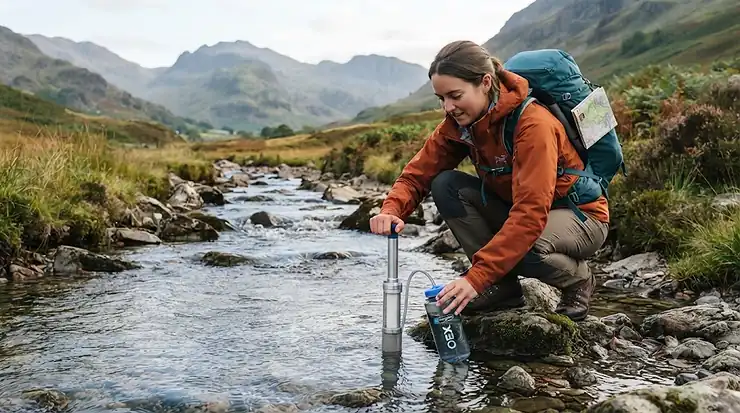
There’s a particular kind of dread that sets in when you’re three hours from the car park, your bottle’s gone dry, and the only water in sight is a peaty brown trickle off a Welsh hillside. A lightweight pump water filter solves that problem in about the time it takes to eat a flapjack: submerge the intake hose, work the handle, and watch clear water fill your bottle while whatever was living in that stream stays exactly where it belongs. Unlike chemical tablets, which ask you to wait half an hour and taste faintly of a swimming pool, or UV pens, which need batteries and clear water to work properly, a pump filter gives you drinkable water on demand, in any weather, from a source that’s barely ankle deep.
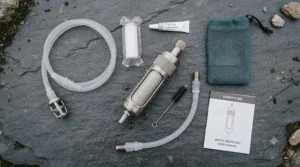
This guide walks through seven real, current pump filters, from a £45 pocket-sized squeeze-pump to a genuine virus-rated expedition purifier, and explains honestly what each one is actually good at. What is a lightweight pump water filter? In short, it’s a hand-operated device that forces untreated water through a microscopic filter element, physically straining out bacteria, protozoa, and sediment, without chemicals or batteries. We’ll cover pump water filter for backpacking use cases, the pump water filter vs gravity filter debate that splits opinion on every long-distance trail forum, and how these devices slot into genuine pack weight optimisation. Prices below are UK ranges only, since exact figures shift by the week — always check current pricing before you buy.
Quick Comparison Table
| Model | Weight | Flow Rate | Best For |
|---|---|---|---|
| MSR Guardian | ~490g | ~1L/37 sec | International travel, virus removal |
| Katadyn Pocket | 550g | 1L/min | Decades of hard use, groups of 3 |
| Katadyn Vario | ~425g | 1-2L/min | Adjustable flow, mixed water quality |
| MSR MiniWorks EX | ~415g | 1L/min | Field-serviceable, best taste |
| Katadyn Hiker Pro | ~320g | 1L/min | Budget-conscious weekend backpackers |
| MSR TrailShot | 142g | 1L/min | Ultralight, trail running, fastpacking |
| Katadyn Explorer | ~480g | 1L/min | Two-stage filtration, overseas trips |
Looking at the spread above, the gap between the MSR TrailShot and the rest of the field is stark — at 142g it weighs roughly a quarter of what the Katadyn Pocket does, which tells you immediately that “pump filter” is not one product category but at least three (pocket squeeze-pumps, mid-weight field-serviceable pumps, and heavyweight ceramic purifiers). Flow rate differences matter less than they look on paper: 1L/min versus 2L/min is the difference between filling a bottle in sixty seconds or thirty, which rarely changes your day, whereas the weight difference sits on your back for every one of those miles. According to the Ramblers’ summer walking advice, hikers in hot conditions can need up to a litre of water per hour, which is exactly the scenario where flow rate and pump effort start to matter more than a spec sheet suggests.
💬 Just one click — help others make better buying decisions too!😊
Top 7 Lightweight Pump Water Filters: Expert Analysis
1. MSR Guardian — the only pump on this list that purifies against viruses
The standout feature of the MSR Guardian is its 0.02-micron hollow-fibre element, roughly ten times finer than the pore size on most trail filters, which is small enough to physically block viruses as well as bacteria and protozoa. Most pump filters top out at 0.2 microns, adequate for UK and North American backcountry water but not certified against viral contamination, which matters if your trips extend to regions with less reliable sanitation. The MSR Guardian also self-backflushes with every stroke, pushing a portion of filtered water backward through the element automatically, so it keeps working in genuinely turbid water without you stopping to clean it.
Based on the spec comparison, this is the filter for international travel, remote expeditions, or anyone who has been burned by a filter clogging solid halfway through a trip. Reviewers consistently report exceptional durability, with some units still performing reliably after seven or more years of regular use, including drop tests onto concrete that would finish off lighter designs. What most buyers overlook is that this reliability comes at a genuine weight and bulk cost — it’s the heaviest and priciest filter here, and several long-term testers note it’s simply overkill for straightforward UK stream water. If you only ever filter clear upland becks, you’re paying for capability you won’t use.
Pros:
- ✅ Removes viruses, not just bacteria and protozoa
- ✅ Self-cleaning backflush works in turbid water
- ✅ Exceptional long-term durability, field-proven over years
Cons:
- ❌ Bulkiest and heaviest option on this list
- ❌ Premium price hard to justify for domestic UK trips
Expect to pay in the £350-£420 range at the time of research — a significant outlay, but the value verdict holds up if international or expedition use is genuinely on your itinerary.
2. Katadyn Pocket — built to outlast the rucksack it lives in
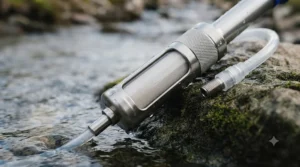
The Katadyn Pocket‘s standout feature is its 20-year manufacturer warranty, an almost unheard-of commitment that signals real confidence in the silver-impregnated ceramic element inside. That ceramic construction filters to 0.2 microns and can be scrubbed clean in the field with the supplied pad, restoring flow without needing a replacement cartridge — a genuinely different maintenance philosophy from disposable hollow-fibre designs. In practice this means one filter element can realistically outlive several generations of squeeze filters, with a rated capacity around 50,000 litres depending on water clarity.
Here’s what to weigh: the ceramic housing is largely aluminium and stainless steel, which is why the Katadyn Pocket tips the scales at 550g, the heaviest filter in this line-up. Aggregated review sentiment across outdoor retailers is notably split — long-term owners frequently describe decades of dependable service and call it worth every penny, while a vocal minority find the pumping effort tiring and the price steep for what is, mechanically, a simple device. Reviewers consistently note that the pumping action feels stiffer than glass-fibre alternatives, particularly once the ceramic element starts to clog with fine silt.
Pros:
- ✅ 20-year warranty, longest in the category
- ✅ Ceramic element cleans and reuses almost indefinitely
- ✅ Proven military and expedition pedigree
Cons:
- ❌ Heaviest model here at 550g
- ❌ Pumping effort increases noticeably as ceramic clogs
Prices typically sit in the £220-£260 range, and for hikers who genuinely want a buy-it-once filter, the long-term value case is compelling despite the weight penalty.
3. Katadyn Vario — one filter, two very different water days
What sets the Katadyn Vario apart is its dual-mode dial: twist it to “Faster Flow” for up to 2 litres a minute in clear water, or “Longer Life” to route water through an additional ceramic pre-filter when a source looks murkier than you’d like. This flexibility means you’re not locked into a single flow rate that’s either too slow on good days or too fast-clogging on bad ones — the dual-piston pump also draws water on both the push and pull stroke, cutting the physical effort per litre compared with single-action designs.
On paper this means the Katadyn Vario suits hikers who can’t predict water quality in advance, which describes most multi-day UK routes where you might fill up from a clear spring in the morning and a peat-stained runoff by afternoon. What most buyers overlook is that switching modes requires partially disassembling the filter housing, which is fiddly with cold hands. Aggregated review sentiment describes the pump action as noticeably smoother than fixed-flow competitors, though a recurring complaint flags the intake hose connector as feeling fragile under repeated field use.
Pros:
- ✅ Adjustable flow rate matched to water clarity
- ✅ Dual-piston action reduces pumping effort
- ✅ Integrated carbon core improves taste
Cons:
- ❌ Mode-switching requires partial disassembly
- ❌ Intake hose connector reported as a weak point
Look for the Katadyn Vario in the £120-£150 range — solidly mid-pack pricing for a filter that adapts to more scenarios than most.
4. MSR MiniWorks EX — the field mechanic’s choice
The defining feature of the MSR MiniWorks EX is total field serviceability: its AirSpring Accumulator lets you restore near-full flow rate by unscrewing the housing and scrubbing the ceramic-and-carbon element with the included pad, no spare parts or tools required, in about two to five minutes streamside. The carbon core does double duty beyond bacteria and protozoa removal, actively stripping out the chlorine, tannic, and earthy off-tastes that make some backcountry water genuinely unpleasant to drink even once it’s technically safe.
Reviewers consistently note this is the filter backcountry guides and search-and-rescue teams keep coming back to, precisely because it can be nursed back to full performance indefinitely rather than replaced. Based on the spec comparison, that reliability comes with trade-offs: at roughly 415g it’s noticeably heavier than hollow-fibre squeeze designs, and the ceramic element’s flow rate is honestly slower than glass-fibre competitors like the Katadyn Hiker Pro. What the spec sheet won’t tell you, but reviewers note, is that the pumping resistance climbs steadily through a trip in silty water, making the field-cleaning step less of a nice-to-have and more of a routine chore.
Pros:
- ✅ Fully field-serviceable ceramic/carbon element
- ✅ Genuinely improves water taste, not just safety
- ✅ NSF-protocol tested and widely trusted
Cons:
- ❌ Slower flow than glass-fibre pump alternatives
- ❌ Regular field-cleaning required in silty water
Expect the mid-£90-£120 range, which puts it squarely between the budget hand pumps and the ceramic heavyweights.
5. Katadyn Hiker Pro — the sensible default for weekend trips
The Katadyn Hiker Pro‘s standout advantage is weight-to-value ratio: at around 320g it’s among the lightest true pump filters here while still delivering a genuine 1 litre per minute, roughly 48 strokes, through a pleated glass-fibre element with a carbon core. The transparent housing is a small but useful upgrade over the original Hiker, letting you see at a glance when the cartridge is clogging rather than guessing from pump resistance alone.
Based on the spec comparison, this is the filter most weekend backpackers should default to unless a specific need points elsewhere — it attaches directly to wide-mouth bottles and most hydration bladders via quick-connect fittings, and the cartridge is rated for roughly 1,000-1,150 litres before replacement. Reviewers consistently report the pumping action feels easier on the hands than ceramic alternatives, though a recurring complaint concerns small connector pieces that can snap if the unit is used carelessly, such as pumping while braced against a rock. It’s also strictly a one-person, downstroke-only pump, so groups larger than two or three will find themselves waiting.
Pros:
- ✅ Lightest true pump filter under £100
- ✅ Transparent housing shows cartridge condition
- ✅ Fast, low-effort glass-fibre flow rate
Cons:
- ❌ Small connector parts can snap under rough handling
- ❌ Only pumps on the downstroke, slow for groups
Prices generally fall in the £70-£90 range, making it one of the strongest value picks in this entire line-up.
6. MSR TrailShot — a filter that lives in your pocket, not your pack
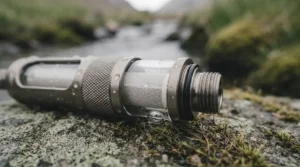
Nothing else here comes close to the MSR TrailShot‘s party trick: at just 142g and small enough to disappear into a hip-belt pocket, it’s less a traditional pump and more a squeeze-bulb quick-filter you can deploy in seconds without breaking stride. One-handed operation draws water through a 0.2-micron hollow-fibre element and delivers roughly a litre per minute, and MSR rates the cartridge for around 2,000 litres before replacement.
On paper this means the MSR TrailShot is the obvious choice for trail runners, fastpackers, and anyone practising serious pack weight optimisation, where every unnecessary gram is a personal grievance. What most buyers overlook is that this compactness trades away raw pumping power — flow rate drops noticeably in genuinely silty or algae-thick water, and MSR doesn’t offer a dedicated silt-guard attachment the way it does for some larger models. Reviewers consistently note it’s brilliant as a “just in case” backup or primary filter for clear mountain sources, but several long-distance testers report flow rate degrading faster than expected on multi-week trips through consistently turbid water, requiring more frequent shake-cleaning than the marketing suggests.
Pros:
- ✅ Lightest true pump-style filter available, 142g
- ✅ Fits in a pocket, deploys in seconds
- ✅ Inexpensive replacement cartridges
Cons:
- ❌ Struggles with heavily silty or algae-thick water
- ❌ No dedicated silt-guard attachment offered
At around £40-£55, it’s also the most affordable filter here, which only strengthens the case for ultralight backpacking gear lists that already lean on it as a category staple.
7. Katadyn Explorer — a two-stage system for unpredictable water
The Katadyn Explorer‘s defining feature is its two-stage build, combining a ceramic microfilter with a separate activated-carbon stage, which tackles biological contaminants and chemical taste issues as genuinely distinct problems rather than relying on one element to do both jobs. This matters more than it sounds: ceramic alone can leave water technically safe but flat-tasting, while carbon alone does nothing against bacteria and protozoa.
Here’s what to weigh: at roughly 480g, the Katadyn Explorer sits closer to the heavier end of this list, and its two-stage design means slightly more bulk in the pack than single-element pumps. Aggregated review sentiment frames it as a strong pick for travel and overseas trips where water sources vary wildly in both biological risk and chemical taste, from questionable tap water to genuinely wild sources, though it’s arguably more filter than most UK weekend hikers strictly need. What the spec sheet won’t tell you, but reviewers note, is that the separate carbon stage needs its own periodic replacement schedule distinct from the ceramic element, adding a small extra maintenance line most single-stage filters don’t require.
Pros:
- ✅ Two-stage design tackles taste and safety separately
- ✅ Ceramic element field-cleanable and long-lasting
- ✅ Well suited to variable water quality abroad
Cons:
- ❌ Heavier than most single-stage pump filters
- ❌ Two maintenance schedules instead of one
Expect a price range of roughly £110-£140, positioning it as a considered mid-to-premium choice for hikers who travel further afield than the local trailhead.
Practical Usage Guide: Getting the Most from Your Pump Water Filter
Getting a new pump filter working properly starts before you ever leave the house. Prime the system indoors first: run a litre or two of tap water through it so you understand the pumping resistance when everything is clean, which gives you a baseline to notice when the element starts clogging on the trail. Store the filter completely dry between trips — residual moisture in ceramic or hollow-fibre elements is the single biggest cause of mould growth and, in freezing conditions, of cracked fibres that silently ruin filtration performance.
On the trail, always position the intake hose away from silt and disturbed sediment; even a few centimetres of clearance above a streambed dramatically extends element life between cleanings. Most manufacturers recommend backflushing or scrubbing every 8-15 litres in clear water, sooner in anything visibly cloudy — don’t wait until the pump feels like hard work, since by then the element is already significantly clogged. A common mistake in the first 30 days is over-tightening housing seals, which can crack plastic threads; hand-tight is genuinely enough on every model reviewed here. Finally, never let the clean and dirty ends of hoses touch or coil together in a pack pocket, since that single habit is responsible for more contaminated “filtered” water than any element failure.
Real-World Scenarios: Which Pump Filter Suits Your Trip?
Picture a university student planning their first solo three-day route through the Brecon Beacons on a tight budget, carrying a lightweight tent and cooking for one. For this profile, the Katadyn Hiker Pro makes the most sense: it’s the lightest genuine pump on this list under £100, easy to operate solo, and its 1,000-litre cartridge life comfortably covers several trips before replacement is needed.
Now consider a trail runner training for a 50-mile ultra who wants insurance against running dry between aid stations, without adding meaningful weight to a running vest. The MSR TrailShot is built for exactly this — at 142g it barely registers, deploys in seconds without breaking cadence, and handles clear upland water without complaint.
Finally, imagine a couple planning a six-week trip through Southeast Asia that mixes remote trekking with unpredictable municipal water. Here the case for the MSR Guardian or Katadyn Explorer becomes obvious: viral contamination and chemically variable water are realistic risks abroad in a way they simply aren’t on a weekend in the Lakes, and the extra weight is a fair trade for genuine peace of mind.
Problem → Solution: Common Pump Filter Issues on the Trail
Problem: flow rate has slowed to a crawl. This is almost always a clogged element. Backflush hollow-fibre models by reversing water through the filter, or scrub ceramic elements like the Katadyn Pocket and MSR MiniWorks EX with the supplied pad until you see fresh material underneath.
Problem: the pump feels loose or won’t build pressure. Check hose connections and O-ring seals first; a perished or dislodged O-ring is the most common culprit and a cheap, packable spare is worth carrying on any trip over a week.
Problem: water tastes off despite filtering cleanly. Filters like the Katadyn Hiker Pro without a dedicated carbon stage won’t remove organic tannins from peaty water; a filter with an active carbon core, such as the MSR MiniWorks EX or Katadyn Vario, solves this directly.
Problem: the filter has frozen overnight. Hollow-fibre elements can crack invisibly when frozen wet. Sleep with the filter in your sleeping bag on cold nights, and if you suspect a freeze has occurred, treat the output water as unfiltered until you can inspect or replace the cartridge.
Problem: pumping large volumes for a group is exhausting. Single-person pumps like the Katadyn Hiker Pro aren’t built for this; the Katadyn Vario‘s dual-piston, two-way pumping action or a genuinely high-output model like the MSR Guardian will save real effort over a multi-person resupply.
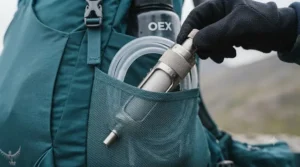
How to Choose a Lightweight Pump Water Filter
- Match filtration to your destination. Standard 0.2-micron pumps handle bacteria and protozoa fine for UK and most temperate trails; only genuine virus-rated purifiers like the MSR Guardian are necessary for regions with unreliable sanitation.
- Weigh flow rate against pumping effort. A faster litres-per-minute figure means little if the pump action tires your hand within a few strokes — dual-piston designs reduce fatigue over long fill sessions.
- Decide between field-cleanable and disposable elements. Ceramic and glass-fibre elements, as in the Katadyn Pocket and MSR MiniWorks EX, can be scrubbed and reused; hollow-fibre elements are typically lighter but eventually need full replacement.
- Check bottle and bladder compatibility. Confirm the output threads onto your existing bottles or hydration reservoir before buying, since adapters add weight and one more thing to lose.
- Factor in genuine pack weight, not marketing weight. Compare the full system weight including hoses and carry bag, not just the housing figure often quoted on the box.
- Consider taste, not just safety. A carbon-equipped model earns its keep on trips through peaty or tannic water where a purely biological filter leaves an unpleasant aftertaste.
- Budget for replacement elements, not just the initial price. A cheaper filter with expensive, hard-to-source cartridges can cost more over several seasons than a pricier model with a long-life or field-cleanable element.
Pump Water Filter for Backpacking: What Sets Pump Systems Apart
Choosing a pump water filter for backpacking specifically, rather than day-hiking or car camping, changes the calculus in a few important ways. On multi-day trips, water sources are rarely predictable — you might fill from a clear spring one morning and a stagnant puddle the next — so the adjustable or field-cleanable designs covered above, such as the Katadyn Vario and MSR MiniWorks EX, tend to earn their keep more than fixed-flow squeeze filters that clog and stay clogged. Backpackers also carry filters for days or weeks at a stretch, which makes cartridge lifespan and field maintainability genuinely load-bearing decisions rather than nice-to-haves.
The other backpacking-specific consideration is redundancy. Serious multi-day hikers often pair a primary pump filter with a lightweight backup, such as purification tablets, precisely because a single point of failure hundreds of metres from the nearest resupply point is a real risk, not a theoretical one. Reviewers consistently note that pump filters with quick-connect fittings, like the Katadyn Hiker Pro, integrate more smoothly into an existing hydration bladder setup than models requiring bottle-specific threads, which matters when you’re filling water in the dark at the end of a long day.
Pump Water Filter vs Gravity Filter
The pump-versus-gravity debate comes up on nearly every long-distance trail forum, and the honest answer is that neither wins outright — they solve different problems. A pump filter, such as any of the seven models above, works actively: you supply the pressure, which means you can draw water from sources as shallow as a few centimetres, including puddles and slow trickles that a gravity bag simply can’t access. Gravity filters, by contrast, rely entirely on height difference to push water through the element passively, which means hands-free operation once set up, but they need a genuinely deep, accessible water source and several minutes of patience per litre.
For solo or small-group hikers moving fast through variable terrain, a pump filter’s ability to work anywhere, including shallow upland becks, tends to outweigh the extra physical effort involved. For basecamp situations or larger groups needing several litres at once, a gravity system lets you set it up, walk away, and cook dinner while it works — genuinely more efficient use of time when volume matters more than speed of access. Weight-wise, pump filters with ceramic or carbon stages, like the Katadyn Vario and Katadyn Pocket, are typically heavier than equivalent gravity bags, while a bare-bones option like the MSR TrailShot closes that weight gap almost entirely. In practice, many experienced long-distance hikers carry a pump for its shallow-water access and speed, and only switch to gravity systems on trips involving a fixed camp for several nights.
| Factor | Pump Filter | Gravity Filter |
|---|---|---|
| Shallow water access | Excellent | Poor |
| Hands-free operation | No | Yes |
| Typical weight | Higher (ceramic/carbon models) | Lower |
| Best for | Solo, fast-moving hikers | Groups, basecamps |
The table confirms what most experienced backpackers already suspect: it’s less about which system is objectively better and more about matching the tool to how you actually move through the backcountry. A fastpacker refilling from ankle-deep streams every hour wants a MSR TrailShot in a hip pocket, not a gravity bag hanging from a tree branch they haven’t found yet.
Ultralight Backpacking Gear: Where Pump Filters Fit In
Within the broader world of ultralight backpacking gear, water filtration is one of the few categories where “ultralight” doesn’t automatically mean “pump filter” — most gram-counters actually gravitate toward chemical tablets or minimalist squeeze filters that weigh a fraction of even the MSR TrailShot. That said, pump filters still have a defensible place on an ultralight gear list, specifically the 142g MSR TrailShot, which delivers active filtration at a weight that barely registers against a sub-7kg base weight target.
What most buyers overlook when building an ultralight kit is that weight savings on the filter itself can be undone by redundancy choices elsewhere — carrying a backup purification method “just in case” adds back exactly the grams you saved. The honest ultralight approach is to pick one primary method that suits your actual water sources and commit to it, rather than layering multiple systems out of anxiety. For UK trails with generally reliable upland water, a single well-chosen filter, paired with good judgement about source selection, is usually enough.
Pack Weight Optimisation: Shaving Grams Without Sacrificing Safety
Genuine pack weight optimisation isn’t about buying the lightest gear regardless of function — it’s about identifying where weight actually earns its place. A water filter is a strong candidate for scrutiny because, unlike a sleeping bag or shelter, its weight is entirely fixed by the model you choose rather than by conditions on the day. Swapping a 550g Katadyn Pocket for a 142g MSR TrailShot saves over 400g outright, more than most hikers manage by agonising over tent stake materials or trimming toothbrush handles.
The trade-off, as covered throughout this guide, is capability: lighter filters generally handle a narrower range of water conditions and offer less biological protection margin. A sensible optimisation approach is to match filter capability to genuine trip risk rather than worst-case scenarios you’re unlikely to encounter — a weekend in the Peak District doesn’t need expedition-grade purification, while six weeks trekking through variable water quality abroad genuinely might. Reviewers consistently note that hikers who overspec their filtration “just in case” often end up carrying weight that never gets used, which is the opposite of what pack weight optimisation is supposed to achieve.
Long-Distance Trail Hydration: Planning Water Strategy for Multi-Day Trails
Long-distance trail hydration is fundamentally a planning problem before it’s an equipment problem. Before setting out on a route lasting several days, map known water sources against your daily mileage, and treat any gap of more than a few hours without a reliable source as something requiring extra carrying capacity, not just faith in your filter. According to Mountain Safety Adviser guidance reported by The Great Outdoors magazine, hikers should aim to drink roughly two litres across a six-to-eight-hour day on the hill, more in hot conditions, which gives a useful baseline for calculating how many filter refills a given day realistically requires.
On multi-day trails, filter maintenance becomes part of your daily routine rather than an occasional chore — cleaning or backflushing at the end of each day, before the day’s sediment has a chance to dry and harden inside the element, keeps flow rates consistent for the whole trip. Hikers relying on models like the Katadyn Vario or MSR MiniWorks EX for week-plus trips should also carry the manufacturer’s cleaning pad and, ideally, a spare O-ring, since these small consumables are cheap insurance against a filter failure days from the nearest outdoor shop.
Common Mistakes When Buying a Lightweight Pump Water Filter
The most frequent mistake is buying on weight alone without checking flow rate and maintenance requirements, which leaves hikers with a filter that’s light in the pack but genuinely tedious to use at the water’s edge. A close second is ignoring cartridge or element replacement costs at the point of purchase; a budget filter with an expensive, hard-to-find replacement cartridge can end up costing more over two or three seasons than a pricier model with a field-cleanable ceramic element. Buyers also commonly overlook bottle compatibility, discovering only on the trail that their filter’s output thread doesn’t match their existing bottles or bladder.
Another common error is buying purification capability far beyond genuine need — a virus-rated purifier like the MSR Guardian is excellent, but overkill and unnecessary extra weight for hikers who only ever drink from UK upland streams. Finally, some buyers skip reading about maintenance intervals entirely, then are surprised when flow rate drops sharply after a few uses in murky water; every pump filter, without exception, needs periodic cleaning, and none of the seven models here are “buy and forget.”
Safety, Regulations & Water Quality Compliance Guide
UK wild water sources are generally cleaner than many hikers assume, but they’re not risk-free. The Drinking Water Inspectorate’s guidance on Cryptosporidium explains that this parasite is genuinely resistant to standard chemical treatments like chlorine, which is precisely why physical filtration, rather than tablets alone, is the more reliable defence against it in untreated water. Giardia presents a similar challenge; according to Wikipedia’s overview of giardiasis, the infection typically causes diarrhoea, abdominal pain, and nausea beginning one to three weeks after exposure, symptoms unpleasant enough on a multi-day trail that prevention is clearly worth the modest weight of a decent filter.
None of the seven filters reviewed here are classed as medical devices, and none should be relied upon as a substitute for professional medical advice if you do fall ill after drinking wild water — seek medical attention for persistent gastrointestinal symptoms rather than assuming the filter failed silently. From a compliance standpoint, always check current import and export regulations if travelling internationally with pressurised or chemically treated filtration equipment, since rules vary by destination and change periodically.
✨ Ready to Gear Up for Your Next Trip?
🔍 Take your trail hydration to the next level with a filter genuinely matched to where you’re headed. Click through to check current pricing and availability on any of the models above — the right choice today means one less thing to worry about three hours from the nearest tap.
Long-Term Cost & Maintenance
Total cost of ownership varies more between these seven filters than the sticker price alone suggests. The MSR TrailShot, cheapest to buy at around £40-£55, uses inexpensive hollow-fibre cartridges that need full replacement roughly every 2,000 litres, meaning a heavy user might replace it every one to two seasons. By contrast, the Katadyn Pocket‘s £220-£260 upfront cost looks steep, but its field-cleanable ceramic element and 50,000-litre rated capacity mean many owners never buy a replacement cartridge at all across a decade or more of use.
Field-serviceable models like the MSR MiniWorks EX and Katadyn Vario sit in between: their elements can be scrubbed and restored many times over, extending the interval between the roughly £30-£45 replacement cartridges considerably compared with disposable designs. For a hiker doing perhaps ten multi-day trips a year, the cheapest filter to buy isn’t necessarily the cheapest to own — running the numbers over five years often favours the field-cleanable ceramic and carbon designs, even accounting for their higher initial price and extra carried weight.
Features That Actually Matter (And Those That Don’t)
Genuinely important: filtration pore size relative to your destination’s water risks, field maintainability, and output compatibility with your existing bottles or bladder. These three factors determine whether a filter actually gets used correctly on the trail rather than left in a drybag out of frustration.
Genuinely less important for most UK-based hikers: marginal differences in litres-per-minute flow rate between broadly similar models, since the practical difference between filling a bottle in 40 versus 60 seconds rarely changes a day’s plan. Branded “anti-clog technology” claims are also worth scrutiny — reviewers consistently note that every filter here still clogs eventually in silty water, and the meaningful differentiator is how easily it can be cleaned afterward, not whether marketing claims it won’t happen at all.
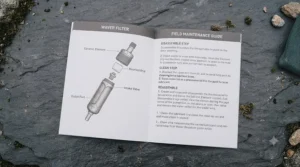
FAQ
❓ Is a pump water filter better than tablets for backpacking?
❓ How often should I clean my pump water filter?
❓ Can a lightweight pump water filter remove viruses?
❓ What's the lightest pump water filter you can buy?
❓ Do pump filters work in freezing conditions?
Conclusion
There’s no single “best” lightweight pump water filter, only the right one for how you actually hike. If weekend trips through the Lakes or Snowdonia are your usual outing, the Katadyn Hiker Pro offers genuine value without unnecessary weight. If you’re counting grams for a fastpacking mission, the MSR TrailShot disappears into a pocket and does its job without fuss. And if your trips take you further afield, into water quality genuinely unlike anything on a British hillside, the MSR Guardian or Katadyn Explorer justify their extra weight with real, verified capability.
What matters most, across every model covered here, is matching filtration capability honestly to the water you’ll actually encounter, rather than either underestimating the risk or overspending on protection you don’t need. Whichever you choose, a properly maintained pump filter remains one of the most reliable ways to turn an uncertain trailside stream into a genuinely safe drink, trip after trip.
Recommended for You
- Pump Water Filter for Group Expeditions: 7 Top Picks (2026)
- 7 Best Pump Water Filter for Camping Picks 2026
- Water Filter for Duke of Edinburgh Expedition: 7 Best Picks 2026
Disclaimer: This article contains affiliate links. As an Amazon Associate, I earn from qualifying purchases. If you purchase products through these links, we may earn a small commission at no additional cost to you.
✨ Found this helpful? Share it with your friends! 💬🤗
