
In This Article
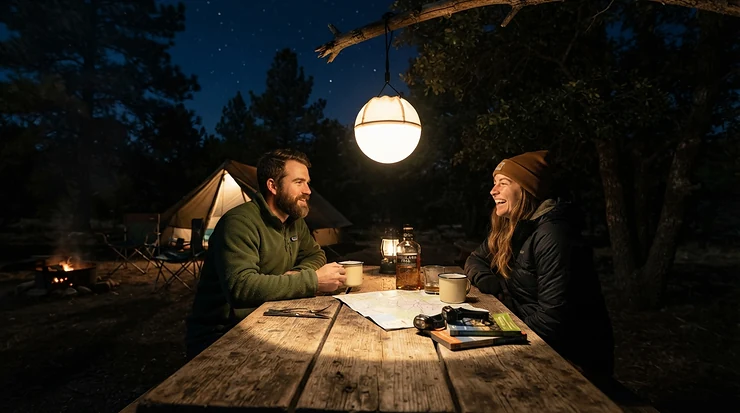
An LED lantern for family camping is a portable, battery-powered light built to illuminate a tent, awning or pitch for several people at once. Unlike a head torch, it spreads soft light widely, runs for hours without a naked flame, and ideally survives sticky fingers, wet grass and the odd tumble off a picnic table.
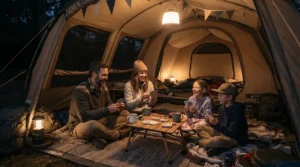
Picture the moment. The kids are fed, the sun has dropped behind the hedgerow, and someone has just trodden on a guy line. Whether the next hour is cosy or chaotic depends largely on one object hanging from your tent pole. Get it right and the evening feels like a campfire story. Get it wrong and you’re squinting at a harsh white glare while a toddler hunts for a missing sock.
Most buying advice starts with lumens, which are the headline figure on nearly every spec sheet, as the Camping and Caravanning Club’s lighting guide points out. But brightness is only one piece of the puzzle. A good lantern also needs sensible dimming, a believable water rating, a durable shell and a colour of light that suits your family.
This guide compares seven real, widely sold lanterns. It also covers the practical questions families ask: what makes a child-safe camping lantern, how much light a big tent needs, and how to light a group pitch without turning it into a floodlit car park.
One note on method. Everything below is built from manufacturer specifications, retailer listings and published reviews, not personal testing. Where review evidence is thin, I say so.
Quick Comparison: The Best LED Lantern for Family Camping at a Glance
| Lantern | Peak brightness | Light colours | Best For |
|---|---|---|---|
| Ledlenser ML6 | 550 lm (750 lm boost) | White; separate warm-light edition | Regular campers wanting one durable lantern |
| BioLite AlpenGlow 500 | 500 lm | Cool/warm white plus colours | Kids, bedtime and mood lighting |
| LE 1000LM | 1,000 lm | Cool, warm, combined | Budget lighting for large tents |
| Black Diamond Apollo | 250 lm | Dimmable white | Glare-free table lighting |
| Goal Zero Lighthouse 600 | 600 lm | Warm white | Groups, power cuts, backup power |
| Robens Munros | 280 lm | Cool, warm, mixed | Cosy, stylish family pitches |
| Robens Lighthouse Rechargeable | 1,000 lm | Cool, warm, mixed | Awnings and big-tent downlighting |
The table shows a clear split. The LE 1000LM and Robens Lighthouse Rechargeable chase raw output for large tent LED lighting. The Black Diamond Apollo and Robens Munros aim for gentler, table-height ambience. If you only buy one, the Ledlenser ML6 or BioLite AlpenGlow 500 cover the widest range of situations, though at a higher price.
💬 Just one click — help others make better buying decisions too!😊
Top 7 Picks for an LED Lantern for Family Camping: Expert Analysis
Each lantern below gets the same treatment: what stands out, what the specs mean in practice, who it suits, and what reviewers say.
1. Ledlenser ML6 — best premium all-rounder
The headline here is range. The Ledlenser ML6 runs from a 5-lumen night-light to a 750-lumen boost, so one lantern can watch over a sleeping toddler and light a barbecue.
Retailer specifications list 550 lumens as standard peak, a 280 g body and an 18650 lithium cell. In practice, the 300-lumen power mode (about 2.5 hours claimed) suits supper, the 150-lumen setting (about five hours) handles board games, and the 200-hour low setting means a whisper of light can run all weekend. Most retailers quote IP66, though one older listing says IP54, so check the box before trusting it in a storm. A hook, removable stand and magnet let you hang it, stand it or stick it to a car panel.
Based on the spec comparison, this is the buy-once choice for families who camp most weekends. The red mode also protects night vision for 2 a.m. toilet trips, and the power-bank function rescues a flat phone.
I couldn’t verify a deep pool of owner reviews for the UK listing, so treat the praise as editorial. The Walks4all roundup names it best overall for regular UK camping, singling out its robust, flexible build.
Pros:
- ✅ Brightness range from 5 to 750 lumens
- ✅ Red mode and power-bank function included
- ✅ Compact 280 g body with hook, stand and magnet
Cons:
- ❌ Premium price compared with budget rivals
- ❌ Warm light needs the separate Warm Light edition
At the time of research it sat roughly in the £65-£90 range, so check current price. Value verdict: dearer than the budget crowd, but cheaper than replacing two lanterns.
2. BioLite AlpenGlow 500 — best for kids and mood lighting
Shake it and the BioLite AlpenGlow 500 swaps from crisp white to warm light, candle flicker or colour. Children adore the trick, and parents quietly appreciate the gentle bedtime glow.
The listed specs are 500 lumens on high (about five hours), 5 lumens on low (up to 200 hours), a 6,400 mAh battery with a USB-A output, a 380 g body and IPX4 splash resistance. That battery should manage roughly one to two phone top-ups, depending on your handset. The LEDs are quoted at CRI 90, so sandwich fillings and first-aid kits look natural rather than washed out. Retailer listings also describe 360-degree and half-lantern modes.
On analysis, the dome shape scatters light instead of throwing it, which is kinder to small eyes. The rubber port covers help against drizzle and sticky fingers.
A Yachting Monthly reviewer found it versatile, easy to use and long-lasting on a charge. The same review criticised the price and said the hook could be more secure.
Pros:
- ✅ Switches between cool and warm white in one lantern
- ✅ Real power-bank output for phones
- ✅ Dome diffuses light into a soft, glare-free glow
Cons:
- ❌ Hook could be more secure, per one reviewer
- ❌ Micro-USB charging feels dated
Expect roughly £55-£80 at the time of research; check current price. Value verdict: fair if the warm and colour modes will get used, steep if they won’t.
3. LE 1000LM Battery Powered LED Camping Lantern — best budget brightness
If you want to light a big family tent without emptying your wallet, the LE 1000LM Battery Powered LED Camping Lantern is the blunt instrument.
Listings quote 1,000 lumens, four modes (cool white, warm white, combined and flashing, spanning roughly 3,000K-6,000K), IPX4 splash resistance and three D alkaline cells with about 12 hours claimed at full power. A lampshade stops the glare dazzling, and there’s a hook on the base plus a metal top handle. In practice, 1,000 lumens is more than most four-berth tents need, so you’ll mostly run it dimmed, which is where the runtime comes from.
The catches are worth knowing. One listing warns against rechargeable D cells, and another says the lantern isn’t suitable for children under three. Three D cells also add noticeable weight and a recurring cost.
Based on the review snippets I could access, buyers praise battery life for the light output and say it feels durable. This is a sturdy second lantern for large tent LED lighting rather than a refined main light.
Pros:
- ✅ Big brightness for a small outlay
- ✅ Warm, cool and combined modes
- ✅ Hook and handle for flexible hanging
Cons:
- ❌ Needs D alkaline cells, not rechargeables
- ❌ Recurring battery cost and extra weight
Budget bracket, likely in the £20s-£30s; check current price. Value verdict: excellent as a spare or tent-centre light.
4. Black Diamond Apollo — best glare-free table lantern
Folding legs and a frosted globe make the Black Diamond Apollo look like it belongs on a camping table.
It delivers 250 lumens from a 2,600 mAh internal lithium cell, with three AA batteries as backup. Retailers quote roughly six hours at full brightness from the internal cell, with AAs extending that considerably. It weighs 272 g (344 g with AAs), carries IPX4, dims down to around 10 lumens, and has a USB port for charging devices. Two hundred and fifty lumens will comfortably light a table for four, but it won’t light a whole tent on its own.
The AA fallback is the clever bit. On a wet four-day trip with no mains, you can swap in spare cells instead of rationing light.
At the time of research, one US retailer showed a 4.5 average from 54 ratings. Fans like the table legs and tent use. A few reviewers say real output undershoots the claim, and one called it a midsize compromise: a touch big for backpacking, a touch small for car camping.
Pros:
- ✅ Rechargeable with AA backup
- ✅ Folding legs and double-hook hanging loop
- ✅ Three-year manufacturer warranty, per one retailer
Cons:
- ❌ 250 lumens can’t light a big tent alone
- ❌ Some owners say output undershoots the claim
Roughly £40-£60 range; check current price. Value verdict: strong for table-top ambience, weaker as a sole light.
5. Goal Zero Lighthouse 600 — best for power cuts and groups
The Goal Zero Lighthouse 600 has a party trick the rest lack: a built-in hand crank.
It produces 600 lumens from two 3 W warm-white LEDs, in either 360-degree light or half-lantern mode. A 5,200 mAh battery feeds a USB output, and a full USB recharge takes about six hours. One minute of cranking buys roughly ten minutes of low light, which is an emergency measure, not a daily routine. It weighs 498 g and has collapsible legs and a carry handle. Lighting only half the lantern stretches the runtime significantly.
For campsite lighting for groups, the warm tone is easier on the eyes than a hard white, and the output covers a shared table. It also earns its keep at home during a power cut.
OutdoorGearLab found the 600 lumens more than enough for a group at a picnic table, even too much for ordinary camping. It also judged battery life on high short of class-leading, and said the crank takes real effort.
Pros:
- ✅ Warm 360-degree light with half-lantern mode
- ✅ Three ways to recharge, including the crank
- ✅ Doubles as a USB power hub
Cons:
- ❌ Close to 500 g, heaviest of the seven
- ❌ Modest runtime at full brightness
Roughly £55-£80 at the time of research; check current price. Value verdict: good if you want emergency-readiness as well as camping light.
6. Robens Munros — best for a classic, cosy look
With its retro lantern silhouette, the Robens Munros is the one parents pick because it looks good on the table.
It delivers 10-280 lumens, with cool white, warm yellow and mixed modes plus a dimmer. A 2,500 mAh lithium battery charges over USB-C, the body weighs 305 g, and the rating is IPX4. Listings quote about 66 hours at minimum output but only about three at maximum. The shell combines polycarbonate, ABS and steel. In practice, the long low-setting runtime suits bedtime and the table, while the short high-setting runtime tells you it isn’t meant to flood a tent.
Pair it with a brighter overhead light and you get a quietly effective two-layer setup. Honestly, it’s a pleasant child-safe camping lantern candidate: no glass, no flame, and a modern USB-C port.
I couldn’t verify a deep review pool. The Camping and Caravanning Club includes it among its camping lights, picking it for style-conscious setups and soft ambient light on a table or from a hook.
Pros:
- ✅ USB-C charging, shared with most modern phones
- ✅ Cool, warm and mixed modes
- ✅ Long low-mode runtime
Cons:
- ❌ Only about three hours at full output
- ❌ Too dim to light a large tent alone
Roughly £30-£45; check current price. Value verdict: good for the cosy-table role.
7. Robens Lighthouse Rechargeable — best convertible downlight for awnings
Twist off the globe and the Robens Lighthouse Rechargeable stops being a lantern and becomes a downlight.
It’s rated at up to 1,000 lumens, with a 4,000 mAh battery, micro-USB input and a USB output for phones. The body weighs 484 g, and modes include cool white, warm white, mixed and flashing. Decathlon’s UK listing quotes two to six hours of burn time depending on brightness and highlights a large, glove-friendly button. Practically, expect to run it at mid settings: full power drains it in around two hours. Removing the globe sends light down onto a cooking area, which is useful for large tent LED lighting in an awning.
It suits families who cook under a canopy and want a bright, directed task light. I couldn’t verify a substantial review pool, so there’s no crowd-sourced verdict to report.
Pros:
- ✅ Removable globe for downward lighting
- ✅ Large glove-friendly button
- ✅ USB output for phones
Cons:
- ❌ Short runtime at top brightness
- ❌ Micro-USB input is dated
Roughly £30-£45; check current price. Value verdict: useful as a task and awning light.
Side-by-Side Spec Check
| Lantern | Brightness | Power | Weight | Water rating | Price range | Best For |
|---|---|---|---|---|---|---|
| Ledlenser ML6 | 550-750 lm | 18650 rechargeable | 280 g | IP66 (retailer-listed) | £65-£90 | Buy-once all-rounder |
| BioLite AlpenGlow 500 | 500 lm | 6,400 mAh rechargeable | 380 g | IPX4 | £55-£80 | Kids and mood |
| LE 1000LM | 1,000 lm | 3 × D alkaline | Heavier (D cells) | IPX4 | Budget bracket | Large tents on a budget |
| Black Diamond Apollo | 250 lm | Rechargeable + 3 × AA | 272-344 g | IPX4 | £40-£60 | Table lighting |
| Goal Zero Lighthouse 600 | 600 lm | 5,200 mAh + crank | 498 g | Not stated in sources found | £55-£80 | Groups and emergencies |
| Robens Munros | 10-280 lm | 2,500 mAh USB-C | 305 g | IPX4 | £30-£45 | Cosy ambience |
| Robens Lighthouse Rechargeable | up to 1,000 lm | 4,000 mAh micro-USB | 484 g | Weather resistant (no rating found) | £30-£45 | Awning downlight |
Reading across, the best-value pairing is a bright, cheap light plus a gentle one. The LE 1000LM handles the heavy lifting, and the Robens Munros or Black Diamond Apollo handles the atmosphere. If you want one lantern to do everything, the Ledlenser ML6 and BioLite AlpenGlow 500 carry the widest brightness range, at higher cost.
How to Choose an LED Lantern for Family Camping
The right LED lantern for family camping matches your tent size, offers dimming and has a believable water rating. Beyond that, work through these seven steps:
- Match lumens to space. Aim for 300-600 lumens of peak output for a family tent, remembering you’ll rarely run at full power.
- Demand dimming. A lantern with only on and off will dazzle children and drain batteries.
- Pick a power source you’ll actually manage. USB-rechargeable suits mains-equipped trips; D or AA cells suit off-grid weeks.
- Check the IP rating. IPX4 (splash-resistant) is the realistic minimum for British weather.
- Choose your colour. Cool white suits tasks, warm white suits relaxing; the best lanterns offer both.
- Inspect the build. Look for a stable base, a secure hook and a tough, non-glass shell.
- Weigh the extras. Power-bank output, a red mode and a battery gauge earn their place.

Child-Safe Camping Lantern: What Families Should Look For
No lantern in this round-up is certified as a toy, so “child-safe” here means sensible design, not a safety certificate. A child-safe camping lantern should have no naked flame, no hot glass and no easily opened battery compartment.
LEDs generally run far cooler than gas mantles, though high-output units can still warm up at the base, so keep them away from bedding. Look for a screw-down or latched cap, covered charging ports (the BioLite AlpenGlow 500 uses rubber port doors) and a low, glare-free night mode. A listing for the LE 1000LM states that it isn’t suitable for under-threes and needs adult supervision, which is the honest answer for most lanterns.
Also check for UKCA or CE marking on the product or packaging. And keep cables out of reach: a dangling charging lead is the real hazard at toddler height.
The Robens Munros suits this role well thanks to its steady, dimmable output. Treat any lantern as a tool that adults operate, not a toy children play with.
Large Tent LED Lighting: How Many Lumens Do You Need?
For large tent LED lighting, a hanging lantern of 300-600 lumens at the centre pole usually covers a family tent, with a gentler light near sleeping areas. That’s my planning rule of thumb, not a regulatory standard.
The logic is simple. Light bounces off pale tent fabric, so a mid-height lantern often feels brighter inside a tent than the same lantern on open grass. Two sources beat one: a main light overhead and a low, dimmed task light by the sleeping pods or porch. That avoids shadows and means nobody needs the full-power setting at bedtime.
The LE 1000LM and Robens Lighthouse Rechargeable are the high-output options for big-tent work. Run either at mid or low settings and you’ll stretch battery life considerably. In smaller tents, a Black Diamond Apollo or Robens Munros on its own may be plenty.
Hang lanterns from the central ridge or a pole rather than leaving them on the groundsheet. That avoids glare in sleepy eyes and keeps the lantern out of the way of feet.
Shatterproof Camping Lantern: What Durability Really Means
A shatterproof camping lantern is mostly about materials and claims. Glass globes are the weak point, so look for polycarbonate or ABS shells. Most lanterns here use plastics: the Robens Munros combines ABS, polycarbonate and steel, and the BioLite AlpenGlow 500 has no glass globe.
Water and impact ratings are separate things. The IP code system tells you about dust and water protection, not drops. For impact, look for a stated drop height. Robens quotes a 1.5 m drop rating for its small Assynt UL flashlight, which shows what a real claim looks like. I couldn’t find equivalent drop figures for most lanterns in this guide, so treat durability as unproven rather than assumed.
Practical tips help more than marketing. Hang lanterns instead of standing them on uneven ground, choose a wide base, and avoid placing them on camping tables where children play. A rubberised or collapsible hook also reduces the odds of a tumble.
360-Degree Light vs Directional Beams
A 360-degree light spreads illumination evenly in all directions, which is ideal for hanging at a tent’s centre. Directional lanterns throw light one way, which suits a cooking station or path.
The Goal Zero Lighthouse 600 lets you switch between 360-degree and half-lantern modes, and the BioLite AlpenGlow 500 listings describe similar full and half options. Half mode saves battery and avoids lighting the side of the tent where a child is trying to sleep. The Ledlenser ML6 uses lens technology for an even spread and works well on a table or a hook.
Whichever you pick, height matters more than you’d think. A lantern hung at head height or above lights the space more evenly, while one on the ground leaves long, awkward shadows.
Cool White vs Warm White: Which Suits Family Camping?
The cool white vs warm white debate comes down to purpose. Colour temperature is measured in kelvin: according to the BRE guidance quoted by Designing Buildings, warm white sits below roughly 3,000 K, while cool white starts around 4,000 K and looks bluer.
Use cool white for tasks: cooking, reading maps, treating a scraped knee. Use warm white for relaxing, storytelling and winding down children. Many sleep guides suggest dimmer, warmer light in the hour before bed, which suits a family routine.
Lanterns that switch between both, such as the LE 1000LM, the Robens Munros and the BioLite AlpenGlow 500, avoid buying two lights. The Goal Zero Lighthouse 600 uses warm-white LEDs only, and a warm-light edition of the Ledlenser ML6 is quoted at 2,500K-3,000K. The BioLite’s CRI 90 rating also means colours look natural, which helps with food and first aid.
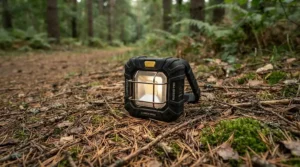
Campsite Lighting for Groups: A Practical Layout Plan
Good campsite lighting for groups works in layers, not as one big floodlight. Think in zones:
- The hub. One bright, high lantern over the shared table; the Goal Zero Lighthouse 600 suits this role.
- The kitchen. A directional or downward light, such as the Robens Lighthouse Rechargeable with its globe removed.
- The path. Dim, low lights near guy lines and toilet routes, so nobody trips.
- The tents. A dimmed, warm lantern in each, such as the Robens Munros.
Keep the brightest light in the middle of the group and the softest at the edges. That way your eyes aren’t constantly readjusting, and neighbours aren’t dazzled.
A red mode, as on the Ledlenser ML6, helps late at night: it preserves night vision and is less intrusive on a quiet site. Agree a “lights low” time with the other families and everyone sleeps better.
First-Night Setup and Maintenance Guide
A few habits make any lantern last longer and work better.
Before the trip:
- Charge fully and test every mode at home.
- Pack spare AA or D cells where the lantern uses them.
- Note the lantern’s IP rating, so you know its limits.
On site:
- Hang lanterns high and away from walls and bedding.
- Keep ports closed and dry, especially on lanterns with rubber covers.
- Never put a lantern in a pocket or bag while switched on.
After the trip:
- Wipe, dry and recharge before storing. Most manufacturers advise against leaving lithium batteries fully drained for long periods.
- Remove alkaline batteries before long storage to avoid leakage.
Common mistakes in the first 30 days: using rechargeable D cells in a lantern that forbids them (as with the LE 1000LM), running at full brightness all evening, and forgetting to charge before travel. Label each lantern with a bit of tape so everyone knows which is whose.
Real-World Scenarios: Matching Lanterns to Three UK Families
Scenario 1: The weekend family with toddlers. A six-person tent, a budget of £50-£70 and two nights a month on a Lake District campsite. The Robens Munros for ambience plus the LE 1000LM for the main area gives a gentle, flexible setup at a modest total cost.
Scenario 2: Three families sharing a gazebo. Big pitch, shared meals and a festival-style site. Here, campsite lighting for groups matters: a Goal Zero Lighthouse 600 at the hub and a Robens Lighthouse Rechargeable over the cooking area. Budget of £90-£130 for the pair.
Scenario 3: The regular car-camping family with teenagers. Frequent trips, varied weather and a wish to buy once. A Ledlenser ML6 as the main lantern and a BioLite AlpenGlow 500 for evening ambience and phone top-ups. Budget of £120-£160, but spread over many years of use.
If you have very young children, prioritise a child-safe camping lantern with a dim, warm setting over raw brightness.
✨ Ready to Light Up Your Next Trip?
🔍 Take your evenings under canvas to the next level with these carefully selected lanterns. Click any highlighted product name to check current pricing and availability. These lights will help you create cosy, safe campsite evenings your family will remember!
LED Lanterns vs Gas and Paraffin Lamps
| Factor | LED lantern | Gas or paraffin lantern |
|---|---|---|
| Fumes and heat | No combustion fumes | Burns fuel; needs ventilation |
| Brightness control | Usually dimmable | Often limited |
| Running cost | Batteries or mains charging | Fuel or canisters |
| Suitability for young children | Generally better (no flame) | Needs constant supervision |
| Best For | Tents, families with children | Open-air base camps with ventilation |
LED wins on safety and simplicity, especially inside a tent. Traditional lanterns have a loyal following, and the Camping and Caravanning Club notes that some work well as base camp lanterns, but they demand more care.
The key reason is carbon monoxide. The NHS warns that appliances burning gas, wood, oil or coal can produce the gas, and advises against using barbecues or camping stoves inside a tent. The same combustion logic applies to any fuel-burning light, so for tents and young children, LED is the cautious choice.
Long-Term Cost and Running Costs
A cheap lantern can cost more over time. D-cell lanterns such as the LE 1000LM shift cost to recurring batteries, while rechargeable options such as the Ledlenser ML6, BioLite AlpenGlow 500 and Black Diamond Apollo shift it to a few pence of electricity.
| Lantern | Price range | Ongoing cost | Value verdict | Best For |
|---|---|---|---|---|
| Ledlenser ML6 | £65-£90 | Mains charging | Strong long-term value | Frequent campers |
| BioLite AlpenGlow 500 | £55-£80 | Mains charging | Good if modes get used | Families with kids |
| LE 1000LM | Budget bracket | D cells | Good as a second light | Large tents |
| Black Diamond Apollo | £40-£60 | Charging or AAs | Solid mid-range | Table lighting |
| Goal Zero Lighthouse 600 | £55-£80 | Charging or crank | Good for emergencies | Groups and power cuts |
| Robens Munros | £30-£45 | Mains charging | Good value | Cosy ambience |
| Robens Lighthouse Rechargeable | £30-£45 | Mains charging | Good value | Awnings |
Over several seasons, rechargeable models usually win on total cost of ownership, especially for families who camp often. The Robens Munros and Robens Lighthouse Rechargeable are the value picks, while the Ledlenser ML6 earns its premium through versatility and longevity.
FAQ
❓ Can I leave an LED camping lantern on all night in a tent?
❓ How long does an LED lantern for family camping last on one charge?
❓ Can an LED camping lantern charge my phone?
❓ Are cheap lanterns worth buying for family trips?
❓ Can I use an LED camping lantern in the rain?
Conclusion
Choosing an LED lantern for family camping isn’t about chasing the biggest lumen number. It’s about matching light to the moment: bright for cooking, soft for bedtime, and sturdy enough to survive a family.
If you want one lantern to do nearly everything, the Ledlenser ML6 is the strongest all-rounder on paper. For children and mood lighting, the BioLite AlpenGlow 500 is a charming option. The LE 1000LM is the budget route to large tent LED lighting, while the Black Diamond Apollo and Robens Munros bring calm, table-level ambience. The Goal Zero Lighthouse 600 shines for groups and power cuts, and the Robens Lighthouse Rechargeable is a handy downlight for awnings.
Whatever you choose, think in layers, favour dimming and rechargeability, and don’t treat any lantern as a toy. A child-safe camping lantern plus a sturdy, shatterproof camping lantern for the main pitch covers most family needs.
Prices and specifications change, so check current details before buying.
Recommended for You
- LED Camping Lantern: 7 Best Budget Picks For UK Campers (2026)
- Odour-Proof Food Sack: 7 Best Picks For UK Campers (2026)
- Food Sack For Backpacking: 7 Best Picks For UK Trails (2026)
Disclaimer: This article contains affiliate links. As an Amazon Associate, I earn from qualifying purchases. If you purchase products through these links, we may earn a small commission at no additional cost to you.
✨ Found this helpful? Share it with your friends! 💬🤗
