
In This Article
Picture dusk on a Pennine ridge. Drizzle is sliding in sideways, and your dinner is somewhere at the bottom of a rucksack that looks like it has been through a blender. Now picture the same evening with one tidy, weatherproof food sack for backpacking sitting on top of your kit. One of those evenings is miserable. The other involves hot noodles.
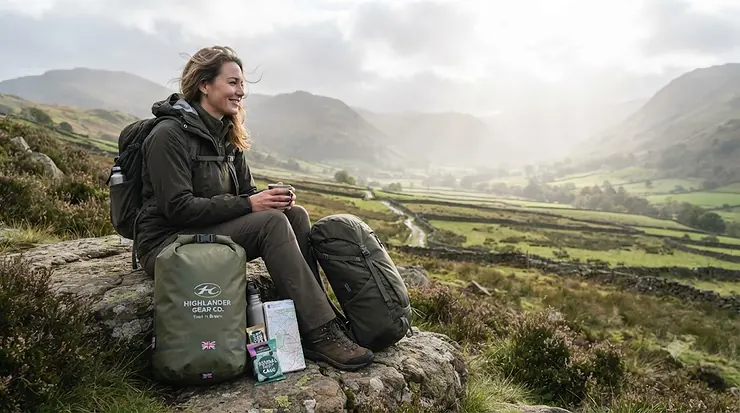
A good food sack for backpacking does three jobs. It corrals your rations, keeps them dry, and (with sensible habits) makes them a less tempting target for wildlife. Britain has no bears, and the animals to think about are foxes, mice and birds. That changes the shopping list. Most American “bear bag” advice is overkill here, and some of it is simply wrong for our wildlife.
This guide compares seven real, widely available options. It draws on independent tests, UK retailer specifications and aggregated buyer feedback. Prices appear as ranges only, so check current listings before you buy. The Countryside Code is worth a skim first. It tells visitors not to feed wild animals, and that is the practical rule behind everything below.
What Is a Food Sack for Backpacking?
A food sack for backpacking is a lightweight, usually roll-top bag that holds your meals, snacks and other smelly items in one place. It keeps rations dry, stops crumbs contaminating the rest of your kit, and makes food easy to hang, stash or seal away from wildlife overnight.
Food Sack for Backpacking at a Glance: Quick Comparison
Here is the short version before we go deep. Weights are approximate manufacturer or retailer figures for the size named.
| Product | Approx. Weight | Material | Price Range | Best For |
|---|---|---|---|---|
| Sea to Summit Ultra-Sil Dry Bag | ~45 g (13L) | 30D ripstop nylon | Mid-£10s to low £20s | Gram-counters |
| Osprey Ultralight DrySack | From ~26 g (3L) | 40D recycled ripstop | Mid-£10s to low £20s | Neat packing |
| Exped Fold Drybag UL | Roughly half a standard Fold | 15D silicone nylon | Mid-£10s to low £20s | Ultralight minimalists |
| Ortlieb Ultra Lightweight PS10 | ~70 g (12L) | PS10 PU-coated nylon | Around £15-£25 | Wet, muddy trips |
| Lifeventure Ultralight Dry Bag | ~35 g (10L) | 30D siliconised ripstop | Around £11-£21 | Tight budgets |
| LOKSAK OPSAK 12 x 20 | ~41-43 g per bag | Odour-barrier polyethylene film | Low cost | Smell control |
| Ursack Minor | ~142 g (5 oz) | Kevlar weave | Premium | Critter-proof insurance |
Read the table as two camps. The first five are weather-protection sacks and the last two are wildlife-defence tools. The waterproof bags are lightest and cheapest, but none of them is a wildlife barrier. Field mice can chew through dry bags to reach food in a single night. If mice or foxes are a real worry where you camp, the Ursack Minor or a smell-blocking layer like the LOKSAK OPSAK does the work that thin nylon cannot.
💬 Just one click — help others make better buying decisions too!😊
Top 7 Food Sack for Backpacking Picks: Expert Analysis
1. Sea to Summit Ultra-Sil Dry Bag — featherweight benchmark for gram-counters
The Ultra-Sil earns its place by being almost absurdly light. The 13L version weighs around 45 g at a UK stockist, and the smallest sizes come in under 30 g. It is built from 30-denier ripstop nylon made with Cordura yarns. The hydrostatic head is about 2,000 mm, which UKC’s reviewer found waterproof enough inside a rucksack but not for sloshing about in a boat.
On paper that means it shrugs off a drizzly walk but won’t enjoy a puddle. It suits weekend walkers who want a lightweight food sack for trekking. The 8L to 13L sizes cover a couple of nights of rations, and the translucent fabric lets you spot the porridge sachets without emptying everything out. The catch is that thin fabric is thin fabric, and it won’t stop a determined mouse.
Review sentiment: Amazon UK lists a 4.6 out of 5 average from roughly 195 ratings. The recurring complaint is durability. Some buyers report small tears after light use and warn that it cannot handle submersion.
Pros:
- ✅ Among the lightest options on this list
- ✅ Translucent fabric shows contents at a glance
- ✅ Roll-top with replaceable buckle
Cons:
- ❌ Thin fabric can tear with rough handling
- ❌ No wildlife resistance at all
Price: mid-£10s to low £20s per bag, with multi-bag sets nearer £50. Good value if you treat it gently.
2. Osprey Ultralight DrySack — flat base that packs neatly
This one is all about shape. It has a rectangular flat base, a roll-top closure with taped seams, and a 40D recycled ripstop fabric. The smallest size weighs about 26 g and the range runs up to 35L. The stiffer 40D fabric is a step up from the 30D used elsewhere, and the flat base means the bag stands up when filled, which makes dinner-time rummaging far easier.
Why does the rectangle matter? It packs flush against your back panel, which helps keep heavy items central and close to your back. That is exactly where dense food belongs (more on that in the pack weight distribution section). It suits anyone who wants a tidy food sack for backpacking that behaves inside a loaded pack.
Review sentiment: Amazon UK’s results show a 4.6 out of 5 average from roughly 183 ratings. An older UK test found the kit stayed dry, but the bag was less durable than heavier options and the clips were fiddly with gloves.
Pros:
- ✅ Flat base stands up and packs flush
- ✅ Sturdier 40D fabric than ultra-thin rivals
- ✅ Wide range of sizes
Cons:
- ❌ Buckle awkward with cold or gloved hands
- ❌ Still no protection against chewing
Price: around the mid-£10s to low £20s depending on size. Excellent all-rounder value.
3. Exped Fold Drybag UL — hook-loop ultralight Swiss build
The Exped Fold Drybag UL is built from 15-denier nylon with a silicone exterior, PU interior and taped seams. It weighs about half as much as the standard Fold Drybag. The Swiss-designed roll-top is usable as a grab handle or a hook loop to hang the bag from a branch. That last detail is quietly clever for overnight storage.
At 15D, the fabric is barely there. That is wonderful for base weight and less wonderful if you are rough with kit, so it suits careful walkers doing short-to-medium trips. If you want more robustness, the heavier Exped Fold Drybag BS sibling weighs 58 g in 13L and has a 10,000 mm hydrostatic head that beaded and shed rain in a UK test.
Review sentiment: the ultralight Fold-Drybag listing on Amazon UK shows 4.6 out of 5 from 71 ratings. Some sizes have very small review pools. For example, the 40L UL shows just three ratings averaging 2.7, so treat those numbers cautiously.
Pros:
- ✅ Very low weight for its capacity
- ✅ Roll-top doubles as a hanging loop
- ✅ Bluesign-style brand pedigree
Cons:
- ❌ Delicate 15D fabric needs careful handling
- ❌ Thin review counts on some sizes
Price: broadly mid-£10s to low £20s for single bags. Strong value for weight-savers.
4. Ortlieb Ultra Lightweight Dry Bag PS10 — reinforced base, five-year warranty
Ortlieb’s PS10 range uses PS10 ultra-lightweight nylon with a tougher PS21 base. The 12L size weighs about 70 g, and Ortlieb offers a five-year warranty. That is roughly double the weight of the featherweights above, and you get a stiffer, more plastic-feeling fabric and a reinforced base that resists scuffing on wet ground.
Ortlieb positions the range as ideal for tours where every gram counts, with 12 to 22 litres suited to clothing, a sleeping bag or food. It suits walkers heading into muddy, wet country who want something less fragile than 15D or 30D sil-nylon. Note that Ortlieb turned up in Amazon UK search results, but stock and listings vary by size and seller, so verify the exact model.
Review sentiment: one long-term reviewer at Trailspace praised the strength-to-weight ratio but reported PU delamination and seam failure after almost six years of use, which is a fair lifespan for the money.
Pros:
- ✅ Reinforced base handles wet ground
- ✅ Five-year manufacturer warranty
- ✅ Bigger, sturdier feel than sil-nylon
Cons:
- ❌ Heavier than the ultralight options
- ❌ Coating can delaminate after years
Price: around £15-£25 depending on size. Good value if you value durability.
5. Lifeventure Ultralight Dry Bag — DofE-approved budget value
The Lifeventure Ultralight Dry Bag is the lesser-known, value-for-money entry. It uses 30D high-tenacity siliconised ripstop with PU coating and fully taped seams. The elliptical shape is designed to sit inside other bags and rucksacks. Weights are 30 g (5L), 35 g (10L) and 60 g (25L), and the range is recommended for Duke of Edinburgh’s Award expeditions.
The elliptical profile is less tidy than the Osprey Ultralight DrySack‘s flat base but tolerates awkward pack shapes. It suits students, scouts, DofE groups and anyone building a first kit. A 10L bag handles two or three days of rations, and multiple sizes let you separate breakfasts from dinners.
Review sentiment: Amazon UK shows a 4.6 out of 5 average from around 464 ratings. Live For The Outdoors’ test scored the bag 5 out of 5 for value and 4 out of 5 for durability.
Pros:
- ✅ Excellent value for money
- ✅ Hypalon finger loop helps extraction
- ✅ Multiple sizes for sorting food
Cons:
- ❌ Elliptical shape packs less neatly
- ❌ Not chew-proof
Price: single bags roughly £11-£21, with sets in the mid-£30s. Best budget pick.
6. LOKSAK OPSAK 12 x 20 — odour barrier that boosts any setup
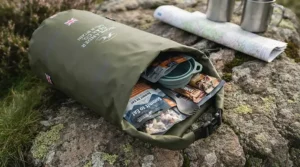
Here the job changes from weather protection to smell control. The LOKSAK OPSAK is a 100% odour-barrier bag that is also water and air tight, and can withstand direct heat up to 170°F. Each 12 x 20 inch bag weighs about 1.5 oz and holds roughly five days of food.
The important caveat is that a long-term reviewer calls it an inadequate overnight food protector on its own and best used to enhance a more reliable method. Think of it as a liner inside a dry bag or the Ursack Minor, cutting the scent trail that draws foxes. A UK seller is equally frank that OPSAK is an odour-barrier bag rather than a wildlife-resistant container.
Review sentiment is mixed. Amazon UK’s listing shows 4.4 out of 5 from 925 ratings but showed as unavailable at research time. At REI, the average is 3.7 out of 5, with complaints of bags bursting or seals separating.
Pros:
- ✅ Blocks food smells better than ordinary bags
- ✅ Doubles as a rehydration bag
- ✅ Very light and inexpensive
Cons:
- ❌ Seal durability draws repeated complaints
- ❌ Offers no physical wildlife protection
Price: the cheapest item here per pair, though stock is inconsistent, so check current price.
7. Ursack Minor — Kevlar critter-proof insurance
The Ursack Minor is the premium, purpose-built wildlife defender. It is a Kevlar bag that protects food from small animals such as foxes, squirrels and mice, but is not bear-proof. It weighs about 5 oz, holds around six days of food for one person, and uses a Velcro closure.
Its trade-offs are real. It isn’t waterproof and doubles from 5 oz to 10 oz when soaked by rain, so pair it with a liner. Because it resists rodents, you don’t need to hang it for that purpose, which is handy when there are no suitable branches. It suits regular wild campers and hut-hoppers where mice or foxes are a known nuisance.
Review sentiment is thinner. The maker’s own page shows only five reviews, including one wishing for a more refined finish for the price. A long-time forum owner reports about fifteen years without a critter breach, though that is one person’s anecdote. Amazon UK availability also looks patchy, since a related Ursack listing there showed as unavailable.
Pros:
- ✅ Kevlar weave resists small sharp teeth
- ✅ No need to hang for rodents
- ✅ Light for what it does
Cons:
- ❌ Absorbs rain and gains weight
- ❌ Premium price, patchy UK stock
Price: US prices in reviews run about $65 to $100, so expect roughly £50-£90 plus possible import costs. Check current price.
Top 7 Head-to-Head Snapshot
| Product | Rating Snapshot | Waterproof? | Wildlife-Resistant? | Best For |
|---|---|---|---|---|
| Sea to Summit Ultra-Sil Dry Bag | ~4.6/5 (Amazon UK, ~195) | Rain-level | No | Weight-savers |
| Osprey Ultralight DrySack | ~4.6/5 (Amazon UK, ~183) | Yes | No | Tidy packing |
| Exped Fold Drybag UL | ~4.6/5 (Amazon UK, ~71) | Yes | No | Ultralight users |
| Ortlieb Ultra Lightweight PS10 | Not verified on Amazon UK | Yes | No | Wet, muddy walks |
| Lifeventure Ultralight Dry Bag | ~4.6/5 (Amazon UK, ~464) | Yes | No | Budget buyers |
| LOKSAK OPSAK 12 x 20 | ~4.4/5 (Amazon UK, ~925) | Yes | Odour only | Scent control |
| Ursack Minor | Small review pool | No | Yes (small animals) | Wild campers |
Look at the pattern here. Every waterproof bag scores similarly on rating but none resists teeth, while the only true wildlife-resistant option is not waterproof. In other words, the best setup for most UK walkers is a two-layer system. Pair a light waterproof bag such as the Osprey Ultralight DrySack with a LOKSAK OPSAK liner, and add an Ursack Minor only where critters are a proven problem.
How to Use Your Food Sack for Backpacking on the Trail
A great bag used badly is still a bad system. This routine works with any of the seven picks.
- Sort by day. Bundle each day’s meals together inside your food sack for backpacking, with a separate small bag for daytime snacks. One reviewer used a 3L Sea to Summit bag in an outside mesh pocket for daytime food, which stops you unpacking everything at lunch.
- Line it. Put smelly items in an odour-barrier bag first. A long-term reviewer suggests washing an OPSAK between uses to reduce residual food odour.
- Roll properly. Fold the top over several times. Osprey advises rolling at least three times before buckling.
- Camp smart. UK guidance suggests walking rubbish to a bin rather than leaving it in the porch, and keeping food out of the sleeping area where you can. Never feed animals.
- Dry and inspect. One UK maker advises making sure a dry bag is completely dry before storing it, because water can break down the PU coating over time. Check for pinholes and replace worn buckles. Sea to Summit’s buckles can be swapped in seconds with a Phillips screwdriver.
Common first-month mistakes include overstuffing (which stops a proper seal), packing sharp-edged items against thin fabric, and storing a damp bag in a warm cupboard. Treat that last one as the fastest route to a delaminated coating.
Real-World Scenarios: Matching a Food Sack for Backpacking to Your Trip
These are illustrative profiles built from the specs and review themes above, not personal anecdotes.
The weekend student (2 nights, tight budget). Two nights on a chalk-and-fields route such as the South Downs Way need only modest volume. A 10L Lifeventure Ultralight Dry Bag plus a LOKSAK OPSAK liner covers the essentials for the cost of a couple of pints. There is no need for anything heavier.
The Pennine Way week (wet, remote, heavy resupply). The Pennine Way runs 268 miles from Edale to Kirk Yetholm, and plenty of it is soggy. The Ortlieb Ultra Lightweight Dry Bag PS10 with its reinforced base suits wet ground, and a LOKSAK OPSAK liner handles smells. Add an Ursack Minor if you plan to wild camp where mice roam.
The coastal ultralighter (gulls and foxes). On coastal routes, herring gulls will take food straight from your hand. A Sea to Summit Ultra-Sil Dry Bag keeps rations organised in the pack, and you eat under a windbreak and never leave a plate unattended. Save the heavier protection for known problem spots.
How to Choose a Food Sack for Backpacking
- Name the threat. Rain and organisation? A dry bag is enough. Mice or foxes? Add a critter-resistant layer.
- Pick the volume. Weekends suit 10-13L. The Ursack Minor holds roughly six days for one person, which is a helpful benchmark for longer trips.
- Balance fabric against weight. 15D is lightest, 30D is a sweet spot, and 40D or PS10 is sturdier.
- Check the closure. Buckles that work with gloves matter on cold mornings.
- Prefer a stable shape. Flat bases such as the Osprey Ultralight DrySack pack more neatly than round ones.
- Plan for smell. A barrier liner costs little and cuts the scent trail.
- Budget for lifespan. Cheap sacks are fine, but replace them when coatings fail.
Lightweight Food Sack for Trekking: Features That Actually Matter (And Those That Don’t)
Matters: fabric and hydrostatic head. A 2,000 mm rating (the Sea to Summit Ultra-Sil Dry Bag class) is fine inside a rucksack. A 10,000 mm rating, as on the Exped Fold Drybag BS, is a better buffer if the sack rides outside in rain.
Matters: seams and closure. Fully taped seams and a roll-top are the essentials. A weak buckle is the failure point on most ultralight sacks.
Matters: shape. A flat or elliptical base determines how neatly the bag packs.
Doesn’t matter: exotic materials for most walkers. Dyneema composite bags exist. One maker’s large food bag weighs 1.3 oz (38 g), but it is a premium, niche purchase.
Doesn’t matter: fancy colours and windows. They help you find things but not survive the weekend.
Doesn’t matter: compression valves. These are for sleeping bags. Food packs flat already.
A lightweight food sack for trekking should do one job well. If you find yourself paying extra for features you won’t use, step back to the Lifeventure Ultralight Dry Bag.
Top Rated Food Sacks for Wild Camping: What UK Wildlife Actually Means
“Top rated” tells you about customer satisfaction, not wildlife resistance. The best-rated bags here are all waterproof stuff sacks, and none stops a mouse. That is the honest picture.
UK wildlife rarely threatens you. Foxes, gulls and mice endanger your food and kit, not you. Bear-style hanging isn’t reliable on its own when ground-dwelling critters are involved, so combine methods. One UK guide recommends a belt-and-braces approach of a sack plus a lockable dry box to deter rats, foxes and badgers.
For UK wild camping, a sensible stack is a waterproof sack such as the Osprey Ultralight DrySack, an odour liner such as the LOKSAK OPSAK, and a critter-resistant sack such as the Ursack Minor where mice are proven. The Countryside Code also asks visitors to avoid feeding livestock, horses or wild animals. Beyond that, check local access rules before pitching.
✨ Don’t Miss These Exclusive Deals!
🔍 Take your trail kit to the next level with these carefully selected products. Click on any highlighted item to check current pricing and availability. These tools will help you create the authentic wild camping evenings you have been dreaming of!
Trail Food Planning: How Much Your Food Sack Needs to Hold
Good trail food planning starts with calories, not bags. One widely used starting point is roughly 2,700-3,200 calories a day at moderate effort. Adjustments matter, including an extra 500-1,000 calories in freezing overnight conditions. The energy-versus-weight logic is explained in the camping food entry on Wikipedia.
Weight is the other half. One 2026 guide suggests 450-550 g of dry food a day for 2,500-3,000 calories, meaning a three-day food bag of 1.3-1.5 kg. Dense foods (nuts, oil, dehydrated meals) reduce volume as well as weight, so your bag can shrink.
What does that mean for sack size? A 10-13L bag suits a weekend, and for around six days the Ursack Minor is about 10.65L. Reviewers say a 12 x 20 in LOKSAK OPSAK holds about five days. Don’t overpack, because most people carry too much food, especially on 1-2 night trips. Weigh a full day’s food on a kitchen scale, multiply by your days, then add a small buffer.
Pack Weight Distribution: Where Your Food Sack Belongs in a Rucksack
Food is dense, so it is your best ballast. Get pack weight distribution right and everything feels lighter.
Most guides agree heavy items belong in the middle of the pack, as close to your back as possible. That includes food, stove and cookware. A rectangular bag such as the Osprey Ultralight DrySack helps because it sits flush against the back panel instead of rolling around.
There are conflicting details worth knowing. Heavy items go close to your back at about shoulder height, and the hip belt should carry about 70% of the load, according to one guide, while a UK retailer suggests medium-weight items such as sleeping gear go at the bottom. The takeaway is central and close, not low and far. Also keep tomorrow’s snacks in a small bag, such as a 3L Sea to Summit Ultra-Sil Dry Bag, in a lid or hip-belt pocket.
Finally, remember your pack lightens daily. Food is the only part of your load that disappears as you walk, so re-balance as your sack empties.
Food Sack for Backpacking vs Alternatives
Is a dedicated food sack for backpacking better than a spare stuff sack, a plastic box or a canister? It depends on the threat.
| Option | Weight | Weather Protection | Critter Defence | Best For |
|---|---|---|---|---|
| Roll-top dry bag (e.g. Osprey Ultralight DrySack) | Very light | Good | None | Everyday trips |
| Kevlar sack (Ursack Minor) | ~142 g | Poor (absorbs rain) | Good vs small animals | Mouse-prone camps |
| Odour-barrier bag (LOKSAK OPSAK) | ~41-43 g | Good | Odour only | Liner in any setup |
| Lockable hard box | Heavier | Good | Good | Car or basecamp |
| Bear canister | 2.7-3.7 lb | Good | Excellent | Not needed in Britain |
The bear canister figure comes from a typical bear-resistant container weighing 2.7 to 3.7 pounds. That is a lot of dead weight for a country without bears. A steel-mesh option also exists in the form of the Ratsack, described by SectionHiker as rodent-proof and small-mammal-proof but not bear-proof. It is a valid alternative for mouse country.
The winning strategy for most UK walkers is a light dry bag as your main food sack for backpacking, a liner, and extra protection only where wildlife is a proven issue.
UK Long-Distance Trails: Matching Your Food Sack to the Route
The UK long-distance trails scene ranges from weekend jaunts to month-long epics. Wikipedia’s list of long-distance footpaths is a good overview. The South West Coast Path is 630 miles from Minehead to Poole Harbour, while the Pennine Way runs 268 miles.
Length changes your sack choice. One guidebook estimate suggests trails of about 100 miles take around six days, while the Pennine Way takes about 18 days and the South West Coast Path about 45. Long routes mean resupply, so size your sack for the gap between shops rather than the whole trip.
For short trails, a 10L bag such as the Lifeventure Ultralight Dry Bag is plenty. For multi-week routes, keep a spare small sack and rotate. Coastal routes add gulls, upland routes add rain, and campsite-heavy routes add foxes, so pack accordingly. On any of these UK long-distance trails, follow the same golden rule: food goes away, rubbish goes to a bin, and animals never get fed.
Common Mistakes When Buying a Food Sack for Backpacking
Buying bear gear for a bear-free country. Heavy canisters and certified bear bags are unnecessary in Britain. The Ursack Minor is the sensible critter-focused alternative, and only if you need it.
Treating a dry bag as a wildlife barrier. Remember that mice chew through dry bags. Waterproof does not mean animal-proof.
Buying too big. An oversized sack wastes space and weight. Size for your longest gap between shops.
Ignoring smell. A cheap odour liner such as the LOKSAK OPSAK reduces the scent trail, but don’t rely on it alone.
Chasing the lightest gram. Ultralight fabric like the Exped Fold Drybag UL is wonderful if you are gentle. If you are not, a sturdier option such as the Ortlieb Ultra Lightweight Dry Bag PS10 lasts longer.
Skipping maintenance. A dry bag stored damp can degrade. Dry it fully, inspect it and keep spare buckles.
FAQ
❓ What size food sack for backpacking suits a weekend trip?
❓ Do I need a bear-proof food sack for backpacking in the UK?
❓ Is a dry bag good enough as a lightweight food sack for trekking?
❓ Which top rated food sacks for wild camping actually stop mice?
❓ Where should my food sit for good pack weight distribution?
Conclusion
Choosing the right food sack for backpacking comes down to one honest question: what are you protecting your food from? If the answer is rain and chaos, a light roll-top such as the Osprey Ultralight DrySack, the Sea to Summit Ultra-Sil Dry Bag or the budget-friendly Lifeventure Ultralight Dry Bag does the job beautifully. If you want something sturdier for wet upland trips, the Ortlieb Ultra Lightweight Dry Bag PS10 trades a little weight for durability. The Exped Fold Drybag UL rewards careful walkers who chase every gram.
If wildlife is the worry, layer up. A LOKSAK OPSAK cuts the scent trail cheaply, and the Ursack Minor adds genuine chew resistance for mouse-prone camps. Remember that no thin waterproof bag is a wildlife barrier, and that good habits, such as cooking away from your tent and binning rubbish, do more than any gadget.
Pair your sack with sensible trail food planning, pack it centrally for good pack weight distribution, and match its size to the gaps on your chosen route. Do that, and your next rainy evening on the hills ends with a hot meal and a dry biscuit rather than a soggy disappointment.
✨ Ready to Upgrade Your Kit?
🎒 Check current pricing and availability on the picks above, and build a food system that suits your trails, your budget and your wildlife. Your future self, eating warm noodles in the drizzle, will thank you!
Recommended for You
- Food Storage Sack Under £15: 7 Essential Picks For UK Camping (2026)
- Odour-Proof Bear Bag: 7 Best Picks For UK Adventurers (2026)
- Bear Bag For Backpacking: 7 Proven Picks For UK Hikers (2026)
Disclaimer: This article contains affiliate links. As an Amazon Associate, I earn from qualifying purchases. If you purchase products through these links, we may earn a small commission at no additional cost to you.
✨ Found this helpful? Share it with your friends! 💬🤗
