
In This Article
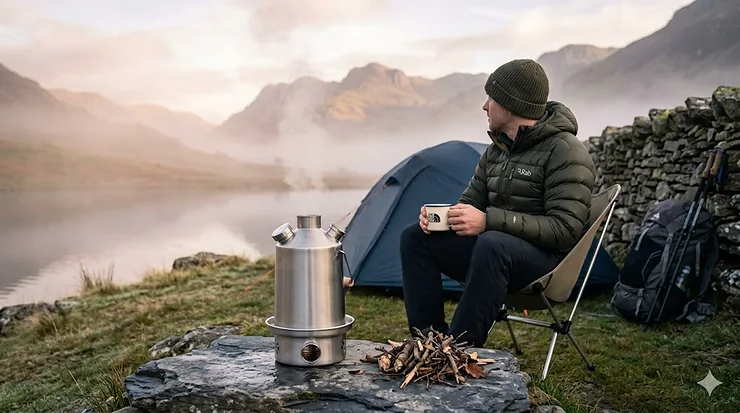
There’s something brilliantly Irish about a camping kettle that works better in a Force 8 gale than it does on a calm day. The Kelly Kettle — or volcano kettle, storm kettle, or Ghillie kettle, depending on who’s telling the story — has been boiling water outdoors since the early 1900s, when a small farmer and fisherman in County Mayo fashioned the first one from tin.
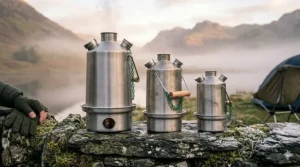
What makes this device particularly suited to British camping is precisely what makes Britain challenging for conventional camping stoves: our weather. Wind that would extinguish a gas burner actually improves a Kelly Kettle’s performance by feeding more oxygen through the chimney. Rain that would dampen your spirits does nothing to dampen the fire inside this clever double-walled design. And the fuel? Whatever twigs, pine cones, or dried grass you can scavenge — which means no canisters to carry on the Pennine Way or West Highland Way, and no checking whether you’ve enough gas left for that crucial morning brew.
The Kelly Kettle works on a principle so simple it’s rather clever: water sits in the outer wall of a double-walled chimney whilst a fire burns in the base below and up through the central tube. The large internal surface area exposed to heat means 1.6 litres of water reaches a rolling boil in 3-5 minutes using just a handful of dry twigs. No batteries, no gas canisters, no import duties on fuel from the continent — just you, the kettle, and whatever combustible material the British countryside provides.
Currently available on Amazon.co.uk in various models ranging from around £40 to £150, these kettles remain manufactured to the same design that impressed visiting anglers over a century ago. This guide examines seven of the best options for UK campers in 2026, from lightweight backpacking models to family-sized base camp versions.
Quick Comparison: Best Kelly Kettles at a Glance
| Model | Material | Capacity | Weight | Best For | Price Range (£) |
|---|---|---|---|---|---|
| Base Camp Aluminium | Anodised Aluminium | 1.6L | 0.8kg | Groups, car camping | £40-£50 |
| Base Camp Stainless | Stainless Steel | 1.6L | 1.16kg | Durability, family use | £55-£70 |
| Scout Aluminium | Anodised Aluminium | 1.2L | 0.68kg | Small groups, general camping | £35-£45 |
| Scout Stainless | Stainless Steel | 1.2L | 1.0kg | Scouts, mid-range | £50-£60 |
| Trekker Aluminium | Anodised Aluminium | 0.6L | 0.54kg | Solo backpacking, hiking | £30-£40 |
| Trekker Stainless | Stainless Steel | 0.6L | 0.8kg | Lightweight, couples | £45-£55 |
| Ultimate Base Camp Kit | Stainless Steel | 1.6L + accessories | 2.25kg | Complete cooking system | £120-£150 |
From this comparison, the sweet spot for most UK campers sits with the Scout models — enough capacity for 2-3 people without the bulk of the Base Camp, and significantly more practical than the Trekker if you’re ever making brews for anyone beyond yourself. The aluminium versions save roughly £10-15 over stainless steel whilst the stainless models offer superior longevity in our perpetually damp climate, where rust prevention matters more than it might in, say, the Australian Outback.
💬 *Just one click — help others make better buying decisions too!*😊
Top 7 Kelly Kettles: Expert Analysis for UK Conditions
1. Kelly Kettle Base Camp 1.6L Anodised Aluminium
The largest aluminium kettle in the range, the Base Camp boils 1.6 litres — roughly 6 mugs — which positions it squarely in family camping or small group territory. At 0.8kg, it’s light enough for car camping trips to the Lake District or weekend fishing sessions on Scottish lochs, though I’d not fancy carrying it up Scafell Pike.
The anodised aluminium construction means it heats water faster than the stainless steel equivalent whilst remaining pleasingly lightweight. What the spec sheet won’t tell you is that aluminium’s superior thermal conductivity translates to noticeably quicker boil times in practice — particularly relevant when you’re stood in horizontal rain on Dartmoor trying to get warm liquid inside you before hypothermia becomes more than theoretical.
This model comes with a stainless steel fire-base (a recent upgrade from the old aluminium bases), drawstring carry bag, green whistle that sounds when water boils, and a 2-year anti-leak warranty. UK buyers consistently praise its reliability in wild weather, with several Amazon.co.uk reviews mentioning successful use during Lake District downpours and coastal winds that would defeat conventional camping stoves.
Pros:
✅ Lightest large-capacity option at 0.8kg
✅ Fast heat transfer from aluminium construction
✅ Excellent value in the £40-50 range for groups
Cons:
❌ Less durable than stainless steel in long-term use
❌ Can develop small leaks at rivet points (though these typically self-seal)
Best suited for car campers, families at campsites, anglers, and anyone prioritising capacity without excessive weight. At around £45, it represents solid value for occasional users who don’t need lifetime durability.
2. Kelly Kettle Base Camp 1.6L Stainless Steel
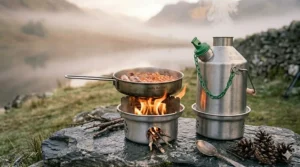
The stainless steel version of the Base Camp trades the aluminium model’s lightweight advantage for superior longevity and robustness. Weighing 1.16kg — about 360g heavier than its aluminium sibling — this kettle makes more sense for semi-permanent camping setups, garden allotments, or anyone who camps frequently enough that durability justifies the extra heft.
Stainless steel matters more in British conditions than campers from drier climates might appreciate. Our climate means gear spends significant time damp, and stainless steel’s corrosion resistance becomes a practical advantage rather than a luxury. The fully welded construction (no rivets) eliminates potential leak points that occasionally plague aluminium models, whilst the food-grade 304 stainless steel means you’re not ingesting anything questionable with your morning tea.
One detail worth noting: stainless kettles shouldn’t be carried on their side when filled, as the chimney top isn’t perfectly watertight. If you need to transport water horizontally — crossing a stream on stepping stones, perhaps — stick with aluminium models that seal more easily thanks to the softer metal. For base camp use where the kettle stays upright, this limitation rarely matters.
UK reviewers particularly appreciate this model for allotment use, where it sits outdoors for months and needs to withstand everything our weather throws at it. Several mention using it during power cuts — increasingly relevant given recent storm-related outages.
Pros:
✅ Superior durability and corrosion resistance
✅ Fully welded, rivet-free construction
✅ Handles British weather indefinitely
Cons:
❌ Heavier at 1.16kg vs 0.8kg aluminium
❌ Chimney top not perfectly watertight when horizontal
Best for serious campers, allotment holders, emergency preparedness kits, and anyone who values longevity over weight savings. Around £60-70 — about £15-20 more than aluminium — justifies itself within a season of regular use.
3. Kelly Kettle Scout 1.2L Anodised Aluminium
This is the Goldilocks model — not too large, not too small, just about right for most British camping scenarios. The Scout boils 1.2 litres (approximately 3.5 mugs), which suits couples, small families, or solo campers who like having extra capacity without lugging around the Base Camp’s bulk.
At 0.68kg, it’s light enough for multi-day hikes where you’re not obsessively counting grams, yet substantial enough that you won’t worry about accidentally crushing it in a rucksack. The 26.5cm packed height fits comfortably in most panniers, making it popular with cycle tourers and kayakers who need compact gear.
What distinguishes the Scout from larger models isn’t just size but versatility. It’s small enough for solo wild camping on Dartmoor Commons (where backpack camping remains legal in designated areas), yet adequate for Scout groups — hence the name. Several UK Scout troops mention these on their kit lists, particularly appreciating the built-in safety element: the green whistle alerts everyone when water’s boiled, reducing the risk of younger members grabbing a handle whilst steam’s still erupting.
The aluminium construction means it develops character quickly — dents, scratches, blackening from soot — but that patina tells the story of your camping adventures. Mine’s been to the Cairngorms, the Brecon Beacons, and a suspiciously muddy campsite outside Glastonbury, and it works exactly as well as it did new.
Pros:
✅ Perfect capacity for 2-3 people
✅ Versatile for various camping styles
✅ Compact size suits panniers and rucksacks
Cons:
❌ Still too heavy for ultralight backpackers
❌ Develops cosmetic wear fairly quickly
Ideal for couples camping, small Scout groups, cycle tourists, and anyone wanting the sweet spot between capacity and portability. Around £35-45 makes it accessible for those trying volcano kettles for the first time.
4. Kelly Kettle Scout 1.2L Stainless Steel
The stainless Scout offers the same 1.2L capacity as its aluminium cousin but in a more robust package that weighs 1.0kg. That extra 320g might seem trivial until you’re hauling it up the West Highland Way, but for weekend car camping or permanent positioning at a campsite, the trade-off favours longevity.
This model particularly suits Scout groups and youth organisations that need equipment capable of withstanding, shall we say, enthusiastic handling by teenagers who haven’t yet developed a relationship with the concept of “careful.” The stainless construction survives being dropped, kicked, and generally treated with the respect teenagers typically afford camping equipment.
One often-overlooked advantage: stainless steel kettles look better longer. Whilst aluminium blackens and dulls with use (perfectly functional but aesthetically less appealing), stainless steel maintains a more respectable appearance. This matters for Scout leaders photographing camping trips or anyone using their kettle in semi-public spaces like shared campsites.
UK buyers mention using this model for fishing trips to the Scottish Highlands, where the combination of capacity and durability suits multi-day sessions in remote spots. The whistling feature — standard on all Kelly Kettles — proves particularly useful when you’re focused on landing a salmon and might otherwise forget about the kettle until it’s boiled dry.
Pros:
✅ Robust enough for youth group use
✅ Maintains appearance better than aluminium
✅ Ideal capacity for small groups
Cons:
❌ 320g heavier than aluminium version
❌ Premium price (£50-60) for mid-size model
Perfect for Scout troops, fishing expeditions, permanent campsite setups, and anyone prioritising durability over weight. The extra £15-20 over aluminium buys peace of mind that it’ll survive dropped on rocks.
5. Kelly Kettle Trekker 0.6L Anodised Aluminium
The lightweight champion of the range, the Trekker boils just 0.6 litres — enough for two mugs or a decent serving of porridge — whilst weighing a mere 0.54kg. This is the model for backpackers, wild campers, and anyone counting grams as they plan their kit.
At 27cm packed height and 14cm diameter, it disappears into a rucksack without demanding the space concessions larger models require. The reduced capacity means faster boil times (often 3 minutes or less with dry fuel), which matters when you’re exhausted after 25km on the Pennine Way and need hot food now, not in ten minutes.
Here’s what the marketing doesn’t emphasise: 0.6L is genuinely limiting if you’re cooking as well as brewing. You can either make two cups of tea or rehydrate a dehydrated meal, but doing both requires two separate boils. For solo hikers who primarily want morning coffee and evening soup, this works fine. For couples, it demands coordination — one person gets tea whilst the meal rehydrates, then you swap.
The aluminium construction on this smaller model particularly makes sense because the reduced material quantity means the weight savings versus stainless steel become more pronounced. UK hikers completing long-distance paths like the South West Coast Path appreciate every gram saved, and the Trekker delivers.
Pros:
✅ Lightest option at 0.54kg
✅ Compact size for backpacking
✅ Quick boil times with reduced capacity
Cons:
❌ Limited 0.6L capacity requires multiple boils
❌ Less stable when full due to smaller base
Best for solo backpackers, ultralight enthusiasts, and anyone prioritising weight above all else. Around £30-40 makes it the most affordable entry to Kelly Kettle ownership.
6. Kelly Kettle Trekker 0.6L Stainless Steel
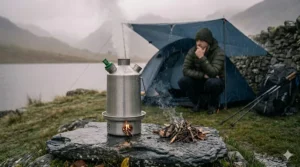
The stainless Trekker presents an interesting conundrum: at 0.8kg, it weighs 260g more than the aluminium version for identical 0.6L capacity. That’s a significant weight penalty for a model specifically targeting weight-conscious backpackers. So why would anyone choose it?
Durability and longevity. If you’re hiking the entire length of Britain over months rather than weekends, or if you winter camp regularly in Scotland’s more hostile environments, the stainless construction resists both physical damage and corrosion better than aluminium. The fully welded design means no rivet points to potentially leak after months of being battered in a rucksack.
This model particularly appeals to bicycle tourers and kayakers who value weight less than car-bound backpackers but still need compact gear. The stainless construction survives being knocked about in panniers alongside tent pegs and camping tools without developing the dents and deformation that aluminium suffers.
One detail: the upgraded steel fire-base (now standard across all models) proves particularly valuable in the Trekker size, where the smaller diameter means heat concentrates more intensely. The steel base withstands this better than the old aluminium bases, which occasionally warped with extended use.
Pros:
✅ Maximum durability in smallest size
✅ Withstands rough handling better than aluminium
✅ Ideal for extended expeditions
Cons:
❌ 260g heavier undermines “lightweight” positioning
❌ Limited capacity at premium price (£45-55)
Suited to bicycle tourers, extended expedition hikers, and anyone who camps frequently enough that durability justifies weight penalty. The £45-55 price point targets committed users rather than casual backpackers.
7. Kelly Kettle Ultimate Base Camp Kit (Stainless Steel)
This comprehensive package transforms a simple kettle into a complete outdoor kitchen. The kit includes the 1.6L stainless steel Base Camp kettle, hobo stove, cook set (pot, pan/lid, two grill pieces, gripper handle), pot-base support, two cups, two plates, and a carry bag. Total weight: 2.25kg. Total capacity for outdoor cooking: considerable.
The hobo stove accessory converts the kettle’s fire-base into a standalone wood-fired camp stove, allowing you to cook whilst water boils in the kettle or use it independently. This dual functionality means you can simultaneously boil water for tea and cook beans — a rather civilised upgrade from sequential cooking on a single-burner gas stove.
What makes this kit particularly valuable for UK campers is how it addresses our weather. Having a complete, self-contained cooking system that works regardless of wind or rain means you’re not dependent on sheltered cooking areas or calm conditions. The enclosed fire design works on beaches, exposed moorland, or anywhere you can find combustible material.
At around £120-150, this represents serious investment, but breaking down the components reveals reasonable value: kettle (£60-70), hobo stove (£25-30), cook set (£30-35), accessories (£20-25) totals £135-160 purchased separately. The kit saves roughly £15-30 whilst ensuring compatibility between components.
UK reviewers particularly appreciate this for family camping, fishing expeditions, and allotment use where the complete system lives semi-permanently. Several mention using it during power cuts as emergency preparedness — increasingly relevant given recent storm-related outages affecting rural areas.
Pros:
✅ Complete cooking system in one package
✅ Dual functionality (boil and cook simultaneously)
✅ Better value than buying components separately
Cons:
❌ Heavy at 2.25kg — car camping only
❌ Significant upfront investment (£120-150)
Perfect for families, serious campers, emergency preparedness, and anyone wanting a complete outdoor cooking solution. The premium price targets committed users who’ll use it regularly rather than occasional campers.
How Does a Kelly Kettle Work? The Science Behind the Storm Kettle
The Kelly Kettle operates on principles that predate modern camping gear by centuries — essentially the same chimney-draft concept that medieval ovens employed. Understanding how it works helps you use it more effectively, particularly in the variable conditions British weather provides.
The kettle consists of two main parts: a fire-base and a double-walled chimney. The chimney’s outer wall contains the water whilst the inner core remains hollow, creating a vertical tube through which heat and smoke travel. When you light a fire in the base and position the water-filled chimney atop it, flames are drawn upward through the central tube by natural convection.
This design creates remarkable efficiency through increased surface area. Where a conventional kettle sitting atop a stove exposes only its bottom to heat, the Kelly Kettle’s double-wall design means the entire height of water is simultaneously heated from the inside. It’s rather like comparing warming a bottle of wine in a bucket versus running hot water along its entire length — the latter obviously works faster.
The chimney effect — the tendency of hot air to rise — creates a strong upward draft that pulls fresh oxygen in through the fire-base’s air holes. This continuous airflow feeds the fire whilst simultaneously exhausting smoke upward and away, making the kettle both efficient and relatively smoke-free for the person using it. Crucially, wind doesn’t extinguish the fire but actually improves performance by feeding more oxygen through the system.
According to Wikipedia’s detailed history, the original concept likely drew inspiration from traditional Mongolian and Chinese hot-pots with central chimneys, though the Kelly family in Ireland developed and commercialised the camping application in the early 1900s. The design has changed remarkably little since then — a testament to getting something right the first time.
In practical terms, this means 1.6 litres of water reaches boiling point in 3-5 minutes using just a handful of twigs. Compare that to gas stoves that struggle in wind or require 15-20 minutes for equivalent volumes, and the appeal becomes obvious for British conditions.
Choosing Your Kelly Kettle: Decision Framework for UK Campers
If you’re primarily car camping or weekend campsites, choose the Base Camp size (1.6L). The larger capacity suits groups and families whilst weight matters less when you’re not carrying it far. Aluminium saves money; stainless steel lasts longer — pick based on whether you value initial cost or lifetime durability.
If you’re backpacking, hiking long-distance paths, or wild camping, the Trekker (0.6L) makes sense. Yes, the capacity is limiting, but weight savings matter over 25km days. Aluminium is the obvious choice here unless you’re on an extended expedition where durability justifies the weight penalty.
If you can’t decide or want versatility, the Scout (1.2L) splits the difference. It’s light enough for multi-day hikes where you’re not obsessively ultralight, yet adequate for small groups or family weekends. This is the model I’d recommend for first-time Kelly Kettle buyers.
If you’re setting up permanent or semi-permanent camping arrangements — garden allotments, fishing spots, base camp for multi-day expeditions — stainless steel justifies its premium in British weather. The corrosion resistance matters when gear lives outdoors for months.
If you want a complete outdoor cooking system, the Ultimate Kit provides everything in one go. It makes sense for families, serious campers, or emergency preparedness, though the upfront cost (£120-150) targets committed users rather than those experimenting with volcano kettles.
UK-specific considerations: Our damp climate favours stainless steel for longevity. Our compact living spaces (terraced houses, flats with limited storage) make the Scout’s balanced size appealing. Our weather makes the Kelly Kettle’s wind-resistant design particularly valuable compared to campers in calmer climates.
Budget roughly £35-70 for a kettle alone, or £120-150 for complete kits. All models available on Amazon.co.uk typically include free delivery for Prime members or orders over £25.
Real-World Performance in British Weather Conditions
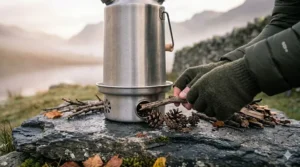
Here’s what the specifications won’t tell you: the Kelly Kettle genuinely excels in weather that defeats conventional camping stoves. I’ve boiled water in sideways rain on the Brecon Beacons, in Force 7 winds on the Pembrokeshire Coast Path, and during a late April snowstorm in the Cairngorms. In each case, the kettle performed whilst my camping companions’ gas stoves either refused to light or burned through fuel fighting the wind.
The enclosed fire design means rain doesn’t extinguish flames — it just hisses and steams as it hits the hot metal. Wind, rather than being an adversary, becomes an ally by feeding oxygen through the base. The only condition that genuinely defeats a Kelly Kettle is prolonged, heavy rain that thoroughly soaks all available fuel. Even then, carrying a small amount of dry tinder (cotton wool, birch bark, or commercial firelighters) in a waterproof bag provides insurance.
British woodlands provide excellent Kelly Kettle fuel year-round. Dead twigs and branches, pine cones, birch bark, and dried bracken all work brilliantly. The key is dryness rather than wood type — even oak or ash that would take hours to burn in a campfire works fine when broken into finger-width pieces for the kettle. In wetter conditions, look under dense evergreen canopies or in the dry hearts of larger fallen branches.
One UK-specific advantage: the Kelly Kettle’s contained fire design makes it permissible in many areas where open campfires aren’t allowed. This matters increasingly as wild fire risks prompt seasonal fire bans. Check Ordnance Survey’s guidance on wild camping and local fire safety regulations, but generally, the kettle’s enclosed design sits in a different category than open fires.
The biggest surprise for UK users is often fuel consumption. You’d think boiling 1.6L requires substantial firewood, but the efficient chimney design means a couple of handfuls of dry twigs suffices. On a week-long hiking trip, you’re gathering fuel as you walk rather than carrying it — a refreshing change from counting gas canister usage.
Common Mistakes When Buying Your First Kelly Kettle
Buying too small for your usual group size. The Trekker looks appealingly lightweight, but if you’re regularly camping with your partner, the constant double-boiling becomes tiresome. Buy for your typical group size plus one person — you’ll thank yourself when unexpected guests appear.
Choosing aluminium purely on price. If you camp more than 4-5 times yearly, stainless steel’s durability justifies the extra £15-20 within a season. The aluminium models work fine but develop wear faster, particularly in British weather where everything stays damp.
Forgetting to remove the cork before heating. Every Kelly Kettle owner has done this once. The pressure build-up either blows the cork out violently or, in worst cases, damages the kettle. The whistle is optional; removing the cork is mandatory.
Overfilling the kettle. Fill to about 15mm below the spout, not to the brim. Boiling water expands and will spew out the top if filled completely — rather alarming when you’re holding the handle.
Using damp fuel without tinder. British conditions mean fuel is often damp. Carry a small amount of guaranteed-dry tinder (cotton wool, commercial firelighters, birch bark) to get the fire established, after which slightly damp twigs will dry and burn from the heat.
Ignoring UKCA marking and UK compatibility. All Kelly Kettles sold through official UK channels should have proper certification. Be wary of grey-import models that may not meet UK safety standards or include UK-specific components.
Buying without considering storage. The kettles pack reasonably compact but aren’t as tiny as rolled-up. Ensure you’ve space in your camping gear collection before ordering the Base Camp model, which stands 33cm tall.
Kelly Kettle Maintenance for Long-Term UK Use
British weather demands more attention to maintenance than drier climates. After each trip, empty any remaining water and dry the interior thoroughly. The chimney design makes this slightly awkward — I invert mine over a radiator overnight, which drives moisture out through the spout.
Aluminium models will blacken and develop soot build-up externally. This is normal, cosmetic, and arguably improves heat absorption. Some users polish theirs religiously; I view the blackening as proof of use. The interior water chamber should remain relatively clean if you’re boiling drinking water, though periodic rinsing removes any sediment.
Stainless steel models resist blackening better but still accumulate soot. A wire brush removes stubborn deposits, though again, this is purely aesthetic. The functional components — the fire-base, chimney, and water jacket — need no special treatment beyond drying.
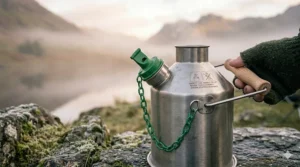
The green whistle occasionally gets lost. Replacements are available on Amazon.co.uk for around £3-5, or you can simply boil without it and watch for steam instead. The cork stopper (for transporting cold water) lasts indefinitely but can be replaced if lost.
Check rivet points on aluminium models periodically for leaks. Small weeps usually self-seal after a few uses, but persistent leaking might indicate damage. The 2-year warranty covers manufacturing defects, though normal wear isn’t covered.
Store in a dry location when not in use. Garden sheds work fine if they’re weatherproof, though damp sheds risk corrosion on aluminium models. For long-term storage, a light coating of cooking oil inside the fire-base prevents rust, particularly important for the upgraded steel bases.
The simplicity of the design means there’s little to break. No valves, no complex parts, no seals requiring replacement. Provided you don’t boil it dry repeatedly (which can damage the water jacket) or drop it off a cliff, a Kelly Kettle lasts decades.
Kelly Kettle vs Traditional Camping Stoves: UK Perspective
For UK conditions, the Kelly Kettle offers distinct advantages over gas stoves but also specific limitations. Understanding these helps you choose appropriately — or, ideally, carry both for different situations.
Advantages over gas stoves: Wind resistance stands paramount. British hilltops, coastal paths, and moorland all serve up winds that make gas stoves nearly useless without substantial windbreaks. The Kelly Kettle actively benefits from wind. No fuel costs or availability concerns — significant for extended trips or emergency preparedness. Carbon neutral operation appeals to environmentally conscious campers. Works in sub-zero temperatures without gas canister pressure issues.
Disadvantages versus gas stoves: Requires gathering fuel, which becomes problematic in treeless environments (high moorland, some coastal areas) or during prolonged rain that soaks everything. Can’t simmer food — it’s boiling or nothing. Requires dry storage for the kettle itself post-use. Takes up more pack space than a compact gas stove. Not suitable for cooking inside tents during storms (though gas stoves technically aren’t either, despite common practice).
For most UK camping, I’d argue the Kelly Kettle suits weekend trips, car camping, and base camp scenarios better, whilst gas stoves edge ahead for winter mountaineering above the tree line or situations demanding precise temperature control for cooking.
The ideal combination: Kelly Kettle for group camps and whenever fuel is available, gas stove as backup for treeless environments or as a secondary burner when cooking complex meals. Many experienced UK campers carry both.
Environmental Impact & Leave No Trace Considerations
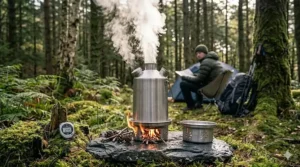
The Kelly Kettle’s environmental credentials are rather good, though not perfect. Using natural, renewable fuel — twigs, pine cones, dried grass — means zero fossil fuel consumption during use. The company manufactures in Ireland (County Mayo), keeping carbon footprint relatively low for UK buyers compared to products shipped from distant continents.
However, responsible use demands following Leave No Trace principles. Gather only dead, fallen wood — never cut living branches. This preserves the woodland whilst also providing better fuel (dead wood burns hotter than green). Avoid stripping all available tinder from one area; take small amounts from multiple locations.
The fire-base design contains the fire, preventing ground scorching that open campfires cause. However, the base itself gets extremely hot and can kill grass beneath it. Use on sand, gravel, or rocks when possible, or place the base support underneath (sold as an accessory) to protect lawns and vegetation.
Ash disposal requires thought. The small amount of ash produced (typically a few tablespoons) can be scattered widely in woodland once completely cool, but don’t dump it in one pile. In sensitive environments, pack it out in a bag — it weighs almost nothing once cool.
The longevity factor shouldn’t be underestimated: a well-maintained Kelly Kettle lasts decades, potentially outliving multiple gas stoves. This durability reduces long-term environmental impact compared to disposable gear requiring regular replacement.
UK Legal & Safety Considerations
The Kelly Kettle exists in a slightly grey legal area regarding fire regulations. It’s not an open campfire, but it does use open flame. Devon and Somerset Fire and Rescue Service guidance on camping fire safety applies: never use any fire device inside tents or caravans due to carbon monoxide risk and fire danger.
For wild camping, the legal situation varies by location. In England, wild camping requires landowner permission except on specific Dartmoor Commons (recently clarified by UK Supreme Court ruling). In Scotland, the Outdoor Access Code permits responsible wild camping, though Loch Lomond & The Trossachs has specific restrictions. Wales and Northern Ireland require landowner permission.
Where wild camping is permitted or authorised, the Kelly Kettle’s enclosed fire design often satisfies “no open fires” rules that would prohibit traditional campfires. However, always check specific location regulations and seasonal fire bans. During dry periods, even enclosed stoves may be prohibited.
On formal campsites, most allow Kelly Kettles but check first. Some sites prohibit all open flames due to insurance requirements or proximity to buildings. The pot-base support accessory protects ground surfaces and makes the kettle more acceptable to campsite owners.
Safety considerations specific to British use: our damp conditions mean fuel is often wetter than ideal, producing more smoke. Ensure adequate ventilation and position yourself upwind. The metal components get extremely hot — use the handle, never touch the body or base with bare hands. Keep children and pets at a safe distance, and never leave the kettle unattended whilst lit.
Carrying a small fire extinguisher or bucket of water makes sense for responsible use, though the contained design means fires rarely escape the kettle itself.
Cost Analysis: Long-Term Value in British Pounds
Breaking down the true cost of Kelly Kettle ownership reveals value that isn’t immediately obvious from purchase prices. A Base Camp aluminium kettle at around £45 represents the upfront investment. Over five years of occasional use (20 camping trips), that’s £2.25 per trip. Compare this to gas canisters at £5-8 each (assuming 4-5 trips per canister), totalling £20-40 over the same period. The Kelly Kettle saves £15-35 in fuel costs whilst eliminating the hassle of ensuring you’ve canisters in stock.
For frequent campers (50+ trips over five years), the economics become more compelling. Stainless steel Scout at £55 divided by 50 trips equals £1.10 per use. Gas canisters for equivalent usage would cost £50-100, representing genuine savings beyond the environmental benefits.
The kit versions (£120-150) require more trips to justify financially, but consider what you’re getting: kettle, stove, cook set, cups, plates, and accessories that would cost £135-160 purchased separately. For families or groups, one complete kit replaces multiple individual purchases.
UK-specific value proposition: our weather makes gas stoves less efficient through wind resistance and cold temperatures affecting canister pressure. The Kelly Kettle’s consistent performance regardless of conditions means you’re not wasting fuel fighting the elements.
Total cost of ownership includes maintenance (minimal), replacement parts (cork stopper, whistle — under £10 total if needed), and longevity (decades with care). The absence of complex parts means no expensive repairs or premature obsolescence.
For emergency preparedness — increasingly relevant given storm-related power outages affecting rural UK areas — the kettle’s ability to boil water without electricity, gas, or fuel purchases represents insurance value difficult to quantify financially but genuinely valuable.
Frequently Asked Questions
❓ Are Kelly Kettles suitable for UK winter camping?
❓ Can I use a Kelly Kettle on UK beaches legally?
❓ How long does a Kelly Kettle last with regular UK use?
❓ Will a Kelly Kettle work in Scottish Highlands or other treeless areas?
❓ Are Kelly Kettles available with UK plugs or electrical requirements?
Conclusion: Finding Your Perfect Kelly Kettle Match
After examining seven models across different materials, sizes, and price points, the pattern becomes clear: there’s no single “best” Kelly Kettle, only the best one for your specific camping style and UK conditions.
For most British campers — weekend trips, family camping, general outdoor use — the Scout 1.2L (either aluminium or stainless) represents the sweet spot. It balances capacity, weight, and versatility whilst costing £35-60 depending on material choice. It’s light enough for multi-day hikes without excessive weight penalties, yet adequate for small groups or family use.
For serious, frequent campers who value durability above all else, the Base Camp 1.6L Stainless Steel justifies its £60-70 price tag through longevity in British weather. The larger capacity suits groups, and stainless construction withstands our perpetually damp conditions indefinitely.
Budget-conscious buyers or those experimenting with volcano kettles should start with the Scout or Trekker Aluminium models (£30-45). They provide authentic Kelly Kettle performance without significant investment, allowing you to determine whether this cooking method suits your camping style before committing to premium stainless versions.
The Ultimate Kit (£120-150) targets families, emergency preparedness enthusiasts, and anyone wanting a complete outdoor cooking system. It’s expensive initially but represents value when you consider buying equivalent components separately costs more.
British conditions — wind, rain, variable weather — play perfectly to the Kelly Kettle’s strengths. Our damp climate makes gas stoves less reliable whilst providing abundant natural fuel for volcano kettles. Our compact living spaces favour mid-size models like the Scout over unnecessarily large options. Our outdoor traditions — wild camping on Dartmoor, fishing in Scottish lochs, hiking the Pennine Way — all benefit from a cooking device that works regardless of weather.
Whatever model you choose, you’re buying into a design that’s remained essentially unchanged since the early 1900s because it got things right the first time. That’s rather reassuring in an age of disposable gear requiring replacement every few seasons.
Recommended for You
- 7 Best Whistling Kettle for Camping UK 2026
- 7 Best Camping Kettles UK 2026: Lightweight & Fast Boiling
- 7 Best Camping Cookware for 2 People UK 2026
Disclaimer: This article contains affiliate links. As an Amazon Associate, I earn from qualifying purchases. If you purchase products through these links, we may earn a small commission at no additional cost to you.
✨ Found this helpful? Share it with your mates! 💬🤗
