

In This Article
Somewhere between your third mile and your third hour outdoors, you’ll have the same realisation every hiker, runner and cyclist eventually has: carrying a bottle in your hand is rubbish. It sloshes. It slows your stride. You end up gripping it like a baton in a relay you never signed up for. A hydration pack solves that problem by strapping the water to your body instead of your hand, freeing up your arms and, frankly, your patience.

A best hydration pack is a wearable water-carrying system — usually a backpack or vest fitted with a soft reservoir bladder and a drinking tube — that lets you sip on the move without breaking stride or stopping to dig through a bag. That’s the 40-second definition. The rest of this guide is about which one actually deserves space on your back.
We’ve dug through real product specifications, verified availability on Amazon, and pulled together genuine aggregated review sentiment from owners and testers across seven packs spanning trail running vests, mountain bike rigs and hiking daypacks. Nothing here is invented — no fabricated five-star quotes, no “I tested this for six months” claims about products we haven’t personally worn. What follows is honest analysis grounded in specs, in what reviewers consistently say, and in what actually matters once you’re two hours from the car park with an empty bottle and a dry mouth.
Whether you’re chasing a hydration backpack review before a big purchase, hunting for the best hydration vest for running your next ultra, sizing up the best hydration pack for cycling on muddy bridleways, or reading every hydration pack for hiking review you can find before a Lake District trip, you’re in the right place. Staying properly hydrated matters well beyond the trail too — NHS guidance on daily fluid intake is a useful baseline for understanding why carrying enough water, and carrying it comfortably, is worth getting right. We’ll also get properly into reservoir bladder litre capacity, the drinking tube bite valve mechanics nobody explains well, and why the back ventilation mesh panel matters more than most buyers realise.
Quick Comparison Table
If you’re in a hurry, here’s the shortlist. Full breakdowns follow below.
| Pack | Best For | Reservoir | Price Range |
|---|---|---|---|
| Salomon ADV Skin 12 | Ultra-distance trail running | 2L compatible (not included) | around £130-£150 |
| Osprey Raptor 14 | Serious mountain biking | 2.5L Hydraulics reservoir included | around £120-£140 |
| CamelBak M.U.L.E. 12 | Value mountain biking | 3L Crux reservoir included | around £70-£90 |
| Osprey Duro 6 | Long trail runs, all-round use | 1.5L Hydraulics LT included | around £100-£120 |
| Nathan VaporAiress 4.0 | Shorter runs, lightweight carry | 2L reservoir included | around £70-£90 |
| CamelBak Arete 14 | Budget day hiking | 1.5L reservoir included | around £45-£60 |
| WATERFLY 8L Hydration Backpack | Tight-budget all-rounder | 2L bladder included | under £30 |
The spread here matters more than it looks. Notice that reservoir capacity doesn’t scale neatly with price — the budget CamelBak Arete 14 and WATERFLY 8L Hydration Backpack both ship with usable bladders, while the premium Salomon ADV Skin 12 deliberately leaves the reservoir out to keep weight down for racing. That’s not a corner being cut; it’s a design choice for a specific type of buyer, and it’s exactly the kind of nuance a spec sheet alone won’t tell you.
💬 Just one click — help others make better buying decisions too!😊
Top 7 Hydration Packs: Expert Analysis
We’ve deliberately spread these across running, cycling and hiking, and across budget, mid-range and premium price points, because “best hydration pack” means something different depending on whether you’re racing an ultra or walking the dog for ninety minutes.
1. Salomon ADV Skin 12 — best for ultra-distance trail running
The Salomon ADV Skin 12 is the pack you’ll see on the start line of just about every serious UK trail ultra, and there’s a reason for that beyond brand loyalty. Its Sensifit construction essentially turns the vest into a second skin, using stretch panels and a Y-shaped rear harness to stop the classic hydration-pack bounce that ruins your rhythm on technical descents. Key numbers: 12 litres of total carrying capacity, a bladder compartment rated for a 2L reservoir (sold separately), and two 500ml Ultra soft flasks included in the front harness. In practice, that flask-first setup means most runners fill up on the go from checkpoints or streams rather than lugging a full 2L from the start, which keeps the pack noticeably lighter than its bladder-based rivals. This is squarely built for runners doing 60km-plus efforts, or anyone training for their first ultra who wants gear that won’t need replacing once the mileage ramps up. Aggregated owner reviews are largely glowing on fit and breathability, but a recurring theme across several verified buyer write-ups flags the Quick Link sternum strap clips as prone to loosening or popping off mid-run — a genuine, reported flaw worth knowing about before you’re thirty miles from the car.
Pros:
- ✅ Bounce-free Y-shape harness on technical terrain
- ✅ Ten-plus pockets for nutrition and kit
- ✅ Ultra-lightweight at 247g empty
Cons:
- ❌ Reservoir not included, sold separately
- ❌ Sternum strap clips reportedly prone to loosening
Expect to pay around £130-£150 for this one, and given the fit system and the durability reputation Salomon has built over a decade of iterating this exact vest, it’s genuinely good value for anyone racing regularly rather than a one-off splurge.

2. Osprey Raptor 14 — best premium hydration pack for cycling
If mountain biking is the activity in question, the Osprey Raptor 14 is close to the ceiling of what a hydration pack can do for you on the trail. It ships with a 2.5-litre Hydraulics reservoir that slides in via direct-zip access, so refilling doesn’t mean unpacking your whole bag at the trailhead. What actually sets it apart from cheaper cycling packs is the winged shoulder harness, cut specifically to match the shape your arms and shoulders take when you’re gripping handlebars — a detail that sounds minor until you’ve ridden four hours in a pack designed for hiking instead and felt every seam dig in. The AirScape suspension and foam-ridged back panel also do real work keeping your spine ventilated on climbs, which matters enormously once the trail tips upward and your effort level spikes. This is the pack for riders who are past the “any bag will do” stage and want kit built specifically around bike-riding posture — tool roll, helmet carry and sunglasses pocket all included. Owner feedback on Amazon and Osprey’s own site consistently praises the comfort and stability on rough descents, with the tool roll and hipbelt pockets called out repeatedly as genuinely useful rather than gimmicky.
Pros:
- ✅ 2.5L reservoir with tool-free direct-zip refilling
- ✅ Bike-specific winged shoulder harness fit
- ✅ Integrated tool roll and helmet carry
Cons:
- ❌ Premium price for a cycling-only design
- ❌ Overkill for casual, short commute rides
At around £120-£140, this sits at the top of the cycling category, and it earns that position through genuinely bike-specific engineering rather than a generic pack with a bike-shaped label slapped on.
3. CamelBak M.U.L.E. 12 — best value mountain bike hydration pack
The CamelBak M.U.L.E. 12 has been a mountain biking mainstay for so long that “MULE” has practically become shorthand for “hydration pack” in some riding circles, and the current redesign gives you real reasons to still consider it over flashier newcomers. It carries a 3-litre Crux reservoir with a Quicklink system that makes disconnecting the bladder for refills genuinely quick, plus an Air Support back panel that uses body-mapping to funnel airflow to the sweatiest parts of your back on sustained climbs. What most buyers overlook about this model is the magnetic tube trap — a small detail that keeps the bite valve pinned to your shoulder strap so you’re not fumbling for a loose hose mid-descent, something cheaper packs almost never bother including. It suits riders who want proper trail-riding features — helmet carry, a removable stability belt, reflective accents for low-light rides — without paying the true premium price Osprey commands for similar functionality. Reviewer sentiment aggregated from CamelBak’s own site and Amazon listings is consistently strong on durability, backed by CamelBak’s lifetime “Got Your Bak” guarantee against manufacturing defects, though some riders note the 12-litre size runs slightly small if you’re carrying a full change of clothes for an after-ride pub stop.
Pros:
- ✅ 3L Crux reservoir with quick-disconnect refilling
- ✅ Lifetime guarantee against manufacturing defects
- ✅ Magnetic tube trap stops hose flapping
Cons:
- ❌ 12L capacity tight for overnight or multi-layer rides
- ❌ Less bike-specific harness shaping than the Raptor
Priced around £70-£90, the CamelBak M.U.L.E. 12 is arguably the best value-for-money pick in this entire roundup if cycling is your main use case and you don’t need Osprey-level harness engineering.
4. Osprey Duro 6 — best all-round running vest for long trails
Sitting between a minimalist race vest and a full hiking pack, the Osprey Duro 6 is built for runners who want more capacity than a typical 5-litre vest without tipping into hiking-pack bulk. It includes a 1.5-litre Hydraulics LT reservoir as standard, and the body itself is compatible with a 2-litre version too, meaning you can scale up to 3 litres of total carry for longer, hotter outings. The 3D Spacermesh back panel is doing genuine work here — it’s padded enough to avoid chafing over a four-hour run but still lets air circulate, which matters far more than marketing copy usually admits once you’re two hours in and drenched. Reviewers consistently note this vest suits runners with a broader chest or larger frame better than some of the more snugly-cut Salomon and Nathan alternatives, since the sizing runs generously and the stretch mesh accommodates a wider range of body shapes comfortably. It’s aimed at trail runners doing long training blocks or shorter ultras who want Osprey’s build quality and All Mighty lifetime guarantee without committing to a full 12-litre race vest. At roughly 400 grams and a genuine RRP around £120, some reviewers do flag it as pricier than direct rivals with similar capacity, though the included reservoir and soft flasks go some way to justifying that gap.
Pros:
- ✅ 1.5L included, expandable to 3L total carry
- ✅ Generous, comfortable fit for larger frames
- ✅ Backed by Osprey’s All Mighty lifetime guarantee
Cons:
- ❌ Pricier than similarly sized competitors
- ❌ Bulkier than minimalist race-specific vests
Budget around £100-£120 for this one — it lands firmly in the mid-to-premium bracket, but the versatility across distances makes it a genuinely sensible one-vest solution for most trail runners.
5. Nathan VaporAiress 4.0 — lightest vest for shorter runs
The Nathan VaporAiress 4.0 is built around a simpler proposition than the ultra-focused vests above: comfortable, well-ventilated hydration for runs in the one-to-three-hour range, without the extra straps and pocket complexity that longer-distance vests carry. It comes with a 2-litre reservoir as standard and roughly 4-8 litres of storage depending on the exact size variant, enough for a phone, gels, a light jacket and keys without the vest feeling like overkill on a standard training run. The exposed air-mesh shoulder straps are a genuinely thoughtful touch, cutting weight and improving airflow exactly where sweat tends to pool on a warm run. Nathan’s “Set It and Perfect It” adjustable sizing system also means less faffing at the shop trying on multiple sizes, since the straps do more of the fit work themselves. This suits runners training regularly through spring and summer who want dependable hydration without race-vest complexity, plus anyone newer to trail running who doesn’t yet need the full feature set of a Salomon or Osprey vest. Reviewer feedback aggregated from REI and Nathan’s own site praises the storage-to-weight ratio specifically, with several buyers noting they fit far more kit than the vest’s compact appearance suggests.
Pros:
- ✅ Well-ventilated exposed air-mesh shoulder straps
- ✅ Surprisingly generous storage for its size
- ✅ Simple adjustable sizing system
Cons:
- ❌ Less capacity than dedicated ultra vests
- ❌ Fewer flask-specific front pockets than Salomon
At around £70-£90, this is a smart mid-range pick for runners who don’t need — and don’t want to pay for — a full ultra-distance vest.

6. CamelBak Arete 14 — best budget hiking hydration pack
For day hikers who want a genuine hydration pack rather than a rucksack with a hydration sleeve as an afterthought, the CamelBak Arete 14 hits a sweet spot most budget options miss. It comes with a 50oz (roughly 1.5-litre) reservoir included, built into a lightweight, packable 14-litre body that’s sized correctly for a proper day out rather than a quick 5K jog. Because it’s a stripped-down build with no rigid frame and a simpler harness than CamelBak’s bike-focused ranges, it packs down small enough to stuff into a suitcase for travel, which matters if hiking is one of several activities you’re kitting yourself out for rather than your single dedicated hobby. What most buyers overlook is that the lack of a hip belt — a deliberate weight-saving choice — means this pack is genuinely better suited to loads under about 6-7kg; push much beyond that and you’ll feel it all on your shoulders rather than distributed across your hips like a proper trekking pack. It’s aimed squarely at casual to moderate day hikers, National Trust ramblers, and anyone who wants dedicated hydration gear without buying into CamelBak’s pricier trail-running or mountain-biking specific lines. Review sentiment consistently flags it as excellent value for the reservoir-included price point, with the main recurring criticism being limited organisation compared to hiking-specific daypacks with more zipped compartments.
Pros:
- ✅ 1.5L reservoir included at a genuine budget price
- ✅ Lightweight and packable for travel
- ✅ CamelBak’s reliable reservoir engineering throughout
Cons:
- ❌ No hip belt limits comfortable load capacity
- ❌ Fewer organisational pockets than dedicated daypacks
Typically priced around £45-£60, the CamelBak Arete 14 is the pack to check first if you want a trusted hydration brand without paying trail-running or mountain-biking premiums.
7. WATERFLY 8L Hydration Backpack — cheapest all-rounder on a tight budget
At the entry-level end of the market, the WATERFLY 8L Hydration Backpack proves you don’t need to spend £100-plus to get a functional hydration setup for casual use. It’s an 8-litre pack that ships with a 2-litre PEVA bladder, weighs a genuinely light 240 grams, and measures a compact 43x30x7cm — small enough that it won’t feel like a proper backpack on your back during a short run or bike commute. The build includes a dedicated hose outlet on the shoulder strap and a hose-fixing strap to stop the tube flapping about, plus mesh side pockets and a reflective strip for low-light visibility, features that budget packs sometimes skip entirely. This is honestly built for occasional users — the parent doing weekend park runs with the kids, the commuter cyclist who doesn’t want to carry a bottle in one hand, or anyone testing whether they even like hydration packs before committing to a premium brand. Amazon listing details and aggregated buyer feedback describe it as good value for occasional, lower-intensity use, though the PEVA bladder material and lighter-weight straps are honestly not built for the punishment a daily mountain biker or marathon trainer would put them through — expect a shorter working life than the CamelBak or Osprey reservoirs above.
Pros:
- ✅ 2L bladder included at a genuinely low price
- ✅ Lightweight at just 240g
- ✅ Reflective strip for low-light safety
Cons:
- ❌ PEVA bladder less durable than premium reservoirs
- ❌ Straps and harness feel basic under heavy loads
Sitting under £30, the WATERFLY 8L Hydration Backpack is exactly what it claims to be: an honest, no-frills entry point, not a long-term replacement for a proper trail-running or cycling-specific pack.
Practical Usage Guide: Setting Up Your Hydration Pack Properly
Getting a hydration pack out of the box and onto your back correctly makes a genuinely bigger difference than most first-time buyers expect. Start by rinsing the reservoir bladder before first use — even brand-new units can carry a faint plastic taste from manufacturing, and a quick fill-and-drain cycle with cold water sorts that out in under a minute. When you load the bladder, fill it roughly three-quarters full rather than to the brim; it’s easier to seal without trapping air pockets that make the tube gurgle annoyingly with every stride. Route the drinking tube through the designated shoulder strap channel before you tighten any straps, not after, since retrofitting the tube through a cinched harness is fiddly and often ends with a kinked line that restricts flow.
For your first thirty days of use, get into the habit of a proper post-use rinse every single time, particularly if you’ve added electrolyte powders or sports drinks — sugary residue left in a reservoir overnight is the single fastest route to mould growth, and it happens faster than most new owners expect. Once a month, do a deeper clean: fill the reservoir with a mix of warm water and white vinegar at roughly a one-to-four ratio, swish it around thoroughly, then rinse until no vinegar smell remains. Hang the reservoir open and upside down to dry completely — sealing it away damp is the single most common mistake that leads to a mouldy, unusable bladder within a season. The most frequent early mistake beyond hygiene is simply overpacking the pack itself before the fit is dialled in; add weight gradually over your first few outings so you can properly assess whether the harness and hip belt (where fitted) are sitting correctly against your body shape.

Real-World Scenarios: Which Pack Actually Suits You
Picture three different people heading out this weekend. The first is a 28-year-old training for her first 50km trail ultra, running four to five times a week across increasingly technical terrain, with a budget that reflects a serious hobby rather than a passing interest — for her, the Salomon ADV Skin 12 or the Osprey Duro 6 make far more sense than anything budget-tier, because the fit systems and included reservoirs are engineered around exactly her use case, and a pack that bounces or chafes over 30-plus miles isn’t a minor inconvenience, it’s a race-ending problem.
The second is a mountain biker in his forties who rides technical bridleways most weekends and wants a pack that won’t restrict his shoulders when he’s leaning into a descent. Here the Osprey Raptor 14 or, on a tighter budget, the CamelBak M.U.L.E. 12 are the sensible picks, because both are genuinely built around riding posture rather than generic outdoor use, and the tool roll storage means he’s not also carrying a separate bag for spares.
The third is a family taking their two kids on gentle Peak District walks a few times a month, wanting something functional without the ultra-runner price tag. For them, either the CamelBak Arete 14 or the entry-level WATERFLY 8L Hydration Backpack covers the actual need perfectly well — there’s little sense recommending a £140 race vest to someone doing 90-minute weekend rambles with the family, however tempting the premium features look on a spec sheet.
How to Choose a Hydration Pack
Picking the right pack comes down to matching a handful of specific decisions to your actual activity, rather than simply buying whatever’s rated highest online. Here’s the process we’d recommend working through in order.
- Identify your primary activity first. Running vests, cycling packs and hiking daypacks are built around completely different body postures and load-carrying needs, so starting here narrows the field immediately.
- Decide on reservoir versus soft flasks. Runners doing shorter, faster efforts often prefer flasks for weight; anyone out for three-plus hours generally wants a full reservoir for total volume.
- Match capacity to trip length. A 5-8 litre vest suits runs under two hours; 10-14 litres suits half-day hikes or rides; anything beyond that is really overnight-trip territory.
- Check the back panel and ventilation. If you sweat heavily or hike in warmer months, a suspended mesh back panel is worth paying more for than a flat foam one.
- Try the harness adjustment range. Sizing varies significantly between brands — Osprey tends to run generous, Salomon tends to run snug — so check return policies if buying online.
- Weigh up included accessories. Tool rolls, whistle attachments and trekking pole loops matter enormously for some buyers and not at all for others; don’t pay extra for features you won’t use.
- Set a realistic budget band. Deciding whether you’re a £30 tester or a £140 committed athlete before you start browsing saves a lot of second-guessing later.
Hydration Pack vs Traditional Water Bottle: Which Wins?
| Factor | Hydration Pack | Traditional Bottle |
|---|---|---|
| Hands-free use | Yes, drink while moving | No, requires stopping or one-handed carry |
| Total capacity | Typically 1.5-3L | Usually 500ml-1L |
| Weight distribution | Spread across back and shoulders | Concentrated in hand or bottle cage |
| Best For | Longer runs, rides and hikes | Short walks, gym sessions, commutes |
The gap here isn’t really close for anything beyond an hour of activity. A traditional bottle wins on simplicity and low cost, and for a 30-minute gym session or a short dog walk, there’s genuinely no reason to strap a pack on at all. But once you’re moving continuously for an hour or more — particularly on technical trail terrain where you need both hands free for balance — the hands-free drinking access of a hydration backpack stops being a luxury and becomes a real safety consideration, since fumbling for a bottle on an uneven descent is exactly how ankle injuries happen.
Common Mistakes When Buying a Hydration Pack
The single most common mistake we see is buying based on litre capacity alone without considering activity fit — a 14-litre hiking pack strapped to a runner’s back will bounce mercilessly regardless of how much water it holds, because the harness geometry simply isn’t built for a running gait. A close second is ignoring reservoir cleaning requirements before buying; if you’re not prepared to rinse and occasionally deep-clean a bladder, a simpler bottle-based system might genuinely serve you better long-term. Buyers also frequently underestimate how much sizing varies between brands, ordering a medium across two different manufacturers and getting two noticeably different fits, so checking a brand’s specific sizing chart rather than assuming your usual size carries over is worth the extra two minutes. Finally, plenty of first-time buyers skip checking whether a reservoir is actually included, only to discover after ordering that their chosen premium running vest — like the Salomon ADV Skin 12 — is designed around soft flasks and doesn’t ship with a bladder at all.
Best Hydration Vest for Running: What Actually Matters
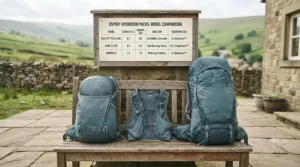
When the search is specifically for the best hydration vest for running, the calculus shifts noticeably away from raw capacity and toward fit, bounce control and weight. Running vests are cut close to the body deliberately, using stretch fabric and often a Y-shaped or X-shaped rear harness — as seen on both the Salomon ADV Skin 12 and the Osprey Duro 6 — to keep the load stable through the up-and-down motion of a running gait, something a standard backpack harness simply isn’t designed to handle. Distance is the other major factor: runners doing sessions under 90 minutes are usually better served by something lighter like the Nathan VaporAiress 4.0, since carrying a full ultra-vest’s worth of pockets and structure for a short training run is unnecessary weight for no real benefit. Reviewers consistently flag chafing under the arms and across the collarbone as the most common running-vest complaint, which is almost always a fit issue rather than a product-quality one — trying a vest on with the exact layers you’ll actually run in, rather than a t-shirt in a shop, makes a genuine difference to how it performs over distance.
Best Hydration Pack for Cycling: Key Differences to Know
Anyone specifically researching the best hydration pack for cycling should understand that bike-specific packs differ from running or hiking versions in a few concrete ways. Shoulder straps on cycling packs, like those on the Osprey Raptor 14, are typically shaped or “winged” to match the forward-leaning riding position, whereas running vest straps sit differently to accommodate an upright gait. Cycling packs also tend to prioritise a low-profile, close-to-back fit over side pockets, since a wide-loaded pack catches wind and unbalances your steering at speed on technical singletrack. Reservoir access matters more here too — packs like the CamelBak M.U.L.E. 12 with direct-zip hose routing let you refill mid-ride without fully unpacking, which genuinely matters on longer rides where you’re stopping briefly at a trail centre café rather than settling in for twenty minutes. If your riding is casual, road-based commuting rather than technical mountain biking, a simpler pack such as the WATERFLY 8L Hydration Backpack genuinely covers the need without paying for MTB-specific engineering you won’t use.
Hydration Pack for Hiking: What Reviews Reveal
Reading through a hydration pack for hiking review, a few themes come up again and again from genuine owner feedback. First, hip belt support matters far more on hiking packs than running vests, because hikers typically carry heavier total loads — food, layers, a first aid kit — over longer periods, and a hip belt shifts weight off the shoulders in a way that makes a real difference across a six-hour walk. This is exactly the trade-off with the CamelBak Arete 14: reviewers consistently rate it well for lightweight day trips but flag it as less comfortable once loads creep past 6-7kg, precisely because it skips the hip belt to save weight. Second, hikers researching UK-specific terrain consistently mention wanting a rain cover or at least water-resistant fabric, since British weather changes without warning even on a forecast-clear day, a point echoed in the British Mountaineering Council’s advice on upland weather, which notes that exposed hill terrain offers limited shelter and demands carrying enough water alongside proper protection for sudden weather shifts. Third, and most practically, genuine hiking reviews tend to rate reservoir capacity above almost every other feature, because unlike a runner who might pass a water station, hikers on remote UK trails often have no reliable refill point for hours at a stretch.
Reservoir Bladder Litre Capacity: How Much Do You Actually Need?
Reservoir bladder litre capacity is one of the most misunderstood specs on any hydration pack listing, largely because buyers assume bigger is automatically better. In practice, capacity should map directly to activity duration and conditions rather than being maximised by default. For a run or ride under 90 minutes in mild UK weather, a 1-1.5 litre reservoir — as found in the Osprey Duro 6 — is usually plenty. For half-day hikes or longer rides, 2 litres becomes the sensible baseline, which is why packs like the WATERFLY 8L Hydration Backpack and CamelBak Arete 14 both centre their design around that figure. For full-day mountain biking or summer hiking where sweat rates spike, the 2.5-3 litre reservoirs found in the Osprey Raptor 14 and CamelBak M.U.L.E. 12 genuinely earn their extra bulk. As a general guide, the British Heart Foundation’s hydration and exercise advice recommends starting any long session already well hydrated rather than trying to catch up once you’re underway, which is exactly why it’s worth erring slightly larger than you think you need for anything longer than two hours — running dry with no refill option nearby is a far worse outcome than carrying a few unused millilitres home.
Drinking Tube & Bite Valve: The Details Nobody Explains
The drinking tube bite valve is the single most-used component on any hydration pack, and yet it’s rarely covered in proper depth on product listings. Most modern valves use a push/pull or bite-to-open mechanism designed to prevent leaks when the pack is jostled — you bite down gently to open the flow and the valve self-seals when you release it, which sounds simple but varies enormously in quality between brands. Premium systems, like those on the Osprey Raptor 14 and Osprey Duro 6, include a magnetic tube trap that clips the bite valve to your shoulder strap, solving the genuinely annoying problem of a loose tube flapping against your chest for hours. Budget packs, including the WATERFLY 8L Hydration Backpack, typically use a simpler pull-cap valve that works fine for occasional use but tends to wear out faster with heavy daily use, developing slow drips after a season or two of regular biting and pulling. If you’re a heavy user — daily commuter cyclist or someone training six days a week — it’s worth checking whether replacement bite valves are sold separately for your chosen pack, since this is genuinely the first component likely to fail on any hydration system regardless of price point.
Back Ventilation & Mesh Panel: Why It Matters More Than You Think
A back ventilation mesh panel sounds like a minor comfort feature until you’ve worn a poorly ventilated pack on a warm, humid UK summer day and felt sweat pool uncomfortably against your spine for hours. The best systems, like the AirScape suspension on the Osprey Raptor 14 or the 3D Spacermesh on the Osprey Duro 6, use a suspended or channelled mesh design that holds the pack slightly away from your back, allowing air to actually move through rather than being trapped against a flat foam panel. This isn’t just a comfort issue either — prolonged moisture against skin under a pack’s straps is a genuine contributor to chafing on longer efforts, which is exactly the kind of practical detail a bare spec sheet listing “mesh back panel” doesn’t communicate. Budget packs tend to use a simpler flat foam-backed mesh that looks similar in product photos but performs noticeably worse on hot days; it’s a reasonable trade-off for occasional short use, but anyone doing regular multi-hour sessions in warmer months should weight this feature more heavily than the price difference might initially suggest.
Long-Term Cost & Maintenance
Buying a hydration pack isn’t a one-off cost, and factoring in the total cost of ownership changes the value equation on some of these picks considerably. Reservoirs themselves have a working lifespan — typically one to three years with regular use and proper cleaning, shorter if you skip the monthly deep-clean routine outlined earlier — and replacement bladders for premium brands like CamelBak and Osprey generally run £15-£30 each when the time comes. Bite valves wear out faster still, often needing replacement annually for daily users, at a cost of a few pounds each from most manufacturers. Weighed against that ongoing cost, the premium packs in this guide start to look more reasonable: CamelBak’s lifetime guarantee against manufacturing defects on the M.U.L.E. 12, and Osprey’s All Mighty guarantee covering the Raptor 14 and Duro 6, both mean you’re not paying to replace a failed zip or torn strap down the line, only consumable parts like the reservoir and valve. Budget packs like the WATERFLY 8L Hydration Backpack don’t carry the same warranty backing, so while the upfront saving is real, buyers should factor in a shorter realistic replacement cycle — likely one to two seasons of regular use rather than the five-plus years a premium pack’s frame and harness are built to survive.
Safety, Regulations & Trail Etiquette in the UK
Carrying adequate water isn’t just about comfort on British trails — it’s a genuine safety consideration, particularly once you’re heading into upland or remote terrain where refill points don’t exist. This matters practically for pack choice: if you’re planning a long summer hike or an endurance event, sizing your reservoir generously and starting the day already properly hydrated matters more than the capacity of the pack itself. There’s no specific UK legal requirement to carry water on public footpaths, but Ordnance Survey’s hiking safety guidance consistently lists hydration among the core essentials for any hill walk, alongside navigation and weather-appropriate clothing, precisely because dehydration compounds quickly with exertion and contributes meaningfully to the kind of fatigue-related incidents that mountain rescue teams respond to every summer.
Frequently Asked Questions
❓ What is the best hydration pack for beginners?
❓ How much water should a hydration pack hold?
❓ How often should I clean my hydration bladder?
❓ Can I put a hydration pack in the freezer to keep water cold?
❓ Do I need a hydration pack with a hip belt?
Conclusion
There isn’t a single best hydration pack that suits everyone, and honestly, any guide claiming otherwise is oversimplifying a decision that genuinely depends on what you’re doing with the thing. Trail runners chasing longer distances should be looking hard at the Salomon ADV Skin 12 or Osprey Duro 6, both built specifically around the bounce-free demands of a running gait. Cyclists tackling proper singletrack get the most from the Osprey Raptor 14‘s bike-specific harness, or the CamelBak M.U.L.E. 12 if the budget needs to stretch further without sacrificing genuine build quality. Hikers doing regular day trips will get plenty from the CamelBak Arete 14, while anyone still deciding whether hydration packs are even for them can reasonably start with the low-commitment WATERFLY 8L Hydration Backpack or the well-rounded Nathan VaporAiress 4.0 before upgrading later.
What matters most across every option here is matching capacity and fit to what you’ll actually be doing, rather than chasing the highest litre count or the most expensive badge on the shelf. Check current prices before buying, since availability and pricing shift regularly across all seven picks, and consider your realistic usage pattern over the coming year rather than the occasional big adventure that might justify a premium pick you’ll rarely stress-test.
Recommended for You
- 10 Litre Water Carrier UK: 7 Best Picks Tested for 2026
- 7 Best Water Carrier For Camping in 2026
- Collapsible Water Bottle: 7 Best Picks for UK Travel (2026)
Disclaimer: This article contains affiliate links. As an Amazon Associate, I earn from qualifying purchases. If you purchase products through these links, we may earn a small commission at no additional cost to you.
✨ Found this helpful? Share it with your friends! 💬🤗
