
In This Article
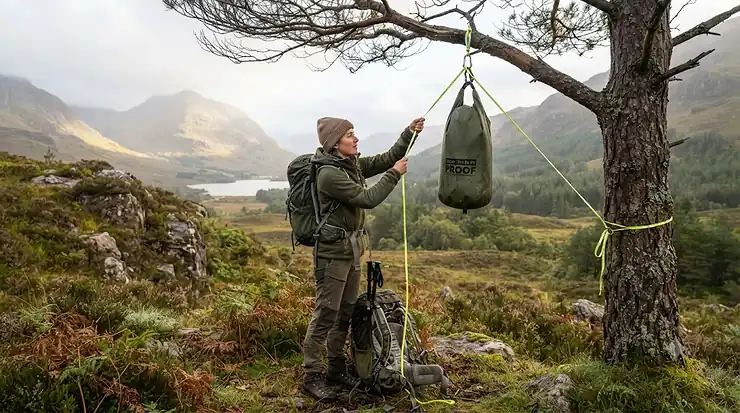
A bear bag for backpacking is a lightweight, sealable food sack used to keep your food, rubbish and scented items away from wildlife overnight. Depending on the design, it is either hung from a tree branch out of reach or made from tough fabric that resists teeth and claws, replacing a heavy hard-sided canister.
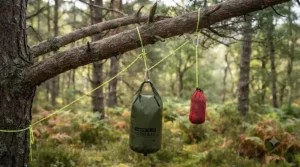
Now, the awkward bit for British readers: there are no bears here. Brown bears vanished from Britain long ago, so why bother? Because mice never got the memo. Anyone who has spent a night in a Highland bothy knows the tiny, relentless scratching that starts ten minutes after the head torch goes off. A chewed-through rucksack lid is an expensive way to learn about rodents. Add the trips that take UK hikers abroad, whether a summer on the PCT or a fortnight in the Rockies, and a good bear bag for backpacking looks less like a novelty and more like proper kit.
This guide sorts the useful options from the marketing noise. You’ll find seven real products, from an IGBC-certified (Interagency Grizzly Bear Committee) soft bag to a 39 g British-made Dyneema sack. You’ll also get practical advice on PCT-style bear hangs, choosing a lightweight bear bag for hiking, and shortlisting top rated bear bags for wild camping. There’s a full section on wild camping in Scotland too, because the rules and the wildlife there aren’t what most American guides assume.
One honest note first: I haven’t personally tested these products. Everything below is analysis built from published specifications, independent reviews and aggregated customer ratings, so you’ll read “reviewers report” rather than “I found”. If you’re new to wild camping, the short version is lightweight, low-impact overnighting away from campsites, which is exactly where a food bag earns its keep.
Quick Comparison of the Best Bear Bags for Backpacking
| Product | Type | Approx. weight | Capacity | Guards against | Price range | Best For |
|---|---|---|---|---|---|---|
| Ursack Major XL | Soft, IGBC-certified | ~250 g | 15 L | Bears | £90-£130 | Week-long trips in true bear country |
| Ursack AllMitey | Soft, IGBC-certified | ~370 g | 10.65 L | Bears and small critters | £110-£150 | One bag for every animal |
| RATSACK (XS) | Stainless steel mesh | Under 200 g (size-dependent) | XS-XL sizes | Rodents | £80-£100 | Bothies, huts and shelters |
| Sea to Summit Ultra-Sil Dry Bag (20 L) | Roll-top dry bag | ~90 g | 20 L | Nothing (hang it) | £20-£35 | Budget PCT-style bear hangs |
| LOKSAK OPSAK (12 × 20 in) | Odour-barrier liner | ~25 g | Large liner | Scent only | £10-£20 | Inside any other bag |
| Foxtell Bear Food Bag Hanging System | Hang kit (10 L + 15 L) | Varies by kit | 10 L and 15 L | Nothing on its own | Budget bracket | Beginners wanting everything in one box |
| Wild Sky Gear DCF 3.0 Bear Bag | Dyneema dry bag | 39 g | 14 L | Mice (when hung) | Mid-£40s | Bothy-hoppers and gram-counters |
Looking at the comparison above, only the Ursack Major XL and Ursack AllMitey carry IGBC certification, so they’re the only real answer for genuine bear country. Everything else is a hang-it-or-hide-it system. If your trips stay in Britain, the Sea to Summit Ultra-Sil Dry Bag does most of the job at a fraction of the cost, and the Wild Sky Gear DCF 3.0 Bear Bag shaves the grams. Budget buyers should note that the Foxtell Bear Food Bag Hanging System looks complete in the box but is still a hang kit, so it only works if you find a decent branch.
💬 Just one click — help others make better buying decisions too!😊
Top 7 Bear Bags for Backpacking: Expert Analysis
Each pick follows the same logic: what the specs mean on the trail, who should buy it, what reviewers keep saying, and whether the price range stacks up.
1. Ursack Major XL — IGBC-certified with room for a week’s food
The headline is certification: the IGBC only lists soft containers that survive an hour of direct bear contact, and this design made the list.
It’s a 15-litre sack woven from UHMWPE (the fibre often sold as Spectra), weighing about 250 g, with a 1.8 m attached cord rated to roughly 2,500 lb. In practice that’s around a week of dehydrated meals for one person. It also collapses as you eat, which a hard canister never does.
As a bear bag for backpacking in black bear or grizzly country where canisters aren’t compulsory, it makes sense. You tie it to a tree trunk rather than hanging it, so there’s no branch-hunting at dusk. What the spec sheet won’t tell you is that the weave, while bear-resistant, can still be pierced by small teeth, so mice remain a nuisance.
Reviewers consistently praise the weight saving over canisters and the peace of mind, while noting that the fabric soaks up rain and gets heavier. I couldn’t verify a meaningful pool of amazon.co.uk ratings for this exact listing, so lean on independent reviews and the certification instead.
Pros:
- ✅ IGBC-certified against bears
- ✅ About 250 g for 15 litres
- ✅ Packs flatter as food runs down
Cons:
- ❌ Soaks up rain and gains weight
- ❌ Small critters can still puncture it
Expect roughly £90-£130 (Amazon flags the listing as pricier than typical, so check current price). That’s fair value if you need certified protection, and overkill for a Cairngorms weekend.
2. Ursack AllMitey — bear and critter protection in one bag
This is the one for people who refuse to choose between bears and mice.
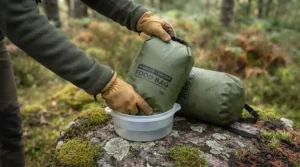
The standard size holds 10.65 litres and weighs about 368 g (13 oz). The laminated fabric pairs UHMWPE with Kevlar, so fine teeth that would chew the plain weave get nowhere. Larger Grizzly (20 L) and Kodiak (30 L) versions exist for longer trips or two people. Bigger bags mean more weight, but they suit shared food.
For wild camping in Scotland, the Ursack AllMitey is arguably over-specified, yet it’s the most flexible bag here. As SectionHiker’s review points out, it’s the only Ursack you can leave on the ground overnight. That means no hanging in a treeless glen. The same review warns that it isn’t crush-proof, waterproof or leak-proof, and that some parks don’t accept it despite the IGBC listing.
Reviewers generally call it the least-compromising soft option. The recurring complaints are the price and the extra weight next to the Major.
Pros:
- ✅ Bear- and critter-resistant in one bag
- ✅ Safe to leave on the ground overnight
- ✅ Grizzly and Kodiak sizes for bigger trips
Cons:
- ❌ Heaviest and priciest of the soft bags
- ❌ Not waterproof or crush-proof
Budget around £110-£150. Stock has looked patchy (the US listing I found showed as unavailable), so check availability. Buy it once if you want a single bag for every animal on earth.
3. RATSACK — stainless mesh that mice can’t chew
Metal beats teeth, and that’s the entire pitch.
The bag is knitted stainless steel mesh with a wide hook-and-loop closure and a grommet for a carabiner. It won’t rust and doesn’t absorb rain. SectionHiker suggests the XS size handles a one-person weekend if toiletries share the space.
The RATSACK isn’t bear-proof, and it doesn’t pretend to be. What it does brilliantly is solve the bothy problem. You can hook it on a rafter nail or leave it on a shelf without throwing a rope over anything. Because mesh neither hides smell nor keeps food dry, pair it with a liner such as the LOKSAK OPSAK.
The amazon.co.uk listing carries 4.6 out of 5 from 459 ratings, a decent sample. Independent reviewers rate it highly for shelters and campsite bear boxes that get raided by small mammals.
Pros:
- ✅ Rodent-proof stainless steel construction
- ✅ Doesn’t rust or soak up rain
- ✅ Hangs from a hook or carabiner
Cons:
- ❌ Not bear-resistant
- ❌ No scent or moisture protection
The XS sits in the £80-£100 range on amazon.co.uk. That’s steep for a sack, but metal doesn’t degrade like fabric, so the cost per night falls quickly for frequent bothy users.
4. Sea to Summit Ultra-Sil Dry Bag — featherweight favourite for PCT-style bear hangs
The best budget bear bag for backpacking is often not sold as one.
This roll-top sack uses 30D Cordura-branded ripstop nylon with taped seams and a translucent finish. The 20 L size weighs around 90 g. Sizes run from 3 L to 35 L, so a 13 L or 20 L covers three or four days of food comfortably.
It’s a staple for PCT-style bear hangs because it’s light, slippery in the pack and sheds water. One long-distance hiking writer lists Ultra-Sil dry bags among the lightest hang-friendly options. It isn’t bite-resistant or odour-proof, though, so treat it as a carrier, not armour.
On amazon.co.uk, the 3/5/8 L set shows 4.9 out of 5 from 47 ratings and the 35 L shows 4.8 from 13. A walker on a US hiking forum reported that nothing got wet despite rain every night on half a long-distance trail.
Pros:
- ✅ Around 90 g for 20 litres
- ✅ Waterproof roll-top with taped seams
- ✅ Wide range of sizes, 3-35 L
Cons:
- ❌ Zero resistance to teeth or claws
- ❌ No odour barrier
Expect £20-£35 depending on size. It’s the best value here, provided you’re willing to hang it properly.
5. LOKSAK OPSAK — odour barrier that slips inside any bag
Animals find food by smell first, so this bag attacks the smell.
The 12.25 × 20.75 in two-pack is a resealable, watertight, odour-barrier film. The listing says it tolerates hot water up to around 170°F, so it doubles as a rehydration pouch. Each bag weighs around 25 g.
The point isn’t protection, it’s masking. Slip your food inside an OPSAK, then inside any other bag here. It also acts as a wet barrier for the rain-absorbing Ursack Major XL. A pack of two also gives you a spare for toiletries, which should share the food bag overnight.
The two-pack holds 4.4 out of 5 from 925 ratings on amazon.co.uk, while a single-size listing sits at 3.7 from 59, a reminder that sizes attract different verdicts. Stock fluctuates, and I couldn’t retrieve full review text.
Pros:
- ✅ Odour-barrier film reduces scent
- ✅ Watertight seal, doubles as a wet barrier
- ✅ Around 25 g and reusable
Cons:
- ❌ Thin film, so it’s a liner, not armour
- ❌ Stock on amazon.co.uk fluctuates
Roughly £10-£20. Cheap insurance that makes every other bag better.
6. Foxtell Bear Food Bag Hanging System — complete hang kit at a budget price
Everything arrives in one box, so beginners can learn PCT-style bear hangs immediately.
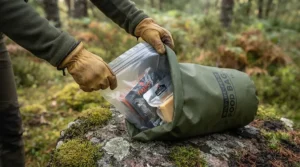
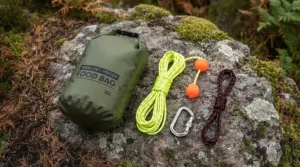
The two-set version includes a 10 L and a 15 L waterproof bag, each with a detachable shoulder strap, plus rock-throwing pouches, carabiners and ropes, sold through Amazon’s Global Store. That means you can practise the technique on your lawn before you spend serious money.
The marketing leans on the words “bear proof”, but this is a set of dry sacks, not IGBC-tested containers. It only protects food if you hang it correctly out of reach. Check the rope, too: line thinner than about 1.5 mm can cut into branches, so consider upgrading it.
The listing shows 4.6 out of 5 from just 28 ratings. That’s encouraging but small, so long-term durability remains unknown.
Pros:
- ✅ Everything needed for a hang in one box
- ✅ Two bag sizes included
- ✅ Ideal for learning hang technique
Cons:
- ❌ Not bear-resistant despite the wording
- ❌ Small review pool, unproven durability
It sits at the budget end, so check current price. As a practice kit it’s sensible value; as bear protection, it isn’t.
7. Wild Sky Gear DCF 3.0 Bear Bag — British-made Dyneema at 39 grams
For minimalist backpacking gear obsessives, this is the grail.
The 14 L roll-top bag uses 1.43 oz DCF (Dyneema Composite Fabric), weighs 39 g and has taped seams. The maker rates it above 20,000 mm waterproof and describes it as handmade in Britain. That means a bag that weighs less than a smartphone, keeps food dry and stays out of the way.
It suits the UK’s actual threat: mice. The maker describes the fabric as rodent-resistant, but says plainly to hang it rather than leave it on the floor, and it’s designed for tree branches or bothy rafters. If you need certified bear protection, look at the Ursack Major XL instead.
The maker calls it a best-seller and a resale listing showed a couple of hundred units sold, but I couldn’t verify detailed independent reviews, so treat durability claims as the maker’s. It’s sold direct rather than through Amazon.
Pros:
- ✅ Just 39 g for 14 litres
- ✅ Waterproof roll-top with taped seams
- ✅ British-made and repairable with DCF tape
Cons:
- ❌ Premium price for a dry bag
- ❌ Not bear-resistant
Expect the mid-£40s. That’s fair for the lightest option here, and pricey if a £25 dry bag would do.
How to Do PCT-Style Bear Hangs Without the Faff
The PCT method earned its name among Pacific Crest Trail thru-hikers because it removes the classic weak point: the tie-off, where an animal can gnaw the line. Done properly, PCT-style bear hangs are quick, need one carabiner and only one throw. The classic Backpacker walkthrough explains the same principle.
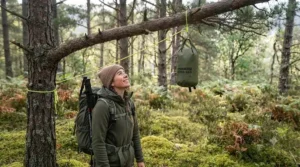
- Pick the branch. Choose a live, sturdy limb sticking out at least 4 ft (1.2 m) from the trunk, roughly 15-25 ft (4.5-7.5 m) up.
- Make the throw. Put a small rock in a rock sack, tie on your throw line and toss it over the branch.
- Clip and hoist. Attach the carabiner to your food bag, feed the free end of the line through it, and haul the bag up to the branch.
- Add the toggle. Reach as high as you can and tie a pencil-thick stick to the line with a clove hitch.
- Let go. The bag drops until the stick jams against the carabiner, leaving it around 10 ft (3 m) off the ground and 4 ft (1.2 m) out from the trunk.
Line between 1.5 mm and 2.5 mm works best, and reflective cord helps you find the bag at dawn. One veteran guide argues most backpackers hang badly because they rarely practise, so rehearse once in daylight before you rely on any bear bag for backpacking. Fair warning: in open Scottish country there’s often no tree to hang from, which is where mesh or laminated bags come into their own.
Real-World Scenarios: Three Trips, Three Setups
The weekend wanderer. She wild camps six to eight nights a year in Highland glens, with roughly £30 to spend. A 13 L Sea to Summit Ultra-Sil Dry Bag plus a LOKSAK OPSAK covers her. She hangs it low from a pine branch away from the tent, because the realistic threat is mice.
The bothy bagger. He does 20+ nights a year along routes like the Cape Wrath Trail and has £45-£100 to spend. He hangs the Wild Sky Gear DCF 3.0 Bear Bag from a rafter, or hooks a RATSACK to a nail when the ceiling is hopeless. Rodents are the constant, so armour isn’t necessary.
The bucket-list thru-hiker. A UK walker is flying out for a summer on a US trail, with £110-£150 earmarked. An Ursack AllMitey or Ursack Major XL fits where bags are permitted. However, some areas, such as Yosemite’s backcountry, still require hard-sided canisters, so check the local rules before buying anything.
The pattern is obvious: match protection to the animal, then to the rules, then to the budget.
Problem → Solution: Fixing Common Bear Bag Headaches
- Problem: the bag soaks up rain. The Ursack Major XL fabric absorbs water and gets heavy. Fix: line it with a LOKSAK OPSAK and seal the seams if the listing recommends it.
- Problem: no suitable branch. Above the treeline or on open moor there’s nothing to throw over. Fix: switch to a rodent-resistant bag like the RATSACK or the Ursack AllMitey, which don’t need hanging.
- Problem: the throw line tangles or snags. Fix: use slick 1.5-2.5 mm line, coil it in its own pouch and keep the rock sack light.
- Problem: food smell leaks out. Fix: use an odour-barrier liner and store toothpaste, lip balm and sunscreen alongside your food.
- Problem: bag too big or too small. Fix: allow roughly 10-11 L for five days and 15 L for a week, then stop packing air.
How to Choose a Bear Bag for Backpacking
To choose a bear bag for backpacking, match the bag to the animal you’re protecting against, check the local rules, then size it for your trip and weigh grams against effort.
- Name the animal. Bears call for IGBC-certified soft bags or hard canisters. Mice call for mesh, Kevlar laminate or a proper hang. Anything else is guesswork.
- Check the rules. Some areas require hard-sided canisters regardless of certification, and even IGBC-listed bags aren’t accepted everywhere.
- Size it by days. Around 10-11 L covers about five days for one person, 15 L roughly a week and 30 L close to two weeks.
- Weigh grams against effort. A dry bag saves weight but costs you a hang every night. A certified sack costs more grams but no branch-hunting.
- Think about water and smell. Some soft bags soak up rain and dry bags don’t hide scent, so budget for a liner.
- Do the cost-per-night sums. Divide the price by nights used per year over the years you’ll own it.
Lightweight Bear Bag for Hiking: What the Grams Really Buy You
A lightweight bear bag for hiking sounds like a marginal gain until you see the numbers. Reviewers put the BearVault BV500 canister at around 1.1 kg for 11.5 L. The Ursack Major XL delivers 15 L at roughly 250 g, the Sea to Summit Ultra-Sil Dry Bag carries 20 L at around 90 g, and the Wild Sky Gear DCF 3.0 Bear Bag manages 14 L at 39 g.
That gap of nearly a kilo is typically about a day and a half of food. On a five-day trip, choosing a lightweight bear bag for hiking is like carrying a whole extra dinner you never eat. The catch is that weight-saving only counts if the bag does its job. A 39 g bag hung badly is worse than a 1.1 kg canister used correctly.
Here’s what to weigh: hang-based bags trade grams for nightly effort and technique, certified soft bags trade a few more grams for convenience, and canisters trade a lot of grams for certainty. Pick the point on that spectrum that matches your trip, not your ego.
Top Rated Bear Bags for Wild Camping: Reading the Ratings Properly
Ratings are seductive and slippery. On amazon.co.uk, the RATSACK shows 4.6 out of 5 from 459 ratings and the LOKSAK OPSAK two-pack 4.4 from 925. The Sea to Summit Ultra-Sil Dry Bag range sits at 4.8-4.9 from smaller samples of 13-47, and the Foxtell Bear Food Bag Hanging System shows 4.6 from only 28.
Three rules help when you shortlist top rated bear bags for wild camping. First, sample size matters: 459 ratings tell you far more than 28. Second, stars measure satisfaction, not protection. Nobody reviews a bag after a mouse defeats it, and the ratings don’t capture that. Third, for bear resistance, IGBC certification is a stronger signal than any star average.
So in practice, the top rated bear bags for wild camping in Britain are the ones that solve the mouse problem reliably. The RATSACK and the Sea to Summit Ultra-Sil Dry Bag lead on evidence, while the Wild Sky Gear DCF 3.0 Bear Bag is the intriguing outsider.
✨ Don’t Miss These Carefully Chosen Picks!
🔍 Take your food storage to the next level with the products above. Click on any highlighted product name to check current pricing and availability. A little planning now means a dry, uneaten breakfast later!
Bear Bag vs Bear Canister vs Rodent Hang
Choosing between a soft bear bag for backpacking, a hard canister and a hang is really choosing how much weight and effort you’ll accept.
| Option | Typical weight | Bear protection | Mouse protection | Effort | Best For |
|---|---|---|---|---|---|
| Soft certified bag (e.g. Ursack Major XL) | ~250 g | Certified where accepted | Partial | Low | Bear country where canisters aren’t required |
| Hard canister (e.g. BearVault BV500) | ~1.1 kg | Highest | Yes | Low | Areas that mandate canisters |
| PCT-style hang (e.g. Sea to Summit Ultra-Sil Dry Bag) | From ~85-100 g setup | Only if hung well | If out of reach | High | Confident, practised hikers |
| Rodent hang (e.g. Wild Sky Gear DCF 3.0 Bear Bag) | ~40 g bag | None | Yes if out of reach | Low | UK bothies and glens |
Looking at the table, canisters win on certainty but lose badly on weight, while hangs are light but demand skill and a suitable tree. Soft certified bags sit in the middle, which is why so many US walkers prefer them. For UK trips, a simple rodent hang from a low branch or bothy rafter is often all you need, and it’s much less effort than a full PCT-style bear hang.
Minimalist Backpacking Gear: Where the Food Bag Fits
Minimalist backpacking gear is about doing more with less, and a food bag is a perfect candidate for double duty. A 35 L Sea to Summit Ultra-Sil Dry Bag can line your whole pack, which keeps everything dry, and the manufacturer says a 20 L holds a three-season synthetic sleeping bag. The LOKSAK OPSAK doubles as a rehydration pouch, cutting out a pot wash.
The philosophy is simple: every item should justify its grams twice. Under that logic, the Wild Sky Gear DCF 3.0 Bear Bag is minimalist backpacking gear at its purest, since 39 g does the work of a bag, a pillow stuffed with a jacket and a bothy shield. Meanwhile the Ursack AllMitey is the opposite lesson: a heavier item that lets you drop a rope, a carabiner and a nightly ritual.
Base-weight counting rewards this kind of thinking. If your food bag lets you skip the cord and the tree-hunt, the extra 100-150 g may still be a net win.
Wild Camping in Scotland: Why a Food Bag Still Matters
Wild camping in Scotland is legal on most unenclosed land under the Land Reform (Scotland) Act 2003, provided you follow the Scottish Outdoor Access Code. Forestry and Land Scotland’s camping guidance describes wild camping as small-scale, for two or three nights in any one place. Popular areas, such as parts of Loch Lomond & The Trossachs National Park, add byelaws between March and September, so check before you pitch.
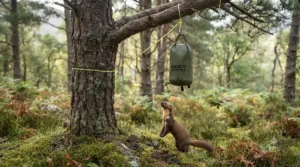
None of that involves bears, but food storage still matters for wild camping in Scotland. Mice chew into packs, and scraps left on the ground attract them and larger scavengers. The Access Code’s leave-no-trace ethos means you shouldn’t be dropping food waste anyway. Above the treeline there’s nothing to hang from, so a mesh RATSACK or a laminated Ursack AllMitey makes life easier. In woodland, a Sea to Summit Ultra-Sil Dry Bag hung low is usually enough.
Elsewhere in the UK, you generally need landowner permission, so treat wild camping in Scotland as the exception, not the rule.
Common Mistakes When Buying a Bear Bag for Backpacking
- Trusting the words “bear proof”. Many cheap kits use the phrase loosely. Certification, not marketing copy, is the proof.
- Ignoring local rules. IGBC listing doesn’t guarantee acceptance everywhere, and some areas insist on hard canisters.
- Oversizing. Extra litres are just extra weight and floppy bulk.
- Skimping on rope. Line thinner than roughly 1.5 mm can cut into branches and snap when it matters.
- Forgetting smellables. Toothpaste, lip balm and sunscreen belong in the bag too.
- Assuming waterproof. Some soft bags absorb rain, and a mesh sack keeps nothing dry.
Get these six right and you’ve avoided most of the regret people report with a bear bag for backpacking.
Long-Term Cost and Maintenance
The illustrative table below assumes 75 nights of use (15 nights a year for five years) and uses the price ranges above.
| Product | Price range | Weight | Cost per night (illustrative) | Best For |
|---|---|---|---|---|
| Ursack Major XL | £90-£130 | ~250 g | About £1.20-£1.75 | Frequent bear-country trips |
| Ursack AllMitey | £110-£150 | ~370 g | About £1.50-£2 | Buy-once, all-animal protection |
| RATSACK | £80-£100 | Under 200 g | About £1.05-£1.35 | Regular bothy users |
| Sea to Summit Ultra-Sil Dry Bag | £20-£35 | ~90 g | About 25p-45p | Budget-conscious walkers |
| LOKSAK OPSAK | £10-£20 | ~25 g | Roughly 15p-25p | Anyone using another bag |
| Wild Sky Gear DCF 3.0 Bear Bag | Mid-£40s | 39 g | Roughly 60p | Gram-counters |
Looking at the numbers, even the priciest bag costs under £2 a night if it lasts five seasons, while the dry-bag options are pennies. The Foxtell Bear Food Bag Hanging System is omitted because its cost depends on the current price and how long the ropes survive. Maintenance is simple: rinse and dry each bag fully, store it loose and replace frayed cord. If you own an Ursack, sealing the seams may help it shed water, and hand-washing is the manufacturer’s advice.
FAQ
❓ How much does a good bear bag for backpacking cost in the UK?
❓ Are Ursack bags allowed everywhere?
❓ What size bear bag suits a weekend trip?
❓ Will a dry bag work as a bear bag?
❓ Do I need an odour-proof liner as well?
Conclusion
The right bear bag for backpacking depends on where you’re walking, not how impressive it sounds. For genuine bear country, the Ursack Major XL and Ursack AllMitey are the certified soft options, and the AllMitey adds critter protection. For Britain’s bothies and glens, the RATSACK, the Sea to Summit Ultra-Sil Dry Bag and the Wild Sky Gear DCF 3.0 Bear Bag cover the realistic threat at far lower weight and cost. Add a LOKSAK OPSAK for scent control and, if you’re starting out, the Foxtell Bear Food Bag Hanging System is a sensible way to practise.
Choosing a lightweight bear bag for hiking, or comparing top rated bear bags for wild camping, comes down to matching protection to the animal, then to the rules, then to the budget. Whether you’re planning minimalist backpacking gear for a Cairngorms weekend or PCT-style bear hangs on the other side of the Atlantic, the same logic applies. Practise your hang in daylight, keep your smellables together and let your food storage be the least dramatic part of the trip.
✨ Ready to Sort Your Food Storage?
🎒 Click on any highlighted product name above to check current pricing and availability, and pack smarter for your next wild camp!
Recommended for You
- Bear Bag Kit Under £30: 7 Best Picks for UK Campers (2026)
- Dry Bag for Motorcycle Touring: 7 Best UK Picks (2026)
- Dry Bag for Kayaking: 7 Top Rated Picks That Actually Work (2026)
Disclaimer: This article contains affiliate links. As an Amazon Associate, I earn from qualifying purchases. If you purchase products through these links, we may earn a small commission at no additional cost to you.
✨ Found this helpful? Share it with your friends! 💬🤗
