
In This Article
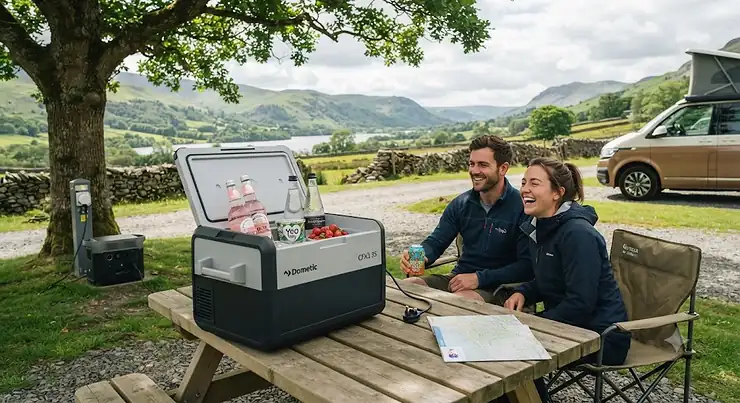
A warm beer at a UK campsite is a personal tragedy, and a soggy sandwich swimming in melted ice water is somehow worse. That’s the entire reason the Dometic electric cool box exists: no ice, no dripping bag-for-life, no Tuesday-morning panic about whether last night’s chicken is still safe to eat. A Dometic electric cool box is a portable, plug-in refrigeration unit — either a Peltier-effect thermoelectric box or a true compressor fridge — built to hold food and drink at a set temperature using your car’s 12V socket, a leisure battery, or mains power, rather than relying on ice. Dometic effectively created this category, and its CFX and Tropicool ranges remain the benchmark every rival gets measured against. But Dometic isn’t the only sensible choice on amazon.co.uk, and picking the right box means understanding capacity, cooling technology, and your actual use case — not just chasing the most familiar badge on the lid.

This guide pulls together seven real, currently available models spanning budget thermoelectric boxes through to premium variable-speed compressor fridges, with honest analysis of where each one earns its keep. We’ll dig into the genuine difference between compressor and thermoelectric cooling, how Peltier element efficiency actually behaves in British summer heat, the noise level decibels you’ll live with at 2am in a campsite, and what changes when you’re running a box off a van’s leisure battery rather than a mains socket at home. Whether you’re after the best electric cool box for camping weekends, an electric cool box for van life, or simply the best electric cool box that plugs into car power for the school run to the coast, there’s a sensible pick below — and a clear sense of why it beats the alternatives for your specific situation.
Quick Comparison Table
| Product | Cooling Type | Capacity | Best For | Price Range |
|---|---|---|---|---|
| Dometic CFX3 35 | Variable-speed compressor | 35L (32L usable) | Van life, week-long touring | £700-£850 |
| Dometic Tropicool TCX 21 | Thermoelectric (Peltier) | 21L | Day trips, budget Dometic buyers | £150-£200 |
| Engel MT45F-U1 | Compressor drybox | 45L | Overlanders, fishing, dual-use storage | £650-£800 |
| Alpicool NCF35 | Compressor | 35L | Tightest budget for real freezing | £140-£190 |
| Iceco GO20 | Compact compressor | 20L | Small cars, tight boot space | £200-£260 |
| Mobicool MQ40 AC/DC | Thermoelectric (Peltier) | 40L | Families plugging into the car | £150-£220 |
| Outwell ECOcool 35L | Thermoelectric (Peltier) | 35L | First-time buyers, casual camping | £100-£150 |
Looking across this table, the split between compressor and thermoelectric models is really a split between two different jobs. The Dometic CFX3 35, Engel MT45F-U1, Alpicool NCF35 and Iceco GO20 can all hold a genuine fridge or freezer temperature regardless of how hot it gets outside, which matters enormously once you’re off-grid in a heatwave. The Mobicool, Outwell and Tropicool boxes cool to a fixed margin below ambient temperature instead, which is perfectly adequate for a one-day outing but starts to struggle once the mercury climbs past 28°C. According to Which? testing of cool boxes for camping, picnics and festivals, this distinction consistently separates the boxes that genuinely chill from those that merely take the edge off.
💬 Just one click — help others make better buying decisions too!😊
Top 7 Dometic Electric Cool Box Picks: Expert Analysis
1. Dometic CFX3 35 — variable-speed compressor with app control
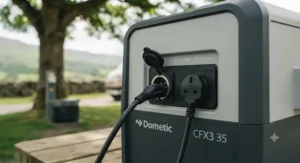
The CFX3 35 is the model every other 12V fridge in this guide is quietly compared against, and the comparison usually doesn’t go in the rival’s favour. Inside is a variable-speed Secop-based compressor that ramps up and down rather than crudely switching on and off, which keeps power draw to roughly 352Wh per 24 hours (around 29Ah from a 12V leisure battery) when set to 5°C in a 25°C ambient — figures borne out by independent off-grid testing rather than just marketing copy. The 35-litre shell (32 litres usable) runs on 12/24V DC or 100-240V AC, has a temperature range from +10°C down to -22°C, and includes three-stage battery protection so it won’t flatten your starter battery overnight. Based on the spec comparison with the rest of this list, this is the box for buyers who actually need freezer-grade cold off-grid, not just a chilly drinks box for the afternoon. Reviewers consistently note how quiet the compressor is in operation, with several independent testers specifically remarking that it’s barely audible next to a tent at night, and one common theme in long-term user reports is that the WiFi app function is “finicky” while Bluetooth control works reliably.
✅ Genuine freezer performance regardless of outside heat
✅ Three-stage battery protection prevents a flat car battery
✅ Whisper-quiet variable-speed compressor for tent pitches
❌ Heavy at roughly 21kg — awkward for one person to carry
❌ Premium price puts it out of reach for casual users At around £700-£850, the CFX3 35 isn’t an impulse buy, but for anyone running a van fridge daily it earns its keep in saved ice costs and reliability within a season or two.
2. Dometic Tropicool TCX 21 — Dometic’s entry-level Peltier cooler
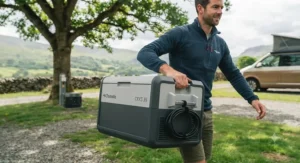
If the CFX3 is Dometic’s flagship, the Tropicool TCX is the brand’s answer for buyers who just want a cheap, reliable Peltier box with the Dometic name on it. The TCX 21 uses thermoelectric (Peltier-effect) cooling rather than a compressor, drawing from 12V or 230V power and chilling contents to roughly 18-25°C below the surrounding air temperature. What that means in practice is a box that comfortably holds drinks at fridge-cold on a mild British day but loses ground once ambient temperatures climb into the high twenties, since Peltier cooling can’t outpace genuinely hot air the way a compressor can. This makes it a sensible pick for short day trips, picnics, and back-garden use rather than multi-day off-grid camping. Energy-saving electronics reduce draw once the target temperature is reached, which is a feature budget thermoelectric rivals frequently skip. Aggregated buyer sentiment for the wider Tropicool range tends to highlight straightforward, no-fuss operation and a genuinely portable size, with the more common complaint being limited cooling headroom on the hottest days.
✅ Trusted Dometic build quality at a thermoelectric price point
✅ Dual-voltage 12V/230V flexibility for car and home use
✅ Energy-saving electronics cut draw once target temp is hit
❌ Cooling power drops noticeably above roughly 28-30°C ambient
❌ Cannot freeze food — chilling only Sitting in the £150-£200 range, it’s good value if you understand its limits and aren’t expecting compressor-level performance.
3. Engel MT45F-U1 — rugged drybox-style compressor fridge
Engel built its reputation in the American fishing and overlanding market before gaining serious traction with UK buyers, and the MT45F-U1 shows exactly why. Unlike a conventional cool box, it’s effectively an airtight drybox: an EVA gasket seal keeps out dust, insects and water as well as keeping cold in, which is why photographers and anglers use the same shell for camera gear as campers use for food. The 45-litre capacity, stainless steel dual latches and polypropylene shell are built for genuine abuse rather than gentle weekend use. What most buyers overlook about this model is that the sealed-box design also means slower temperature recovery after the lid’s open for a while, since there’s less airflow assisting the compressor compared with a more conventional vented design. For anyone hauling gear through mud, sand or saltwater spray, that trade-off is well worth making. Reviewers consistently flag the seal and latch quality as the standout feature, with long-term marine and overlanding users reporting the shell shrugs off impacts that would crack a cheaper plastic cooler.
✅ Genuinely airtight, dustproof, near-waterproof drybox seal
✅ Industrial-grade stainless steel latches built for abuse
✅ Doubles as protective storage for electronics and gear
❌ Slower temperature recovery once the lid’s been open
❌ Premium pricing similar to Dometic’s flagship range Priced around £650-£800, it’s a strong pick for overlanders and anglers who need ruggedness as much as refrigeration.
4. Alpicool NCF35 — the cheapest genuine compressor worth buying
There’s a meaningful gap between “compressor fridge” and “compressor fridge that costs less than a tank of fuel,” and the Alpicool NCF35 sits firmly in the second camp. It’s a 35-litre 12V compressor fridge capable of -20°C to 20°C, meaning it can properly freeze rather than just chill, which puts it in direct competition with boxes costing two or three times as much. Here’s what to weigh: Alpicool doesn’t have Dometic’s decades of reliability data or app ecosystem, and the compressor isn’t variable-speed, so it’s a blunter instrument that cycles on and off rather than smoothly ramping. For buyers on a tight budget who still want genuine freezing power for fish, meat or ice cream on a road trip, that’s a sensible compromise rather than a dealbreaker. Aggregated review sentiment on Amazon’s marketplace consistently praises the value-for-money angle, with thousands of verified buyers rating it highly, though some reviewers note the compressor cycling is more audible than premium rivals.
✅ True freezing capability at a genuinely budget price
✅ Solid 35-litre capacity for the cost
✅ Widely available with strong verified buyer ratings
❌ Cycling compressor noise more noticeable than premium models
❌ No app control or advanced battery protection electronics At roughly £140-£190, this is the value pick for anyone who wants compressor performance without compressor-level spending.
5. Iceco GO20 — compact compressor for tight spaces
Not every vehicle has room for a 35-litre box, and the Iceco GO20 exists for exactly that gap — small cars, motorbike sidecars, and any boot space where a full-size fridge simply won’t fit. At 20 litres, it’s compressor-cooled rather than thermoelectric, so it still freezes properly despite the smaller footprint, which separates it from similarly sized Peltier boxes that can only chill. On paper this means you’re trading capacity for portability, and that’s precisely the calculation worth making if you’re a solo traveller, a motorcyclist, or someone fitting a fridge into a compact hatchback boot alongside luggage. The compact compressor unit still draws meaningful current when cycling, so pairing it with even a modest leisure battery or portable power station is sensible for anything beyond a few hours’ use. Long-term van-life testers who run larger Dometic units as their primary fridge often recommend GO20-sized boxes specifically as the secondary or back-up cooler that fits where the main fridge can’t.
✅ Genuine compressor cooling in a genuinely small footprint
✅ Fits where 30L+ boxes simply won’t go
✅ Useful as a secondary fridge alongside a larger unit
❌ Limited capacity for anything beyond solo or weekend use
❌ Smaller battery buffer means quicker compressor cycling Expect to pay around £200-£260, fair value for buyers whose vehicle, not their appetite, is the limiting factor.
6. Mobicool MQ40 AC/DC — dual-voltage thermoelectric for families
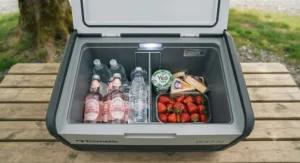
Mobicool (the rebranded successor to Ezetil, a name with over 60 years in mobile cooling) built the MQ40 specifically around flexibility: a dual-voltage AC/DC design that runs from a car’s 12V socket or a 230V mains supply without needing a separate adaptor. The 40-litre capacity is generous for a thermoelectric box, with reviewers and retailers noting its dual-fan cooling system and thicker insulation chill contents to around 16°C below ambient — solid for a family day out, less convincing for a heatwave. Based on the spec comparison with true compressor units, the trade-off here is space and price against ultimate cooling power: this is the box for a family driving to the coast with a packed boot of sandwiches and soft drinks, not the one for storing meat safely on a five-day off-grid trip. What most buyers overlook is that the carry handles, while functional, aren’t rated for the box’s full weight when fully loaded, so two-handed lifting is genuinely advisable rather than optional.
✅ Generous 40-litre capacity for a thermoelectric box
✅ True dual-voltage AC/DC with no separate adaptor needed
✅ Dual-fan system copes well with moderate UK summer heat
❌ Carry handles strain under a fully loaded box
❌ Cooling power tails off in genuinely hot weather Sitting around £150-£220, it’s a sensible family pick for anyone who wants the best electric cool box that plugs into car power without committing to compressor pricing.
7. Outwell ECOcool Slate Grey 35L — accessible entry point for first-timers
Outwell’s ECOcool range carries an EEI energy classification label, a detail that’s genuinely useful since it lets buyers compare running costs against other thermoelectric boxes using the same scale found on domestic appliances. The Slate Grey 35L model runs from 12V or 230V, making it equally happy plugged into a car or a campsite hook-up point. As an entry point into electric cooling, here’s what to weigh: Peltier-effect boxes like this one are simpler and cheaper than compressor units, but the trade-off is the same one that applies across every thermoelectric model in this guide — cooling relative to ambient temperature rather than to an absolute target. For someone testing whether they actually need an electric cool box at all, before spending compressor-level money, this is a reasonable place to start. Aggregated buyer sentiment on cool box specialist retailers tends to describe the ECOcool line as straightforward and reliable for short trips, with the EEI rating specifically called out as a useful point of comparison against unrated rivals.
✅ EEI energy label makes running costs easy to compare
✅ True dual-voltage 12V/230V operation
✅ Genuinely budget-friendly entry point into electric cooling
❌ Thermoelectric ceiling means no real freezing capability
❌ Performance noticeably weaker in sustained heat above 25°C At roughly £100-£150, it’s the sensible low-commitment choice for buyers still deciding whether electric cooling suits how they actually travel.
Practical Usage Guide: Setting Up Your Electric Cool Box
Getting the most from any electric cool box starts before you’ve even loaded it. Pre-chill the box for 20-30 minutes before packing, ideally on mains power at home, so the compressor or Peltier element isn’t fighting both ambient heat and warm food at once — this single habit shaves meaningful time off reaching your target temperature. Pack pre-chilled food and drink wherever possible; warm items dragged straight from a kitchen cupboard force the unit to work far harder than it needs to. Leave a little airflow space rather than cramming the box completely full, since most compressor units rely on internal air circulation to distribute cold evenly, and overpacking creates warm pockets the thermostat won’t detect. In the first 30 days, the most common mistake is leaving the lid open while rummaging for items, which lets warm air flood in and triggers a longer, more power-hungry recovery cycle — get in the habit of deciding what you need before lifting the lid. For maintenance, wipe down the interior with a mild detergent after each trip, check the door seal for grit or sand that could break the seal, and for compressor models, keep the external vents clear of dust so the unit isn’t overheating itself while trying to keep your food cold.
Real-World Scenarios: Matching the Box to Your Trip
Picture three different buyers and the calculation each one is actually making. First, a couple converting a mid-size van for full-time travel, running a 200-400Ah lithium leisure battery: this is the textbook case for an electric cool box for van life, and the Dometic CFX3 35 or Engel MT45F-U1 fit because both genuinely freeze regardless of ambient heat and include the kind of battery protection that won’t leave you stranded with a dead starter battery. Second, a family of four doing UK staycations and the occasional festival, plugging the cooler into the car for the journey and a campsite hookup once there: the Mobicool MQ40 or Outwell ECOcool 35L make more sense here, since the trip is rarely longer than a few days and absolute freezing power matters less than capacity and simplicity. Third, a solo motorcyclist or small-car owner doing weekend trips with minimal storage: the Iceco GO20 solves a space problem first and a cooling problem second, trading capacity for the fact that it actually fits. In each case the “best” box isn’t the most expensive one — it’s the one whose cooling technology, capacity and power draw actually match how the trip will really unfold.
How to Choose an Electric Cool Box
- Decide compressor or thermoelectric first. This single choice eliminates half the market immediately and should be based on whether you need genuine freezing or simply chilling below ambient.
- Match capacity to trip length, not appetite. A weekend needs roughly 20-25 litres per person; week-long trips push that closer to 30-35 litres for two.
- Check the power source you’ll actually use. Confirm dual-voltage 12V/230V support if you’ll be switching between car and mains, rather than assuming it’s included.
- Factor in battery protection. Compressor units running off a car battery should include low-voltage cutoff to avoid a flat starter battery — don’t assume budget models include this.
- Weigh weight against portability. A 21kg compressor fridge is brilliant once it’s installed in a van but miserable if you’re carrying it across a festival field.
- Read the noise specification, not just the marketing copy. Decibel figures vary meaningfully between models and matter enormously for anyone sleeping near the unit.
- Budget for total cost, not just sticker price. Cheaper thermoelectric boxes cost less upfront but draw more continuous power, which matters if you’re paying for campsite electricity or running off a limited battery bank.
Compressor vs Thermoelectric: The Real Difference
The compressor vs thermoelectric question is the single most important decision in this entire buying process, and it’s worth separating fact from marketing. A compressor cooler works like a miniature version of your kitchen fridge: a small motor compresses refrigerant gas, which then expands and absorbs heat from inside the box, allowing it to hold any set temperature from around +20°C down to -22°C regardless of how hot it is outside. A thermoelectric cooler instead uses a Peltier-effect semiconductor plate, which moves heat from one side to the other when an electric current passes through it, typically chilling contents to somewhere between 18°C and 25°C below the surrounding air. Compressor coolboxes work like a domestic fridge, holding any set temperature regardless of outside heat, while thermoelectric coolboxes chill to a fixed margin below ambient and cost considerably less. In UK terms, that means a thermoelectric box on a 28°C August afternoon might only reach around 6-10°C, which is fine for drinks but marginal for raw meat, while a compressor box will sit at whatever temperature you’ve actually dialled in.
| Factor | Compressor | Thermoelectric (Peltier) |
|---|---|---|
| Cooling method | Refrigerant cycle, like a fridge | Peltier-effect semiconductor |
| Can freeze food | Yes, down to roughly -22°C | No — chilling only |
| Performance in heat | Unaffected by ambient temperature | Degrades as ambient temperature rises |
| Typical price | £140-£1,200+ | £80-£220 |
| Best for | Van life, off-grid, multi-day trips | Day trips, festivals, mains-powered use |
The analysis here is straightforward once you see it laid out: compressor units cost considerably more but deliver genuinely fridge-like, weather-independent performance, while thermoelectric boxes are cheaper, lighter and simpler but fundamentally limited by how hot the day already is. Anyone choosing between the Dometic CFX3 35 and the Tropicool TCX 21 within Dometic’s own range is really making this exact decision, just with a familiar badge on both options.
Peltier Element Efficiency Explained
Peltier element efficiency is the technical heart of every thermoelectric cool box, and understanding it explains both the appeal and the limitations of these budget-friendly units. A Peltier element works through the thermoelectric effect, where passing a current through a junction of two different conductive materials causes heat to move from one side of the plate to the other — effectively pumping warmth out of the box rather than chemically refrigerating its contents. The honest trade-off is that Peltier elements are notably less energy-efficient than a compressor’s refrigerant cycle for the same amount of cooling, which is precisely why thermoelectric coolers draw a fairly constant current of around 4-5 amps from a 12V supply the entire time they’re switched on, rather than cycling on and off like a compressor does. What this means in practice is that a thermoelectric box left running on a parked car’s battery for 8-12 hours can flatten a standard starter battery, since there’s no smart cycling to ease the load once the target temperature is reached. The upside of that constant, simple operation is mechanical reliability — there’s no compressor to wear out or refrigerant to leak — and a noticeably lower upfront price, which is exactly why models like the Outwell ECOcool and Mobicool MQ40 remain popular for short trips where absolute efficiency matters less than affordability and simplicity.
Noise Level Decibels: What You’ll Actually Hear
Noise level decibels rarely make it onto a spec sheet in bold print, yet they’re one of the most practically important differences once you’re trying to sleep six feet from your cool box in a tent. Thermoelectric coolboxes use a small fan that runs continuously, producing 35-45dB of consistent low-level hum, similar to a quiet computer, while compressor models produce a deeper hum around 40-45dB when the compressor cycles on, with quiet periods once the target temperature is reached. In practice this means a thermoelectric box delivers a steady, unchanging background hum all night, while a well-built compressor unit like the Dometic CFX3 35 is genuinely silent between cycles and only audible in short bursts — independent reviewers testing the CFX3 specifically remarked on how quiet it was straight out of the box compared with rivals that “sound like a rocket about to launch.” Dometic’s newer CFX5 range goes further still, engineered to run up to 5dB quieter than the CFX3 it replaces, a difference that’s genuinely noticeable to the human ear given how decibels scale logarithmically. For anyone planning to sleep near their box, positioning it in a vehicle, porch or awning rather than directly inside the sleeping area remains the simplest fix regardless of which cooling technology you choose.
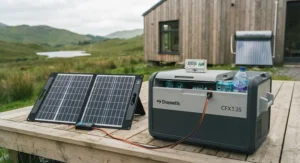
Electric Cool Box for Van Life: Power and Battery Considerations
Running an electric cool box for van life full-time is a fundamentally different proposition from using one for the occasional weekend, because the box is now drawing power continuously rather than for a few hours at a time. Independent off-grid testing of the Dometic CFX3 45 over a 24-hour period in UK summer conditions recorded power consumption noticeably below Dometic’s official 372Wh-per-day datasheet figure, suggesting real-world draw can run leaner than the worst-case manufacturer spec under typical ambient conditions — useful reassurance, though it’s still sensible to budget for the higher official figure rather than assume the best case. As a rough planning guide, a Dometic CFX3 35 draws around 29Ah daily from a 12V leisure battery at a 5°C setting in 25°C ambient conditions, which is comfortably sustainable with a decent leisure battery and a modest solar panel, but would meaningfully drain a small battery bank within a couple of days without recharging. Reviewers consistently note that three-stage battery protection — the feature that automatically cuts power before a starter or leisure battery drops to a damaging level — is genuinely worth prioritising for van life use, since the alternative is occasionally waking up to a vehicle that won’t start. Thermoelectric boxes are a poor fit for full-time van life specifically because their constant current draw, rather than a compressor’s intelligent cycling, makes them considerably harder to sustain off-grid for days at a time.
Best Electric Cool Box That Plugs Into Car: 12V Essentials
For most UK buyers, the practical question isn’t van conversions — it’s simply which is the best electric cool box that plugs into car power for day trips, the school run to a National Trust car park, or a weekend away. The good news is that nearly every box in this guide, compressor or thermoelectric, includes a standard 12V cigarette-lighter style plug as standard, designed specifically to run from a car’s accessory socket while driving. The genuine pitfall is leaving the box plugged in and running with the engine off: a thermoelectric box drawing its steady 4-5 amps can flatten a typical 50Ah usable starter battery within 8-12 hours, while a cycling compressor model lasts somewhat longer but isn’t immune either. Most modern vehicles will cut power to 12V sockets automatically once the battery reaches a protective threshold, but it’s not a guarantee across every make and model, so checking your vehicle’s accessory socket behaviour before relying on it overnight is sensible practice. For drivers wanting the simplest possible plug-and-go experience, dual-voltage models like the Mobicool MQ40 or Outwell ECOcool 35L are particularly well suited, since the same 12V cable that powers the box on the drive down can be swapped for a mains lead once you’ve arrived at a powered pitch.
Common Mistakes When Buying an Electric Cool Box
Buyers regularly fall into a handful of avoidable traps. The first is assuming bigger is always better — a 45-litre box left half-empty actually cools less efficiently than a well-packed smaller one, since compressors and Peltier elements both work against the air gaps as much as the food itself. The second is overlooking power draw entirely, buying a thermoelectric box for a multi-day off-grid trip and discovering on day two that there’s no compressor cycling to ease the load on a limited battery bank. The third is ignoring noise specifications, particularly for anyone planning to sleep near the unit, where the difference between a quiet variable-speed compressor and a budget on/off model is genuinely night-and-day. The fourth is forgetting dual-voltage compatibility, buying a 12V-only model and then discovering it needs a separate mains adaptor for home or campsite hook-up use that wasn’t included in the box. The fifth, and most expensive, is buying on price alone without checking battery protection on compressor models — a saving of £50-100 upfront can easily be outweighed by a single roadside-assistance callout for a flat starter battery.
Long-Term Cost and Maintenance
The sticker price of an electric cool box is only part of the real cost. Thermoelectric boxes are cheaper to buy but draw continuous current whenever they’re switched on, which adds up meaningfully if you’re paying for campsite electricity hook-up by the night or relying on a limited leisure battery that needs frequent recharging. Compressor units cost considerably more upfront — often three to five times the price of an equivalent-capacity thermoelectric box — but their intelligent cycling generally uses less total energy over a full day’s running, and the absence of a constantly spinning fan reduces wear-related failure points over several seasons of use. Maintenance costs differ too: thermoelectric boxes have essentially no moving parts beyond a fan, so repair costs are minimal but a failed Peltier plate usually means replacing the whole unit, while compressor fridges can occasionally need a refrigerant top-up or compressor replacement after several years of hard use, though premium brands like Dometic and Engel typically back this with multi-year warranties that offset the risk. Factoring in saved costs on ice (a regular camper can easily spend £150-£300 a season on bagged ice) and reduced food waste from spoiled provisions, a mid-range compressor box frequently pays back its higher purchase price within two to three seasons of regular use.
Safety, Food Storage and Regulations Guide
Electric cool boxes sit alongside, rather than replace, the legal framework around food safety in the UK. Cold food must legally be kept at 8°C or below in England, Wales and Northern Ireland, and in practice it’s recommended to set your fridge to 5°C or below to allow for temperature fluctuations. That guidance applies just as sensibly to a portable electric cool box used for raw meat, fish or dairy on a camping trip as it does to a domestic kitchen fridge — a thermoelectric box that’s only managing 10°C in hot weather is genuinely outside the safe zone for these foods, even if it feels cold to the touch. The wider legal basis for this sits in UK food temperature control legislation, which sets out the maximum holding temperatures and time limits that apply to chilled food more broadly. From an electrical safety standpoint, always check that any 12V-to-230V adaptor or inverter you’re using is rated for the box’s actual power draw rather than just its physical plug size, and never leave a compressor or thermoelectric unit running unattended on a charging system you haven’t verified can handle continuous load. For van conversions specifically, having a qualified installer check leisure battery wiring and fusing before permanently mounting a compressor fridge is sensible practice rather than an optional extra.
✨ Don’t Miss These Exclusive Deals!
🔍 Take your camping kitchen to the next level with these carefully selected electric cool boxes. Click on any highlighted product above to check current pricing and availability. These coolers will help you keep food fresh and drinks cold on every trip your family takes!
FAQ: Dometic Electric Cool Box Questions
❓ What is a Dometic electric cool box?
❓ Is a Dometic electric cool box worth it for camping?
❓ How long will a Dometic cool box run off a car battery?
❓ Can an electric cool box freeze food?
❓ Are Dometic electric cool boxes noisy?
Conclusion
There’s no single best Dometic electric cool box, only the right box for how you actually travel. If you’re converting a van or heading off-grid for a week, the Dometic CFX3 35 or Engel MT45F-U1 justify their higher price with genuine, weather-independent freezing and the battery protection that keeps you from waking up to a dead engine. If you’re after the best electric cool box for camping weekends or simply the best electric cool box that plugs into car power for day trips, a thermoelectric model like the Mobicool MQ40 or Outwell ECOcool 35L delivers sensible performance without the compressor price tag — provided you respect its limits on genuinely hot days. The Dometic Tropicool TCX 21 splits the difference, offering Dometic’s reliability in a thermoelectric shell for buyers who want the brand without the compressor spend. Whichever route you take, match capacity to your actual trip length, take noise level decibels seriously if you’re sleeping near the unit, and remember that food safety guidance doesn’t pause just because you’re on holiday. Buy for the trips you actually take, not the trips you imagine taking, and any of the seven boxes above will serve you well.
Recommended for You
- Best Electric Cool Box UK 2026: 7 Expert Picks Reviewed
- Coleman Cool Box Review: 7 Best Models Tested in the UK (2026)
- Best Passive Cool Box UK 2026: 7 Expert Picks Reviewed
Disclaimer: This article contains affiliate links. As an Amazon Associate, I earn from qualifying purchases. If you purchase products through these links, we may earn a small commission at no additional cost to you.
✨ Found this helpful? Share it with your friends! 💬🤗
