
In This Article
There’s a very specific kind of heartbreak that only picnic parents know: you’ve packed the sandwiches, wrangled three kids and a windbreak into the car, found the perfect spot under a tree, and then you unzip the bag to discover the butter has turned to soup and the orange squash is basically bathwater. A large cool bag for family picnic outings isn’t a luxury, it’s the difference between a lovely afternoon and a slightly damp, slightly warm disappointment. This guide walks through what actually matters when you’re choosing one — capacity, insulation, and how a cool bag that stays cold all day compares with a hard-sided box — using real products, real specs and honest analysis rather than marketing fluff.
Reviewers and testers agree on one thing above all else: insulation only works if you understand how to use it. According to the Food Standards Agency, food kept above 8°C for four hours or more carries an increased risk of bacterial growth, and in very hot weather that window shrinks to just two hours. So this isn’t only about comfort — it’s about keeping your family safe while you’re out enjoying the sunshine. What follows is a breakdown of seven genuinely available UK products, spanning soft cool bags, hybrid backpacks and hard cool boxes, so you can pick the one that actually fits how your family picnics.
What is a large cool bag for family picnic use? It’s an insulated, portable carrier — typically 25L to 60L — built with foam or foil-backed lining to slow heat transfer and keep chilled food and drinks cold for several hours away from a fridge. Unlike a lunchbox cooler, it’s sized to feed four or more people across a full afternoon out.
Quick Comparison Table
| Product | Capacity | Claimed Cooling Time | Style | Best For |
|---|---|---|---|---|
| Lifewit 30L Soft Cooler Bag | 30L (50 cans) | Up to 12 hrs | Soft, foldable | Budget-conscious families |
| VonShef 4 Person Picnic Backpack | 24L cooler compartment | Up to 6 hrs | Backpack + dining set | Al fresco dining occasions |
| TOURIT Cooler Backpack | ~20L (30 cans) | Up to 16 hrs | Backpack | Hands-free carrying |
| Vango Pinnacle 32L Cool Box | 32L | Up to 72 hrs | Hard box | Longer days, hill spots |
| Coleman Convoy 53L | 53L | Up to 4 days | Hard box, wheeled | Big family gatherings |
| Fineway 60L Large Cool Bag | 60L | Several hours (bag-class) | Soft, oversized | Maximum food volume |
| Subcold MOBI 45L Wheeled Cooler | 45L | Up to 3 days | Hard box, wheeled | No-lift transport |
Looking at the spread here, the gap between soft bags and hard boxes is the story of this whole category: Lifewit and Fineway win on price and packability, but the Vango, Coleman and Subcold boxes more than double the realistic cooling window once you’re several hours into a warm afternoon. If your picnics rarely last more than three or four hours, a soft bag will serve you well and take up far less space in the car; if you’re settling in for a whole day, the extra bulk of a hard box pays for itself in food safety and fewer trips back to buy ice.
💬 Just one click — help others make better buying decisions too!😊
Top 7 Large Cool Bags for Family Picnics: Expert Analysis
1. Lifewit 30L 50-Can Soft Cooler Bag — best budget pick that still folds flat
The Lifewit earns its spot as the default budget recommendation largely because it doesn’t sacrifice much to hit its low price point. Lifewit rates the bag’s thickened PEVA lining and foam insulation layer as keeping contents cold for up to 12 hours, though independent lab testing of a related Lifewit soft cooler found performance closer to 1.6 days below 40°F in a controlled ice-retention test rather than the marketed figure, which is a fairly typical gap between manufacturer claims and real-world results for thin-walled soft coolers. What most buyers overlook about a bag like this is that its real strength isn’t raw endurance, it’s flexibility: at 30L holding up to 50 cans, and with a fully collapsible design, it stores flat in a cupboard or car boot when not in use, which matters if you don’t have a dedicated garage shelf for camping gear.
The main compartment is joined by a mesh pocket inside the lid and two side pockets, giving you somewhere to stash napkins and a bottle opener separate from the chilled food, and the tear-resistant Oxford fabric shell handles the odd scrape without much drama. Reviewers consistently note that it performs best as a day-trip companion rather than a weekend one — several buyers found it kept a picnic cool for a few hours on a hot day but noted the ice began softening well before the 12-hour mark, which lines up with the lab data above.
Pros:
- ✅ Folds flat for easy storage between trips
- ✅ Generous 30L/50-can capacity for the price
- ✅ Leak-proof lining with heat-sealed seams
Cons:
- ❌ Real-world cooling falls short of the 12-hour claim
- ❌ Straps feel less robust than the bag’s build quality
At around £20-£30, this sits firmly in the budget bracket and represents strong value for families who picnic a handful of times a year rather than every weekend — check current price before buying, as promotions shift regularly.
2. VonShef 4 Person Picnic Backpack — best all-in-one for al fresco dining
If a large cool bag for family picnic use needs to double as a complete dining kit, the VonShef backpack is the obvious contender. Inside its 600D polyester shell sits a 24-litre PEVA-lined cooler compartment rated to keep food chilled for up to six hours, plus a full set of melamine plates, stainless steel cutlery, wine glasses and cotton napkins for four people, all tucked into their own padded slots so nothing rattles about on the walk from car park to picnic spot. What that six-hour figure means in practice is that this bag is built for the classic three-to-four-hour picnic window, not an all-day festival — pack it with pre-chilled food and you’ll comfortably make it through lunch and into the afternoon before things start to soften.
The two insulated side pockets deserve a mention: they’re sized for a standard wine bottle each, which is a small but genuinely useful detail rather than the kind of vague “bottle holder” claim you see on cheaper sets. A detachable, machine-washable picnic blanket with a waterproof PEVA backing clips to the base, so you’re not also lugging a separate rug. Aggregated customer sentiment across retailer reviews is strongly positive on presentation and completeness, with the most common criticism being that the main storage area, once the dining set is loaded, leaves comparatively little extra room for actual food — something worth knowing if you were hoping to also pack a full charcuterie spread.
Pros:
- ✅ Complete four-person dining set included
- ✅ Detachable, washable waterproof picnic blanket
- ✅ Insulated bottle holders for chilled wine or juice
Cons:
- ❌ Six-hour cooling window is shorter than dedicated cool boxes
- ❌ Less spare capacity once the dining set is packed
Typically priced in the £35-£50 range depending on colourway, this is excellent value if you’d otherwise be buying plates, cutlery and a blanket separately — those add-on costs make the VonShef backpack a genuinely strong package deal rather than just a novelty.
3. TOURIT Cooler Backpack — best hands-free option for a walk to the spot
Not every picnic happens a few steps from the car. If yours involves a walk across a park, along a beach, or up a hill to a good viewpoint, carrying a bag on your back rather than by a strap makes a genuine difference to how pleasant that walk is, especially with kids also in tow. The TOURIT backpack holds around 30 standard cans across a roomy main compartment, with two side mesh pockets, two front zip pockets and a lid pocket for smaller items, plus a bottle opener built into the strap — a nice touch for anyone who’s ever tried to open a beer with car keys.
On paper this design trades some outright cooling power for portability: TOURIT rates the leak-proof liner and high-density insulation at up to 16 hours, and this is one of the best-selling cooler backpacks on Amazon UK, with tens of thousands of accumulated ratings averaging around 4.5 stars, which is a meaningful signal of consistency at scale rather than a handful of cherry-picked reviews. Reviewers consistently praise how comfortable the padded straps are over longer walks and how well it holds its shape when full, though a recurring theme in feedback is that the zips can feel slightly fiddly when the bag is packed to capacity.
Pros:
- ✅ Comfortable padded straps for longer walks
- ✅ Huge, consistent review base backing performance claims
- ✅ Multiple pockets keep utensils separate from food
Cons:
- ❌ Zips can be stiff when fully packed
- ❌ Smaller capacity than dedicated hard cool boxes
Sitting in the budget-to-mid range, usually under £30, the TOURIT backpack is one of the smartest picks here if your picnic spot isn’t right next to the boot of the car.
4. Vango Pinnacle 32L Cool Box (72hr) — best hard box for genuine all-day retention
This is where the category shifts meaningfully. The Vango Pinnacle swaps flexible fabric for a high-density polyethylene shell filled with polyurethane foam insulation, and that construction is precisely why Vango can credibly claim up to 72 hours of cooling rather than the single-digit hours typical of soft bags — thicker, rigid foam simply loses far less cold to the surrounding air. At 32 litres it holds roughly 46 cans, or a more realistic 25-35 cans once you account for the ice packs and food that actually share the space, and the built-in lid compartment keeps bottle openers, keys or sun cream separate from the cold zone.
What the spec sheet won’t tell you, but buyer feedback across retailers consistently notes, is how much the swing-up soft-grip handle changes the day-to-day experience of a box this size — at 3.2kg empty it’s genuinely one-hand liftable even loaded, which is not something you can say for every hard cooler in this size bracket. This is the box to choose if your family picnic regularly stretches into a full afternoon in direct sun, since the retention margin gives you a real safety buffer rather than a tight race against the clock.
Pros:
- ✅ Genuinely long 72-hour cooling claim backed by foam thickness
- ✅ Built-in lid compartment for small essentials
- ✅ Comfortable one-hand carry even when loaded
Cons:
- ❌ Rigid shell takes up more car boot space than a soft bag
- ❌ No wheels, so it must be carried by hand
Usually priced in the £40-£55 range, the Vango Pinnacle represents strong mid-range value for what is, in effect, a compact fridge for the day.
5. Coleman Convoy 53L Hard Cooler — best premium option for big family gatherings
For multi-family picnics, birthday get-togethers in the park, or anyone who simply refuses to run out of cold drinks, the Coleman Convoy in its 53-litre configuration is built for scale. Coleman’s own testing rates its rotomoulded-style insulation at keeping ice for up to four days, and independent hands-on testing of the smaller 28-quart Convoy backed that claim closely, with testers reporting drinks still genuinely cold after 67 hours of continuous use. Reviewers consistently describe the build quality as close to bomb-proof, citing the rust-resistant hinges, thick rubber latches and a lid rated to double as a seat.
Here’s what to weigh before buying at this size: the Convoy range includes rugged wheels and rope handles specifically because a cooler this large, once loaded with ice, food and drinks, becomes genuinely heavy to lift — a detail that matters far more once you’re wrangling it across grass rather than a smooth driveway. The antibacterial liner moulded into the interior is a small but sensible addition for a box that’s likely to see food and drink share space repeatedly over a busy weekend.
Pros:
- ✅ Independently verified multi-day ice retention
- ✅ Rugged build with reinforced hinges and latches
- ✅ Wheels and rope handles ease transport when loaded
Cons:
- ❌ Bulky footprint needs a larger boot or estate car
- ❌ Premium pricing compared with soft-bag alternatives
Typically found in the £75-£100 bracket, this sits at the premium end of the market, but for families who host regularly, the Coleman Convoy often works out better value than replacing cheaper coolers every season or two.
6. Fineway 60L Large Cool Bag — best for maximum food volume in a soft bag
Sometimes the honest answer to “how big a cool bag do I need” is simply “as big as possible without buying a hard box,” and that’s exactly the niche the Fineway 60L fills. At 60 litres it’s roughly double the volume of most of the soft bags in this list, built with a water-resistant shell and a shoulder strap designed to carry real weight rather than just a light lunch. This size makes sense for larger families, or for anyone doing a weekly shop as well as a picnic run, since Fineway markets it as dual-purpose for frozen food transport and outdoor days out.
Based on the spec comparison with smaller soft bags in this list, a bag this size inevitably trades some peak insulation efficiency for that extra volume — a bigger internal air space takes proportionally longer to chill down and holds heat pockets more easily than a snugly packed smaller bag, so realistic performance sits closer to the shorter end of the soft-bag cooling range rather than matching a hard box. Reviewers consistently flag the sheer capacity as the standout feature, with the trade-off being that it’s noticeably bulkier to carry when full than the 30L options here.
Pros:
- ✅ Largest soft-bag capacity in this list at 60L
- ✅ Doubles as a frozen shopping bag outside picnic season
- ✅ Water-resistant shell handles damp grass and light rain
Cons:
- ❌ Less efficient insulation than smaller, snugly packed bags
- ❌ Bulky and heavy to carry once fully loaded
Priced generally under £30, the Fineway bag is an easy budget recommendation specifically for larger families who prioritise sheer packing space over marathon cooling times.
7. Subcold MOBI 45L Wheeled Cooler Box — best for zero-lift transport
The final pick solves a problem the other six don’t: what happens when nobody wants to carry anything. The Subcold MOBI pairs a 45-litre PU-foam-insulated hard shell, rated for up to three days of ice retention, with rugged wheels and a drain plug, so the box can be rolled from car to picnic blanket and simply tipped to drain melted ice afterwards rather than lifted and poured. Subcold, a UK-based brand, positions this specifically for family picnics and group getaways rather than serious wilderness camping, and the spec reflects that — this is a box designed for grass, gravel and pavement rather than rough terrain.
What most buyers overlook about wheeled coolers generally is how much they change who in the family can actually help carry the picnic gear; a rolling box means younger kids or anyone with back or mobility concerns can still pitch in without lifting real weight. Two built-in cup holders on the lid double as a handy surface once you’ve arrived, and aggregated customer feedback on Amazon points to strong satisfaction with how easily it moves across grass compared with wheelless alternatives, alongside general praise for reliable temperature retention over a full day out.
Pros:
- ✅ Wheels remove the need to lift a loaded box
- ✅ Drain plug makes post-picnic cleanup fast
- ✅ UK brand with three-day retention claim
Cons:
- ❌ Wheels struggle on soft sand or uneven woodland paths
- ❌ Heavier overall than an equivalent-capacity soft bag
Sitting in the mid-to-premium range, roughly £45-£65, the Subcold MOBI is the pick for anyone who has ever thrown their back out lugging a cooler across a car park.
Practical Usage Guide: Getting the Most From Your Cool Bag
Buying the right bag is only half the job — how you pack and use it changes performance more than most people realise. Start the night before: chill your food and drinks in the fridge overnight rather than relying on the cool bag to bring warm items down to temperature, since a cool bag or box is designed to maintain cold, not generate it. Pre-freeze a couple of reusable ice blocks or even a bottle of water, and place them near the top of the bag rather than only at the bottom, since cold air sinks and this helps distribute the chill evenly through the whole compartment.
In the first 30 days of ownership, the most common mistake buyers make is packing a bag or box only half full. A partially loaded cooler has more internal air space to keep cold, and that air warms faster than solid, densely packed contents — filling gaps with extra ice packs, rolled-up tea towels, or even bags of ice cubes genuinely improves performance. Once you’re at the picnic itself, minimise how often you open the lid; every opening lets warm air rush in and cold air spill out, and this single habit affects retention time more than almost any other factor. For maintenance, always dry the interior fully after use before storing, particularly around zips and seams on soft bags, since trapped moisture is the main cause of the mildew smell that eventually ruins otherwise perfectly good cool bags.
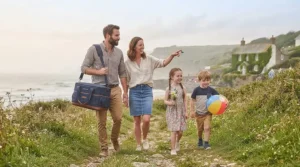
Cool Bag That Stays Cold All Day: What “All Day” Really Means
The phrase gets thrown around loosely in product listings, so it’s worth being precise about what it actually takes to achieve. Based on the specs and test data gathered across this list, a soft cool bag genuinely holding a safe temperature for six-plus hours in warm weather needs three things working together: thick foam or multi-layer PEVA insulation, a properly sealed zip rather than a simple fold-over flap, and enough ice mass relative to the food volume — roughly a one-to-one ratio of ice to food by volume is a reasonable rule of thumb for a full day out. Hard cool boxes achieve genuinely longer retention primarily through wall thickness; the Vango Pinnacle and Coleman Convoy both use several centimetres of rigid foam versus the few millimetres typical in a soft bag, and that’s the real engineering difference behind claims of 72 hours versus 12.
Here’s what most listings don’t tell you: even a “12-hour” or “72-hour” rated product is being tested under near-ideal conditions — a sealed lid, minimal opening, and often a controlled ambient temperature rather than direct summer sun. Reviewers consistently note that real-world performance on a hot, sunny picnic day runs noticeably shorter than the marketed figure, which is exactly why keeping your bag in shade and limiting how often it’s opened matters as much as the bag itself.
Cool Bag vs Cool Box: Which Is Better?
This is genuinely one of the most common questions families face, and the honest answer is that it depends on trip length far more than budget. A soft cool bag wins on portability and storage — it folds flat, weighs next to nothing empty, and slips into an already-full car boot without a fight. A hard cool box wins decisively on raw cooling performance and durability, thanks to thicker rigid insulation and a sealed lid that doesn’t rely on a zip staying perfectly closed.
The practical dividing line sits at around four to five hours. For a quick two-to-three-hour picnic in the local park, any of the soft bags on this list — the Lifewit, VonShef, TOURIT or Fineway — will comfortably keep food safe and drinks refreshingly cool. For a full-day outing, a beach trip, or a gathering where the cooler sits in the sun for six-plus hours, the Vango, Coleman or Subcold hard boxes offer a genuine safety margin that soft bags simply can’t match at a comparable price point. Weight is the trade-off: a loaded 50-litre hard box is a two-person job to lift into a car boot, while even the largest soft bag here rarely needs more than one person to carry it, wheels or straps notwithstanding.
| Factor | Cool Bag | Cool Box |
|---|---|---|
| Typical cooling time | 4-16 hrs | 24-96 hrs |
| Weight (empty) | Very light | Moderate to heavy |
| Storage when not in use | Folds flat | Takes permanent shelf space |
| Best for | Short trips, tight car boots | All-day trips, big groups |
| Typical price range | Under £30 | £40-£100+ |
The table makes the trade-off fairly stark: bags win on convenience and price, boxes win on raw performance and peace of mind. If you picnic more than a handful of times a summer and tend to stay out past lunch, the extra outlay and boot space a box demands genuinely pays for itself in fewer soggy sandwiches.
Insulated Bag for Food: Getting Hot and Cold Items Right
A large cool bag for family picnic use isn’t only about keeping drinks chilled — it’s also where you’re likely storing anything that needs to stay food-safe, from cold meats and dairy to homemade salads and dips. The same insulation that keeps things cold also slows heat gain, which is why several products in this list, including the Lifewit and Fineway bags, are marketed as suitable for keeping hot food warm too, not just cold food cold.
The practical guidance from food safety bodies is worth internalising here: keep raw or ready-to-eat perishables that would normally live in your fridge — cooked meats, dairy, egg-based dishes, prepared salads — in direct contact with an ice pack rather than loose in the main compartment, and try to pack the bag so that the coldest items sit centrally, insulated by less sensitive items like fruit or packaged snacks around the edges. If you’re transporting both raw and cooked food for a barbecue-style picnic, using a separate bag or a divided compartment (several products here, including the VonShef and TOURIT, include internal dividers) reduces the risk of cross-contamination in transit.
Multi-Compartment Design: Why It Matters More Than Litres
Raw capacity numbers get all the attention in product listings, but compartmentalisation is often the feature that determines whether a bag actually feels well-organised in practice. A single cavernous 60-litre space sounds generous until you’re digging past a picnic blanket and a bag of crisps to find the one item you actually need, which is exactly the scenario a well-divided bag avoids.
Look specifically at how each product separates its space: the VonShef backpack uses dedicated slots for plates, cutlery and glasses so the dining set never mixes with food; the TOURIT and Lifewit use side mesh pockets and front zip pockets to keep small items like bottle openers and napkins away from the cold zone; and the Vango and Coleman hard boxes use lid-mounted compartments for exactly this purpose, keeping dry goods separate from the wet, icy main chamber. What most buyers overlook when comparing bags on capacity alone is that a well-organised 30L bag often out-performs a poorly divided 45L one in day-to-day usability, simply because you spend less time searching and less time with the lid open letting cold air escape.
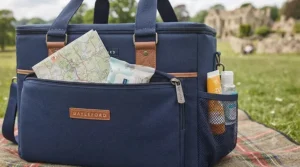
Family-Size Capacity Litres: How Much Do You Actually Need
Matching litres to family size avoids the two most common buying mistakes: coming home with something too small to feed everyone, or lugging around an oversized box that’s mostly empty air. As a general guide, budget roughly 5-7 litres per person for a half-day picnic including food, drinks and ice, which puts a family of four comfortably in the 20-30L bracket for a shorter trip. For a full-day outing, or if you’re regularly picnicking with extended family or friends, that figure climbs toward 8-10 litres per person once you account for the extra ice needed to maintain temperature over more hours.
Against that framework, the products in this list map fairly cleanly onto family size and trip length: the TOURIT and VonShef sit at the lower end, ideal for a standard family of four on a shorter outing; the Lifewit and Vango occupy the middle ground, comfortable for a family of four to six across a longer afternoon; and the Coleman, Fineway and Subcold options are built for either bigger groups or longer, hotter days where extra ice volume becomes essential rather than optional.
How to Choose a Large Cool Bag for Family Picnic Days
- Match capacity to trip length, not just family size. A short two-hour park visit needs far less litre count and ice mass than a six-hour beach day, even for the same number of people.
- Decide between soft and hard based on how often you’ll use it. Occasional picnickers are usually better served by a soft bag’s low cost and easy storage; regular users benefit more from a hard box’s durability and retention.
- Check how it’s carried before you buy. If your picnic spot involves any real walking distance, a backpack or wheeled design beats a simple carry-strap bag every time.
- Look past the headline cooling-hours claim. As covered above, real-world performance in direct sun typically falls short of lab-tested figures, so treat marketed hours as a ceiling rather than a guarantee.
- Consider what else you need to carry. An all-in-one option like the VonShef saves buying separate plates, cutlery and a blanket, which can offset a higher upfront price.
- Factor in storage space at home. Hard boxes take up permanent shelf or garage space; soft bags fold away, which matters more than people expect if storage is tight.
- Read aggregated review themes, not just star ratings. A 4.5-star average tells you little on its own — the recurring specific complaints (zips, straps, real-world cooling time) tell you far more about day-to-day reliability.
Common Mistakes When Buying a Cool Bag
The single most frequent mistake is buying based on the manufacturer’s headline cooling-hours figure without checking how that number was tested. As covered earlier, these ratings are typically achieved under closed-lid, controlled conditions, so a bag rated for 12 hours might realistically manage six or seven on an actual hot, sunny picnic where the lid gets opened repeatedly.
A second common error is under-buying on capacity to save money, then discovering the bag can’t hold both food and enough ice to keep it cold — the two compete for the same space, and skimping on ice to fit more food undermines the entire point of the purchase. A third mistake is ignoring how the bag is actually carried; a beautifully insulated bag with only a thin, non-padded strap becomes genuinely unpleasant to carry any real distance, which is exactly why the backpack-style options in this list consistently score well in reviews for longer walks to a picnic spot. Finally, many buyers overlook maintenance entirely, and mould or lingering odours from incomplete drying after use are a recurring theme in negative reviews across nearly every soft-bag brand on the market — not a flaw unique to any single product here.
What to Expect: Real-World Performance
Specs on a listing page rarely translate directly into lived experience, so here’s what the research and aggregated reviews suggest you should actually expect. On a mild day, roughly 18-20°C, most of the soft bags in this list will comfortably hold food and drinks at a safe temperature for the length of a typical three-to-four-hour picnic, with the ice packs still mostly frozen when you pack up. On a genuinely hot day, above 25°C in direct sun, that same soft bag’s effective window shrinks meaningfully, and by the four-to-five-hour mark you’re likely looking at melted ice packs and drinks that are cool rather than properly cold.
Hard cool boxes behave very differently under the same conditions. Independent cool box test results from LFTO found that thicker-walled hard coolers held safe temperatures for well over 24 hours in controlled hourly testing, far outperforming soft-sided alternatives. The Vango and Coleman boxes, thanks to their thicker foam walls, show far less sensitivity to ambient heat — testers who left the smaller Coleman Convoy sealed for 67 hours in ordinary conditions still found drinks genuinely cold, which suggests a single hot picnic afternoon barely dents their capacity. The practical takeaway: if you picnic mostly on mild days for a few hours, soft bags perform close to their claims; if hot weather and longer days are the norm for your family, a hard box’s real-world margin over its rated claim is considerably more forgiving.
Long-Term Cost & Maintenance
It’s worth thinking about total cost of ownership rather than just the sticker price, because these product categories age very differently. A budget soft bag in the £20-£30 range typically lasts two to four years of regular seasonal use before zips wear out or seams start to leak, meaning a family who picnics every summer might realistically replace one every three years or so — working out to roughly £7-£10 a year. A hard cool box like the Vango or Coleman, priced at £40-£100, is built from HDPE plastic that’s far more resistant to UV degradation and physical wear, with many owners reporting five-plus years of use, which brings the effective annual cost down close to, or even below, that of repeatedly replacing a cheaper soft bag.
Maintenance costs are minimal either way but differ in kind. Soft bags need careful drying after every use to avoid mildew, and their fabric and zips are the parts most likely to fail over time. Hard boxes need almost no maintenance beyond an occasional wipe-down and drain-plug check, though replacing rubber seals or latches, if they ever fail, is usually a small standalone cost rather than requiring a whole new box. For families weighing this up, the honest verdict is that soft bags win on low upfront cost and are perfectly sensible for occasional use, while hard boxes offer better long-term value specifically for households that picnic often enough to wear out a cheaper bag within a couple of summers.
Real-World Scenarios: Matching the Bag to Your Picnic
The weekly park regulars: A family of four who picnics most weekends through spring and summer, usually for two to three hours, close to the car. Budget matters, storage space at home is limited, and they need something that goes from cupboard to car boot in seconds. The TOURIT backpack or Lifewit soft bag both suit this pattern well — low cost, easy storage, and cooling performance that comfortably covers a shorter outing.
The all-day beach trippers: A family heading to the coast for a full day, arriving mid-morning and not packing up until early evening, often with extended family joining. Here, cooling endurance and capacity both matter more than storage convenience, since the car boot for a beach day is already at capacity with windbreaks and towels regardless. The Coleman Convoy or Subcold MOBI, with their multi-day retention claims and wheeled transport, are built precisely for this scenario.
The occasional special-occasion picnickers: A couple or small family who picnics only a handful of times a year — an anniversary, a birthday in the park, a nice day that comes along unexpectedly. They don’t want a permanent piece of garage equipment, and presentation matters as much as raw performance. The VonShef backpack, with its complete dining set and blanket, turns “let’s have a picnic” into a fully equipped outing without a separate shopping trip for plates and cutlery.
Problem → Solution Guide
Problem: Food is still warm by the time you eat, even though the bag was “insulated.” Solution: check you pre-chilled both the food and the bag’s ice packs overnight rather than loading everything at room temperature — a cool bag maintains cold, it doesn’t create it from scratch.
Problem: The bag smells musty after storage. Solution: always dry the interior completely, including seams and zip tracks, before folding a soft bag away; leaving it open to air for a few hours after washing prevents the trapped moisture that causes this.
Problem: Drinks stay cold but food seems to warm up faster. Solution: distribute ice packs throughout the bag rather than piling them at the bottom, and keep perishables in direct contact with an ice pack rather than loose in the main compartment, in line with Food Standards Agency guidance on spreading ice packs through a cool box rather than concentrating them in one spot.
Problem: The bag is too heavy to carry comfortably to the picnic spot. Solution: switch to a backpack-style design like the TOURIT or VonShef, which redistributes weight across both shoulders rather than one strap or handle.
Problem: You keep running out of ice on longer days out. Solution: freeze a couple of large 2-litre bottles of water alongside standard ice packs — they melt more slowly than smaller packs and double as a cold drink once thawed, extending your effective cooling window without extra cost.
Buyer’s Decision Framework
If your picnics rarely exceed three hours and you’re mostly picnicking close to the car, choose a soft cool bag, because the lighter weight and flat storage outweigh the shorter cooling window for short trips. If your picnics regularly run past four or five hours or involve direct summer sun for extended periods, choose a hard cool box, because the thicker insulation gives you a genuine safety margin rather than a tight race against melting ice. If you’re feeding a group larger than six or hosting a recurring gathering, prioritise total litre capacity and wheeled transport over portability, since lifting a fully-loaded large box repeatedly becomes the real bottleneck. And if presentation and convenience matter as much as raw cooling performance — think special occasions rather than routine outings — a complete backpack-and-dining-set option like the VonShef solves more problems in one purchase than buying separate components.
Safety & Food Hygiene Guide for Picnics
Beyond the bag itself, safe picnicking comes down to a handful of consistent habits that matter regardless of which product you choose. The Food Standards Agency’s core guidance centres on what it calls the “4Cs”: chilling, cooking, cleaning and avoiding cross-contamination, and for picnics specifically that translates into a few concrete actions: wash fruit and vegetables before packing rather than at the site, keep raw and ready-to-eat items in separate compartments or bags, and use hand sanitiser if handwashing facilities aren’t available at your picnic spot.
Timing matters as much as the bag’s rated performance. Once food has been out of proper chilling for more than four hours in normal conditions, or two hours in extreme heat, it’s safer to discard leftovers than risk it, regardless of how confident you feel in your cool bag’s insulation. On genuinely hot days, the Met Office recommends staying hydrated, avoiding strenuous activity during the hottest part of the day, and seeking shade where possible — advice that applies as much to keeping your family comfortable as it does to keeping your picnic food safe, since the same conditions that stress your cool bag’s insulation also raise the risk of heat-related illness for the people eating from it.
Features That Actually Matter (And Those That Don’t)
Cutting through marketing language, a handful of features genuinely affect day-to-day performance: wall or lining thickness (thicker consistently means longer retention), a properly sealing zip or latch system, and a carry method suited to how far you’ll actually walk. Drain plugs, found on the Coleman and Subcold boxes, are a small but genuinely useful feature for cleanup rather than pure marketing, since they save tipping a heavy box to empty melted ice.
Features that matter far less than their marketing suggests include exact can-count figures (real capacity always drops once ice and food share the space, so treat these as theoretical maximums) and colour or pattern options, which have zero bearing on performance despite often being the most prominently marketed detail on soft bag listings. Built-in bottle openers are a nice-to-have rather than a genuine differentiator — pleasant when present, but not worth choosing one product over another for alone.
Frequently Asked Questions
❓ How long does a large cool bag actually keep food cold?
❓ What size cool bag do I need for a family of four?
❓ Is a cool box better than a cool bag for picnics?
❓ Can I put hot food in an insulated cool bag?
❓ How do I stop my cool bag from smelling after storage?
Conclusion
Choosing the right large cool bag for family picnic days ultimately comes down to being honest about how you actually picnic, not how you imagine you might. If your outings are short, frequent and close to the car, a soft bag like the Lifewit, TOURIT or Fineway will serve you well without demanding storage space or a big outlay. If you regularly commit to full days out in the sun, or you’re catering for a bigger group, the extra investment in a hard box like the Vango, Coleman or Subcold pays for itself in genuine peace of mind and considerably less risk of warm food ruining the afternoon. And if convenience and presentation matter as much as raw performance, the VonShef’s all-in-one dining set solves several problems in a single purchase.
Whichever direction you lean, the underlying principles hold steady regardless of price point: pre-chill everything the night before, pack ice generously and distribute it evenly, minimise how often the lid gets opened, and keep the whole thing in shade whenever you can. Do that consistently, and even a modestly rated bag will outperform its marketed hours; skip it, and even the most expensive hard box in this list won’t save a warm afternoon from a soggy, lukewarm picnic.
Recommended for You
- Best Cool Bag UK: 7 Top Picks Ranked for Summer 2026
- Dometic Electric Cool Box: 7 Best Picks Tested for 2026
- Best Electric Cool Box UK 2026: 7 Expert Picks Reviewed
Disclaimer: This article contains affiliate links. As an Amazon Associate, I earn from qualifying purchases. If you purchase products through these links, we may earn a small commission at no additional cost to you.
✨ Found this helpful? Share it with your friends! 💬🤗
