
In This Article
Picture this: you’ve dragged yourself up a drizzly hillside in the Lake District, pitched your tent in the inevitable downpour, and now you’re desperate for a brew. You reach for your camping stove and… nothing. The butane canister’s gone to sleep in the October chill, and your dreams of a hot cuppa evaporate faster than the rain clouds gathering overhead. I’ve been there, shivering in the Peak District with a stove that simply wouldn’t play ball.
The gas vs multi fuel camping stove debate is more than academic — it’s about whether you’ll actually eat warm food when the British weather turns properly grim. Gas canisters are brilliant: clean-burning, easy to use, and perfect for summer festivals and family camping. But venture into the hills in winter, head to remote Scottish bothies, or travel abroad where UK-style canisters are scarce, and you’ll understand why seasoned wildcampers swear by multi fuel stoves that’ll burn petrol, kerosene, or pretty much anything liquid.
What most UK buyers overlook is that our damp, changeable climate sits right in the awkward middle ground. We’re not dealing with Scandinavian deep-freeze conditions, but we’re certainly not enjoying Mediterranean summers either. A canister stove might work perfectly well on a mild May weekend in the Cotswolds, then leave you stranded on a blustery autumn trip to the Cairngorms when temperatures drop below 5°C and the butane refuses to vaporise.
In this guide, I’ll walk you through seven top-performing camping stoves available on Amazon.co.uk, from lightweight gas models perfect for quick overnighters to expedition-grade multi fuel workhorses that’ll run on whatever you can pour into them. Whether you’re a Duke of Edinburgh participant looking for your first camping stove, a weekend wildcamper, or planning a bicycle tour across Europe where fuel availability varies wildly, you’ll find the right match here.
Quick Comparison: Gas vs Multi Fuel Camping Stoves
| Feature | Gas Canister Stoves | Multi Fuel Stoves |
|---|---|---|
| Best For | UK summer camping, festivals, weekenders | Winter trips, expeditions, international travel |
| Fuel Cost | £4-6 per canister (230g-450g) | £1-2 equivalent in petrol/white gas |
| Cold Weather | Struggles below 5°C (butane) | Works to -40°C |
| Setup Time | 10 seconds | 2-3 minutes (priming required) |
| Weight | 75-400g | 350-550g |
| Maintenance | None | Regular cleaning needed |
| Fuel Availability in UK | Widely available | Petrol everywhere, white gas in outdoor shops |
From this comparison, you can see that gas canisters offer convenience and simplicity — brilliant for most casual UK camping where you’re never far from a Cotswold Outdoor or Go Outdoors. The trade-off comes in cold weather performance and long-term fuel costs. If you’re camping more than a dozen nights per year, the cheaper running costs of multi fuel stoves start to make financial sense, even factoring in the higher upfront investment. For winter hillwalkers and Scottish bothiers, there’s really no contest — propane or multi fuel is the only sensible choice when morning temperatures regularly dip below freezing.
💬 Just one click — help others make better buying decisions too! 😊
Top 7 Camping Stoves: Expert Analysis
1. MSR PocketRocket 2 — The Ultralight Champion
The PocketRocket 2 represents everything that’s brilliant about modern gas canister stoves: it weighs just 74g (about the same as three AA batteries), packs down smaller than a tennis ball, and will boil a litre of water in under four minutes even on a breezy morning. What the spec sheet won’t tell you is that this tiny marvel has been quietly dominating the UK backpacking scene since its release, and for good reason.
The pressure regulator is the clever bit here — it maintains consistent flame output even as your gas canister depletes or temperatures fluctuate. I’ve used mine everywhere from Snowdonia summer camps to chilly autumn bivouacs in the Highlands, and it’s never let me down in conditions above 5°C. The windscreen lip around the burner provides decent protection, though you’ll still want to find a sheltered spot on properly gusty days (and in Britain, when aren’t the days gusty?).
Key specs: 74g weight, 3.5-minute boil time (1L), 8,200 BTU output, folds to 8cm tall. Works with any threaded isobutane canister. What this means in practice: you can legitimately go ultralight without sacrificing your morning coffee ritual. The folding pot supports are surprisingly robust and will hold pots up to 1.5L comfortably — plenty for solo trips or lightweight duos.
✅ Pros: Ridiculously lightweight, reliable piezo ignition, excellent simmer control for such a small burner, widely available fuel
✅ Pros: Compact enough to nest inside most cooking pots, good flame spread
✅ Pros: Great value around £45-55
❌ Cons: Struggles in temperatures below 5°C with standard butane mix
❌ Cons: No built-in windscreen means you need to shelter it properly
British wildcampers rave about how it disappears into a pack, though some note that on exposed Scottish hills, you’ll appreciate pairing it with a lightweight windscreen. At around £45-55, it’s positioned perfectly for serious hillwalkers who refuse to carry unnecessary grams but still want reliability. If you’re tramping the Pennine Way or tackling the West Highland Way in summer, this is your stove.
2. Jetboil Flash — The All-in-One Speedster
The Jetboil Flash isn’t just a stove; it’s a complete cooking system that boils water so fast it feels like cheating. One hundred seconds from cold water to rolling boil — that’s genuinely impressive, and it’s down to the clever FluxRing heat exchanger on the pot base that captures nearly all the heat before it escapes into the atmosphere.
For UK campers, the real genius is the insulated neoprene cosy that wraps the pot. When you’re standing in a Lake District drizzle watching condensation drip off your tent, that insulation means your brew actually stays hot while you faff about with tent guy-lines. The integrated design — stove locks directly into pot — provides exceptional wind resistance, which matters enormously on exposed British campsites where a Force 4 breeze is considered “light winds.”
Key specs: 440g system weight, 1L capacity, 100-second boil time, colour-change indicator shows when water’s hot. Runs on Jetboil’s Jetpower fuel or any isobutane/propane mix canister. In real terms: this setup transforms camping cooking from a chore into something approaching pleasure. The push-button igniter works reliably (unlike cheaper stoves where you’re forever fumbling for a lighter with cold fingers), and the flame adjustment allows proper simmering — surprisingly good for a rapid-boil system.
✅ Pros: Exceptional boil speed saves fuel and time
✅ Pros: All-in-one system means fewer bits to lose
✅ Pros: Excellent wind resistance from integrated pot design
❌ Cons: Heavier than modular systems (though you’re carrying pot and stove together anyway)
❌ Cons: Proprietary pot means you’re locked into Jetboil accessories
UK customer reviews frequently mention using it for festival camping and family trips where speed and convenience trump absolute minimum weight. The insulated pot is particularly appreciated during British spring and autumn trips when ambient temperatures hover around 8-12°C. Around £95-110, it’s pricier than a basic gas stove, but the integrated system and rapid performance justify the investment if you’re prioritising efficiency.
3. MSR WhisperLite Universal — The True Multi Fuel Workhorse
The WhisperLite Universal is what you bring when failure simply isn’t an option. This is the stove that’ll keep running on unleaded petrol from any garage, white gas from outdoor shops, kerosene you’ve scrounged from a rural farm, or good old isobutane canisters when you’re back in civilisation. It’s essentially two stoves in one — switch between liquid fuels and gas canisters depending on what’s available.
I’ve watched expedition leaders prime these in -15°C conditions at Scottish winter bothies, and they fire up every single time. The liquid fuel setup requires a bit of ritual — pumping the fuel bottle to pressurise it, priming the burner with a small amount of fuel to pre-heat it — but once you’ve done it twice, it becomes second nature. What sets the WhisperLite apart is the shaker jet cleaning system: if the jet clogs (and it will, especially on dirty petrol), you just shake the fuel line and the built-in cleaning wire clears the blockage. Brilliantly simple engineering.
Key specs: 350g stove weight, dual-fuel capability (liquid and canister), 2,700W output, 3.5-minute boil time on white gas. Multiple jets included for different fuels. The practical upshot: this stove genuinely goes anywhere. Planning a cycle tour through Eastern Europe where canister availability is patchy? No problem — fill up at petrol stations. Winter camping in the Cairngorms when butane won’t vaporise? Switch to liquid fuel mode.
✅ Pros: Burns literally any liquid fuel plus gas canisters — maximum versatility
✅ Pros: Proven reliability in genuinely harsh conditions
✅ Pros: Self-cleaning jet system reduces field maintenance
❌ Cons: Requires priming and pumping — not instant like canister stoves
❌ Cons: Heavier system when you include fuel bottle and pump
This is the stove serious UK wildcampers recommend when someone mentions multi-week trips or winter mountain use. British hillwalking forums are full of WhisperLite devotees who’ve been running the same stove for 15+ years. At around £135-160, it’s a significant investment, but the fuel cost savings (unleaded petrol costs roughly 75% less per burn time than gas canisters) and bomb-proof reliability make it worthwhile for frequent users.
4. Primus OmniLite Ti — The Lightweight Multi Fuel Specialist
If the WhisperLite Universal is the Land Rover Defender of camping stoves, the OmniLite Ti is the Range Rover Evoque — offering the same go-anywhere capability but with titanium construction and Swedish precision engineering. At just 341g including the pump, it’s remarkably light for a multi fuel stove, and the titanium components shave weight without sacrificing strength.
The OmniLite’s party trick is its interchangeable jets that thread directly into the pot supports — each jet is clearly marked for gas, petrol/gasoline, diesel, or kerosene/paraffin. There’s no confusion about which jet you need, and swapping between fuel types takes about 30 seconds. The brass flame spreader distributes heat evenly, and unlike some multi fuel stoves that roar like jet engines, the OmniLite runs reasonably quietly.
Key specs: 341g with pump, 2,700W output, burns gas/petrol/diesel/kerosene/aviation fuel, boils 1L in 4.5 minutes. In real-world UK use: this is what you choose when you want multi fuel versatility but refuse to carry the extra 200g of heavier alternatives. The simmer control is genuinely usable (rare in multi fuel stoves), making it viable for actual cooking rather than just boiling water. That matters when you’re stuck in a tent for three days of Cairngorm rain and want to cook something more ambitious than pot noodles.
✅ Pros: Remarkably light for a multi fuel stove
✅ Pros: Burns five different fuel types with proper simmer control
✅ Pros: Titanium construction for long-term durability
❌ Cons: Premium price around £180-220
❌ Cons: Still requires priming ritual with liquid fuels
UK long-distance hikers and bicycle tourers particularly rate this stove for international trips where fuel types vary wildly. The lighter weight compared to the WhisperLite becomes significant over multi-week journeys. European cyclists appreciate being able to fill up at any petrol station without hunting for specific canister types. It’s expensive, but if you’re planning serious expeditions or extended European tours, the OmniLite Ti justifies its premium.
5. Trangia 27 Series — The Classic Spirit Burner System
The Trangia isn’t trendy, isn’t high-tech, and certainly isn’t fast. But it’s been fuelling British camping trips since 1951, and there’s something deeply reassuring about a stove with literally no moving parts that runs on methylated spirits you can buy in any hardware shop for under £5 per litre.
The complete system — windshield, burner, two pots, frying pan, all nesting together — weighs around 860g and forms a storm-proof cooking unit that’ll work in absolutely any weather. I’ve cooked in sideways Lake District rain that would’ve blown out any open-flame stove, and the Trangia’s double-wall windshield just shrugged it off. The secret is the ventilation holes in the lower windshield that turn to face the wind, actually using breezes to improve combustion.
Key specs: 860g complete system (27-3 ultralight version), spirit burner runs 25-30 minutes per fill, boils 1L in approximately 8-10 minutes. Aluminium construction, includes 1.5L and 1.75L pots plus frying pan. What this means for British campers: yes, it’s slower than gas. But methylated spirits (meths) cost about £4 per litre versus £5-6 for a 230g gas canister that contains far less usable fuel. Over a year of regular camping, the savings add up considerably.
✅ Pros: Runs on cheap, widely available methylated spirits
✅ Pros: Completely silent operation (bliss compared to roaring gas stoves)
✅ Pros: Storm-proof design works in genuinely awful British weather
❌ Cons: Slow boil times — patience required
❌ Cons: No flame adjustment (though you can simmer by partially covering the burner)
Duke of Edinburgh participants have been issued Trangias for decades, and many keep using them long after completing their awards. The system’s elegance lies in its simplicity — there’s nothing to go wrong. UK wildcampers and bothiers appreciate that meths never freezes, works at any altitude, and doesn’t require special disposal like gas canisters. Around £65-85 depending on the specific model, it’s exceptional value for a complete cooking system.
6. Campingaz Camp Bistro 3 — The Compact British Favourite
The Camp Bistro 3 is what you’ll see at every British campsite from Cornwall to the Cairngorms. It’s compact (fits in a rucksack), uses Campingaz’s widely available blue CP250 cartridges, features piezo ignition that actually works, and costs less than a decent meal out. This is camping democratised — functional, affordable, and utterly dependable for fair-weather British camping.
The recessed burner provides reasonable wind protection, and the 2,200W output is sufficient for boiling water and cooking simple meals. What makes it specifically suited to UK camping is the sheer ubiquity of Campingaz cartridges — every camping shop, many garden centres, and even some larger supermarkets stock them. You’ll never be stranded hunting for fuel.
Key specs: 270g stove weight, 2,200W output, runs on CP250/CP500 easy-clic cartridges, piezo ignition. Practical meaning: this is the stove that gets chucked in the car for weekend trips without a second thought. It’s light enough for casual backpacking, stable enough for family camping, and foolproof enough that even camping novices can operate it confidently. The easy-clic cartridge attachment is genuinely easier than threaded systems — just push and twist.
✅ Pros: Widely available fuel across the UK
✅ Pros: Compact and lightweight for car camping
✅ Pros: Reliable piezo ignition and simple operation
❌ Cons: Campingaz cartridges cost slightly more than generic alternatives
❌ Cons: Performance drops in cold conditions like all butane stoves
This is the stove British families buy for summer holidays in the New Forest or Lake District campsites. Customer reviews consistently praise its reliability and the convenience of finding fuel anywhere. At around £25-35, it represents outstanding value for casual campers who aren’t venturing into extreme conditions. If you camp a few times per year in mild weather, this does everything you need without unnecessary complexity.
7. Soto Windmaster — The Wind-Beating Ultralight
The Windmaster is Japan’s answer to the question “what if we made a canister stove that actually works in wind?” The concave burner head creates a low-profile flame that resists gusts far better than conventional designs, and the four-prong pot supports fold out to create an exceptionally stable platform despite weighing just 87g.
For UK hillwalkers who regularly encounter Force 5-6 winds on exposed ridges, this matters enormously. I’ve used gas stoves that blew out in what the forecast cheerfully called “moderate breezes,” but the Windmaster keeps burning in conditions that send other ultralight stoves into sulky retirement. The TriFlex pot supports spread the weight across four points rather than three, which sounds trivial until you’re balancing a pot on uneven ground.
Key specs: 87g weight, 2,800W output, micro-regulator valve for precise simmer control, folds to incredibly compact size. Uses standard threaded canisters. Real-world translation: this stove punches well above its weight class. The micro-regulator (a feature usually found on larger, heavier stoves) provides exceptional flame control — you can genuinely simmer sauces rather than just toggle between “off” and “blast furnace.”
✅ Pros: Outstanding wind resistance for its size and weight
✅ Pros: Exceptional stability from four-prong design
✅ Pros: Precise flame control including proper simmering
❌ Cons: Premium price around £60-75 for a small canister stove
❌ Cons: Still susceptible to cold-weather issues with standard butane
British ultralight backpackers who’ve tested multiple stoves often settle on the Windmaster as the sweet spot between weight, performance, and weather resistance. The concave burner is particularly appreciated when cooking on breezy Scottish hillsides or exposed Pennine camps. It’s more expensive than the PocketRocket 2, but the superior wind performance and stability justify the extra £15-20 for exposed mountain use.
How UK Weather Impacts Your Stove Choice
British weather sits in a peculiar sweet spot — or perhaps sour spot — that makes camping stove selection genuinely tricky. According to the Met Office, UK mountain areas can experience temperatures ranging from -27°C to +30°C throughout the year, creating highly variable conditions for outdoor equipment. We don’t experience the Arctic extremes that make multi fuel mandatory, but we’re certainly not blessed with reliable Mediterranean warmth that would let us use basic butane stoves year-round without worry.
The critical threshold is around 5°C ambient temperature. Below this, standard butane struggles to vaporise inside its canister, meaning even a full cartridge delivers pathetic flame output or nothing at all. This becomes problematic during UK spring and autumn camping, when daytime temperatures might reach 12°C but plummet to 2-4°C overnight. Your stove works fine for dinner, then refuses to start for breakfast.
Propane and propane/isobutane blends solve this by vaporising at much lower temperatures (propane works down to -42°C), but they come in heavier, bulkier canisters that are stored at higher pressure. For summer-only camping in the south of England, standard butane canisters suffice. For year-round use, Scottish hillwalking, or winter bothying, you need either propane-mix canisters or liquid fuel stoves that’ll work in any temperature.
The other British weather peculiarity is persistent damp. Gas canister stoves tolerate this perfectly well — there’s nothing to rust or corrode. Liquid fuel stoves require more attention: the brass jets and internal components need occasional cleaning, and storing the fuel bottle in damp conditions without proper sealing can lead to water contamination. UK wildcampers who use multi fuel stoves religiously dry components after wet trips and store fuel bottles upright with seals checked.
Wind is the third factor. The British Isles are famously breezy, and exposed camping spots (mountain bothies, coastal sites, moorland camps) regularly experience sustained winds that would blow out unprotected stove flames. Integrated systems like the Jetboil or stoves with substantial windshields (Trangia, MSR Windburner) excel here. Lightweight canister stoves need careful site selection or additional windscreens to function reliably on gusty days — and in Britain, most camping days are gusty.
Propane vs Butane: Understanding Camping Fuel Chemistry
The propane vs butane camping stove debate comes down to basic chemistry that manifests as real-world performance differences. Both are liquefied petroleum gases (LPG) stored under pressure in metal canisters, but their boiling points determine when and where they actually work. The Royal Society of Chemistry explains that these hydrocarbon fuels have distinctly different phase transition temperatures that directly impact outdoor performance.
Butane boils at -0.5°C, extremely close to the freezing point of water. This means that on a chilly British autumn morning when your tent’s covered in frost, the butane inside your canister remains liquid and produces minimal vapour pressure. Turn the stove valve, and you get a pathetic dribble of gas that won’t sustain a flame. Warm the canister in your sleeping bag for 10 minutes, and suddenly it works perfectly — the fuel has warmed enough to vaporise.
Propane boils at -42°C, well below any temperature you’ll encounter camping in the UK (if you’re camping at -42°C, congratulations on surviving). This means propane always vaporises, always produces good pressure, and always delivers consistent flame regardless of ambient temperature. The trade-off is that propane requires stronger, heavier canisters (typically the large red bottles seen at campsites) because the vapour pressure is about four times higher than butane.
Isobutane sits between the two with a boiling point of -12°C. It’s a rearranged version of butane with the same chemical formula but different molecular structure, and this modest improvement in boiling point makes it far more reliable for three-season camping. Most modern camping gas canisters sold in UK outdoor shops contain isobutane/propane blends (typically 80/20 or 70/30) that work reliably down to around -10°C.
For British campers, the practical advice is straightforward: pure butane is fine for summer-only camping below 500 metres elevation. Isobutane/propane blends handle spring and autumn trips plus higher-altitude summer camps. Pure propane or liquid fuels are essential for winter camping, Scottish winter hillwalking, or expeditions where temperatures routinely drop below freezing. The fuel cost difference is negligible — an isobutane/propane mix canister costs perhaps 50p more than pure butane — making it sensible to default to the blended fuel for year-round versatility.
Multi Fuel Stove Maintenance: What UK Campers Must Know
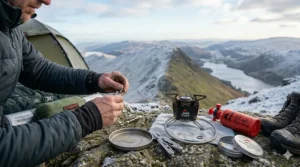
Multi fuel stoves deliver unmatched versatility and cold-weather reliability, but they demand regular maintenance that gas canister stoves simply don’t require. Understanding the maintenance requirements before buying prevents nasty surprises on a rain-soaked Scottish bothy trip when your stove clogs mid-cook.
The fundamental issue is carbon buildup. When you burn liquid fuels — particularly dirty fuels like unleaded petrol or diesel — combustion isn’t perfectly clean. Microscopic carbon particles accumulate in the fuel jet (the tiny brass nozzle where fuel is converted to vapour and ignited), gradually restricting flow until flame performance deteriorates or the stove won’t light at all.
White gas (Coleman fuel) is the cleanest-burning liquid fuel, producing minimal carbon. Unleaded petrol is dirtier, requiring jet cleaning roughly twice as often. Kerosene (paraffin) is dirtier still, and diesel is the worst offender. Most multi fuel stoves include cleaning tools — thin wires that poke through the jet to clear blockages — and you’ll need these every 5-10 burn hours with petrol, more frequently with dirtier fuels.
The pump also requires attention. The leather or rubber seal inside the pump plunger dries out over time, reducing its ability to pressurise the fuel bottle. MSR includes maintenance oil (often just SAE 20 motor oil works fine), and you should lubricate the pump leather every few months of active use. Store the fuel bottle with a little pressure in it to keep seals compressed and prevent air ingress.
British wildcampers using multi fuel stoves recommend carrying the jet cleaning tool on every trip (many stoves have built-in storage for this), knowing how to disassemble and clean the jet (practice at home), and carrying spare O-rings for the fuel bottle and pump connections. These tiny rubber seals can perish, especially in the UV-rich sunlight of high-altitude camps, and a £2 spare O-ring prevents a £150 stove becoming useless.
The trade-off for this maintenance is genuine fuel independence. When you’re bicycle touring through Eastern Europe, wildcamping in the Scottish Highlands in February, or tackling a long-distance trail where resupply points are scarce, the ability to run on petrol from any garage makes multi fuel stoves worthwhile despite the faff. For casual UK summer camping, the maintenance requirements tip the balance towards gas canisters unless you’re specifically drawn to the ritual and self-sufficiency aspects of liquid fuel cooking.
Real-World Scenarios: Matching Stoves to British Camping Styles
Scenario 1: Weekend Wildcamper in the Lake District (April-October) — You’re hiking 8-12 km to remote pitches, carrying everything in a 40L pack, and camping 6-8 nights per season. An MSR PocketRocket 2 with 230g isobutane/propane mix canisters hits the sweet spot. The 74g stove weight is negligible, one canister lasts about four days of morning coffee and evening meals, and you’re never camping in extreme cold that would defeat isobutane. Budget around £50 for the stove, £6 per canister — roughly £50-60 annual fuel cost for moderate usage.
Scenario 2: Scottish Winter Hillwalker (November-March) — Winter bothies, snow camping, temperatures regularly -5°C to -15°C, cooking for two people. The MSR WhisperLite Universal becomes essential. Butane-based canisters simply won’t vaporise reliably, but white gas or unleaded petrol work flawlessly at any temperature. The fuel bottle system is heavier than canisters, but you’re not carrying ultralight anyway with winter sleeping bags and insulated pads. Initial investment around £145, but white gas costs about £8 per litre (lasting 15-20 cooking sessions for two people) versus £18-24 of gas canisters for equivalent burn time.
Scenario 3: Family Car Camping (Summer holidays) — Three adults or two adults plus children, camping at established sites with vehicle access, cooking proper meals not just boiling water. A two-burner Campingaz setup or dual Camp Bistro units make sense. You’re not carrying weight (it’s in the car boot), fuel is available at campsites and shops, and the convenience of quick lighting and simple operation matters when juggling kids and cooking. Budget £60-80 for stoves, £5-6 per canister, perhaps 3-4 canisters per week-long trip.
Scenario 4: Long-Distance Trail Thru-Hiker (Pennine Way, West Highland Way) — Covering 20-30 km daily over 2-3 weeks, resupplying in villages, weight obsession paramount. The Soto Windmaster at 87g with excellent wind performance suits this perfectly. You’re passing through civilisation frequently enough to resupply isobutane canisters, and shaving every possible gram matters over hundreds of kilometres. The superior wind resistance means faster, more fuel-efficient cooking on exposed highland sections. Investment around £65 for stove, £6 per canister with one canister lasting 5-7 days of conservative use.
Scenario 5: European Bicycle Tour — Multi-week journey through countries where gas canister standardisation is patchy, camping 60-90 nights per season. The Primus OmniLite Ti justifies its £190+ price tag by burning literally any fuel you can find. France has Campingaz, Germany has different threads, Eastern Europe might have neither — but everywhere has petrol stations. The lighter weight versus the MSR WhisperLite (saving roughly 150g on stove and pump) compounds over months of cycling. Fuel flexibility trumps everything else on extended international tours.
Cold Weather Camping: When Gas Stoves Let You Down
I learned about cold-weather stove failure the uncomfortable way on a February bothying trip to the Cairngorms. The morning temperature was -8°C, proper Scottish chill, and my supposedly “all-season” isobutane canister produced precisely nothing when I cracked the valve. The fuel had enough vapour pressure to hiss dramatically but not enough to sustain a flame, leaving me staring at a pot of icy water and contemplating a very cold breakfast.
The physics are unforgiving: as temperature drops, so does vapour pressure inside the canister. Even isobutane/propane blends struggle when ambient temperatures fall below -5°C, and pure butane becomes useless below about +2°C. This matters enormously for UK winter camping, where overnight temperatures in mountain bothies or exposed camps regularly drop to -5°C or colder.
The crutch solution is warming the canister — tuck it inside your sleeping bag overnight, wrap it in a spare fleece during cooking, even (carefully) invert the canister to draw liquid fuel that vaporises in the burner pre-heat. These workarounds help but add faff and unreliability. The proper solution is switching fuel types entirely.
Liquid fuel stoves (MSR WhisperLite, Primus OmniLite) run on white gas or petrol that you manually pressurise by pumping the fuel bottle. The fuel vaporises in the burner pre-heat tube, not in the storage container, so ambient temperature becomes irrelevant. I’ve watched these stoves light at -15°C after the standard priming ritual — they simply don’t care about cold weather.
Propane-only systems also work reliably in extreme cold, but the canisters are bulky and typically designed for car camping rather than backpacking. For UK mountain bothying and winter hillwalking, where you need portable reliability in genuinely cold conditions, liquid fuel multi fuel stoves represent the sensible choice. Yes, they’re heavier and require maintenance, but they work when canister stoves are expensive paperweights.
The other consideration is fuel efficiency in cold. Even when canister stoves do light in near-freezing conditions, they burn far less efficiently because vapour pressure is low. You’ll consume canisters roughly 30-40% faster at -5°C versus +15°C. Liquid fuel stoves maintain consistent efficiency regardless of temperature, making them more economical over a winter season of regular use despite the higher initial investment.
Fuel Availability and Costs in the UK
Understanding what fuel you can actually buy in Britain — and what it costs — matters as much as stove performance when choosing your setup. The convenience of gas canisters evaporates rather quickly if you’re paying £6 for 230g while your mate’s running on £1.50 of unleaded.
Isobutane/Propane Mix Canisters: Available at Cotswold Outdoor, Go Outdoors, Decathlon, Amazon.co.uk, larger Tesco and Sainsbury’s stores, and most camping shops. Standard 230g canisters cost £5-7, 450g larger sizes £8-12. Major brands (MSR IsoPro, Jetboil Jetpower, Primus) are marginally more expensive than generic equivalents but some stoves perform better with premium blends. Widely available means you’ll rarely be stranded, but post-Brexit some European brands have become harder to source.
Campingaz Blue Canisters: The most ubiquitous camping fuel in the UK, available at camping shops, garden centres, some petrol stations, and campsite shops. CP250 (220g) costs £4-6, CV470 (450g) £7-9. The easy-clic attachment system is genuinely convenient, but you’re locked into Campingaz’s proprietary thread. Brilliant for domestic UK camping, less ideal for international travel where Campingaz penetration varies.
Methylated Spirits (Meths): Available at hardware shops (B&Q, Wickes, Screwfix), some supermarkets, and outdoor shops for around £4-5 per litre. One litre provides roughly 8-12 cooking sessions (boiling 1L water per session), making it dramatically cheaper than gas canisters. Burns slower, requires the Trangia-style windshield setup, but represents exceptional value for frequent campers unconcerned with speed. Also functions as emergency disinfectant, fire starter, and glass cleaner — multi-purpose utility.
White Gas (Coleman Fuel): Outdoor specialist shops (Cotswold, Ellis Brigham, independent hiking stores) stock Coleman fuel at around £8-10 per litre. Not as universally available as the above, but lasts significantly longer than equivalent cost in gas canisters. One litre provides 15-20 cooking sessions for two people with a multi fuel stove, making the per-use cost considerably lower than canisters. Cleaner-burning than petrol, resulting in less jet maintenance.
Unleaded Petrol: Available literally everywhere via petrol stations at around £1.40-1.60 per litre (as of 2026). The most universally accessible camping fuel, though also the dirtiest burning. Suitable for multi fuel stoves, requires more frequent jet cleaning, but unbeatable for bicycle tours and remote wildcamping where you can refuel from any village garage. Costs roughly 75-80% less per cooking session than gas canisters.
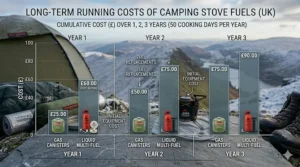
For weekend warriors making 6-8 camping trips per year, the fuel cost difference between gas canisters and liquid fuels is negligible — perhaps £20-30 annually. For frequent campers (20+ nights), Scottish bothiers, or bicycle tourers, liquid fuel savings become significant, potentially £60-100 per year, offsetting the higher stove cost within 2-3 seasons. Factor in that multi fuel stoves typically last decades with proper maintenance (there are MSR WhisperLites from the 1980s still working perfectly), and the long-term economics favour liquid fuel for serious users.
Stove Weight and Packability for UK Backpackers
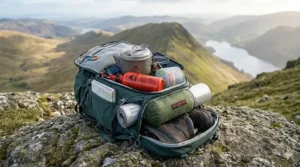
British backpacking culture tends toward the practical middle ground rather than American ultralight extremism, but weight and pack size matter when you’re hauling your kit up to Snowdon or across the Pennines. Understanding the complete system weight — not just the marketed stove weight — prevents nasty surprises.
The MSR PocketRocket 2 famously weighs 74g, and manufacturers love quoting this number. What they’re less keen to emphasise is that you also need a pot (200-300g for a 1L titanium or aluminium pot), a canister (340-450g full for 230g fuel), and probably a lightweight windscreen (30-50g). Suddenly your “ultralight” system weighs 650-900g complete. Still reasonable, but quite different from the heroic 74g headline.
Multi fuel stoves quote higher stove weights (350-550g) but you’re carrying a fuel bottle (150-200g when full) and pump (included in some stove weights, separate in others). A complete MSR WhisperLite system weighs around 750-850g including a 600ml fuel bottle. Heavier than a PocketRocket setup, certainly, but the weight delta is perhaps 100-150g, not the 300g the bare stove weights suggest.
Packability matters almost as much as weight for British backpackers using 40-60L packs. The PocketRocket and similar canister stoves nest inside most 1L pots, creating a compact package. The Jetboil integrated systems are taller and wider but everything (stove, canister, accessories) packs into the pot, forming one self-contained unit. Multi fuel stoves have longer fuel lines and bulkier pumps that don’t nest as neatly, typically requiring a dedicated stuff sack that sits wherever it fits in your pack.
For serious weight weenies tackling the Cape Wrath Trail or chasing Fastest Known Times on major routes, every gram genuinely matters, and the Soto Windmaster (87g) or PocketRocket 2 (74g) represent sensible choices. For weekend wildcampers carrying sensible base weights around 8-12 kg, the 100-200g difference between ultralight canister stoves and multi fuel setups is essentially negligible compared to the weight of your sleeping bag, tent, and water.
The British backpacking reality is that we’re rarely more than a day’s walk from resupply, we’re not crossing vast desert expanses requiring week-long fuel supplies, and our weather demands robust rather than minimum-weight solutions. The obsession with shaving 50g from your stove makes far less sense than carrying a 100g emergency shelter or 150g of extra warm clothing for the inevitable weather changes.
Environmental Considerations and Canister Disposal
Gas canisters present a disposal challenge that methylated spirits and liquid fuels simply don’t. Empty canisters are pressurised metal containers that can’t go in standard recycling bins, creating a waste problem that British campers are increasingly conscious about.
The official guidance from the Camping and Caravanning Club recommends completely emptying canisters (burn them out entirely), then either returning them to outdoor shops offering take-back schemes or contacting your local council for hazardous waste disposal. According to GOV.UK waste guidance, pressurised containers require special handling and cannot be placed in household recycling bins. Some Cotswold Outdoor and Go Outdoors locations operate canister recycling programmes, though availability varies regionally. MSR’s Seattle repair shop offers free canister recycling, but shipping empty canisters from the UK makes little environmental sense.
The frustrating reality is that many UK councils don’t have clear guidance on camping canister disposal, and the canisters often end up in general waste heading to landfill. This isn’t ideal for anyone who camps regularly and cares about their environmental footprint. The alternative approaches include:
Canister Refilling: Some campers use fuel transfer adaptors to consolidate partially used canisters into full ones, reducing waste. This is technically against manufacturers’ recommendations (canisters are designed for single use), carries explosion risk if done incorrectly, and voids warranties. Proceed cautiously.
Liquid Fuel Reuse: White gas and methylated spirits come in refillable containers you keep using indefinitely. Petrol you’re buying anyway for vehicles. The only waste is the original container, dramatically reduced versus accumulating spent canisters. MSR fuel bottles last decades.
Trangia Spirit Burning: Methylated spirits burn completely clean, producing only water and CO2 as combustion products. The fuel bottle is reusable indefinitely, and spilled meths evaporates without leaving residue or contaminating soil and water sources. From a pure environmental perspective, spirit burners have significant advantages.
For wildcampers adhering to Leave No Trace principles, the canister disposal challenge is genuinely vexing. You’ve made the effort to pack out all your rubbish, scatter your wild toilet deposits appropriately, and leave your pitch exactly as you found it — then you’re stuck with a spent canister that requires special disposal. Multi fuel and spirit burner systems eliminate this dilemma entirely, which for environmentally conscious campers can be the deciding factor regardless of other performance considerations.
Expert Buying Tips for First-Time Stove Buyers
Choosing your first camping stove feels overwhelming with dozens of options across wildly different fuel types and price points. Here’s what I’d tell a mate heading into an outdoor shop without the first clue where to start.
Start with honest usage assessment. If you camp 3-4 weekends per summer at established campsites in decent weather, you don’t need a £180 expedition-grade multi fuel stove. A £30-40 basic gas canister model like the Campingaz Bistro or equivalent will serve you perfectly well for years. Conversely, if you’re planning Scottish winter bothying or international bicycle tours, spending on proper multi fuel capability now prevents replacing inadequate equipment later.
Test flame control if possible. Go to a shop with demo units and actually work the gas valve. Some stoves toggle abruptly between off and blast furnace with minimal adjustment range, making proper simmering impossible. Others (MSR PocketRocket 2, Soto Windmaster, Jetboil MiniMo) offer genuinely usable flame control that transforms cooking versatility. If you want to actually cook rather than just boil water, this matters enormously.
Consider complete system weight. Don’t be seduced by headline stove weights without factoring in fuel, pot, and accessories. A 74g stove that requires a 450g canister and 300g pot might weigh more complete than a 200g stove with 200g fuel bottle. Calculate what you’ll actually carry in your pack.
Match stove to typical weather. UK summer camping (May-September, lowlands and coasts)? Standard isobutane canisters work fine. Three-season use including spring/autumn? Isobutane/propane blends for cold-weather reliability. Winter camping or Scottish year-round? Multi fuel or propane-only systems are essential. Don’t assume mild British weather never gets cold — I’ve encountered frost in June in the Highlands.
Factor in fuel availability for your trips. Planning to camp primarily in the UK with access to outdoor shops? Any fuel type works. Heading to remote Scottish islands? Canister availability can be patchy — carry spares or use multi fuel. European touring? Canister threads vary by country, making liquid fuel flexibility valuable. Wild camping in truly remote areas? Assume you can’t resupply and calculate fuel needs accordingly.
Budget for the complete setup. A £50 stove is brilliant value until you add £30 for a pot, £15 for fuel, £10 for a windscreen, and £8 for a lighter. Suddenly you’re at £113. Conversely, a £95 Jetboil Flash includes pot, lid, and integrated windscreen — actually decent value as a complete system. Compare total costs, not just stove prices.
Read UK-specific reviews. American reviews rave about stoves that work brilliantly in Colorado’s dry 3,000m altitude but might struggle in Snowdonia’s damp 1,000m drizzle. British hillwalking forums, UKClimbing gear reviews, and UKHillwalking.com provide genuinely relevant UK weather context. Pay attention to wind performance complaints — we get a lot of wind here.
Common Mistakes When Choosing Camping Stoves
Over years of chatting with campers in bothies and on trails, certain stove selection mistakes crop up repeatedly. Learning from others’ errors saves you money and frustration.
Mistake 1: Assuming bigger is always better. The novice camper buys a three-burner behemoth suitable for car camping expeditions, then discovers it’s monstrously heavy and oversized for actual backpacking trips. Match burner capacity to your typical group size. Solo wildcampers need 1-1.5L pot capacity maximum; two people suit 1.5-2L; groups of 3-4 want 2-3L. Carrying a double-burner when you’ll only use one wastes pack space and weight.
Mistake 2: Ignoring simmer control. Boil-only stoves seem adequate until you try cooking anything requiring gentle heat. Rice scorches, sauces burn, pasta water boils over. If you want actual cooking versatility beyond “add boiling water to dehydrated meals,” check whether the stove can genuinely simmer. Integrated canister systems (Jetboil Flash) often struggle here; stoves with proper valves (MSR PocketRocket 2, Soto Windmaster) perform far better.
Mistake 3: Trusting manufacturer boil times without wind context. That impressive “3.5 minute boil time” is measured indoors with no wind. Outdoors on a breezy British hillside, your actual boil time might double or triple if the stove lacks proper wind protection. Always consider real-world conditions, not laboratory optimums.
Mistake 4: Not accounting for cold weather use. Buying standard butane canisters for year-round camping guarantees failure on chilly autumn mornings. If there’s any chance you’ll camp in single-digit temperatures, default to isobutane/propane blends or liquid fuel. The cost difference is negligible; the performance difference is enormous.
Mistake 5: Skimping on fuel quantity for extended trips. Calculating “I’ll need three days of fuel” then buying exactly three days’ worth leaves zero margin for wind, cold, or wanting an extra cup of tea. Always carry 25-30% more fuel than your conservative estimate suggests. Running out mid-trip is miserable; carrying 100g of extra fuel is trivial.
Mistake 6: Forgetting stove-pot compatibility. Ultra-wide pots on narrow canister stoves create tipping hazards. Tiny pots on multi fuel stoves with large pot supports don’t sit securely. Check that your chosen stove and pot combination actually works together stably. Most manufacturers provide pot diameter compatibility information.
Mistake 7: Overlooking maintenance requirements. Multi fuel stoves demand regular jet cleaning and pump seal lubrication. Failing to maintain them leads to degraded performance and eventual failure. If you want zero-maintenance cooking, stick with gas canisters. If you’re willing to invest 10 minutes every few months maintaining equipment, multi fuel opens new possibilities.
Frequently Asked Questions
❓ Are gas camping stoves safe to use inside tents?
❓ Which fuel type works best in cold Scottish winter conditions?
❓ Can I fly with camping stove fuel canisters to UK destinations?
❓ How long does a 230g gas canister last for typical UK camping?
❓ What's the best camping stove for Duke of Edinburgh expeditions in the UK?
Conclusion: Making Your Choice
The gas vs multi fuel camping stove debate ultimately comes down to your specific British camping reality rather than theoretical performance specifications. If you’re a fair-weather camper tackling the South Downs Way in July or spending weekends at Kentish campsites, a simple gas canister stove like the Campingaz Bistro or MSR PocketRocket 2 delivers everything you need without unnecessary complexity. The convenience of screw-on-and-light simplicity, widely available fuel, and zero maintenance requirements makes gas the sensible default for casual UK camping.
Once you venture into more challenging territory — Scottish winter bothying, year-round wildcamping, international bicycle touring, or genuinely remote expeditions — multi fuel stoves transition from enthusiast indulgence to practical necessity. The ability to burn petrol from any village garage, the reliable performance in freezing temperatures that defeat canister stoves, and the long-term fuel cost savings justify the higher initial investment and maintenance requirements.
For British three-season backpackers (April-October), I’d recommend starting with a quality gas canister stove using isobutane/propane blends. The MSR PocketRocket 2 at £50 or Soto Windmaster at £65 provide excellent performance across typical UK conditions without the learning curve and maintenance of multi fuel setups. Keep the option open to add a multi fuel stove later if your camping ambitions expand into winter conditions or international travel.
The environmental consideration deserves genuine weight in your decision. If you’re camping frequently and care about reducing waste, the canister disposal challenge with gas stoves is genuinely problematic. Multi fuel stoves running on refillable white gas or spirit burners using reusable meths bottles dramatically reduce your environmental footprint. This alone can justify the choice for conscientious wildcampers committed to Leave No Trace principles.
Whichever direction you choose, buy quality equipment from established manufacturers. A £120 MSR WhisperLite will still be running in 2046 with basic maintenance; a £35 supermarket special might not survive its first season. British weather and terrain demand reliable equipment — this isn’t the place to economise.
Recommended for You
- 7 Best Dutch Oven for Camping UK 2026
- Best Kelly Kettle UK: 7 Top Storm Kettles for 2026
- 7 Best Whistling Kettle for Camping UK 2026
Disclaimer: This article contains affiliate links. As an Amazon Associate, I earn from qualifying purchases. If you purchase products through these links, we may earn a small commission at no additional cost to you.
✨ Found this helpful? Share it with your mates! 💬🤗
