In This Article
Standing in the breakfast queue at Glastonbury whilst nursing a hangover and watching a tenner evaporate for soggy eggs isn’t anyone’s idea of peak festival living. Yet every summer, thousands of UK festivalgoers hand over £10-15 per meal without realising there’s a rather sensible alternative sitting on Amazon.co.uk for less than the cost of two burgers.
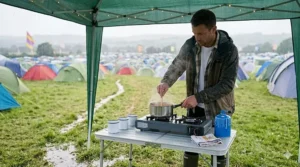
A camping stove for festivals transforms how you experience multi-day events. That £40 compact festival cooking equipment pays for itself after roughly four meals, leaving you with more funds for the actually important stuff—like tickets for next year, or that ridiculous light-up hat you absolutely don’t need but will definitely buy at 2am. Beyond the financial arithmetic, there’s something quietly satisfying about brewing proper coffee whilst your tent neighbours queue for overpriced instant. British weather being what it is—with the Met Office confirming that UK summers remain characteristically unpredictable—a hot meal when you’re damp and knackered becomes less luxury and more survival tool.
This guide examines the best portable stove for music festivals available to UK buyers in 2026, focusing on models that balance pack size, fuel efficiency, and the rather crucial matter of not getting confiscated at the gate. Portable camping stoves have evolved considerably over the past decade, with modern designs offering reliability and convenience that previous generations could only dream of. Whether you’re a Reading veteran or a Latitude first-timer, understanding which festival camping gear actually earns its space in your rucksack makes the difference between thriving and merely surviving.
Quick Comparison: Top Festival Camping Stoves at a Glance
| Stove Model | Weight | Power Output | Boil Time (1L) | Price Range | Best For |
|---|---|---|---|---|---|
| Campingaz Bleuet Connect | 214g | 1,250W | ~5min 23sec | £30-£45 | Budget-conscious solo campers |
| MSR PocketRocket 2 | 73g | 2,143W | ~3min 30sec | £30-£40 | Ultralight backpackers |
| Jetboil Flash | 371g (system) | 2,269W | ~1min 40sec | £100-£120 | Speed and convenience |
| Campingaz Camp Bistro | 276g | 2,200W | ~4min 30sec | £35-£50 | Balanced performance |
| Campingaz Twister Plus | 189g | 2,600W | ~3min 50sec | £25-£35 | High power, low price |
| Fire-Maple FMS-X2 | 318g (system) | 2,600W | ~3min 20sec | £40-£60 | Integrated cooking system |
| GREEN HAVEN Portable | 1.2kg (double) | 2,800W (2×1.4kW) | ~4min | £35-£50 | Group cooking |
From the comparison above, the MSR PocketRocket 2 offers exceptional power-to-weight ratio for solo festival campers who don’t fancy lugging extra grams across muddy fields. However, if you’re cooking for mates or prioritise speed over pack size, the Jetboil Flash justifies its higher price with blistering boil times—critical when you’re racing to catch a headliner. Budget buyers should note that the Campingaz Twister Plus delivers impressive wattage for under £35, though its flame control isn’t quite as refined as pricier options—a trade-off that stings less when you remember you’re essentially getting free breakfast for the weekend.
💬 Just one click — help others make better buying decisions too! 😊
Top 7 Camping Stoves for UK Festivals: Expert Analysis
1. Campingaz Bleuet Connect — The Reliable Festival Workhorse
The Campingaz Bleuet Connect represents that sweet spot between affordability and dependability that makes sense for UK festival circuits. At 214g and packing down to 14.5 x 10 cm, it disappears into your rucksack without complaint whilst delivering 1,250W of consistent heat—enough to boil water for coffee before the first band kicks off.
What genuinely stands out here is the Dual Lock Function, which addresses the rather pressing concern of cartridge safety in crowded campsites. The gas flow only opens when the lever’s properly engaged, and the cartridge refuses to budge until you’ve shut everything off. This isn’t marketing flannel—it’s the sort of thoughtful engineering that prevents the “I’ve accidentally released gas whilst trying to swap canisters in the dark” scenario that keeps festival first-aiders rather busy. The manual ignition means you’ll need matches or a lighter, but that’s hardly a dealbreaker when you’re saving £10-15 compared to piezo-equipped alternatives.
UK festivalgoers consistently praise its straightforward operation and rugged build. One reviewer mentioned using it through five consecutive festivals without a single hiccup, including a particularly sodden Download where most tents resembled paddling pools. The 90g/h gas consumption means a standard CV 470 Plus cartridge lasts roughly 5-6 hours of cooking time—comfortably covering a long weekend if you’re sensible about boiling only what you need.
Pros:
✅ Dual Lock safety system genuinely enhances peace of mind
✅ Compact pack size suits festival rucksacks
✅ Compatible with widely available Campingaz cartridges (CV 300 Plus and CV 470 Plus)
Cons:
❌ Manual ignition requires carrying separate lighter
❌ 1,250W output takes longer than high-power alternatives
Price & Verdict: In the £30-£45 range, the Bleuet Connect offers excellent value for first-time festival campers or anyone prioritising reliability over speed. It won’t win races, but it won’t let you down either.
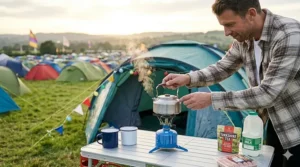
2. MSR PocketRocket 2 — The Ultralight Champion
The MSR PocketRocket 2 weighs 73g. That’s lighter than most smartphones and roughly the same as three AA batteries. For festival veterans who’ve learned that every gram counts when you’re trudging from car park to campsite in British drizzle, this stove represents minimalist camping done properly.
Despite its diminutive dimensions (collapses to 5 x 5 x 8 cm), the PocketRocket 2 punches well above its weight class with 2,143W output and a 3.5-minute boil time for one litre. The WindClip windshield—often overlooked but genuinely valuable—makes the difference between a proper flame and watching your heat disperse across a breezy Reading campsite whilst your pasta water sits there looking vaguely warm. MSR’s precision flame control ranges from aggressive boil to gentle simmer, useful when you’re attempting something more ambitious than instant noodles.
UK climbers and backpackers have been quietly favouring the PocketRocket series for years, and the second generation addresses the main criticism of the original: the folding pot supports now create an exceptionally compact packed size whilst accommodating wider vessels. One UK hillwalking reviewer noted the PocketRocket 2 survived seven years of mountain abuse before needing replacement—that’s around £4 per year if you’re keeping score.
The catch? It’s a canister-top design, meaning stability matters more than with separate-burner stoves. Flat ground becomes essential, and larger pots require extra caution. But for solo or duo festival camping where pack weight and fuel efficiency trump cooking for crowds, this stove earns its reputation.
Pros:
✅ Exceptionally lightweight at 73g (128g with protective case)
✅ WindClip windshield performs surprisingly well in British weather
✅ MSR build quality means years of reliable service
Cons:
❌ Canister-top design demands flat, stable surface
❌ Small burner head less efficient with larger pots
Price & Verdict: Around £30-£40 makes this outstanding value. If you’re backpacking to the festival site or cycling in, the weight savings alone justify the investment.
3. Jetboil Flash — The Speed Merchant
The Jetboil Flash takes a fundamentally different approach: rather than just heating a pot, it’s an integrated cooking system optimised for one thing—boiling water obscenely fast. The FluxRing heat exchanger technology directs combustion heat with ruthless efficiency, delivering 500ml of boiling water in roughly 100 seconds. That’s barely enough time to fish your coffee grounds from the bottom of your rucksack.
For UK festival camping, where mornings often involve waking up damp, cold, and questioning your life choices, the Flash’s speed transforms the experience. Push-button ignition works reliably (until it doesn’t, but more on that), and the 1-litre cooking cup clips directly onto the burner, preventing the “I’ve knocked over my breakfast” mishap that plagues separate pot-and-stove setups. The insulated cozy keeps water hot whilst you’re faffing about with tea bags, and the colour-changing heat indicator removes guesswork—though after your first use, you’ll know the 100-second drill by heart.
The system weighs 371g complete, making it heavier than ultralight alternatives but still reasonable for festival purposes. UK reviews consistently mention durability, with several owners reporting five-plus years of heavy use. The piezo ignition occasionally fails (particularly in damp British conditions), but the system works fine with a standard lighter when that happens.
Where the Flash stumbles: it’s genuinely brilliant at boiling water and adequately competent at heating ready meals, but proper cooking—frying eggs, simmering sauces—requires optional accessories and patience. It’s a boil-only system that excels within those constraints.
Pros:
✅ Blistering 100-second boil time for 500ml
✅ Integrated design prevents accidental spills
✅ Push-button ignition (when functional) beats fumbling for lighters
Cons:
❌ Limited cooking versatility without accessories
❌ Higher price point than basic stoves
Price & Verdict: In the £100-£120 range, the Flash isn’t cheap, but the combination of speed, convenience, and build quality makes it worthwhile for regular festival and camping use. If you’re primarily making hot drinks and rehydrating meals, it’s arguably the best option available.
4. Campingaz Camp Bistro — The All-Rounder
The Campingaz Camp Bistro occupies sensible middle ground: 2,200W output, 276g weight, and enough versatility to handle breakfast fry-ups alongside your standard boil-water duties. The single burner design keeps pack size manageable whilst the included carry case means you’re not shoving a bare stove into your festival bag alongside everything else.
What UK buyers particularly appreciate is the Camp Bistro’s stability. The base sits firmly on uneven ground—rather important when you’re setting up on a slight slope because the flat spots were claimed hours ago. The piezo ignition works reliably enough (though carrying backup matches remains wise), and flame control gives you proper adjustment range rather than just “off” and “volcanic.”
One UK reviewer mentioned using it weekly for car camping and occasional festival trips over three years without issues. The 2,200W output means you’re waiting roughly 4-5 minutes for a litre boil—not Jetboil territory, but perfectly adequate when you’re not in a rush. The pan support accommodates reasonably large cookware, making it viable for cooking actual meals rather than just heating water.
The Bistro runs on Campingaz CV cartridges, which are widely stocked across UK camping shops and supermarkets—useful when you’ve forgotten to pack spares and need emergency fuel Saturday morning. Amazon.co.uk typically offers Prime delivery on both the stove and compatible cartridges, solving the “I’ve left this to the last minute” problem.
Pros:
✅ Balanced performance across different cooking tasks
✅ Included carry case protects stove and simplifies packing
✅ Stable base design suits uneven festival ground
Cons:
❌ Heavier than ultralight alternatives at 276g
❌ Piezo ignition occasionally temperamental in damp conditions
Price & Verdict: Around £35-£50 positions this as excellent value for versatile festival cooking. It’s the stove for people who want one device that handles everything competently rather than excelling narrowly.
5. Campingaz Twister Plus — The Budget Power Play
The Campingaz Twister Plus delivers genuinely surprising performance for under £35. At 2,600W, it outmuscles stoves costing twice as much, boiling a litre in under four minutes whilst weighing just 189g. The catch? Flame control lacks the finesse of premium models, and build quality feels adequate rather than bombproof.
For UK festival campers prioritising bang-per-pound, the Twister Plus makes considerable sense. The included carry bag protects it during transport, and the compact dimensions (when folded) mean it doesn’t dominate your pack. One UK buyer mentioned taking it to Download, Reading, and several weekend camping trips over two seasons without failures—though the general consensus suggests treating it gently rather than expecting MSR-level durability.
The Twister Plus shines at its intended purpose: boiling water efficiently and cheaply. Attempting delicate simmering or precise temperature control reveals the limitations of its basic flame adjustment, but if your festival cooking centres around instant porridge, noodles, and coffee, those limitations rarely matter. It runs on widely available CV 470 Plus cartridges, and the screw connection feels secure enough for safe operation.
British weather testing reveals adequate wind resistance—not stellar, but functional when you’ve positioned the stove sensibly. The pan supports fold down tightly, though they occasionally require persuasion to lock properly when setting up. Given the price point, these minor irritations feel reasonable.
Pros:
✅ Outstanding power-to-price ratio at 2,600W for under £35
✅ Lightweight 189g won’t burden your festival pack
✅ Carry bag included despite budget pricing
Cons:
❌ Basic flame control limits cooking versatility
❌ Build quality adequate but not exceptional
Price & Verdict: In the £25-£35 range, the Twister Plus represents the best budget option for festival camping. It won’t last a decade, but it’ll comfortably see you through multiple festival seasons whilst costing less than a single day’s food vendor meals.
6. Fire-Maple FMS-X2 — The Integrated Alternative
The Fire-Maple FMS-X2 provides China-made competition to Jetboil’s dominance of integrated cooking systems, offering similar performance at notably lower prices. The 2,600W burner with piezo ignition sits beneath a heat-exchange pot, delivering 3-minute-20-second boil times for one litre whilst the system weight of 318g remains backpack-friendly.
UK buyers who’ve migrated from Jetboil often mention the FMS-X2’s surprisingly robust build quality and reliable ignition system. The pot support stand provides stability, and the included pot accommodates 0.8 litres—sufficient for solo festival camping or sharing coffee between two. One British reviewer used it throughout a soggy Glastonbury without issues, noting the pot’s heat retention kept drinks warm whilst they were faffing about with milk and sugar.
Where Fire-Maple distinguishes itself: price. You’re typically paying £40-£60 versus £100-plus for comparable Jetboil systems, making it appealing for festival campers who want integrated-system convenience without premium pricing. The trade-off comes in slightly less refined flame control and marginally slower boil times, though the differences are modest enough that you’d need side-by-side comparison to notice.
The system packs nested, with the burner stowing inside the pot alongside a gas canister—tidy organisation that festival campers appreciate when unpacking in semi-darkness. The pot includes measurement markings, removing guesswork from portion sizes.
Pros:
✅ Integrated system convenience at mid-range pricing
✅ Reliable piezo ignition and good build quality
✅ Nested storage keeps everything organised
Cons:
❌ Slightly slower than premium competitors
❌ Less established UK spare parts availability
Price & Verdict: Around £40-£60 makes this compelling for buyers wanting integrated-system benefits without Jetboil expense. It’s particularly suited to regular festival and camping use where the investment pays dividends across multiple trips.
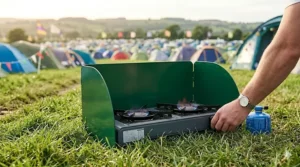
7. GREEN HAVEN Portable Double Burner — The Group Cooking Solution
The GREEN HAVEN Portable Double Burner takes a different approach entirely: forget ultralight minimalism, embrace cooking for your festival crew properly. With two 1,400W burners delivering 2,800W combined output, you can simultaneously boil water for coffee whilst frying breakfast—a genuine luxury when you’re feeding four mates who’ve emerged from their tents demanding sustenance.
At 1.2kg, this stove has no business pretending to be lightweight. It’s festival car camping equipment, designed for situations where you’re parked reasonably close to your pitch or don’t mind an extra kilo in exchange for proper cooking capability. The automatic piezo ignition works on both burners, individual flame control means you’re not stuck with “everything on full blast,” and the enamel pan supports accommodate larger cookware without wobbling.
UK buyers mention its utility for group festival trips, family camping, and car-based adventures where weight matters less than functionality. The included carry case protects the stove and keeps gas canisters organised, whilst the EN417 compliance means compatibility with widely available butane cartridges. Several UK reviews note using it for caravan and campervan trips, appreciating the two-burner convenience.
The catch—beyond weight—is setup space. You’ll need a stable surface and reasonable clearance, making this less suitable for cramped festival campsites. But if you’ve secured decent pitch space or are cooking in designated areas, the double-burner advantage transforms meal preparation from tedious sequential cooking to efficient parallel processing.
Pros:
✅ Two burners enable proper multi-dish cooking
✅ Stable design suits group camping scenarios
✅ Individual burner controls offer cooking flexibility
Cons:
❌ 1.2kg weight unsuitable for backpack camping
❌ Larger footprint requires adequate setup space
Price & Verdict: Around £35-£50 represents excellent value for group festival camping where car access makes weight irrelevant. It’s the stove for people who’ve realised cooking together beats everyone fending for themselves.
Understanding UK Festival Stove Regulations and Safety
British festivals maintain varying policies on camping stoves, creating occasional confusion for first-time festivalgoers. The general principle: most UK music festivals allow small portable gas stoves in camping areas whilst banning them in arena spaces, car parks, and certain designated tent zones. According to The British Mountaineering Council’s safety guidelines, the majority of UK campsites allow portable gas stoves (Campingaz, Coleman, Jetboil, Go System, Trangia) to be used on or beside your pitch, though some sites require stoves to be used on a table rather than on the ground to protect grass and reduce fire risk.
Before packing your festival camping cooker, verify the specific event’s terms and conditions. Download, Reading, Leeds, and most major festivals permit gas stoves with capacity restrictions—typically limiting individual canisters to 450g maximum. Glastonbury follows similar guidelines whilst emphasising sustainable practices. According to UK Government fire safety guidance, some smaller festivals ban liquid fuel stoves entirely (petrol, paraffin, methylated spirits) due to spillage risks in crowded camping areas, whilst welcoming sealed gas cartridge systems.
Critical Safety Requirements
Carbon Monoxide Awareness: Any stove that burns fuel produces carbon monoxide. According to NHS guidelines on carbon monoxide poisoning, if used in a poorly ventilated tent or bothy, this gas can quickly reach dangerous levels. Never cook inside enclosed tents. The temptation to boil water inside during downpours must be resisted—British festivals regularly see carbon monoxide incidents, and the symptoms (dizziness, headache, nausea) can escalate rapidly. Always maintain proper ventilation and cook outside or in well-aired porch areas.
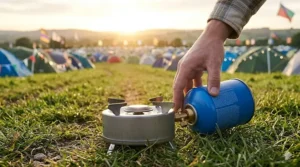
Stability and Positioning: Festival camping involves uneven ground, foot traffic, and occasional inebriated stumbling. Position your stove on stable, level surfaces away from tent fabric and foot paths. Canister-top stoves (PocketRocket, Bleuet Connect) become top-heavy with pots attached—exercise extra caution when boiling larger volumes. Many UK festivals now encourage or require raised stove platforms, protecting grass whilst improving stability.
Fuel Cartridge Management: Empty gas canisters must never be discarded in general waste bins. Many festivals provide specific cartridge disposal points, but carrying empties home remains safest. Partially used canisters should be transported upright in your vehicle, never left in hot cars for extended periods. Empty gas canisters should never be left at the campsite or thrown in general waste bins. They are recyclable as steel/aluminium at recycling centres.
How to Choose the Right Festival Camping Stove for UK Weather
British festival season coincides with our famously unpredictable climate, where blazing sunshine Saturday transforms into biblical downpour Sunday without apology. Your portable stove for music festivals needs accommodation of these conditions rather than merely tolerating them.
1. Wind Resistance Matters More Than Brochures Suggest
Specifications rarely mention the reality of cooking in a breezy field at 7am whilst trying to caffeinate before the headache intensifies. Stoves with integrated windshields (MSR PocketRocket 2’s WindClip) or lower burner profiles (Campingaz Camp Bistro) maintain consistent flame performance when British weather decides to be characteristically unhelpful. Canister-top designs without wind protection become frustratingly inefficient, converting your fuel into heat that simply disperses across the campsite whilst your water sits there looking lukewarm.
2. Fuel Efficiency Determines Weekend Viability
Festival camping typically spans 3-4 days, requiring adequate fuel capacity without lugging multiple canisters. Calculate realistically: boiling 2 litres daily (morning coffee, lunch noodles, evening meal) consumes roughly 50-70g of gas on efficient stoves. A standard 450g cartridge should comfortably cover a long weekend, with margin for the inevitable extra brews. Less efficient stoves might require backup canisters, adding weight and cost.
3. Pack Size Versus Cooking Versatility
Solo festival campers prioritise compact dimensions—the MSR PocketRocket 2’s minuscule footprint disappears into any pack corner. Groups benefit from larger, more versatile options like the Campingaz Camp Bistro or double-burner systems that enable proper meal preparation. Consider your typical festival cooking: primarily rehydrating meals and boiling water suits compact systems, whilst attempting fry-ups and multi-dish cooking demands more substantial equipment.
4. Ignition Reliability in Damp Conditions
British festival mornings frequently involve condensation-drenched tents and general dampness. Piezo ignition systems sometimes struggle in these conditions—not a dealbreaker if you’re carrying backup matches or lighter, but worth considering. Manual ignition stoves (Campingaz Bleuet Connect) sidestep this entirely whilst typically costing less. When purchasing camping equipment in the UK, ensure products meet current safety standards—the Trading Standards website provides guidance on consumer rights and product safety requirements.
5. Spare Parts and Fuel Availability
Choosing stoves that use widely available Campingaz CV cartridges (most UK camping shops, some supermarkets) beats relying on specialist canisters requiring online ordering. Emergency fuel purchases become straightforward when you’ve forgotten spares or underestimated consumption.
Festival Camping Stove Setup: First-Timer’s Practical Guide
Successfully operating a camping stove for festivals involves more than simply attaching a canister and hoping for the best. Here’s what UK festivalgoers learn through experience—often after a few preventable mishaps.
Before You Leave Home
Test Everything: Assemble your stove completely at home, ensuring all components fit properly and ignition works. This prevents the “I can’t figure out this connection in the dark after six pints” scenario that leaves you eating cold beans Friday night.
Pack Backup Ignition: Even reliable piezo ignition occasionally fails. Waterproof matches in a sealed container or a standard lighter provides insurance against temperamental systems or damp conditions.
Pre-Plan Meals: Knowing exactly what you’ll cook determines cookware requirements and fuel needs. Festival cooking rewards simplicity—porridge, noodles, pasta, rehydrated camping meals—over ambitious culinary projects.
At the Festival Site
Choose Your Cooking Spot Wisely: Position your stove away from tent entrances, foot traffic, and synthetic fabric. Flat, stable ground matters more than convenience—walking an extra five metres beats dealing with spilled boiling water.
Create a Cooking Station: A small folding table or dedicated ground mat defines your cooking area, keeping stove, utensils, and food organised. This also satisfies festival sites requiring elevated cooking rather than ground-level operation.
Fuel Management: Store gas canisters upright in shade, never inside tents or enclosed spaces. Morning sun heats canisters rapidly, affecting pressure and performance. Partially used canisters should be securely attached to prevent leakage.
Operating Safely
Pre-Ignition Check: Before lighting, verify stable placement, clear surroundings, and proper canister attachment. Loose connections cause gas leaks—you’ll smell them immediately if present.
Wind Assessment: Even gentle breezes substantially affect efficiency. Position your body or backpack as makeshift windbreak, or relocate to more sheltered spots for better performance.
Constant Supervision: Never leave operating stoves unattended. Festival campsites involve unpredictable movement—children, dogs, inebriated stumbling—that can rapidly escalate into emergencies.
Common Festival Camping Stove Mistakes (And How to Avoid Them)
Mistake 1: Overfilling Pots on Small Stoves
Canister-top designs become dangerously unstable when supporting heavy, full pots. Limit to two-thirds capacity maximum, boiling in multiple batches if necessary. The five minutes you save isn’t worth scalding injuries or ruined equipment.
Mistake 2: Ignoring Fuel Cartridge Compatibility
Not all cartridges fit all stoves despite looking similar. CV threaded cartridges (Campingaz) differ from EN417 screw-thread designs. Verify compatibility before purchasing, avoiding the “I’ve bought wrong cartridges and shops are 20 miles away” predicament.
Mistake 3: Cooking Inside Tents
Bears repeating: never cook inside enclosed tents, regardless of weather conditions. Carbon monoxide accumulation occurs rapidly in confined spaces, and symptoms appear gradually enough that you won’t realise danger until potentially too late. Pitch a tarp if rain makes outdoor cooking impossible, ensuring adequate ventilation.
Mistake 4: Neglecting Stove Maintenance
Post-festival cleaning prevents future failures. Remove food residue, check burner jets for blockages, and verify O-rings remain intact. Proper storage (dry, protected location) extends lifespan substantially.
Mistake 5: Underestimating Fuel Requirements
New festival campers frequently pack insufficient gas, running out Sunday morning and resorting to expensive festival food. Calculate conservatively: 100g per day covers most solo cooking, whilst groups need proportionally more.
Festival Camping Stove vs Traditional Alternatives
Gas Stoves vs Disposable BBQs
Disposable barbecues tempt festival campers with simplicity and novelty, but practical realities favour gas stoves overwhelmingly. Single-use BBQs provide roughly 90 minutes cooking time, cost £5-8 each, generate substantial waste, and require careful disposal (many festivals ban them entirely). A £35 gas stove with £5 cartridge delivers days of cooking, packs smaller, ignites instantly, and eliminates disposal concerns.
Gas Stoves vs Solid Fuel Tablets
Solid fuel systems (Esbit, hexamine tablets) offer ultralight simplicity but suffer critical limitations for festival use. Slow heating times, sooty cookware, fumes that cling to everything, and minimal flame control make them suitable for emergency backup rather than primary cooking. Gas stoves provide vastly superior convenience and performance.
Gas Stoves vs Multi-Fuel Expedition Stoves
Liquid fuel stoves (Primus OmniFuel, MSR WhisperLite) excel in extreme conditions and remote locations where canister gas availability becomes unreliable. For UK festivals with petrol stations nearby, their advantages—fuel flexibility, cold-weather performance—matter less whilst disadvantages—weight, complexity, priming requirements, maintenance—become burdensome. The Camping and Caravanning Club, the UK’s longest-established camping organisation, recommends simple gas stoves for recreational camping and festival use, reserving multi-fuel investments for genuine expeditions.
Long-Term Value: Cost Analysis of Festival Camping Cooking
Initial Investment vs Festival Food Savings
Let’s examine the financial arithmetic. A mid-range camping stove for festivals (£40) plus initial gas cartridge (£5) and basic cookware (£15) totals £60 upfront investment. Compare this against typical UK festival food costs:
- Breakfast: £8-10 (full English or equivalent)
- Lunch: £10-12 (burger, wrap, or similar)
- Dinner: £12-15 (main meal)
- Daily total: £30-37 per person
Over a typical 4-day festival weekend, food vendors extract £120-£150 from your wallet. Your £60 stove investment plus £10 of ingredients (porridge, pasta, noodles, coffee) delivers identical nutrition for £70 total—saving £50-£80 on your first festival. Subsequent festivals add only fuel costs (£5-8 per weekend), meaning the stove pays for itself immediately whilst continuing to save money indefinitely.
Maintenance and Replacement Costs
Quality stoves (MSR, Jetboil, Campingaz) typically last 5-10 years with basic maintenance. Budget models might require replacement after 2-3 seasons, but even then, you’re spreading that £30-40 cost across multiple festivals. Fuel cartridges represent your ongoing expense—roughly £5-8 per festival weekend for solo camping, £10-15 for groups.
Hidden Value: Flexibility and Freedom
Beyond pure cost savings, owning a portable stove for music festivals provides scheduling freedom. You’re not constrained by food vendor hours, queue lengths, or limited menu options. Breakfast at 6am because you’re awake? No problem. Midnight noodles after the headliner? Sorted. This flexibility proves particularly valuable at larger festivals where food queues can consume 30-60 minutes of prime festival time.
Preparing Your First Festival Camping Meal: A Realistic Guide
Your festival camping cooker won’t magically transform you into a gourmet chef, and attempting elaborate cooking in a muddy field whilst sleep-deprived rarely ends well. Success comes from embracing simplicity whilst optimising for efficiency and nutrition.
Breakfast: The Foundation Meal
Option 1: Instant Porridge — Boil water (3-4 minutes), add oats, wait 2 minutes. Total time: 6 minutes. Add dried fruit, honey, or peanut butter for enhanced calories. Requires only one pot and minimal cleanup.
Option 2: Coffee and Bagels — Pre-packed bagels with spreads require no cooking, whilst your stove handles coffee duties. British festival mornings demand proper coffee, not the tepid brown water that passes for it at vendor stalls.
Lunch: Minimal Effort, Maximum Effect
Instant Noodles Elevated — Standard ramen becomes substantially better with added ingredients. Boil water, add noodles and flavour packet, throw in pre-cooked sausage or boiled eggs. Five-minute meal that actually satisfies.
Couscous Meals — Boiling water over couscous creates edible food in roughly 5 minutes. Pre-mix dried vegetables, spices, and stock cubes at home, then add boiling water at festival. Requires only one pot, minimal stirring.
Dinner: Actually Cooking
Pasta Simplicity — Boil water, add pasta (8-12 minutes), drain, add jarred sauce or butter and cheese. Feeds multiple people with one large pot. Pre-grate cheese at home to eliminate festival-field faffing.
Ready Meal Heating — Supermarket ready meals in boil-in-bag packaging heat in 10-15 minutes. Less romantic than “proper” cooking, substantially more reliable than attempting complex recipes in challenging conditions.
Pro Tips for Festival Cooking Success
- Pre-portion everything at home: Measuring ingredients in a tent at midnight rarely goes well
- Use sealable containers: Ziploc bags prevent spills and keep food organised
- Bring pre-cooked proteins: Supermarket cooked chicken, sausages, or hard-boiled eggs add substance without festival cooking complexity
- Clean as you go: Washing single pot immediately beats dealing with hardened food residue later
Environmental Considerations: Sustainable Festival Camping
British festivals increasingly emphasise environmental responsibility, with organisers and attendees recognising that leaving muddy fields worse than you found them isn’t particularly clever. Your festival camping gear choices contribute to—or detract from—these efforts.
Reusable Equipment vs Disposable Alternatives
Gas camping stoves represent the sustainable choice compared with disposable barbecues, single-use camping equipment, or relying entirely on vendor-provided food with associated packaging waste. A properly maintained stove lasts years, using refillable gas cartridges that UK recycling centres accept (after puncturing safely).
Fuel Cartridge Recycling
Empty Campingaz and compatible cartridges qualify as steel/aluminium recycling. According to Recycle Now (UK government recycling guidance), many UK recycling centres accept them in metal bins, though you’ll need to confirm locally. Some camping shops run return schemes for used cartridges, providing small discounts on new purchases. Never bin cartridges with general waste—pressurised containers create legitimate hazards in waste processing.
Reducing Festival Food Packaging
Cooking your own meals dramatically reduces packaging waste compared with vendor food. Pre-portioning ingredients in reusable containers eliminates the streams of clamshell containers, disposable cutlery, and wrappers that characterise festival eating. Glastonbury and similar events now incentivise reusable dishware, making your camping stove for festivals part of a broader sustainable approach.
Responsible Washing Up
Festival camping doesn’t excuse environmental laziness with washing up. Carry waste water away from tents and dispose at designated points rather than pouring grey water onto grass. Use biodegradable washing-up liquid sparingly, and consider dry-wiping plates before washing to minimise detergent requirements.
Troubleshooting: When Your Festival Stove Won’t Cooperate
Problem: Stove Won’t Ignite
Diagnosis: Piezo ignition failure, empty cartridge, loose connection, or blocked jet.
Solution: First, verify cartridge is properly attached and contains fuel (shake gently—liquid slosh indicates fuel remains). Try manual ignition with lighter or matches. If that fails, check burner jet for blockages using the cleaning needle included with most stoves. Persistent failures suggest damaged piezo mechanism—not fixable at festivals, hence the importance of backup ignition.
Problem: Weak Flame/Low Heat Output
Diagnosis: Near-empty cartridge, cold temperatures affecting gas pressure, or partially blocked jet.
Solution: Cold morning temperatures reduce canister pressure. Warm the cartridge in your sleeping bag for 10 minutes before use—body heat increases internal pressure substantially. If flame remains weak with warm cartridge, you’re likely running on fumes. Swap for fresh cartridge rather than struggling inefficiently.
Problem: Excessive Wind Interference
Diagnosis: Exposed cooking location with inadequate wind protection.
Solution: Reposition to sheltered area behind tents, vehicles, or natural windbreaks. Create makeshift shields using backpacks or sitting cross-legged as human windbreak. Consider fashioning aluminum foil windshield if you’ve brought spare (wrapping loosely around stove base whilst maintaining adequate ventilation).
Problem: Uneven Heating/Flame Pattern
Diagnosis: Tilted stove, damaged burner, or debris in jet.
Solution: Ensure stove sits level—even minor tilts affect flame distribution. Remove burner head and inspect for damage or blockages. Most stoves include multi-tools with cleaning needles specifically for clearing jets. Regular maintenance prevents this entirely.