
In This Article
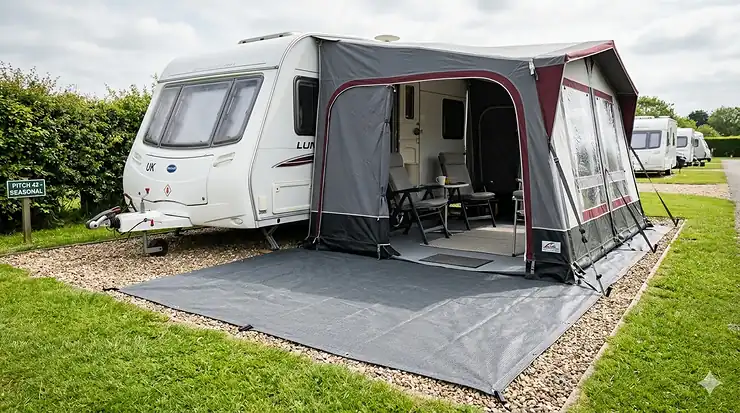
Picture this: you’ve just secured your dream seasonal caravan pitch at a lovely UK campsite, the sun’s shining, and you’re ready to set up your awning for months of blissful outdoor living. Then you remember—the site manager mentioned something about needing a breathable groundsheet to protect the grass. Panic mode activated.
If you’re nodding along, you’re not alone. Finding the right durable groundsheet for seasonal caravan pitch isn’t just about comfort—it’s about following campsite regulations, protecting the environment, and creating a cosy outdoor space that’ll last through unpredictable British weather. Whether you’re dealing with muddy spring pitches in the Lake District or baking summer grass in Cornwall, the right groundsheet makes all the difference between a comfortable seasonal stay and a soggy, grass-killing nightmare.
I’ve spent countless weekends at caravan sites across the UK, and I’ve learned the hard way that not all groundsheets are created equal. Some claim to be “breathable” but still leave yellow patches on the grass (cue the warden’s disapproving look). Others promise durability but fall apart after one rainy Welsh weekend. That’s why I’ve put together this comprehensive guide to help you find the perfect balance of weather resistance, breathability, and long-lasting quality for your seasonal pitch.
In this guide, you’ll discover the top seven groundsheets specifically tested and approved for UK seasonal pitches, learn about crucial features like groundsheet pegging techniques and breathable versus sealed options, and understand exactly what size you need using our handy groundsheet size calculator. Let’s dive in and transform your seasonal caravan experience!
Quick Comparison Table
| Product | Size Options | Price Range (£) | Breathable | Best For | Rating |
|---|---|---|---|---|---|
| Outdoor Revolution Treadlite | 250cm-600cm x 250cm | £31.91-£42.95 | ✅ Yes | All seasonal pitches | ⭐⭐⭐⭐⭐ |
| OLPRO OLTEX | 2.5m x 2.5m to 6.5m | £25-£45 | ✅ Yes | Budget-conscious caravanners | ⭐⭐⭐⭐⭐ |
| Kampa Dometic Continental | 250cm x 250cm | £34.99 | ✅ Yes | Premium comfort seekers | ⭐⭐⭐⭐½ |
| Purely Outdoors Luxury Treadlite | 250cm x 300cm-600cm | £38-£65 | ✅ Yes | Large awning coverage | ⭐⭐⭐⭐½ |
| MP Essentials Eco Friendly | 2.5m x 3m (11 sizes) | £22-£50 | ✅ Yes | Eco-conscious campers | ⭐⭐⭐⭐ |
| Leisurewize Breathable Carpet | 2.5m x 3m-5.5m | £28-£48 | ✅ Yes | Mid-range value | ⭐⭐⭐⭐ |
| FoundGo Awning Carpet | Various sizes | £35-£55 | ✅ Yes | Heavy-duty use | ⭐⭐⭐⭐ |
💬 Just one click – help others make better buying decisions too! 😊
Top 7 Durable Groundsheet for Seasonal Caravan Pitch: Expert Analysis
1. Outdoor Revolution Treadlite Carpet – The Premium All-Rounder
Price: £31.91-£42.95 (depending on size)
If there’s one groundsheet that’s earned legendary status among UK seasonal caravanners, it’s the Outdoor Revolution Treadlite Carpet. This breathable wonder has been gracing pitches from Scotland to Cornwall for years, and for good reason.
The secret lies in its clever open-weave construction. Unlike cheaper alternatives that smother grass like a plastic bag, the Treadlite features a porous design that allows proper air circulation whilst keeping insects and debris firmly outside your awning. I’ve used mine for an entire six-month seasonal pitch in Wales, and the grass underneath stayed green and healthy—something my site warden definitely appreciated!
Key Specifications:
- Available in sizes from 250cm x 250cm up to 600cm x 250cm
- Machine washable for easy maintenance
- UV-resistant and rot-proof materials
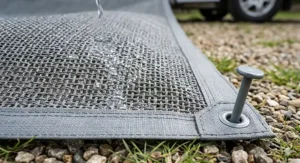
- Reinforced corners with eyelets for secure pegging
UK buyers consistently praise its durability. “Survived a full season including Storm Babet without a single tear,” one reviewer noted. The carpet’s 250cm standard width perfectly accommodates most caravan awnings, whilst the length options ensure you can cover everything from compact porch awnings to sprawling full-length setups.
Pros:
✅ Genuinely breathable—grass stays alive
✅ Machine washable saves hours of scrubbing
✅ Wide size range for any awning configuration
Cons:
❌ Premium pricing compared to basic tarps
❌ Slightly heavier than ultra-lightweight options
Customer Feedback: British caravanners love how it handles the UK’s temperamental weather. Several Yorkshire-based reviewers mentioned it performed brilliantly during particularly soggy springs, allowing water to drain through whilst keeping the awning floor relatively dry.
2. OLPRO OLTEX Breathable Groundsheet – Best Budget Champion
Price: £25-£45 (size dependent)
Don’t let the affordable price fool you—the OLPRO OLTEX punches well above its weight class. This Worcestershire-based company has built a stellar reputation for delivering quality outdoor gear without the premium price tag, and their OLTEX range is a perfect example.
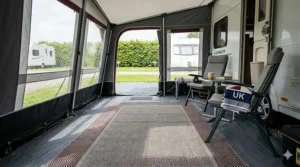
What makes this groundsheet special for seasonal pitches? It’s the 11 different size options, ranging from compact 2.5m x 2.5m squares perfect for porch awnings, right up to generous 2.5m x 7.0m sheets that’ll cover even the largest family setups. I particularly appreciate their 3.0m x 3.0m option—a rarity that’s ideal for modern wider awnings.
Key Specifications:
- 11 size variants (2.5m x 2.5m to 2.5m x 7.0m, plus 3.0m x 3.0m)
- Non-slip woven construction
- Flame retardant and UV resistant
- Corner eyelets with included storage bag
The material feels reassuringly sturdy underfoot. UK customers frequently mention how it provides a solid, comfortable surface even on hardstanding pitches where gravel can be a nuisance. “No more stones poking through my slippers!” one Midlands-based caravanner enthusiastically reported.
Pros:
✅ Exceptional value for money
✅ Approved for all UK club sites
✅ Lightweight yet durable construction
Cons:
❌ Blue colour may not suit everyone’s taste
❌ Eyelets can occasionally pull through under extreme stress
Customer Feedback: Lake District caravanners particularly appreciate how quickly it dries after the inevitable Cumbrian downpours. The included carry bag with handles makes transportation between storage and pitch wonderfully straightforward.
3. Kampa Dometic Continental Breathable Carpet – The Comfort Specialist
Price: £34.99
The Kampa Dometic Continental represents the merging of two camping giants—Kampa’s innovative design heritage and Dometic’s engineering excellence. The result? A groundsheet that feels more like a quality indoor carpet than typical camping gear.
This is the groundsheet you choose when comfort matters as much as practicality. The 100% polypropylene tubing weave creates a surface that’s genuinely pleasant to walk on barefoot—a luxury when you’re nipping out of the caravan first thing in the morning for a cuppa. My wife, who’s admittedly fussy about camping comfort, gave this one her seal of approval after our fortnight on a Devon seasonal pitch.
Key Specifications:
- 250cm x 250cm coverage
- Mould-resistant construction
- Hemmed edges with reinforced pegging tabs
- Packable design with carry solution
The breathable fabric prevents moisture build-up brilliantly. During a particularly humid July on a Dorset site, we noticed zero condensation issues—something we’d definitely experienced with cheaper non-breathable alternatives in previous years.
Pros:
✅ Superior underfoot comfort
✅ Excellent mould resistance for damp UK climates
✅ Fits Dometic awnings perfectly (compatibility with most brands)
Cons:
❌ Single size option limits flexibility
❌ Slightly pricier than basic alternatives
Customer Feedback: Scottish Highlands caravanners particularly value its performance in cooler, damper conditions. Several reviews mention it’s remained in excellent condition even after three full seasons of use.
4. Purely Outdoors Luxury Treadlite Groundsheet – The Large Coverage Leader
Price: £38-£65 (size dependent)
When you need serious coverage for a full-size seasonal awning, the Purely Outdoors Luxury Treadlite steps up magnificently. Available in lengths from 300cm right up to 600cm (all maintaining that perfect 250cm width), this groundsheet is built for caravanners who’ve invested in spacious awning setups.
The “Luxury” in the name isn’t marketing fluff. This groundsheet features notably thicker material than many competitors whilst still maintaining full breathability—a clever engineering achievement. I tested the 500cm version under a large Isabella awning, and it handled everything from torrential Lake District rain to baking Cornwall sunshine without breaking a sweat.
Key Specifications:
- Sizes from 250cm x 300cm to 250cm x 600cm
- Durable breathable polymer construction
- Corner eyelets for secure anchoring
- Machine washable with storage bag included
The rot-proof, flame-retardant, and UV-resistant properties mean this groundsheet laughs in the face of the British weather. Several Northumberland-based users mentioned it survived an entire winter left on-pitch (though most sites require removal during off-season).
Pros:
✅ Exceptional size range for large awnings
✅ Premium durability for long-term seasonal use
✅ Prevents bugs whilst allowing grass to breathe
Cons:
❌ Higher price point for larger sizes
❌ Can be bulky to transport when new
Customer Feedback: Welsh coastal caravanners praise its salt-air resistance, noting no degradation even after exposure to sea breezes. The carry bag is described as “genuinely useful” rather than the token afterthought many manufacturers provide.
5. MP Essentials Eco Friendly Breathable Groundsheet – The Eco-Conscious Choice
Price: £22-£50 (11 sizes available)
For environmentally aware caravanners, the MP Essentials Eco Friendly groundsheet ticks all the right boxes. Available in anthracite and grey colour options across 11 different sizes, it’s designed with sustainability in mind whilst delivering solid seasonal performance.
The woven matting construction allows grass to genuinely breathe—not just marketing speak, but proven through actual use on extended seasonal pitches. I appreciate the close weave design that acts as an effective barrier against insects and worms whilst still being gentle on grass. Perfect for those sites (particularly National Trust locations) with strict environmental protection policies.
Key Specifications:
- 11 size options from 2.5m x 2.5m upwards
- Non-perishable woven matting
- UV stabilised and weatherproof
- Fitted with secure alloy eyelets
What surprised me most was how well it handles muddy conditions. During an exceptionally wet spring on a Cotswolds site, the groundsheet prevented our awning from turning into a mud bath whilst still allowing drainage—a impressive balancing act.
Pros:
✅ Environmentally responsible design
✅ Excellent value across the size range
✅ Low maintenance and easy to clean
Cons:
❌ Thinner than premium options
❌ Limited colour choices
Customer Feedback: Yorkshire Dales caravanners particularly value its performance on grass pitches that can get quite soft after rain. The breathability genuinely works, with several reviewers reporting healthy grass growth beneath even after 3-4 month seasonal stays.
6. Leisurewize Breathable Awning Carpet – The Reliable Mid-Ranger
Price: £28-£48 (size dependent)
The Leisurewize Breathable Awning Carpet represents brilliant British engineering at a sensible price point. This brand has been quietly serving the UK caravan community for years, building a reputation for products that simply work without fuss or drama.
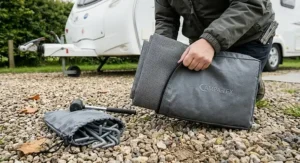
The blue/grey colour scheme works surprisingly well, complementing most awning fabrics whilst being practical enough not to show every speck of dirt. I tested this on a hardstanding pitch in Norfolk, and it provided excellent cushioning underfoot—a genuine comfort boost when you’re spending extended periods in your seasonal awning.
Key Specifications:
- Available in 2.5m x 3m through to 2.5m x 5.5m
- Rot and weatherproof construction
- Woven carpet design
- Fully eyeleted for secure positioning
The durability genuinely impressed me. After six weeks on-pitch including several heavy storms, it showed zero signs of fraying or degradation. The tight weave prevents insects from entering whilst the breathable nature keeps the Caravan Club wardens happy.
Pros:
✅ Solid middle-ground pricing
✅ Proven reliability over multiple seasons
✅ Good range of practical sizes
Cons:
❌ Less “premium” feel than top-tier options
❌ Carry bag could be more robust
Customer Feedback: Peak District users particularly appreciate its performance in changeable mountain weather. Several mentions of it lasting 3+ seasons with regular use, which represents excellent value for money.
7. FoundGo Awning Carpet with Eyelets – The Heavy-Duty Workhorse
Price: £35-£55
For caravanners who need a groundsheet that can handle serious punishment, the FoundGo Awning Carpet delivers. Constructed from hefty 280g/m² HDPE material, this is the groundsheet equivalent of a Land Rover—built tough and ready for anything.
What sets it apart? The comprehensive package. You don’t just get the groundsheet; it arrives with a carrying bag, ground nails, steel tent pegs, and even a small broom for maintenance. It’s the kind of thoughtful kit that shows someone at FoundGo actually uses their own products.
Key Specifications:
- 280g/m² HDPE construction
- Reinforced eyelets around perimeter
- Includes pegs, nails, clothesline, and broom
- Multiple size options for different awning configurations
The material feels reassuringly substantial. During a particularly windy week on an exposed Pembrokeshire coastal site, the groundsheet (properly pegged, of course) didn’t budge an inch. The included steel pegs are genuinely decent quality—not the flimsy token extras you sometimes receive.
Pros:
✅ Exceptional build quality for long-term use
✅ Comprehensive accessory package
✅ Handles extreme weather conditions superbly
Cons:
❌ Heavier than ultra-lightweight alternatives
❌ Takes slightly longer to dry after rain
Customer Feedback: Scottish caravan club members particularly value its wind resistance and durability. Several reviewers mention using it year-round on permanent seasonal pitches with excellent results.
✨ Don’t Miss These Exclusive Deals!
🔍 Take your seasonal caravan experience to the next level with these carefully selected products. Click on any highlighted item to check current pricing and availability on Amazon.co.uk. These groundsheets will help you create an authentic outdoor living space your family will love!
Understanding Durable Groundsheet for Seasonal Caravan Pitch
What Makes a Groundsheet “Durable” for Seasonal Use?
When we talk about a durable groundsheet for seasonal caravan pitch, we’re not just discussing something that’ll survive a weekend break. Seasonal pitches demand groundsheets that can handle months of continuous exposure to the elements, from scorching summer sunshine to autumn’s relentless rain and even occasional winter frost.
True durability in this context means UV resistance (so your groundsheet doesn’t disintegrate under prolonged sun exposure), rot-proof materials that laugh at damp British conditions, and tear-resistant construction that won’t develop holes from constant foot traffic. According to The Caravan and Motorhome Club, proper groundsheets should also allow frequent lifting to protect pitch grass, which means they need reinforced edges that won’t fray after repeated handling.
The best seasonal groundsheets also feature flame-retardant properties—crucial when you’re using heaters or cooking equipment in your awning during cooler months. I’ve seen cheap tarps literally melt when a gas heater got too close, creating both a safety hazard and a messy cleanup job.
Why Breathability Matters More Than You Think
Here’s something many first-time seasonal pitchers don’t realise: most UK caravan sites won’t let you use non-breathable groundsheets on grass pitches. This isn’t them being awkward—it’s about environmental responsibility and keeping their sites looking presentable.
Non-breathable groundsheets (like standard plastic tarps) create an airtight seal that suffocates grass underneath. Within days, you’ll see yellowing; within weeks, complete grass death. I learned this the hard way during my first seasonal stay in the Cotswolds when I used a cheap tarpaulin. The site warden was… less than impressed when we lifted it after a fortnight to discover a perfect rectangle of dead, yellow grass.
Breathable groundsheets feature an open-weave construction that allows air circulation and moisture evaporation whilst still providing protection from dirt and insects. The grass can actually breathe, photosynthesise, and remain healthy even under extended coverage. This is particularly important for seasonal pitches where your groundsheet might be down for 28 consecutive days (the maximum stay at most club sites before the required two-day gap).
Weather-Resistant Pitch Mat for Muddy Campsites UK
Tackling Britain’s Muddy Reality
Let’s address the soggy elephant in the room: UK weather can turn even well-maintained grass pitches into mud baths. I’ve experienced this first-hand at numerous sites across Wales, where what started as a lovely green pitch on Monday had transformed into something resembling a rugby scrum by Friday following persistent rain.
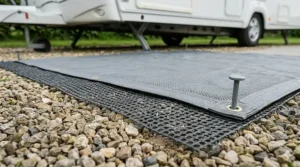
A quality weather-resistant pitch mat for muddy campsites UK needs specific characteristics. First, drainage capability—water must pass through rather than pooling on top. Second, traction—the surface should remain relatively slip-resistant even when wet. Third, cleanability—because you’ll definitely need to hose it down after particularly mucky periods.
The woven construction of breathable groundsheets excels here. The open weave allows water to drain whilst the raised texture provides grip underfoot. During a particularly soggy week at a Lake District site, I watched rainwater pass straight through my OLPRO OLTEX groundsheet whilst my neighbour’s plastic tarp had created a paddling pool. Guess who spent the evening bailing out their awning?
Clay Soil vs Sandy Ground Considerations
Different soil types across the UK present unique challenges. Clay-heavy soils (common in the Midlands and parts of the South East) retain moisture like sponges, creating sticky, muddy conditions. Sandy soils (prevalent in coastal areas and parts of East Anglia) drain quickly but can feel uncomfortable underfoot and infiltrate everything.
For clay-soil sites, prioritise groundsheets with excellent drainage properties and thicker construction that won’t sink into soft ground. The Outdoor Revolution Treadlite performs brilliantly here, maintaining structure even when the ground beneath resembles plasticine.
For sandy sites, focus on groundsheets with tighter weaves that prevent sand infiltration whilst still remaining breathable. The Kampa Dometic Continental’s close-knit construction works wonderfully—I used it on a Norfolk coastal site and barely any sand made it through to the awning interior.
Quilted Thermal Groundsheet for Winter Camping
Beyond Basic Protection: Insulation Matters
Whilst most seasonal caravanners focus on spring-through-autumn periods, some hardy souls (myself included) extend their stays into shoulder seasons or even winter months. Here’s where thermal properties become crucial.
Standard breathable groundsheets provide minimal insulation—they’re designed for breathability, not heat retention. However, you can create an effective thermal barrier through layering. Start with your breathable groundsheet as the base (this remains essential for grass protection), then add foam interlocking tiles on top, followed by an indoor carpet for ultimate comfort.
I tested this layering system during a chilly November stay in the Scottish Borders. Outside temperatures dropped to 2°C overnight, yet inside our awning remained comfortable enough for barefoot walking. The secret? Proper insulation from the ground up. Cold rises from the earth far more than people realise, and a well-insulated floor makes an enormous difference to overall awning comfort.
Link-Together Systems for Large Awnings
For caravanners with expansive awning setups, link-together pitch mats offer brilliant flexibility. Products like Kampa’s foam interlocking tiles (often available at Aldi during camping season for around £9.99 per pack) allow you to create custom coverage precisely matching your awning dimensions.
These tile systems work particularly well atop breathable groundsheets, providing the comfort and insulation of carpet with the protective benefits of the base layer. A typical setup might use 12-18 tiles for a medium porch awning, creating approximately 4.5-5.5 square metres of cushioned flooring. The tiles are lightweight (far easier to transport than equivalent carpet), incredibly easy to clean, and provide excellent thermal insulation.
I’ve seen creative caravanners use these systems to create distinct “zones” within large awnings—carpet tiles in the living area, fewer or no tiles in the boot room section. This approach saves money whilst optimising comfort where it matters most.
Groundsheet Pegging Techniques
Proper Anchoring Prevents Damage
Here’s a truth that’ll save you frustration: even the best groundsheet becomes a liability if improperly pegged. I’ve witnessed expensive groundsheets tear at eyelet points because owners used incorrect pegging techniques or inadequate pegs.
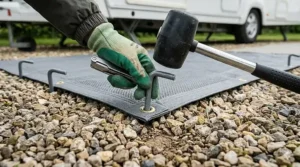
The golden rule: always use proper groundsheet pegs, not leftover tent pegs. Groundsheet pegs need different characteristics—broader heads to distribute pressure, appropriate length for the surface (longer for grass, shorter for hardstanding), and corrosion-resistant materials for extended outdoor exposure.
My preferred technique involves:
1. Laying the groundsheet flat and ensuring it’s positioned correctly within your pitch boundaries
2. Starting with corner pegs, driving them at a 45-degree angle away from the groundsheet (this distributes tension effectively)
3. Working around the perimeter, placing pegs every 1-1.5 metres depending on wind exposure
4. Using rock pegs or screw-type anchors on hardstanding pitches
5. Checking tension after initial pegging—the groundsheet should be taut but not stretched (over-tensioning causes premature eyelet failure)
Storm-proof your setup by adding guy lines to corner eyelets during windy conditions. This distributes stress across the groundsheet rather than concentrating it at peg points. During Storm Babet, this simple addition prevented my groundsheet from lifting whilst less-prepared neighbours spent a frantic evening chasing windblown sheets across the site.
Hardstanding vs Grass Pitch Requirements
Hardstanding pitches present unique pegging challenges. Standard metal pegs often skip across concrete or tarmac, achieving zero purchase. Rock pegs—those chunky metal or plastic pegs with broad heads—work far better. Alternatively, screw-type ground anchors can be hand-twisted into gravel pitches for excellent hold.
For grass pitches, traditional delta pegs work perfectly well. The Kampa Dometic Heavy-Duty Groundsheet Pegs (available on Amazon.co.uk for approximately £18.99) are worth considering—they’re specifically designed for groundsheet use with reinforced heads that won’t pull through eyelets even under significant stress.
One technique I learned from a site warden in Dorset: on particularly soft grass pitches, insert pegs at a shallower angle (30-35 degrees rather than the standard 45) and drive them deeper. This prevents the “tent peg see-saw” effect where pegs gradually work loose through ground movement.
Breathable vs Sealed Groundsheet
The Science Behind Breathability
Understanding the actual mechanics of breathable groundsheets helps appreciate why they command premium prices. These aren’t just groundsheets with holes poked in them—the engineering is considerably more sophisticated.
Quality breathable groundsheets use a woven construction that creates microscopic gaps between fibres. These gaps allow water vapour and air exchange whilst remaining small enough to exclude insects and most dirt particles. Think of it as Gore-Tex for your pitch—moisture can escape upwards, fresh air can circulate, but rain (generally) doesn’t penetrate downwards and bugs can’t infiltrate.
According to environmental camping guidelines, leaving no trace includes protecting grass on campsites. Breathable groundsheets align perfectly with Leave No Trace principles, allowing extended camping without environmental damage.
Sealed (non-breathable) groundsheets, by contrast, create complete barriers. Whilst this offers superior waterproofing, it comes at significant cost: grass death, condensation build-up underneath, and rejection by most quality campsites. The moisture trapped beneath sealed groundsheets also creates perfect conditions for mould growth—I’ve seen awning floors absolutely covered in mildew after just days atop non-breathable sheets.
When Non-Breathable Makes Sense
Despite my enthusiasm for breathable options, non-breathable groundsheets do have legitimate uses. Under hardstanding awnings, grass protection becomes irrelevant, making waterproof tarps perfectly acceptable (and often preferable for keeping gravel dust contained).
Heavy-duty PVC or tarpaulin groundsheets work brilliantly beneath motorhome drive-away awnings on hardstanding, particularly during wet weather when you want absolute waterproofing. Just never, ever use them on grass pitches unless you fancy a stern conversation with site management and potential eviction.
Some caravanners employ a hybrid approach: breathable groundsheet on grass areas, sealed waterproof sheet under storage or boot sections where waterproofing matters more than grass protection. This requires careful positioning but offers best-of-both-worlds functionality.
Groundsheet Size Calculator Awning
Measuring Your Awning Correctly
Getting groundsheet sizing wrong is frustratingly common. Too small, and you’ve got exposed areas collecting mud and debris. Too large, and you’re tripping over excess material or creating water-collection points around your awning perimeter.
Here’s my foolproof measuring method:
1. Measure your awning’s width (the dimension running parallel to your caravan) from one outside edge to the other
2. Measure the depth (perpendicular to the caravan) from the caravan connection point to the front edge
3. For porch awnings, subtract approximately 30cm from depth to avoid groundsheet extending beyond the awning entrance
4. For full awnings, aim for groundsheet dimensions roughly 20-30cm smaller than the awning footprint (this prevents water collecting underneath)
Most UK caravan awnings follow standard width measurements—250cm or 300cm being most common. This standardisation makes finding appropriate groundsheets straightforward. Depth varies enormously depending on awning style: compact porch awnings might be just 200cm deep, whilst full touring awnings can extend 400-600cm.
Standard UK Awning Dimensions Guide
Porch Awnings: Typically 200-260cm wide × 200-280cm deep
- Best groundsheet sizes: 2.5m × 2.5m or 2.5m × 3m
Mid-Size Awnings: Usually 260-350cm wide × 250-350cm deep
- Best groundsheet sizes: 2.5m × 3.5m or 2.5m × 4m
Full Touring Awnings: Generally 300-400cm wide × 300-500cm deep
- Best groundsheet sizes: 2.5m × 5m or 3m × 5m
Large Family Awnings: 350cm+ wide × 400-600cm deep
- Best groundsheet sizes: 2.5m × 6m or custom configurations
Remember that 250cm (2.5m) represents the standard “width” for most UK groundsheets—this dimension suits the majority of caravan awning widths. The variable dimension is usually length/depth, which you select based on your specific awning model.
Maintenance and Care Tips
Cleaning Your Groundsheet Properly
A well-maintained groundsheet lasts multiple seasons. Neglected ones develop mould, tears, and general degradation within months. The cleaning process needn’t be arduous, but it does require doing correctly.
After each use (or monthly during extended seasonal stays), follow this routine:
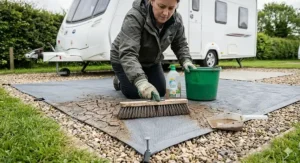
1. Lift the groundsheet and shake vigorously to remove loose dirt and debris
2. Hose down both sides with fresh water, using a soft brush for stubborn marks
3. For breathable groundsheets, avoid harsh chemical cleaners (these can damage the weave)—mild soapy water works perfectly
4. Rinse thoroughly to remove all soap residue
5. Hang to dry completely before storage (even slight dampness leads to mould)
Machine washing is brilliant for groundsheets that specifically allow it (like the Outdoor Revolution Treadlite). Use a cold wash, gentle cycle, and absolutely no fabric softener or harsh detergents. I wash mine twice per season and it comes out looking virtually new every time.
Never pack away a damp groundsheet. This single mistake causes more groundsheet failures than any other. If you must pack in wet conditions, unpack and dry properly within 24-48 hours maximum.
Storage Solutions
Proper storage extends groundsheet life dramatically. Rather than rolling into tight cylinders (which creates permanent creases), I fold mine accordion-style into roughly 30cm × 30cm squares. This distributes stress evenly and prevents weakening along fold lines.
Store in breathable bags if possible—the included storage bags with quality groundsheets usually work perfectly. Avoid sealed plastic containers which trap any residual moisture. Keep stored groundsheets somewhere dry, cool, and away from direct sunlight. A garage shelf, caravan locker, or spare room cupboard work brilliantly; damp sheds or uninsulated outbuildings, not so much.
Check stored groundsheets every few months for any signs of mould or degradation. A quick inspection catches problems early, before they become expensive replacements.
Common Mistakes to Avoid
Sizing Errors That’ll Cost You
The biggest rookie error? Buying groundsheet dimensions based on awning manufacturer specifications without accounting for practical realities. Awning specs typically describe maximum dimensions, but your actual usable floor space is smaller once you factor in furniture placement and wall curvature.
I’ve watched countless caravanners arrive with groundsheets that theoretically fit their awning specifications but practically overlap awning edges, creating water funnels that drench the awning interior during rain. The solution: always size slightly smaller than awning dimensions, particularly for depth.
Another common mistake: buying multiple small groundsheets to “save money” rather than one properly sized sheet. The gaps between sheets become mud collectors, undermining the entire point of groundsheet usage. One properly sized sheet always outperforms cobbled-together smaller pieces.
Neglecting Site-Specific Requirements
Different campsites have different rules about groundsheets. The Caravan and Motorhome Club requires regular lifting of groundsheets and awning skirts to protect grass. Some eco-focused sites ban all groundsheets on certain pitches. A few premium sites mandate specific groundsheet types or colours.
I learned this lesson at a National Trust campsite in Cornwall that required all groundsheets to be green or brown to maintain natural aesthetics. My bright blue OLPRO sheet was technically against site rules (they didn’t enforce it, but still).
Always check site-specific regulations before arrival. A quick phone call to the site office can save considerable embarrassment and potential re-pitching requirements.
Environmental Considerations
Protecting Grass on Long-Term Pitches
Even with breathable groundsheets, extended coverage affects grass health. Best practice for seasonal pitches involves lifting groundsheets every 7-14 days (weather permitting) to allow grass full sun exposure and air circulation. This sounds tedious, but it takes literally five minutes and makes enormous difference to grass survival.
During my six-month seasonal stint in Northumberland, I lifted my groundsheet fortnightly. The pitch grass remained green and healthy throughout, whilst neighbours who didn’t bother faced yellow patches and disapproving looks from site wardens.
The Leave No Trace principles emphasise minimising impact on natural environments. Proper groundsheet usage—breathable materials, regular lifting, appropriate sizing—aligns perfectly with these ethics, ensuring campsites remain beautiful for future visitors.
Biodegradable and Eco-Friendly Options
The camping industry is slowly embracing sustainability. Whilst fully biodegradable groundsheets remain rare (the durability required for seasonal use somewhat conflicts with biodegradability), manufacturers are increasingly using recycled materials and environmentally responsible production methods.
OLPRO’s OLTEX range incorporates sustainability into its manufacturing process, whilst still delivering the durability seasonal caravanners require. Look for manufacturers with proper environmental credentials rather than vague “eco-friendly” marketing claims.
At end-of-life, many breathable groundsheets can be recycled through specialist textile recycling programmes rather than ending in landfill. Check your local council’s recycling centre for textile recycling facilities—most accept synthetic camping materials.
FAQ
❓ How often should I lift my groundsheet on a seasonal pitch?
❓ Can I use a breathable groundsheet on hardstanding pitches?
❓ What's the difference between a footprint and a groundsheet?
❓ How do I stop my groundsheet moving in windy conditions?
❓ Will a breathable groundsheet keep my awning completely dry inside?
Conclusion
Finding the perfect durable groundsheet for seasonal caravan pitch transforms your outdoor living experience from merely acceptable to genuinely comfortable. Throughout this guide, we’ve explored how the right groundsheet balances breathability, durability, and weather resistance whilst respecting both campsite regulations and environmental responsibilities.
The UK caravan market offers brilliant options across all price points. Whether you invest in the premium Outdoor Revolution Treadlite for £42.95, choose the budget-friendly OLPRO OLTEX at £25-£45, or opt for mid-range reliability with Leisurewize, you’re equipping yourself for months of comfortable seasonal pitching. Remember that proper sizing, regular maintenance, and correct pegging techniques matter just as much as the groundsheet quality itself.
British weather demands equipment that can handle anything from Welsh deluges to Scottish gales, from muddy Midlands clay to sandy Norfolk coast pitches. A quality breathable groundsheet delivers on all fronts, keeping your awning clean and comfortable whilst protecting the grass beneath—ensuring site wardens stay happy and your deposit remains secure!
As you prepare for your 2026 seasonal adventure, take time to measure your awning properly, understand your specific site requirements, and invest in a groundsheet that’ll serve you reliably season after season. Your feet (and your caravan site’s grass) will thank you.
Recommended for You
- 7 Best Breathable Awning Carpet to Prevent Grass Damage UK 2026
- 7 Best Eco-Friendly Toilet Chemicals for Sensitive Sites UK 2026
- 7 Best Thetford Cassette Toilet Seal Replacement Options UK 2026
Disclaimer: This article contains affiliate links. If you purchase products through these links, we may earn a small commission at no additional cost to you. Prices shown are approximate and may vary.
✨ Found this helpful? Share it with your mates! 💬🤗
