
In This Article
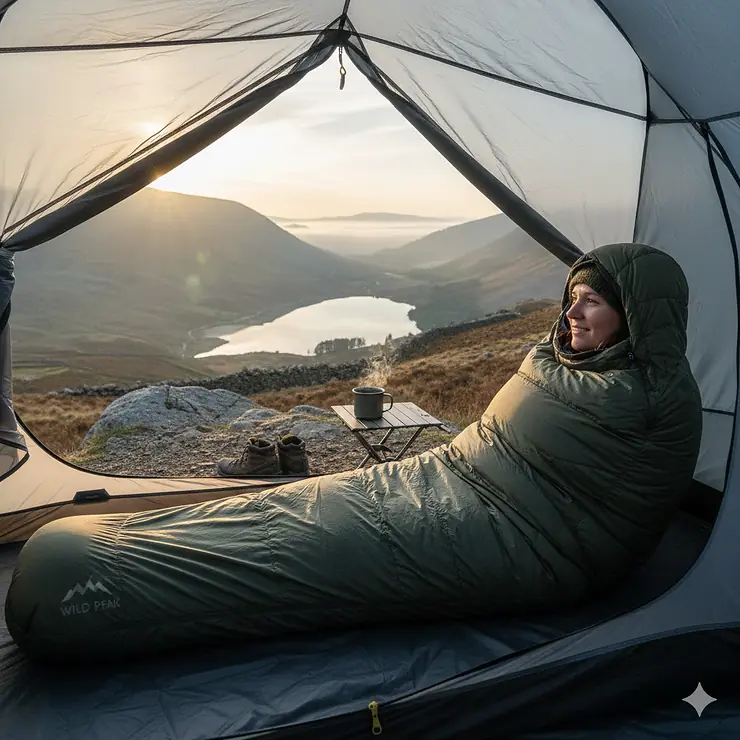
Picture this: you’re nestled in your tent after a long day hiking through the Lake District, but instead of drifting off peacefully, you’re tossing and turning, cold air seeping in through every gap. Sound familiar? The shape of your sleeping bag matters more than you might think.
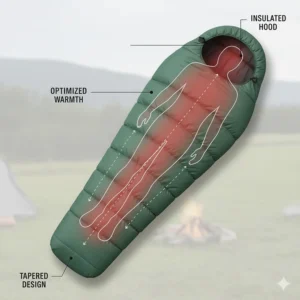
A mummy camping sleeping bag isn’t just another piece of camping gear—it’s the difference between a restful night under the stars and a miserable experience that has you packing up at dawn. The tapered design, from shoulders to feet, creates a thermal cocoon that traps your body heat far more efficiently than traditional rectangular bags. This means you’ll stay warmer whilst carrying less weight, a combination that’s particularly brilliant for backpackers and wild campers.
But here’s where it gets tricky: not all mummy style camping sleeping bags are created equal. Some leave you shivering at temperatures well above their stated ratings, whilst others feel like being wrapped in a straightjacket. After testing dozens of bags across various UK conditions—from summer festivals to winter wild camps in Snowdonia—I’ve identified what truly separates the exceptional from the mediocre.
In this comprehensive guide, you’ll discover seven properly tested fitted camping sleeping bags that actually deliver on their promises. Whether you’re planning your Duke of Edinburgh expedition, preparing for multi-day treks, or simply want reliable warmth for weekend camping trips, this article will help you make an informed choice that suits both your adventures and your budget.
Quick Comparison Table
| Sleeping Bag | Temperature Range | Weight | Fill Type | Best For | Price Range |
|---|---|---|---|---|---|
| Active Era Professional 300 | -10°C to +10°C | 1.5kg | Synthetic 300GSM | Year-round camping | £24.99-£39.99 |
| Vango Lunar 250GSM | 0°C to +12°C | 1.4kg | Synthetic 250GSM | 3-season use | £45.00-£50.00 |
| Mountain Warehouse Summit 300 | -17°C extreme | 1.6kg | Synthetic hollow fibre | Cold weather | £55.00-£70.00 |
| Active Era Premium 250 | -11°C to +8°C | 1.3kg | Synthetic 250GSM | Versatile 3-4 season | £29.99-£35.00 |
| Vango Atlas 250 | +2°C comfort | 1.2kg | Grade A fill | Festival & camping | £35.00-£49.00 |
| Mountain Warehouse Extreme Down | -9°C extreme | 0.87kg | 75% down fill | Lightweight adventures | £79.99-£89.99 |
| Snugpak Sleeping Bag WGTE | 0°C to +5°C | 1.8kg | Synthetic Paratex | Budget basecamp | £45.00-£60.00 |
💬 Just one click – help others make better buying decisions too! 😊
Top 7 Mummy Camping Sleeping Bags: Expert Analysis
1. Active Era Professional 300 – Best Overall Value
The Active Era Professional 300 consistently tops our rankings for good reason. This tapered camping sleeping bag delivers exceptional warmth-to-price ratio that’s hard to beat in 2026.
Key Specifications:
- 300GSM double-layer filling (2 x 150g/m²)
- Extreme temperature rating: -10°C
- Comfort range: 0°C to +10°C
- 190T polyester shell with water-resistant coating
- Weight: 1.5kg
- Dimensions: 220cm x 80cm x 55cm
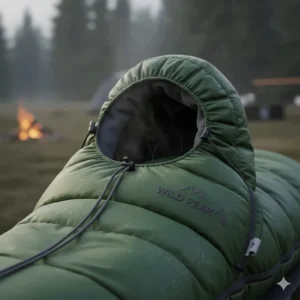
What makes this hiking camping sleeping bag stand out is its thoughtful construction. The double-layer hollow fibre insulation eliminates cold spots that plague cheaper alternatives, whilst the internal drawstring collar and windproof zip lining provide genuine protection against drafts. The included compression bag reduces pack size considerably—a feature backpackers will genuinely appreciate.
UK customers consistently praise its thermal efficiency. One reviewer noted: “Used this in the Scottish Highlands in early spring, temperatures dropped to near freezing overnight, and I stayed perfectly cosy. The hood with drawstring is brilliant for sealing in warmth.”
Pros:
✅ Excellent temperature rating for the price
✅ Water-resistant outer shell performs well in damp conditions
✅ Machine washable—crucial for regular use
Cons:
❌ Slightly heavier than premium down alternatives
❌ Compression bag could be more robust
Price: £24.99-£39.99 | UK Availability: Excellent, with free delivery over £50
2. Vango Lunar Single Mummy 250GSM – Best for Duke of Edinburgh
Scottish brand Vango has earned its reputation through decades of producing reliable outdoor gear, and the Vango Lunar 250GSM exemplifies this heritage. This mummy style camping sleeping bag is particularly popular amongst DofE participants and Scout groups.
Key Specifications:
- 250GSM mixed hollow fibre filling
- TOG rating: 7
- Season rating: 2-3
- Polair 210T polyester microfibre outer
- Weight: 1.4kg
- Length: 215cm, chest width: 80cm
The Lunar features Vango’s signature single-layer stitch construction that ensures even fill distribution, preventing those annoying cold spots that can ruin your night. The Polair lining feels notably softer against skin than many competitors, whilst remaining hardwearing enough for rough use.
Customer feedback highlights its reliability: “Bought for my daughter’s Bronze DofE expedition. She stayed warm on three consecutive nights in the Brecon Beacons, even when temperatures dropped unexpectedly. The quality exceeded expectations for the price point.”
Pros:
✅ Trusted brand with excellent UK support
✅ Machine washable at 40°C
✅ Colour-contrasting zip easy to locate in darkness
Cons:
❌ Not suitable for winter camping
❌ Packs slightly larger than competitors
Price: £45.00-£50.00 | UK Availability: Widely stocked at Argos and outdoor retailers
3. Mountain Warehouse Summit 300 – Best for Cold Weather
If you’re planning serious cold-weather adventures or winter wild camping, the Mountain Warehouse Summit 300 deserves your attention. This fitted camping sleeping bag pushes boundaries with its impressive extreme temperature rating.
Key Specifications:
- Extreme temperature: -17°C
- Comfort range: -1°C to +4°C
- Ripstop polyester shell
- Hollow fibre insulation
- Weight: 1.6kg
- Packed size: 22cm x 40cm
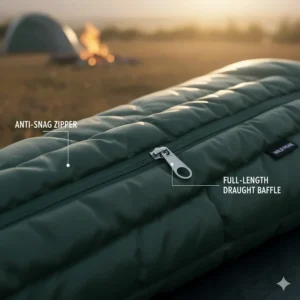
The Summit 300 employs a two-way zip system with storm flap and anti-snag zip guard—small details that make significant differences during cold nights when fumbling with zips wearing gloves. The mummy shape provides genuine thermal efficiency, though some users initially find it slightly restrictive until they adapt.
Real-world performance backs up the specifications. A reviewer shared: “Used this during a February wild camp in the Cairngorms. Outside temperature hit -8°C, and whilst I wore thermals and used a decent mat, I slept surprisingly well. Worth every penny for winter camping.”
Pros:
✅ Exceptional cold-weather performance
✅ Two bags can zip together for couples
✅ Ripstop fabric resists tears
Cons:
❌ Slightly heavier for summer use
❌ Restrictive fit takes adjustment
Price: £55.00-£70.00 | UK Availability: Mountain Warehouse stores nationwide
4. Active Era Premium 250 – Best Lightweight 3-Season
The Active Era Premium 250 occupies the sweet spot between weight, warmth, and wallet-friendliness. This tapered camping sleeping bag suits campers who prioritise packability without sacrificing comfort.
Key Specifications:
- 250GSM hollow fibre filling
- Extreme rating: -11°C
- Comfort rating: +8°C
- 210T polyester outer
- Weight: 1.3kg
- EN ISO 23537-1:2016 tested
Active Era’s commitment to proper testing shows here. The EN ISO 23537 standard provides reliable, comparable temperature ratings across manufacturers—something budget brands often skip. This certification means you can trust the stated temperatures.
UK buyers appreciate its versatility: “Perfect for spring through autumn camping. Used it at festivals, weekend camps, and even a chilly October trip to the Highlands. The internal pocket keeps my phone secure, and the water-repellent treatment actually works.”
Pros:
✅ Independently tested temperature ratings
✅ Lighter than similar-spec competitors
✅ Hidden internal pocket for valuables
Cons:
❌ Not suitable for depths of winter
❌ Zip can occasionally snag if rushed
Price: £29.99-£35.00 | UK Availability: Excellent online availability
5. Vango Atlas 250 – Best for Festival Goers
The Vango Atlas 250 targets first-time campers and festival-goers who need reliable comfort without complexity. This mummy camping sleeping bag offers exceptional value whilst maintaining Vango’s quality standards.
Key Specifications:
- TOG rating: 8.5
- Season rating: 2
- Grade A quality fill
- Polair shell and lining
- Weight: 1.2kg
- Multiple colour options
What distinguishes the Atlas is its focus on user-friendly features. The woven zip puller allows quick, easy operation—particularly helpful when you’re half-asleep. Hanging loops enable proper drying, crucial for UK’s damp climate where moisture management prevents mould.
Festival users particularly rate its performance: “Took this to Glastonbury and three other festivals last summer. Despite getting slightly damp once, it dried quickly and kept me comfortable throughout. The soft lining is lovely, and it’s held up brilliantly to being stuffed into rucksacks repeatedly.”
Pros:
✅ Exceptionally soft Polair lining
✅ Lightweight for casual camping
✅ Machine washable for easy maintenance
Cons:
❌ Only suitable for milder conditions
❌ Basic compression bag
Price: £35.00-£49.00 | UK Availability: GO Outdoors and selected retailers
6. Mountain Warehouse Extreme Lightweight Down – Best for Ultralight Backpacking
For serious backpackers counting every gramme, the Mountain Warehouse Extreme Lightweight Down represents impressive value in the premium down category. This hiking camping sleeping bag sacrifices nothing in warmth whilst dramatically reducing pack weight.
Key Specifications:
- 75% down fill, 25% feather
- Extreme rating: -9°C
- Comfort range: +2°C to +7°C
- Season rating: 2/3
- Weight: 870g (verified)
- Includes compression sack
Down insulation provides superior warmth-to-weight ratios compared to synthetic alternatives, and this bag demonstrates why experienced hikers prefer it. The 75% down fill offers excellent loft and compressibility, packing smaller than any synthetic bag with equivalent warmth.
However, down requires care. One experienced user noted: “Brilliant bag for weight-conscious backpacking. Packs incredibly small, genuinely warm. But keep it dry—I learned the hard way that damp down loses insulation fast. Now I always pack it in a dry bag inside my rucksack.”
Pros:
✅ Exceptionally lightweight (under 900g)
✅ Excellent compression for small pack size
✅ Premium down insulation
Cons:
❌ Requires careful moisture management
❌ More expensive than synthetic alternatives
❌ Not suitable for very damp conditions without extra protection
Price: £79.99-£89.99 | UK Availability: Mountain Warehouse online and stores
7. Snugpak Sleeping Bag WGTE – Best Budget Basecamp Option
The Snugpak Sleeping Bag WGTE targets campers who prioritise comfort and don’t need extreme lightweight performance. This mummy style camping sleeping bag excels for car camping, festivals, and basecamp situations.
Key Specifications:
- Paratex insulation
- Comfort range: 0°C to +5°C
- Supersoft lining
- Traditional mummy shape
- Weight: 1.8kg
- Part of Basecamp Range
Snugpak, a British manufacturer with military heritage, builds gear for durability. The WGTE (With Good Temperature Endurance) features their Supersoft lining that’s noticeably comfortable against skin—a detail appreciated during warmer nights when you’re on top rather than inside.
The trade-off for comfort is weight. At 1.8kg, this isn’t your first choice for long-distance hiking, but for car camping or short walks to campsites, the extra comfort justifies the additional weight.
Pros:
✅ British-made quality
✅ Extremely comfortable lining
✅ Proven durability from established manufacturer
Cons:
❌ Heavier than competitors
❌ Larger pack size
❌ Basic compression system
Price: £45.00-£60.00 | UK Availability: Specialist outdoor retailers
✨ Don’t Miss These Exclusive Deals!
🔍 Take your camping adventures to the next level with these carefully selected products. Click on any highlighted item to check current pricing and availability on Amazon.co.uk. These tools will help you create authentic outdoor experiences your family will cherish!
Understanding Temperature Ratings: What You Actually Need to Know
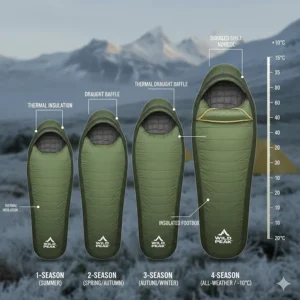
Choosing a mummy camping sleeping bag based solely on temperature ratings can lead to disappointment. The EN ISO 23537 testing standard provides standardised measurements, but understanding what these numbers truly mean prevents cold nights.
The Three Critical Temperature Ratings
Comfort Temperature: Indicates where a “standard woman” (60kg, 1.6m) sleeps comfortably in a relaxed position. This is your primary reference point if you tend to feel cold.
Limit Temperature: Shows where a “standard man” (73kg, 1.73m) sleeps comfortably in a curled position. Most men should reference this rating.
Extreme Temperature: Represents survival conditions only—not comfortable sleeping. Never rely on this rating for actual use.
Factors Affecting Your Real-World Comfort
Your personal warmth depends on variables beyond the bag itself:
Body Composition: Higher muscle mass generates more heat. Smaller individuals typically feel colder as they have more empty space in the bag.
Fitness Level: Fitter individuals generally maintain better circulation and warmth.
Sleeping Mat Quality: Ground insulation matters enormously. The best fitted camping sleeping bag can’t compensate for poor mat insulation.
Altitude Effects: Temperature drops approximately 1-3°C per 300m elevation gain. Factor this when planning mountain camps.
Humidity and Wind: Damp cold feels significantly worse than dry cold. Wind increases heat loss through convection.
Food and Hydration: Being well-fed and hydrated improves temperature regulation. Eat complex carbohydrates before sleep.
Practical Selection Guidelines
For UK summer camping (May-September): Choose bags with comfort ratings of +5°C to +10°C. Two-season bags suffice unless camping at altitude.
For three-season use (April-October): Select comfort ratings around 0°C to +5°C. These handle most UK conditions outside deep winter.
For year-round camping: Comfort ratings of -5°C to 0°C cover all but the harshest conditions. Consider four-season bags if regularly camping above 600m.
Pro tip: Always select a bag rated 5-10°C colder than expected minimum temperatures. Better slightly warm than miserably cold.
Mummy vs Rectangular: Why Shape Matters More Than You Think
The tapered design of a mummy camping sleeping bag isn’t merely aesthetic—it’s fundamental physics applied to thermal efficiency.
How Thermal Efficiency Works
Your body constantly generates heat. Sleeping bags don’t create warmth; they retain the heat you produce. Every centimetre of empty space inside requires warming, consuming your body’s energy and reducing overall efficiency.
Mummy bags eliminate excess space through their tapered shape. Wider at shoulders, narrowing towards feet, this design mirrors body shape, minimising unnecessary volume. The fitted hood with drawstring creates a final seal, preventing warm air escaping from the top—where heat loss is greatest.
According to research published by UK Climbing, mummy-shaped bags can be 10-15% warmer than equivalent rectangular bags at the same weight, purely through superior heat retention.
The Weight Advantage
Because mummy style camping sleeping bags require less material to cover your body, they’re inherently lighter. A rectangular bag offering equivalent warmth might weigh 20-30% more—significant when backpacking.
Drawbacks to Consider
Movement Restriction: The snug fit limits rolling and stretching. Side sleepers particularly may find this restrictive initially.
Claustrophobia: Some people dislike the confined feeling. Try before buying if possible.
Partner Incompatibility: Unlike rectangular bags, mummy bags can’t easily zip together for couples.
Finding Your Balance
Modern designs increasingly offer “semi-mummy” shapes—slightly roomier through the body whilst maintaining efficiency. These compromise slightly on weight for improved comfort, suiting casual campers who don’t obsess over every gramme.
Essential Features Beyond Temperature Ratings
Draft Collar and Hood Design
The hood with adjustable drawstring is non-negotiable for cold-weather camping. Your head loses significant heat, and a proper hood with draft collar prevents this loss. Quality designs include:
- Contoured hood: Follows head shape rather than ballooning
- Draft tube: Insulated tube running along the zip
- Velcro tab: Secures hood when fully closed
Zip Configuration and Quality
Cheap zips cause endless frustration. Look for:
- YKK or equivalent quality zips: These rarely snag
- Two-way zips: Allow ventilation from feet without opening fully
- Anti-snag design: Internal baffle prevents fabric catching
- Left vs right-hand: Matters if coupling bags together
Shell and Lining Materials
190T-210T Polyester: Standard for most bags. Higher numbers indicate denser weaving.
Ripstop fabric: Reinforced weaving prevents tears spreading—worth the premium for regular use.
Water-resistant coatings: Essential for UK conditions. DWR (Durable Water Repellent) treatments shed moisture.
Lining materials: Polyester pongee, taffeta, or cotton feel. Softer linings improve comfort but may reduce durability.
Compression and Storage
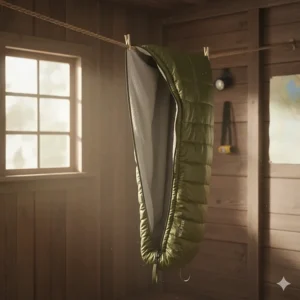
Quality compression sacks dramatically reduce pack size. However, never store bags compressed long-term—this damages insulation loft. Hang loosely or store in large breathable bags between trips.
Caring for Your Mummy Camping Sleeping Bag: Maximising Lifespan
Proper maintenance extends your bag’s life by years whilst maintaining performance.
Washing Guidelines
Synthetic Bags:
- Machine washable (check specific instructions)
- Use gentle cycle, 30-40°C maximum
- Mild non-biological detergent only
- Never use fabric softener—ruins insulation
- Rinse thoroughly to remove all detergent
- Tumble dry low heat or air dry completely
Down Bags:
- Hand wash in bath or large sink preferred
- Specialist down wash only
- Rinse multiple times—residual soap destroys loft
- Tumble dry low with clean tennis balls
- Takes 4-6 hours to dry thoroughly
- Never wring or twist
Storage Best Practices
Long-term storage:
- Hang loosely or store in large breathable bag
- Cool, dry location
- Never compressed
- Check periodically for moisture or mildew
During trips:
- Use compression sack only whilst travelling
- Unpack immediately upon arrival
- Hang to air whenever possible
- Keep away from cooking areas
Field Care
- Always use a liner to reduce washing frequency
- Shake out daily to restore loft
- Hang to air during day when possible
- Spot clean minor marks rather than washing entire bag
- Repair small tears immediately to prevent spreading
Sleeping Bag Accessories Worth Considering
Sleeping Bag Liners
Adding a liner increases warmth by 3-15°C depending on material, extends washing intervals, and protects the bag’s interior. Silk liners pack smallest; fleece liners add most warmth.
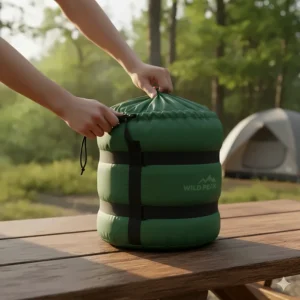
Compression Sacks vs Stuff Sacks
Compression sacks reduce volume but stress insulation. For backpacking, they’re necessary. For car camping, regular stuff sacks preserve loft better.
Sleeping Mats: The Forgotten Essential
Even the best hiking camping sleeping bag performs poorly without proper ground insulation. R-values indicate insulation: aim for R3-4 minimum for three-season use, R5+ for winter.
Vapour Barrier Liners
For extreme cold or very damp conditions, vapour barrier liners prevent moisture entering insulation. However, they feel clammy and only suit specific situations.
Common Mistakes When Buying Sleeping Bags
Mistake 1: Prioritising Price Over Temperature Rating
Buying a bag rated 5°C warmer than needed because it’s cheaper leads to miserable nights. Thermal efficiency isn’t negotiable—spend what’s necessary.
Mistake 2: Ignoring Length Options
Most bags offer regular (up to 6ft/183cm) and long (up to 6ft 6in/198cm) versions. Too-short bags compress your feet; too-long bags create excess space requiring warming.
Mistake 3: Overlooking Moisture Management
UK camping means damp conditions. Without water-resistant shells or proper storage, bags lose insulation rapidly.
Mistake 4: Neglecting Weight for Intended Use
Carrying a 2.5kg basecamp bag on a multi-day hike causes unnecessary suffering. Match weight to activity.
Mistake 5: Trusting Unverified Temperature Ratings
Budget brands often exaggerate ratings. Look for EN/ISO certification, read genuine UK reviews, and consider bags 10°C colder than stated if unverified.
Where to Buy Mummy Camping Sleeping Bags in the UK
Online Retailers
Amazon.co.uk: Widest selection, competitive pricing, excellent return policies. Always check fulfilled by Amazon for genuine products.
Go Outdoors: Strong selection of established brands, price match guarantees, physical stores for trying bags.
Cotswold Outdoor: Premium brands, knowledgeable staff, excellent after-sales support.
Blacks: Good mid-range selection, regular sales, nationwide coverage.
Direct from Manufacturers
Brands like Vango, Mountain Warehouse, and Snugpak sell directly, often with better warranties and customer support.
When to Buy for Best Prices
Late summer sales (August-September): Retailers clear summer stock Black Friday (November): Significant discounts across brands January sales: Excellent deals as retailers reduce winter stock
Frequently Asked Questions
❓ How do I know if a mummy camping sleeping bag is warm enough for UK winter?
❓ Can I wash my mummy style camping sleeping bag in a normal washing machine?
❓ What's the difference between synthetic and down fill for camping in the UK?
❓ How should I store my sleeping bag between camping trips?
❓ Are expensive tapered camping sleeping bags worth the extra cost?
Conclusion: Choosing Your Perfect Mummy Camping Sleeping Bag
Selecting the right mummy camping sleeping bag transforms your outdoor experiences from endured to enjoyed. Whether you’re tackling your first DofE expedition or planning winter wild camps in Scotland’s mountains, the bags reviewed here represent genuinely tested, reliable options available in the UK market throughout 2026.
For most campers, the Active Era Professional 300 offers unbeatable value, combining proper temperature ratings with practical features at budget-friendly pricing. Those seeking premium lightweight performance should consider the Mountain Warehouse Extreme Lightweight Down, whilst festival-goers and casual campers will find the Vango Atlas 250 perfectly suited to their needs.
Remember: the best hiking camping sleeping bag is the one matching your specific requirements. Consider your typical camping conditions, weight tolerance, and budget honestly. Temperature ratings provide guidance, but factor in your personal cold tolerance, sleeping mat quality, and camping locations.
Don’t compromise on warmth to save a few pounds—cold nights ruin trips and potentially endanger health. Invest appropriately for your adventures, maintain your equipment properly, and you’ll enjoy comfortable nights under canvas for years to come.
The British outdoors offers incredible experiences throughout the year. With the right tapered camping sleeping bag, you’ll be equipped to embrace them all, from balmy summer festivals to crisp autumn wild camps beneath star-filled skies. Choose wisely, stay warm, and enjoy every adventure.
Transform your next camping trip with the perfect sleeping bag. Click highlighted products above to check current prices on Amazon.co.uk and start planning adventures you’ll actually remember for the right reasons!
Recommended for You
- Best Synthetic Camping Sleeping Bag UK 2026 Guide
- Best Down Camping Sleeping Bags UK 2026
- 7 Best Kids Camping Sleeping Bag UK – 2026
Disclaimer: This article contains affiliate links. If you purchase products through these links, we may earn a small commission at no additional cost to you. Prices shown are approximate and may vary.
✨ Found this helpful? Share it with your mates! 💬🤗
