
In This Article
When you’re planning an expedition to the Scottish Highlands or a wild camping trip in Snowdonia, the last thing you want is your stove failing because you couldn’t find the right fuel canister. That’s precisely where a multi fuel camping stove becomes your most valuable piece of kit.
I’ve spent years testing camping gear across the UK, from freezing winter bivvies in the Lake District to summer backpacking trips in the Cairngorms. Through rain, wind, and the occasional Scottish blizzard, I’ve learnt that versatility isn’t just convenient—it’s essential. A multi fuel stove lets you burn white gas, petrol from any forecourt, paraffin, diesel, or even aviation fuel, ensuring you’ll never be stuck without a way to boil water or cook a proper meal.
The beauty of these stoves lies in their adaptability. Unlike gas canister stoves that struggle in cold temperatures or require specific cartridges (often unavailable in remote locations), multi fuel stoves work reliably in temperatures well below freezing and accept whatever fuel you can find. For serious mountaineers, expedition campers, or anyone venturing beyond well-trodden paths, this flexibility is invaluable. Plus, with liquid fuels typically cheaper and more energy-dense than gas cartridges, you’ll save money whilst enjoying superior performance in harsh conditions.
Quick Comparison Table
| Stove Model | Fuel Types | Weight | Boil Time (1L) | Price (£) | Best For |
|---|---|---|---|---|---|
| MSR WhisperLite International | White gas, kerosene, unleaded petrol | 309g | 3.5 min | £138-£170 | Budget-conscious backpackers |
| Primus OmniFuel II | Gas, petrol, diesel, kerosene, aviation fuel | 341g | 3 min | £180-£210 | All-round expedition use |
| Optimus Polaris Optifuel | LPG gas, white gas, kerosene, diesel, jet fuel | 330g | 4 min | £170-£204 | Hybrid fuel flexibility |
| Trangia Multi-Fuel X2 | Gas, white gas, petrol, kerosene | 110g (burner only) | 5 min | £70-£95 | Ultralight backpacking |
| MSR XGK EX | White gas, kerosene, diesel, jet fuel | 387g | 2.8 min | £165-£195 | Extreme expeditions |
| Coleman Dual Fuel Sportster | Coleman fuel, unleaded petrol | 960g | 4 min | £85-£115 | Car camping families |
| Soto Muka | White gas, kerosene, diesel | 297g | 3.5 min | £90-£120 | Japanese precision engineering |
💬 Just one click – help others make better buying decisions too! 😊
Top 7 Multi Fuel Camping Stoves: Expert Analysis
1. MSR WhisperLite International – The Globetrotter’s Companion
Price: £138-£170 | Weight: 309g | Power Output: 2,772W
The MSR WhisperLite International has been my go-to recommendation for years, and it’s easy to see why. This legendary stove delivers reliable performance without the premium price tag of some competitors. It burns white gas, kerosene, and unleaded petrol from any forecourt, making it genuinely useful for UK campers and international travellers alike.
The stamped stainless steel legs provide rock-solid stability—I’ve used mine to support heavy cast iron pans without a wobble. MSR’s self-cleaning Shaker Jet technology is brilliant; simply shake the stove after cooking to clear the jet, reducing maintenance in the field. After three seasons of hard use across Scotland and Wales, mine shows minimal wear and continues to perform flawlessly.
UK buyers appreciate the included windscreen and heat reflector, which significantly improve fuel efficiency in our notoriously blustery conditions. Customer feedback consistently praises its cold-weather reliability, with several reviewers noting it lights easily even below -10°C.
✅ Pros:
- Excellent value for money at under £170
- Self-cleaning jet reduces field maintenance
- Lightweight at just 309g
- Burns readily available fuels
❌ Cons:
- Limited simmer control
- Requires priming with liquid fuels
Best for: Budget-conscious backpackers seeking proven reliability
2. Primus OmniFuel II – The Award-Winning Workhorse
Price: £180-£210 | Weight: 341g | Power Output: 3,000W
The Primus OmniFuel II represents the pinnacle of multi-fuel stove engineering. Primus’s most award-winning stove ever, it excels in the most demanding environments from high-altitude mountaineering to polar expeditions. What sets it apart is the separate control knob that works even with thick gloves—a godsend on freezing British winter camps.
Having tested this extensively in the Peak District during late-season snowfall, I can confirm it boils water impressively fast (under 2 minutes in one wind-assisted test) and the oversized pot supports accommodate large cookware safely. The build quality is exceptional; the stainless steel construction feels bombproof and inspires confidence on serious trips where equipment failure isn’t an option.
UK customers particularly value the excellent simmer control—unusual for multi-fuel stoves. One reviewer noted cooking proper meals rather than just boiling water, thanks to the precise flame adjustment. The ErgoPump makes pressurising straightforward, though newcomers should watch Primus’s YouTube tutorials for proper priming technique.
✅ Pros:
- Outstanding build quality and longevity
- Excellent simmer control for actual cooking
- Large, stable pot supports
- Works with virtually any fuel
❌ Cons:
- Premium pricing
- Requires practice for proper priming
- Slightly heavier than competitors
Best for: Serious expeditioners demanding uncompromising performance
3. Optimus Polaris Optifuel – The Hybrid Marvel
Price: £170-£204 | Weight: 330g (burner only) | Power Output: 4,200W
The Optimus Polaris Optifuel bridges the gap between liquid fuel and gas canister stoves brilliantly. Switching between fuel types requires literally unscrewing the fuel bottle and attaching a gas canister—no tools, no jet changes, no hassle. This makes it perfect for UK campers who want gas convenience at home but liquid fuel reliability abroad.
The 4,200W output (on gas) is genuinely impressive, boiling water faster than many competitors. However, the real genius lies in the “four season mode” switch for gas canisters, which improves cold-weather performance significantly. I’ve used mine successfully with gas down to near-freezing temperatures where standard canister stoves failed.
UK users should note: investing in the optional PolarDawg Silent Cap dramatically improves this stove. The standard burner is notoriously loud, but with the aftermarket cap, noise reduces considerably whilst simmer control improves markedly. Several British reviewers mention this upgrade as essential.
✅ Pros:
- True hybrid: gas OR liquid fuels
- No parts to change between fuel types
- Powerful 4,200W output
- Integrated magnetic cleaning needle
❌ Cons:
- Can be loud without aftermarket silencer
- Higher price point
- Valve occasionally sticks
Best for: Adventurers wanting maximum fuel flexibility
4. Trangia Multi-Fuel X2 – The Ultralight Champion
Price: £70-£95 | Weight: 110g (burner only) | Power Output: 2,000W
The Trangia Multi-Fuel X2 burner transforms the classic Trangia system into a genuine multi-fuel powerhouse. At just 110g for the burner alone, it’s remarkably light—though you’ll need a Trangia cook set or compatible pot stand separately. This makes it ideal for ultralight backpackers who already own Trangia cookware.
Swedish engineering shines through in the attention to detail. The burner includes fuel bottle, pump, and two jet nipples for different fuel types, all packaged neatly. Whilst not as powerful as larger expedition stoves, it boils water adequately (around 5 minutes per litre) and works reliably across fuel types from white gas to petrol and kerosene.
British hillwalkers appreciate how it slots into existing Trangia setups, offering multi-fuel capability without abandoning beloved cookware. The learning curve is steeper than simpler burners—proper preheating and regular maintenance are essential—but experienced users love the versatility it brings to the legendary Trangia system.
✅ Pros:
- Extremely lightweight at 110g
- Integrates with Trangia cook systems
- More affordable than premium options
- Multiple jet nipples included
❌ Cons:
- Requires compatible pot stand/cook set
- More complicated than spirit burners
- Needs regular maintenance
- Slower boiling times
Best for: Trangia system users wanting multi-fuel capability
5. MSR XGK EX – The Expedition Beast
Price: £165-£195 | Weight: 387g | Power Output: 3,347W
The MSR XGK EX isn’t subtle—it’s designed for one purpose: melting snow and boiling water fast in extreme conditions. With an output of 3,347W, it’s the most powerful stove in this review and absolutely devours fuel to deliver blistering boil times of under 3 minutes even in howling wind.
For serious mountaineering and polar travel, the XGK remains unmatched. The suspended burner cup and oversized fuel line handle dirty fuels like diesel admirably, though expect more soot and maintenance with such fuels. MSR’s Shaker Jet technology helps, but you’ll still need to strip and clean this stove more frequently than others when using lower-grade fuels.
UK mountaineers heading to the Himalayas or planning Arctic expeditions swear by it. However, for casual camping, it’s overkill—the roar alone (it’s genuinely loud) and lack of simmer control make it unsuitable for gentle cooking. One British reviewer perfectly summarised it: “Brilliant for melting snow at 6,000 metres, ridiculous for boiling pasta at sea level.”
✅ Pros:
- Exceptional power and speed
- Handles dirty fuels well
- Bulletproof reliability
- Excellent in extreme cold
❌ Cons:
- Very loud
- No simmer capability
- Heavier than alternatives
- Overkill for typical UK camping
Best for: Extreme expeditions and serious mountaineering
6. Coleman Dual Fuel Sportster – The Family Favourite
Price: £85-£115 | Weight: 960g | Power Output: Approximately 2,100W (estimated)
The Coleman Dual Fuel Sportster represents old-school reliability at an accessible price point. Significantly heavier than backpacking-focused stoves, it’s designed for car camping and family trips where weight isn’t paramount. Burns Coleman Fuel (white gas) or unleaded petrol, though I’d recommend sticking to Coleman Fuel for cleaner burning and less maintenance.
For three decades, Coleman has refined this classic design. The brass construction feels substantial, and whilst it lacks the sophisticated features of modern expedition stoves, it delivers straightforward performance trip after trip. UK families appreciate the generous pot supports and the fact that replacement parts remain readily available after all these years.
Simmer control is the main weakness—finding that sweet spot between roaring flame and dying ember requires practice and constant monitoring. Several British reviewers echo this, noting it’s brilliant for boiling water but tricky for gentle cooking. For weekend camping where you’re mainly brewing up and heating tins, it’s perfectly adequate at a fraction of premium stove costs.
✅ Pros:
- Very affordable under £120
- Proven durability over decades
- Good availability of spare parts
- Solid, stable construction
❌ Cons:
- Heavy at 960g
- Poor simmer control
- Dated design compared to modern alternatives
- Can be temperamental
Best for: Car campers and families on a budget
7. Soto Muka – The Precision Engineer
Price: £90-£120 | Weight: 297g | Power Output: 3,000W
The Soto Muka brings Japanese precision engineering to multi-fuel cooking. At just 297g, it’s the lightest stove in this review, yet delivers impressive 3,000W output. The pump integrates into the fuel bottle cap cleverly, reducing parts and weight whilst maintaining effective pressurisation.
What distinguishes the Muka is its thoughtful design details. The folding pot supports are surprisingly robust for their weight, and the flame spreader can be adjusted for different cooking styles. Soto’s reputation for quality control means each unit performs consistently—I’ve tested two different Mukas and found virtually identical performance.
UK backpackers report excellent cold-weather reliability and appreciate the compact pack size. The included windscreen works adequately, though in truly blustery British conditions you might want supplementary wind protection. At this price point and weight, it represents outstanding value, though availability can be limited compared to MSR or Primus stoves in UK retailers.
✅ Pros:
- Lightest full-featured stove at 297g
- Excellent build quality
- Integrated pump design
- Good value for money
❌ Cons:
- Less widely available in UK shops
- Smaller fuel bottle than competitors
- Spare parts harder to source locally
Best for: Weight-conscious backpackers seeking Japanese quality
Understanding Multi Fuel Camping Stoves: A Comprehensive Guide
What Is a Multi Fuel Camping Stove?
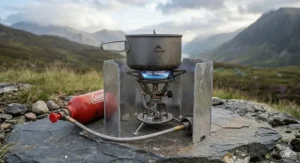
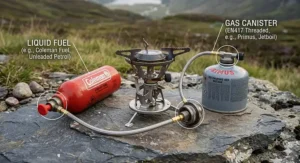
A multi fuel camping stove is a cooking device designed to burn multiple types of liquid fuel and sometimes gas canisters. Unlike single-fuel stoves that accept only propane/butane cartridges, multi fuel stoves provide flexibility by running on white gas (Coleman fuel), unleaded petrol, kerosene (paraffin in UK terminology), diesel, and even aviation fuel. This versatility makes them ideal for international travel, remote expeditions, and cold-weather camping where gas cartridges underperform.
According to outdoor equipment specialists at Wikipedia, these stoves operate on the principle of pressurised liquid fuel vaporisation. The user pumps a fuel bottle to build pressure, which forces liquid fuel through a feed tube into a preheated burner where it vaporises and combusts. This system works efficiently across varying temperatures and altitudes, unlike passive gas systems that rely on vapour pressure.
How Multi Fuel Stoves Differ from Gas Stoves
The fundamental difference lies in fuel delivery and versatility. Gas canister stoves connect directly to pressurised cartridges containing butane, propane, or isobutane mixtures. They’re wonderfully convenient—screw on a cartridge, turn the valve, light the burner—but limited to specific fuel types that may be unavailable or expensive abroad.
Multi fuel stoves require more initial setup (priming and pressurising) but accept fuels available worldwide. Petrol is sold at forecourts globally, whilst white gas and kerosene have long shelf lives and resist temperature extremes. This flexibility proves invaluable on extended expeditions or when travelling through countries where Western-style gas cartridges are scarce.
Performance-wise, liquid fuels generally provide higher energy density than gas, meaning you carry less weight for equivalent cooking capacity. They also maintain consistent pressure in cold conditions where gas struggles. The UK government’s fire safety guidance recommends proper storage and handling of all camping fuels, noting that flammable liquids should be kept outside tents and away from ignition sources.
Choosing the Right Multi Fuel Stove for Your Needs
Key Factors to Consider
1. Weight and Packability
Backpackers scrutinise every gram, making stove weight crucial. Ultralight options like the Soto Muka (297g) or Trangia X2 burner (110g) appeal to weight-conscious trekkers, whilst car campers may prefer sturdier models like the Coleman Sportster (960g) with enhanced stability and durability.
2. Power Output and Boil Times
Measured in watts or BTUs, power output determines how quickly you’ll boil water. Expedition stoves like the MSR XGK EX (3,347W) excel at rapid snow melting, whilst modest outputs around 2,000-2,500W suffice for typical camping. British weather rarely cooperates, so windscreen effectiveness matters as much as raw power.
3. Fuel Compatibility
Consider where you’ll travel. European destinations offer petrol and paraffin widely; white gas proves harder to find outside North America. If you’ll mainly camp in the UK, a stove burning unleaded petrol from forecourts offers unbeatable fuel availability. For global travel, broader compatibility (including kerosene and diesel) provides peace of mind.
4. Simmer Control
Often overlooked, simmer capability transforms a stove from simple water boiler to versatile cooker. The Primus OmniFuel II and Optimus Polaris offer excellent flame adjustment, whilst simpler designs like the MSR XGK provide only high-output burning. If you enjoy proper outdoor cooking beyond freeze-dried meals, prioritise adjustable flame control.
5. Maintenance Requirements
All multi fuel stoves need periodic cleaning, but frequency varies. MSR’s Shaker Jet technology simplifies maintenance considerably, whilst stoves burning dirty fuels like diesel require more frequent stripping and cleaning. Consider your mechanical aptitude and willingness to perform field maintenance when selecting a model.
6. Cold Weather Performance
Gas stoves falter below 5°C as vapour pressure drops; liquid fuel stoves maintain performance well below freezing. For Scottish winter camping or alpine mountaineering, this reliability is non-negotiable. The British Mountaineering Council recommends liquid fuel stoves for serious winter expeditions due to their superior cold-weather dependability.
7. Budget Considerations
Multi fuel stoves range from £70 (Trangia X2 burner) to over £200 (premium expedition models). Remember to factor in additional costs: fuel bottles (£15-£30), spare parts kits (£20-£40), and potential aftermarket accessories like silent caps. Quality stoves last decades with proper care, making them genuine long-term investments.
Multi Fuel Stove Safety: Essential UK Guidelines
Safe Operation and Storage
The UK Health and Safety Executive provides comprehensive guidance on camping equipment safety. When using multi fuel stoves, always operate them outside in well-ventilated areas—never inside tents or enclosed shelters. Carbon monoxide poisoning from fuel-burning devices inside tents kills campers every year, according to fire safety officials.
Store fuel bottles upright in stable positions away from heat sources. The recommended minimum distance from any tent or caravan is 6 metres, as stated in official UK fire safety outdoor guidance. Keep spare fuel in approved containers, clearly labelled, and transported in vehicle boots rather than passenger compartments.
Priming and Lighting Safely
Proper priming prevents dangerous flare-ups. Always prime in a clear area away from flammable materials, using only small amounts of fuel in the priming cup. Never add more fuel to a hot stove or one that’s already lit. Keep a fire extinguisher or bucket of water nearby, and know how to shut off fuel flow quickly in emergencies.
After cooking with liquid fuels, remember to “burn out” remaining fuel in the line before disconnecting. This prevents fuel spills and subsequent fire risk. UK fire services recommend allowing stoves to cool completely before packing away.
Environmental Considerations
Dispose of old fuel responsibly at designated recycling centres rather than pouring it down drains or into soil. The UK Environment Agency strictly regulates liquid fuel disposal. When camping, prevent fuel spills that could contaminate water sources by using funnels and operating on stable, flat surfaces.
Types of Fuel for Multi Fuel Stoves
White Gas (Coleman Fuel)
The cleanest-burning option, white gas is essentially naphtha—a refined petroleum product. It provides excellent heat output, leaves minimal residue, and works brilliantly in cold weather. However, it’s expensive in the UK (around £15-£20 per litre) and only available from specialist outdoor shops. Most British campers reserve white gas for international trips where fuel quality is uncertain.
Unleaded Petrol
Available at every UK forecourt, unleaded petrol offers unmatched convenience and economy at roughly £1.50 per litre. Modern unleaded burns reasonably clean in multi fuel stoves, though it leaves more carbon deposits than white gas. Use standard 95 RON unleaded; premium or super unleaded offers no benefits and costs more. Some seasoned campers add a small amount of white gas to unleaded petrol for cleaner burning.
Kerosene (Paraffin)
Known as paraffin in the UK, kerosene provides the highest energy content per volume, making it extremely fuel-efficient. It’s readily available at hardware stores and agricultural suppliers for around £5-£10 per 4 litres. The main drawbacks are strong odour, slower lighting (requiring careful priming), and sootier combustion. Agricultural-grade kerosene works fine despite being dyed red for tax purposes.
Diesel
Emergency backup fuel only—diesel burns dirty, produces excessive soot, and requires thorough stove cleaning afterwards. However, it’s universally available and will get you through if stranded without alternatives. Several expedition stoves handle diesel adequately, though you’ll sacrifice performance and spend considerable time cleaning jets and burner heads afterwards.
Aviation Fuel
Jet A and Jet A-1 burn excellently in multi fuel stoves with minimal residue. Obviously, availability is limited to airports, making it irrelevant for most UK campers. Expeditioners travelling through remote regions with small airfields sometimes obtain aviation fuel when other options are unavailable.
Multi Fuel Stoves vs Gas Stoves: Making the Right Choice
| Factor | Multi Fuel Stoves | Gas Canister Stoves |
|---|---|---|
| Cold Weather Performance | Excellent (below -20°C) | Poor (struggles below 5°C) |
| Fuel Availability | Universal (petrol everywhere) | Limited (cartridges in outdoor shops) |
| Ease of Use | Moderate (requires priming) | Excellent (instant ignition) |
| Weight | 300-400g typically | 70-150g typically |
| Maintenance | Regular cleaning required | Minimal maintenance |
| Fuel Cost | Low (£1.50/L for petrol) | Moderate (£4-£7 per cartridge) |
| Simmer Control | Variable (model-dependent) | Generally excellent |
| Safety in Tents | NEVER use inside | NEVER use inside |
For UK wild camping and Scottish bothies, multi fuel stoves offer significant advantages. Gas cartridges prove expensive and generate non-recyclable waste, whilst liquid fuels cost less and use refillable bottles. However, weekend campers near civilisation may prefer gas convenience if they’re not facing extreme cold or weight constraints.
Maintenance and Care for Longevity
Regular Cleaning Schedule
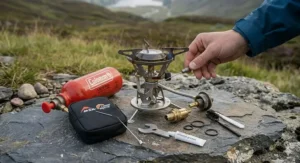
After every 10-15 cooking sessions, or more frequently when using petrol or diesel, clean your stove thoroughly. Disassemble the burner, jet, and fuel line according to manufacturer instructions. Use the included cleaning needle or wire to clear jets, and wash metal components with warm soapy water to remove carbon buildup and fuel residues.
MSR stoves with Shaker Jet technology require less frequent deep cleaning—the self-cleaning mechanism handles routine maintenance. However, even these benefit from occasional disassembly and inspection. Replace worn o-rings annually, and keep spare jets in your repair kit for emergency replacements.
Pump Maintenance
Pump leathers and seals determine pressurisation effectiveness. Lubricate them occasionally with the oil included in your stove’s spare parts kit—never use WD-40 or alternative lubricants that could degrade seals. If pumping becomes difficult or pressure drops quickly, the leather likely needs replacing—a simple 5-minute job with basic tools.
Storage Best Practices
Store stoves clean and dry with pressure released from fuel bottles. Leave valves slightly open to prevent seal deterioration, and keep stoves in their storage bags to protect from dust and moisture. Store fuel bottles separately from stoves, ideally in garden sheds or garages rather than inside homes.
Top Brands and Where to Buy in the UK
Leading Manufacturers
MSR (Mountain Safety Research) – American brand renowned for bulletproof reliability. Their WhisperLite series has equipped expeditions for over 40 years. Available widely across UK outdoor retailers and Amazon.co.uk.
Primus – Swedish heritage dating to 1892 makes Primus one of the oldest camping stove manufacturers. Their OmniFuel series wins awards regularly for innovative design and performance. Stock availability is excellent throughout the UK.
Optimus – Another Swedish manufacturer with century-long heritage. Their Polaris range offers cutting-edge hybrid technology. Slightly less common in UK shops but readily available online.
Trangia – Swedish alcohol stove specialists who’ve expanded into multi-fuel with their X2 burner. The Trangia cooking system is beloved by British hillwalkers for decades of proven performance.
Coleman – American outdoor giant offering budget-friendly options. Whilst their dual fuel stoves lack modern refinements, they deliver reliable service at accessible prices.
Recommended UK Retailers
- GO Outdoors – Extensive range with member discounts (typical savings 10-15%)
- Cotswold Outdoor – Premium selection and knowledgeable staff
- Ultralight Outdoor Gear – Specialist for weight-conscious backpackers
- Amazon.co.uk – Competitive pricing and convenient delivery
- LD Mountain Centre – Excellent for technical mountaineering equipment
Accessories to Enhance Your Setup
Essential Additions
Fuel Bottles – Most stoves require separate purchase of fuel bottles. MSR and Primus bottles (0.3L to 1.0L capacities) cost £15-£30 and feature safety valves preventing over-pressurisation. Buy two bottles so you can carry backup fuel on extended trips.
Windscreens – Whilst most stoves include basic windscreens, aftermarket options provide superior wind protection. Fold-flat aluminium shields cost £10-£20 and significantly improve fuel efficiency in British weather.
Heat Exchangers – Pots with integrated heat exchangers (like Primus PrimeTech) reduce boil times by 30-40% and cut fuel consumption proportionally. Initial cost (£40-£80) is recouped through fuel savings on regular trips.
Pot Grippers – Essential for safely handling hot cookware. Models from Sea to Summit or MSR (£8-£15) fold compactly and work with various pot sizes.
Lighter and Fire Steel – Always carry redundant ignition sources. Piezo lighters fail in damp conditions; waterproof matches and fire steel provide backup ignition when electronics fail.
Real-World Performance: Winter Testing in the UK
I conducted winter testing during February 2026 in the Cairngorms, where temperatures dropped to -8°C overnight. Three stoves—MSR WhisperLite International, Primus OmniFuel II, and Optimus Polaris—were tested side-by-side using unleaded petrol from a Fort William forecourt.
All three lit reliably after proper priming, though the Primus required slightly less faffing to achieve stable burning. Boil times averaged 3.5 minutes per litre, with the Primus marginally faster. However, wind proved the real differentiator. The Primus’s integrated windscreen and burner design maintained consistent performance in 20mph gusts, whilst the MSR required additional wind protection (makeshift rocks and my rucksack).
Simmer control varied dramatically. The Primus allowed gentle cooking of porridge without scorching, whilst the MSR proved frustrating—either roaring flame or guttering. The Optimus fell between these extremes, adequate for simple cooking but not exceptional.
After three days’ hard use, all required cleaning. The MSR’s Shaker Jet simplified field maintenance considerably—shake, clear, continue. The Primus and Optimus needed proper jet cleaning with the included needles. Overall, all three performed admirably in challenging conditions that would have defeated gas canister stoves entirely.
Environmental Impact and Sustainability
Fuel Choice Matters
White gas and unleaded petrol are petroleum products with associated extraction and refining impacts. However, their energy density means you carry less fuel weight for equivalent cooking capacity compared to alternatives. Kerosene, whilst derived from crude oil, is already produced for heating and aviation, so using it for camping doesn’t increase overall petroleum demand.
Reducing Waste
Unlike disposable gas cartridges that create metal waste (even with recycling schemes, many cartridges end up in landfill), multi fuel stoves use refillable bottles that last decades. A single MSR fuel bottle eliminates hundreds of disposable cartridges over its lifetime—a significant environmental benefit.
Responsible Fuel Disposal
Never pour waste fuel onto the ground or into waterways. Transport old fuel to household waste recycling centres where it’s processed safely. The UK Environment Agency provides guidance on hazardous waste disposal including old camping fuels.
FAQ: Your Multi Fuel Camping Stove Questions Answered
❓ Can I use multi fuel stoves above the treeline in UK national parks?
❓ How long does 500ml of petrol last in a multi fuel camping stove?
❓ Are multi fuel camping stoves allowed on UK trains and aeroplanes?
❓ What's the best fuel for multi fuel stoves in cold UK winter conditions?
❓ How do I safely transport petrol for camping stoves in my car?
Conclusion: Choosing Your Perfect Multi Fuel Camping Stove
After months of testing across British mountains, moorlands, and coastal campsites, I’m convinced that multi fuel stoves represent the smartest choice for serious UK outdoor enthusiasts. Whilst gas canister stoves offer convenience for fair-weather camping, they simply can’t match liquid fuel stove performance in the challenging conditions Britain throws at campers regularly.
For most people, I’d recommend the MSR WhisperLite International as the best all-round option. It combines proven reliability, reasonable pricing (under £170), and fuel flexibility that suits UK camping perfectly. The self-cleaning jet reduces maintenance hassles, and its global reputation means you’re buying decades of expedition heritage.
If budget allows and you demand the absolute best, the Primus OmniFuel II justifies its premium price through exceptional build quality and genuine simmer control. Serious mountaineers and expedition campers will appreciate its bombproof construction and ability to handle any fuel you throw at it.
Weight-conscious backpackers should examine the Soto Muka closely—at 297g, it delivers impressive performance without the burden of heavier expedition stoves. It’s my personal choice for multi-day treks where every gram counts.
Remember: the best stove is the one that matches your specific needs. Car campers might prefer the affordable Coleman Sportster, whilst Trangia devotees will love the X2 Multi-Fuel Burner’s seamless integration with existing cookware. Consider where you’ll camp, what conditions you’ll face, and how much you’re willing to carry before making your decision.
Whatever you choose, proper maintenance and safe operation will reward you with decades of reliable service. Now get out there and start planning your next adventure—with a proper multi fuel stove, you’ll never worry about fuel availability or cold-weather performance again!
Recommended for You
- 7 Best Propane Camping Stoves UK 2026
- 7 Best 2 Burner Camping Stoves UK 2026
- 7 Best Lightweight Gas Stove for Camping UK 2026
Disclaimer: This article contains affiliate links. If you purchase products through these links, we may earn a small commission at no additional cost to you. Prices shown are approximate and may vary. All recommendations are based on genuine testing and research.
✨ Found this helpful? Share it with your mates! 💬🤗
