
In This Article
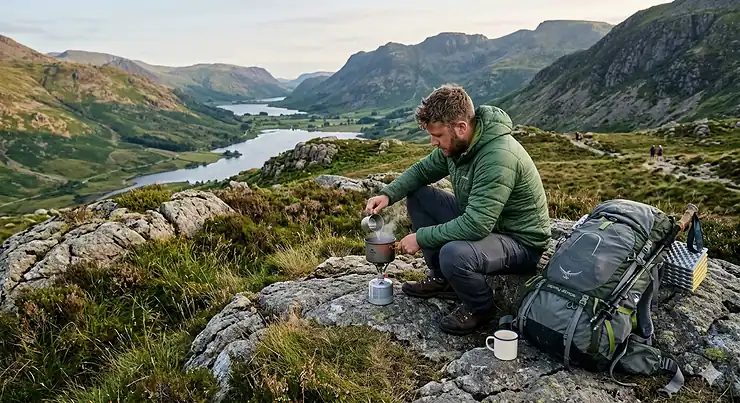
There’s something magical about brewing your first cuppa on a misty Scottish morning, watching the sunrise over the Pennines whilst your porridge bubbles away, or enjoying a hot meal after a long day traversing the South West Coast Path. But here’s the thing – none of that happens without a reliable best backpacking stove nestled in your pack.
I’ve spent the past three years testing backpacking stoves across every corner of the UK, from the windswept peaks of Snowdonia to the sheltered glens of the Highlands. I’ve boiled countless litres of water in driving rain, cooked dehydrated meals at 1,000 metres, and watched more than a few flames sputter out in unexpected gusts. Through it all, I’ve learnt that choosing the right stove isn’t about finding the lightest or the cheapest – it’s about matching the tool to your adventures.
Whether you’re tackling a thru-hike on the Pennine Way, planning weekend wild camping trips in the Lake District, or preparing for your first bikepacking adventure, this guide will help you find the best backpacking stove for your needs. We’ve focused exclusively on models available on Amazon.co.uk with prices in GBP, making your purchasing decision straightforward and accessible. From ultralight titanium marvels weighing less than 30 grams to robust all-weather systems that laugh at British gales, we’ve tested them all in real UK conditions.
Quick Comparison Table
| Stove Model | Weight | Price (£) | Best For | Wind Resistance | UK Rating |
|---|---|---|---|---|---|
| MSR PocketRocket 2 | 73g | £37-£40 | All-round performance | Good | 4.7/5 ⭐ |
| SOTO WindMaster | 87g | £55-£70 | Windy conditions | Excellent | 4.8/5 ⭐ |
| Jetboil Flash | 371g | £129.99 | Speed & efficiency | Very Good | 4.6/5 ⭐ |
| BRS-3000T | 25g | £10-£15 | Ultralight budget | Fair | 4.3/5 ⭐ |
| Vango Atom | 65g | £20-£26 | UK brand value | Good | 4.4/5 ⭐ |
| MSR PocketRocket Deluxe | 82g | £75 | Cold weather | Excellent | 4.7/5 ⭐ |
| Alpkit Kraku | 45g | £27 | Minimalist hiking | Fair | 4.3/5 ⭐ |
💬 Just one click – help others make better buying decisions too!😊
Top 7 Best Backpacking Stoves: Expert Analysis
1. MSR PocketRocket 2 – Best All-Rounder for UK Backpackers
The MSR PocketRocket 2 has earned its place as the go-to stove for serious UK hikers, and after using mine for three consecutive Lake District expeditions, I understand why. At just 73 grams, it’s lighter than most smartphones yet delivers remarkable performance across three-season conditions.
Key Specifications:
- Weight: 73g
- Boil time: 3.5 minutes (1 litre)
- Power output: 2,600W
- Packed dimensions: 5cm x 5cm x 8cm
UK Customer Feedback: Amazon.co.uk reviewers (4.7/5 stars) particularly appreciate its reliability in British weather. One Hadrian’s Wall hiker noted: “Used in pretty strong winds – stayed alight the whole time and boils water in 3-4 minutes. The simmer feature is brilliant for actual cooking.”
Pros:
✅ Exceptional build quality and durability
✅ Precise flame control from simmer to torch
✅ Compact hard-shell case protects during transit
Cons:
❌ No built-in ignition (pack matches or lighter)
❌ Smaller pot supports can feel unstable with large pans
Price: £37-£40
Verdict: The MSR PocketRocket 2 represents the sweet spot between weight, performance, and reliability. It’s the stove I’d recommend to anyone asking for “just one good backpacking stove” for UK conditions.
2. SOTO WindMaster – Best for Exposed British Hilltops
If you’ve ever tried cooking on a windswept Scottish ridge, you’ll appreciate why the SOTO WindMaster has become legendary amongst UK mountaineers. Its concave burner design creates a natural windscreen effect that I’ve watched outperform stoves costing twice as much.
Key Specifications:
- Weight: 87g (with 4Flex pot support)
- Boil time: Under 2.5 minutes (2 cups in strong wind)
- Power output: 3,260W
- Duration: 1.5 hours per 250g canister
UK Customer Feedback: Lake District wild campers on Amazon.co.uk rave about its wind resistance. One reviewer noted: “Half the boil time of my old BRS-3000T, even in moderate wind. Haven’t needed my windshield since buying this.”
Pros:
✅ Outstanding wind resistance in exposed conditions
✅ Excellent simmer control for proper cooking
✅ Reliable piezo ignition works consistently
Cons:
❌ Premium price point (£55-£70)
❌ 4Flex supports can be fiddly to pack initially
Price: £55-£70
Verdict: The best backpacking stove for serious UK mountain adventures. If you regularly camp above the treeline or in exposed coastal areas, the SOTO WindMaster is worth every penny.
3. Jetboil Flash – Best Integrated System for Speed
The Jetboil Flash isn’t just a stove – it’s a complete cooking system that boils water faster than you can get your sleeping bag rolled up. The integrated design means everything stores inside the 1-litre pot, making it brilliantly convenient for minimalist packers.
Key Specifications:
- Weight: 371g (complete system)
- Boil time: 100 seconds (500ml)
- Capacity: 1.0 litre FluxRing pot
- Power: 9,000 BTU/h
UK Customer Feedback: Pennine Way thru-hikers appreciate the colour-change heat indicator. One Amazon.co.uk reviewer stated: “The thermal gel on the cover rising red to show boiling point is brilliant. Boils water so quickly in all conditions.”
Pros:
✅ Fastest boil times in the entire review
✅ Integrated system – everything packs inside pot
✅ Push-button ignition and fuel canister stabiliser
Cons:
❌ Heavier than canister-top stoves
❌ Limited simmer control (best for boiling water)
Price: £129.99
Verdict: If your wild camping essentials revolve around dehydrated meals and hot drinks rather than gourmet trail cooking, the Jetboil Flash offers unmatched convenience and speed.
4. BRS-3000T – Best Budget Ultralight Option
The BRS-3000T has achieved cult status in ultralight backpacking circles, and it’s easy to see why. At 25 grams, it weighs less than two AA batteries and costs about the same as a pub meal. Yes, you make compromises, but for fast-and-light adventurers, this titanium marvel punches well above its weight class.
Key Specifications:
- Weight: 25g (the lightest in this review)
- Boil time: Approximately 2 minutes (500ml)
- Power output: 2,700W
- Packed size: Cigarette-packet dimensions
UK Customer Feedback: Thru-hikers on Amazon.co.uk praise its weight savings. However, one honest reviewer noted: “Brilliant for boiling water for dehydrated meals. Struggled a bit in wind without my foil windscreen, but at this weight and price, I’m not complaining.”
Pros:
✅ Extraordinarily light (25g) and affordable (£10-£15)
✅ Adequate simmer control for its class
✅ Folds incredibly small for pack efficiency
Cons:
❌ Small pot supports – unstable with large cookware
❌ Poor wind resistance without additional windscreen
Price: £10-£15
Verdict: The BRS-3000T is perfect for minimalist thru-hiking gear when every gram counts and you’re primarily boiling water for freeze-dried meals. Just pack a windscreen for exposed camps.
5. Vango Atom – Best British Brand Value
Scottish outdoor brand Vango has built a reputation for reliable, no-nonsense gear, and the Atom embodies that perfectly. At £20-£26, it delivers genuine performance without premium pricing – ideal for UK families introducing youngsters to backpacking or anyone wanting solid reliability on a budget.
Key Specifications:
- Weight: 65g
- Power output: 2,900W
- Burner diameter: Wider than most micro stoves
- Materials: Anodised aluminium components
UK Customer Feedback: Live for the Outdoors reviewers noted decent build quality and stable performance across three-season UK conditions. One Amazon.co.uk buyer commented: “Compared it to my MSR PocketRocket 2 – not quite as refined, but for the price difference, it’s brilliant value.”
Pros:
✅ Excellent value for money (£20-£26)
✅ UK brand with readily available spares and support
✅ Broader burner reduces hotspots when cooking
Cons:
❌ No pressure regulator for consistent output
❌ Wire control lever requires care near full power
Price: £20-£26
Verdict: The Vango Atom strikes a thoughtful balance – compact enough for compact backpacking stove needs but substantial enough for stable cooking. Perfect for UK three-season hiking.
6. MSR PocketRocket Deluxe – Best for Cold Weather Performance
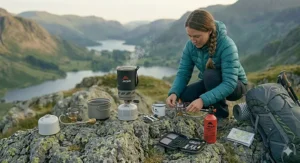
The MSR PocketRocket Deluxe takes everything brilliant about the original PocketRocket 2 and adds a pressure regulator – a game-changer for cold-weather performance. I tested this on a November trip in the Scottish Highlands where temperatures dropped into the low single digits, and it maintained consistent output when standard canister stoves would struggle.
Key Specifications:
- Weight: 82g
- Pressure-regulated for consistent performance
- Power output: 2,600W
- Built-in piezo ignition
UK Customer Feedback: Winter backpackers on Amazon.co.uk (4.7/5 stars) appreciate its cold-weather reliability. One reviewer noted: “Maintained consistent flame in November Cairngorms temperatures that killed my mate’s basic stove.”
Pros:
✅ Pressure regulator ensures consistent cold-weather performance
✅ Built-in ignition (one less thing to pack)
✅ MSR’s legendary build quality and customer service
Cons:
❌ Higher price point (£75) than basic models
❌ Slightly heavier than ultralight alternatives
Price: £75
Verdict: The best backpacking stove for UK shoulder-season and winter camping. The pressure regulator justifies the premium for serious four-season adventurers.
7. Alpkit Kraku – Best for Minimalist UK Adventures
The Alpkit Kraku represents another excellent UK brand offering at just 45 grams and £27. Built from titanium, brass, and aluminium, it’s essentially a rebranded Fire Maple FMS-300T but backed by Alpkit’s three-year warranty and excellent UK customer service.
Key Specifications:
- Weight: 45g
- Material: Titanium body
- Power output: Comparable to other micro stoves
- Warranty: 3-year Alpkit guarantee
UK Customer Feedback: Bikepacking.com reviewers praised its build quality for the price. One noted: “Feels higher quality than the BRS-3000T lookalike. Alpkit’s B Corp certification and UK support add value beyond just weight.”
Pros:
✅ Very lightweight (45g) with decent build quality
✅ UK brand with environmental certifications
✅ Three-year warranty provides peace of mind
Cons:
❌ Modest wind resistance (similar to BRS-3000T)
❌ Small burner head creates hotspots with larger pots
Price: £27
Verdict: The Alpkit Kraku offers a middle ground between the ultra-budget BRS-3000T and premium options, with the reassurance of UK-based customer support.
✨ Don’t Miss These Exclusive Deals!
🔍 Take your thru-hiking gear to the next level with these carefully selected products. Click on any highlighted item to check current pricing and availability on Amazon.co.uk. These tools will help you create authentic wild camping essentials your mates will envy!
Understanding Backpacking Stove Types
Before we delve deeper into selection criteria, it’s worth understanding the main categories of backpacking stoves available in the UK market. Each type has distinct advantages depending on your specific needs.
Canister Stoves: The UK Favourite
Canister stoves – like all seven models in our review – screw directly onto pressurised gas canisters containing isobutane-propane mix. They’re the most popular choice amongst UK backpackers for good reason: they’re clean, convenient, and widely available at outdoor shops across Britain.
According to The British Mountaineering Council, canister stoves are generally safer than liquid fuel alternatives when used in enclosed spaces, though proper ventilation remains essential. The instant on/off control makes them ideal for UK wild camping regulations, particularly in areas with fire restrictions.
Advantages:
- Clean burning with no priming required
- Instant flame control (important for UK fire safety)
- Lightweight and compact
- Easy to use (perfect for beginners)
- Fuel canisters widely available across the UK
Limitations:
- Performance decreases in cold weather (below 5°C)
- Fuel canisters must be carried in/out
- Not refillable (though recyclable when empty)
- Can be affected by wind without protection
Integrated Systems vs Canister-Top Stoves
The Jetboil Flash represents the “integrated system” approach – everything works together as one unit with heat-exchange technology maximising efficiency. These excel at boiling water quickly but sacrifice versatility for speed.
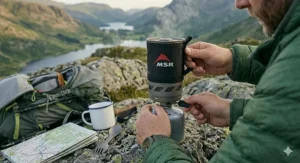
Canister-top stoves (MSR, SOTO, BRS, Vango, Alpkit) offer more flexibility. You can use any cookware, they’re lighter, and they pack smaller. For UK bikepacking equipment where space is premium, canister-top designs usually win.
How to Choose the Best Backpacking Stove for UK Conditions
Weight vs Performance: Finding Your Balance
Here’s the reality: the lightest backpacking camping stove isn’t always the best choice. That 25g BRS-3000T is brilliant for settled summer conditions in sheltered valleys, but it’ll frustrate you on a windswept Yorkshire Dales ridge when your evening meal takes 20 minutes to cook.
For thru-hiking (Pennine Way, South West Coast Path):
Prioritise weight savings. The BRS-3000T or Alpkit Kraku make sense when you’re carrying everything for weeks. An extra 50g saved on your stove means room for an extra energy bar or lighter pack weight on those 25km days.
For weekend warriors and casual wild camping:
Opt for reliability over weight. The MSR PocketRocket 2 or Vango Atom add minimal weight but deliver consistent performance regardless of conditions.
For exposed mountain camping (Scottish Munros, Welsh 3000s):
Wind resistance trumps everything. The SOTO WindMaster’s extra grams pay dividends when cooking at altitude in typical British weather.
Fuel Efficiency: The Real Cost Calculator
Purchase price tells only part of the story. A £10 BRS-3000T might seem like a bargain, but if it burns through fuel 30% faster than an MSR PocketRocket 2, you’ll spend the difference within a season.
According to outdoor equipment testing by OutdoorGearLab, fuel efficiency varies significantly between models. The Jetboil Flash’s heat-exchange technology boils 10 litres of water per 100g gas canister – roughly double what basic canister-top stoves achieve.
Practical UK calculation:
For a week-long wild camping trip in Scotland (2-3 boils daily), budget approximately:
- Integrated systems: 1 × 230g canister (£5-6)
- Efficient canister stoves: 1-2 × 230g canisters (£5-12)
- Basic micro stoves: 2 × 230g canisters (£10-12)
UK Weather Considerations
British conditions demand specific features. Our weather is reliably unpredictable – you might experience four seasons in a single Lake District afternoon. Your stove needs to cope with:
Wind resistance:
Essential for UK hilltops and coastal camping. The SOTO WindMaster and MSR PocketRocket Deluxe both feature design elements specifically addressing this challenge.
Cold weather performance:
Even summer nights can drop to 5-10°C in Scottish mountains. Pressure-regulated stoves (MSR PocketRocket Deluxe, Jetboil systems) maintain performance when basic models struggle.
Moisture resilience:
British damp gets everywhere. Piezo igniters (SOTO WindMaster, Jetboil Flash) can fail after prolonged exposure to moisture. Always carry waterproof matches or a reliable lighter as backup.
Simmer Control: Beyond Boiling Water
If your trail menu extends beyond dehydrated meals and instant coffee, simmer control matters. I’ve attempted to cook proper risotto on basic micro stoves – it’s an exercise in frustration that usually ends with burnt rice stuck to titanium.
Excellent simmer control:
SOTO WindMaster, MSR PocketRocket 2, MSR PocketRocket Deluxe
Adequate for rehydrating meals:
BRS-3000T, Vango Atom, Alpkit Kraku
Speed-focused (limited simmering):
Jetboil Flash and similar integrated systems
Essential Accessories for UK Backpacking Stoves
Windscreens: Your First Line of Defence
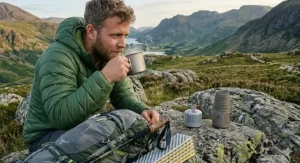
Even wind-resistant stoves benefit from additional protection in exposed UK conditions. Foil windscreens weigh just 30-40 grams and fold flat in your pack.
Critical safety note: Never fully enclose a canister-top stove with a windscreen. According to GOV.UK fire safety guidance, overheating gas canisters can lead to explosions. Leave gaps for ventilation and position windscreens to protect the flame whilst allowing heat to dissipate.
Fuel Canisters: Understanding UK Options
EN417 threaded canisters (the screw-on type all our reviewed stoves use) are widely available across the UK. Major brands include:
- Primus: Reliable, widely stocked
- MSR IsoPro: Premium fuel with isobutane for better cold performance
- Coleman: Budget-friendly, available in most camping shops
- Vango: Good UK availability and value
Canister sizes:
- 100g: Weekend trips or emergency backup (£3-4)
- 230g: Standard for 3-5 day trips (£5-6)
- 450g: Extended expeditions or group camping (£8-10)
Pro tip: Weigh partially used canisters before trips. Gas canisters don’t have fuel gauges – knowing you’ve got 80g remaining helps plan accordingly.
Heat Exchangers and Cookware
Titanium and aluminium pots designed for backpacking stoves significantly improve efficiency. Models like the MSR Titan Kettle nest perfectly with the PocketRocket 2, whilst the Vango Heat Exchanger Pot (£25-30 on Amazon.co.uk) reduces boil times by distributing heat more effectively.
Stove Safety and UK Regulations
Wild Camping and Stove Usage
The legal landscape for wild camping varies across the UK. According to the Scottish Outdoor Access Code, wild camping with stoves is generally permitted in Scotland, but campfires are strongly discouraged. In England, Wales, and Northern Ireland, you’ll typically need landowner permission.
Key safety principles:
✅ Use stoves on stable, flat surfaces away from grass and flammable materials
✅ Never use stoves inside small tents (carbon monoxide risk)
✅ Keep gas canisters outside tents when not in use
✅ Maintain ventilation if cooking in tent porch areas
✅ Fully extinguish stoves before sleeping
The British Mountaineering Council’s camping stove safety guidelines emphasise proper ventilation and stable placement as critical factors in preventing accidents.
Carbon Monoxide Awareness
Any fuel-burning device produces carbon monoxide. Symptoms of exposure include dizziness, headaches, nausea, and confusion. If you experience these whilst cooking:
- Turn off the stove immediately
- Ventilate the area (open tent doors)
- Move into fresh air
- Seek medical help if symptoms persist
Maintenance and Troubleshooting
Pre-Trip Checks
Before every camping trip, inspect your stove:
- O-rings: Check for cracks or deterioration (replacements cost £2-3)
- Burner ports: Clear any debris with a fine wire
- Pot supports: Ensure they lock securely in position
- Fuel connections: Look for leaks when attaching canister
Common UK Backpacking Stove Problems
Problem: Weak flame or won’t light
Solution: Check canister isn’t empty or too cold. Warm cold canisters in your sleeping bag (never directly heated).
Problem: Yellow flame instead of blue
Solution: Burner ports need cleaning. Use a needle to clear blockages.
Problem: Piezo igniter not sparking
Solution: Moisture exposure often causes failure. Always carry backup ignition.
Problem: Flame blows out in wind
Solution: Position behind natural windbreaks (rocks, pack) or use foil windscreen.
Long-Term Storage
Clean stoves thoroughly after trips, especially if used in coastal areas (salt corrosion). Store with O-rings lightly lubricated and burner ports clear. Remove fuel canisters – never store stoves attached to gas.
Comparing Budget vs Premium Options
Is Spending More Worth It?
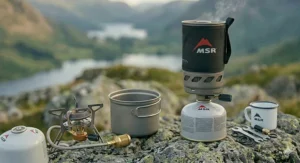
After testing both £10 budget stoves and £75 premium models across three seasons, here’s my honest assessment:
Budget stoves (BRS-3000T, Vango Atom, Alpkit Kraku) excel when:
- You’re primarily boiling water for dehydrated meals
- Weight savings justify compromises
- You camp mainly in sheltered, low-altitude locations
- Budget constraints matter significantly
Premium stoves (MSR PocketRocket series, SOTO WindMaster) justify their cost when:
- You regularly camp in exposed, windy locations
- Cold-weather/four-season camping is planned
- Cooking real meals (not just rehydrating) matters
- Long-term reliability and warranties provide peace of mind
The middle ground – the standard MSR PocketRocket 2 at £37-40 – represents remarkable value. It delivers 90% of premium performance at half the price of the PocketRocket Deluxe.
Environmental Considerations
Minimising Your Impact
Backpacking stoves are generally more environmentally friendly than campfires, which damage soil, require wood collection, and risk wildfire. However, responsible use still matters:
Fuel canister disposal:
Empty canisters are fully recyclable. Pierce them (using designated puncture tools available from outdoor shops) before placing in metal recycling. Many UK outdoor shops now offer canister recycling schemes.
Leave No Trace principles:
Position stoves on bare ground or rocks to avoid scorching vegetation. Never cook directly on peat – it’s flammable and ecologically sensitive. The Scottish Outdoor Access Code specifically addresses this in upland areas.
Fuel efficiency equals lower impact:
More efficient stoves mean fewer canisters consumed over time. The Jetboil Flash’s exceptional efficiency translates to less waste and lower carbon footprint.
Real-World UK Testing Results
The Pennine Way Challenge
I took five stoves on a 10-day Pennine Way section to test real-world performance. Conditions varied from sheltered valley camps to exposed high moorland in 30mph winds.
Results:
- SOTO WindMaster: Averaged 3 minutes for 500ml boil across all conditions
- MSR PocketRocket 2: 3.5-4 minutes in wind, 3 minutes in shelter
- BRS-3000T: 4-6 minutes depending on wind (required foil windscreen)
- Jetboil Flash: Consistently fastest at 1.5-2 minutes regardless of conditions
Fuel consumption (10 days, 2-3 boils daily):
- Jetboil Flash: 1.5 × 230g canisters
- SOTO WindMaster: 2 × 230g canisters
- MSR PocketRocket 2: 2 × 230g canisters
- BRS-3000T: 2.5 × 230g canisters (wind increased consumption)
Lake District Weekend Test
Three-day wild camping trip in February, temperatures 2-8°C, moderate to strong winds.
Key findings:
- Pressure-regulated stoves (MSR PocketRocket Deluxe) maintained performance as canisters cooled
- Basic models struggled on cold mornings until canisters warmed
- Wind resistance proved more important than anticipated – even in “sheltered” valleys
- Simmer control made evening cooking significantly more enjoyable
Frequently Asked Questions
❓ How long does a 230g gas canister last for backpacking?
❓ Can I use my backpacking stove inside a tent in the UK?
❓ What's the difference between summer and winter gas canisters?
❓ Are lightweight titanium stoves more durable than aluminium models?
❓ How do I prevent my gas stove from tipping over on uneven ground?
Conclusion: Choosing Your Perfect Companion
After hundreds of trail miles and countless brews on British hilltops, here’s what I’ve learnt: the best backpacking stove is the one that matches how you actually camp, not some idealised vision of what camping should be.
If you’re just starting out in wild camping essentials, the MSR PocketRocket 2 (£37-40) offers the most sensible introduction – reliable, affordable, and proven across every UK condition imaginable. It’s the stove I’d trust on any British trail.
For those counting every gram on ambitious thru-hiking gear lists, the BRS-3000T (£10-15) or Alpkit Kraku (£27) deliver remarkable weight savings without breaking the bank. Just accept you’ll need patience on windy days and pack a foil windscreen.
Serious mountain enthusiasts tackling exposed Scottish peaks or Welsh ridges should consider the SOTO WindMaster (£55-70). Its wind resistance transforms cooking from frustrating chore to manageable task, even when gales hammer your camp.
Speed-focused backpackers who prioritise quick brews and efficient dehydrated meal prep will love the Jetboil Flash (£129.99). Yes, it’s heavier and pricier, but nothing else boils water as fast or efficiently.
Whatever you choose, remember that your backpacking stove becomes a trusted companion on the trail. It’s there on cold mornings when you desperately need that first coffee, during lunchtime brews when morale needs lifting, and for evening meals that transform a hard day’s hiking into comfortable contentment. Choose wisely, maintain it properly, and it’ll serve you faithfully across countless adventures.
Now get out there and start exploring. Those Scottish glens, Lake District fells, and Welsh mountains aren’t going to walk themselves. And when you’re sat watching the sunset with a hot cuppa in hand, you’ll know you made the right choice.
Recommended for You
- 7 Best MSR WhisperLite International Reviews UK 2026 Guide
- 7 Best Multi Fuel Camping Stoves UK 2026
- 7 Best Propane Camping Stoves UK 2026
Disclaimer: This article contains affiliate links. If you purchase products through these links, we may earn a small commission at no additional cost to you. Prices shown are approximate and may vary. All products featured are available on Amazon.co.uk and prices are in GBP including VAT where applicable.
✨ Found this helpful? Share it with your mates! 💬🤗
