
In This Article
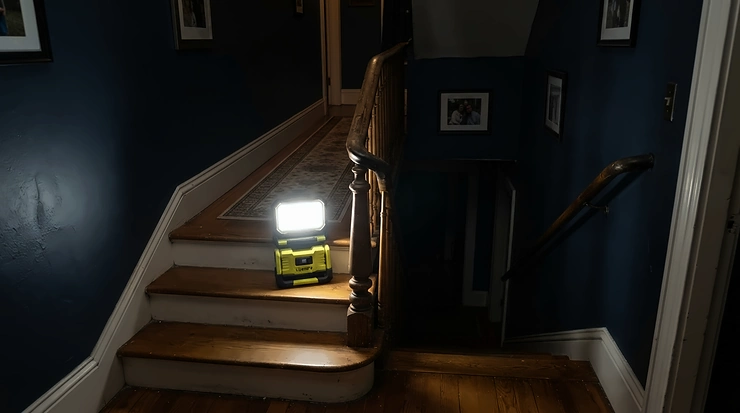
A rechargeable lantern for power cuts is a USB-charged LED light that spreads soft, even light in every direction, so a whole room stays usable when the mains fails. A torch lights a spot. A lantern lights the space. The best models also sit in a cupboard for weeks and still work.
Picture a January evening. The wind has been leaning on the overhead cables since lunchtime, and then the kettle dies mid-boil, the router blinks out and the house goes properly dark. Phone torches are fine for thirty seconds. They are hopeless for cooking, reading or calming a toddler, and they drain the one device you need for updates.
The UK government’s own power cut guidance tells households to keep a battery or wind-up torch at home. It also tells you to save 105, the free number for reporting a cut, before you need it. Councils echoing National Grid advice add that candles and paraffin lights are a fire risk, so a rechargeable lantern for power cuts is the safer choice.
This guide covers seven real lanterns, judged on published specifications and verifiable review themes, because I haven’t handled any of them. It also covers the topics most buying guides skip: the emergency lantern for home that actually survives storage, blackout lighting UK households can rely on, the storm preparedness lantern checklist, standby battery drain, low-light mode runtime and emergency kit essentials.
Quick Comparison: The Best Rechargeable Lantern for Power Cuts at a Glance
| Product | Standout Feature | Listed Max Output | Water Rating | Price Range | Best For |
|---|---|---|---|---|---|
| Ledlenser ML6 | Transport lock, red light | 750 lm | IP54 | £60-£85 | Long-term cupboard readiness |
| Lepro 1300LM | Big output, small outlay | 1,300 lm | IPX4 | £25-£40 | Lighting a whole living room |
| LE 1000LM | Warm and cool modes | 1,000 lm | IP44 | £20-£30 | Budget family backup |
| Mesqool CL1000 | USB, solar and hand crank | 200 lm lantern / 350 lm torch | IPX4 | £15-£25 | Last-resort redundancy |
| Glocusent Survival Camping Light | IP68 sealing | 1,200 lm | IP68 | £25-£40 | Damp or exposed spots |
| Blukar K9156 | Adjustable light panels | 2,000 lm (listed) | Not rated | £20-£35 | Directional room lighting |
| Ledlenser ML4 Mini | AA battery fallback | 300 lm | IP66 | £45-£60 | Bedside or glove box |
Prices are ranges only and move often, so check current price before you buy. Looking at the comparison above, the Ledlenser ML6 suits people who want one lantern that stays ready for months. The Lepro 1300LM and LE 1000LM deliver the most light per pound. The Mesqool CL1000 is the cheapest insurance if your battery is flat and the sun hasn’t shown up. Don’t treat the 2,000-lumen claim on the Blukar K9156 as gospel, because headline lumens rarely survive contact with a real battery.
💬 Just one click — help others make better buying decisions too!😊
Top 7 Rechargeable Lantern for Power Cuts: Expert Analysis
1. Ledlenser ML6 — premium all-rounder with a transport lock
That transport lock matters more than it sounds. It stops the lantern waking up in a drawer and quietly emptying itself, which is the standby battery drain problem that ruins emergency lights.
Listed output is 750 lumens on boost. The figure that matters for a blackout is the 20-lumen minimum setting, which retailers pair with up to 70 hours of runtime. Battery listings vary between roughly 2,500mAh and 3,200mAh depending on the retailer, so read the box. IP54 means dust and splashes are fine but a dunking isn’t, which is adequate for a hallway shelf. A USB output tops up a phone, and the hook, magnetic base and removable stand let it live on a fridge door, a table or a beam.
Based on the spec comparison, this is the lantern for anyone who wants a single dependable emergency lantern for home use. What most buyers overlook is the battery indicator and fluorescent switch. You can check readiness at a glance and find it in total darkness.
Review data for the Ledlenser ML6 is thinner than for budget rivals. The small samples I could verify were positive, but I couldn’t confirm a large UK review base, so treat that as encouraging, not conclusive.
Pros:
- ✅ Transport lock protects stored charge
- ✅ Genuinely low 20-lumen setting
- ✅ Hook, stand and magnet mounting
Cons:
- ❌ Costs several times more than budget rivals
- ❌ Listings disagree on weight and battery size
Around £60-£85. Premium money, but you’re paying for reliability features rather than raw lumens.

2. Lepro 1300LM — serious brightness for little money
When the whole living room needs lighting, headline output earns its keep.
The 1,300-lumen top setting and 3,600mAh battery can light a lounge, kitchen island or stairwell in one go. At 420 g it’s manageable, and four modes let you drop to something gentler. IPX4 splash resistance copes with a damp utility room but not a downpour. A USB output works as a basic phone top-up.
The honest caveat is that maximum output drains any battery fast, as testers across the category note. The sensible approach is to treat the top setting as a ten-minute tool for finding the fuse box, then live on the lower modes. That makes the Lepro 1300LM a strong pick for larger open-plan rooms where a dim lantern disappears.
For review sentiment, I could verify strong positive themes only for Lepro’s wider lantern range. Buyers praise value and rechargeability, and many mention power cuts. Model-specific data for this exact 1,300-lumen version was limited.
Pros:
- ✅ Very high output for the price
- ✅ USB output for phone top-ups
- ✅ Dimmable modes extend runtime
Cons:
- ❌ Runtime drops sharply on full power
- ❌ Only splash-resistant, not waterproof
Around £25-£40. Excellent value if you’ll mostly use the lower settings.
3. LE 1000LM — budget family favourite with warm and cool light
Warm light is the feature that turns a rescue lantern into something you can actually sit beside.
With 1,000 lumens, a 4,400mAh battery and IP44 splash resistance, the LE 1000LM offers daylight, warm white and mixed modes. The warm setting is far kinder at 9pm than a cold-white glare. It weighs about 550 g, so it’s a stay-at-home lantern, and the hook plus top handle let you hang or carry it. The listing quotes around 12 hours in a bright mode.
This is the sort of lantern I’d put on each floor of a family home. At this price, buying several beats buying one premium light, because redundancy matters more than polish in a long outage.
Verified buyer themes are the most useful of the seven. People repeatedly describe it as great for power cuts, and several bought two. They like the power bank function and the stand-or-hang flexibility. The recurring complaint is slow charging. Bob Vila’s testing called it less rugged than premium rivals but tough enough for normal use.
Pros:
- ✅ Warm, cool and mixed light modes
- ✅ Large 4,400mAh battery
- ✅ Cheap enough to buy several
Cons:
- ❌ Slow to recharge from flat
- ❌ Heavier and less refined than premium models
Around £20-£30. The best value verdict of the group.
4. Mesqool CL1000 — three charging routes for worst-case nights
Redundancy is the whole pitch: USB, solar panel and hand crank in one collapsible body.
The 3,000mAh battery is listed at up to 35 hours at lower output, and the lantern puts out about 200 lumens, with a separate 350-lumen torch. It weighs roughly 296 g and carries IPX4 protection. One UK review notes micro-USB charging, so check your variant and keep the right cable. Independent testing suggests ten minutes of cranking buys roughly 20-30 minutes of light, which is a top-up, not a power station.
Solar is the weakest link in British winters, so treat the crank as the real emergency feature. The Mesqool CL1000 shouldn’t be your primary lantern. It works best as the one that still works after you’ve forgotten the others.
UK buyer themes are positive. Reviewers like the build quality for the price, the smooth crank and the way it stands flat. Several bought extras for family. Those samples were smaller than for the LE lantern.
Pros:
- ✅ USB, solar and crank charging
- ✅ Collapsible body stores flat
- ✅ Lantern plus torch in one
Cons:
- ❌ Crank output is modest per minute
- ❌ Solar is slow in UK winter
Around £15-£25. Cheap insurance as a second light.
5. Glocusent Survival Camping Light — IP68 sealing and a big battery
Full waterproofing makes this the pick for places lanterns normally die: a damp garage, a porch or a caravan.
The IP68 rating, 1,200-lumen ultra-bright mode and 5,000mAh battery are the headline specs. Listings claim up to 80 hours at lower output across five brightness levels, plus SOS and colour-temperature modes. At about 246 g it’s also the lightest of the larger lanterns. IP68 means it should survive immersion, which also means a muddy, spilled-tea life won’t bother it.
On paper this offers the best runtime-to-weight ratio here. The practical catch is that high modes burn through that 5,000mAh quickly, so discipline matters. It’s less cosy than rivals, built for function over ambience, which suits a Glocusent Survival Camping Light living in a utility cupboard or outbuilding.
I couldn’t verify a deep pool of independent reviews for this exact model. Similar-named Glocusent lanterns in US testing are different products, so I won’t borrow their sentiment.
Pros:
- ✅ Fully waterproof IP68 rating
- ✅ Large 5,000mAh battery
- ✅ Light for its output
Cons:
- ❌ Utilitarian rather than atmospheric
- ❌ Limited model-specific review evidence
Around £25-£40. Strong value if damp conditions worry you.
6. Blukar K9156 — adjustable panels aim light where you need it
Fold-out panels let you throw light at a kitchen counter instead of the ceiling.
The 4,800mAh battery and 116 LEDs feed seven modes, including a red setting, with listed runtime from 10 to 48 hours depending on mode. The 90-degree adjustable panels let you aim light at stairs, a worktop or a sleeping area. The 2,000-lumen figure is a listing claim, so I’d plan around it being a very bright short-burst mode.
Independent reviewers describe this one as sheltered-use only, with weak water resistance. That’s fine indoors and a problem if you leave it outside. For indoor blackout lighting UK homes need, the Blukar K9156 offers flexibility the cylinder lanterns can’t match, but its mode cycling is fiddlier than a simple dial. Think about whether you’ll cope with that in the dark.
Model-specific review data was limited in what I could verify, so I’m not claiming sentiment I can’t source.
Pros:
- ✅ Adjustable panels direct light
- ✅ Large 4,800mAh battery
- ✅ Red and emergency modes included
Cons:
- ❌ Not suitable for wet exposure
- ❌ Mode cycling is fiddly in darkness
Around £20-£35. Good value indoors if you value aimable light.
7. Ledlenser ML4 Mini — the only one with an AA battery fallback
When the rechargeable cell is flat and the power is still off, a shop-bought AA is a lifeline.
At 71 g with IP66 sealing and 300-lumen boost, the Ledlenser ML4 Mini runs on its 14500 Li-ion cell or a standard AA alkaline. Runtime is listed at up to 45 hours on low. It charges by magnetic cable in around 2.5 hours, and the transport lock, red light and carabiner hook round it out. Ledlenser UK states a two-year warranty extendable to seven years on registration.
It’s too small to light a living room, so I’d call it the bedside or landing light. Keep a spare AA in your kit and you’ve neutralised the worst-case scenario of a dead lithium cell.
Verified review samples were few but uniformly positive, so the picture is encouraging rather than conclusive.
Pros:
- ✅ AA backup beats a flat battery
- ✅ IP66 sealing in a tiny body
- ✅ Long warranty with registration
Cons:
- ❌ Too small for whole-room lighting
- ❌ Magnetic charger is another cable
Around £45-£60. Pricey for its size, but unmatched for fallback flexibility.
Side-by-Side: How the Seven Compare
| Product | Lowest-Mode Runtime (Listed) | Battery (Listed) | Weight (Listed) | Review Evidence | Best For |
|---|---|---|---|---|---|
| Ledlenser ML6 | Up to 70 h | 2,500-3,200mAh (varies) | About 180-280 g (varies) | Positive, small samples | Cupboard readiness |
| Lepro 1300LM | Not quoted | 3,600mAh | 420 g | Brand-wide positive, model-specific limited | Large rooms |
| LE 1000LM | Not quoted (about 12 h bright) | 4,400mAh | 550 g | Broad, power-cut focused | Budget families |
| Mesqool CL1000 | Up to 35 h | 3,000mAh | About 296 g | Positive, smaller samples | Redundancy |
| Glocusent Survival Camping Light | Up to 80 h | 5,000mAh | About 246 g | Limited verifiable | Damp spaces |
| Blukar K9156 | 10-48 h | 4,800mAh | Not stated | Limited verifiable | Directional light |
| Ledlenser ML4 Mini | Up to 45 h | 14500 Li-ion or 1 AA | 71 g | Small samples, positive | Bedside |
The Glocusent Survival Camping Light leads on listed endurance and the LE 1000LM on proven power-cut use. The Ledlenser ML4 Mini wins on fallback flexibility. All runtime figures are manufacturer-quoted lower-setting numbers, so expect less in real life. Buying two different models, one big and one small, covers more failure modes than one expensive lantern.
✨ Don’t Miss These Exclusive Deals!
🔍 Take your blackout preparation to the next level with these carefully selected products. Click on any highlighted item to check current pricing and availability. These lanterns will help you create a calm, well-lit home your family will feel safe in!
Emergency Lantern for Home: Setup, Placement and Maintenance Guide
Owning a lantern isn’t the same as being ready. Readiness is a routine, and it takes about an hour a year.
First-Use Setup
Charge to full before the first storage, and write the date on a strip of tape on the lantern or its box. Put the correct charging cable and a 3-pin USB plug in the same bag, since many people own the lantern but not a spare plug. Learn the lowest mode on a normal evening, not in a blackout.
Smart Placement
Aim for one lantern per floor, kept somewhere you can reach in total darkness, such as a hallway shelf or beside the bed. A lantern buried in a loft is a lantern you’ll never find. Keep a second smaller light, such as the Ledlenser ML4 Mini, with your bedside kit.
Maintenance Schedule
- Every 8-12 weeks: check the charge, top up and note the date.
- After any use: recharge fully before storing.
- Twice a year: check cables, port covers and seals.
- Before winter: replace any spare AA batteries that are near expiry.
Common First-30-Day Mistakes
- Testing on full brightness, which wears the battery and teaches you nothing about low-setting behaviour.
- Storing it in a cold garage, because cold reduces usable runtime.
- Leaving the cable in a different room from the lantern.
Real-World Scenarios: Matching a Lantern to Your Household
Scenario 1: Rural Cottage with Frequent Storm Cuts
If you live somewhere exposed and lose power several times each winter, durability and redundancy matter most. Budget around £50-£80 for two lights. The Glocusent Survival Camping Light handles damp outbuildings, while the Mesqool CL1000 gives you crank and solar as a last resort.
Scenario 2: Family in a Three-Storey Terrace
With children, every floor needs its own light, ideally warm and dimmable. Three LE 1000LM lanterns would cover the house for a modest outlay of around £60-£90, and a Ledlenser ML4 Mini by a child’s bed adds a low red glow for night-time trips. Use the warm mode in the evening to keep the atmosphere calm.
Scenario 3: City Flat with Limited Storage
When shelf space is tight and cuts are rare, one dependable, compact-ish lantern beats a cupboard of backups. The Ledlenser ML6 is easy to wall-mount magnetically and is built to sit unused without leaking charge, while the Blukar K9156 is a lower-cost option if you want aimable light for a small kitchen.
Across all three, notice the pattern: one main lantern plus one fallback light, matched to where you live and how often the power goes.
Problem → Solution: Blackout Lighting Fixes That Actually Work
The Lantern Is Flat When You Need It
Set a calendar reminder every 8-12 weeks to top it up. A transport lock, as on the Ledlenser ML6, stops accidental switch-on in storage. If you want a fail-safe, keep the Ledlenser ML4 Mini loaded with a spare AA.
It Is Too Bright to Sleep Near
Practise with the lowest setting and learn to cycle to it in the dark. Warm modes such as those on the LE 1000LM are gentler than cold-white. Red modes on the Ledlenser ML6 and Blukar K9156 preserve night vision.
Your Phone Is Dying Too
A lantern’s USB output is an emergency top-up, not a replacement for a power bank, because charging a phone drains the lantern’s runtime. Keep a charged power bank in your kit, as council guidance recommends.
Solar and Crank Disappoint
That’s normal in British winters. Treat the Mesqool CL1000 crank as a short boost of light, and keep USB charging as your main route.
How to Choose a Rechargeable Lantern for Power Cuts
The best rechargeable lantern for power cuts is one with a low setting you can run all night, a battery that holds charge in storage, and light you can stand to sit beside. Here’s how to judge any model:
- Check runtime on the lowest setting. Blackouts are long, so a lantern that lasts 70 hours on low beats one that lasts 3 on high.
- Look for standby protection. A transport lock or battery indicator tells you the lantern is ready without testing it.
- Aim for 200-600 usable lumens. Lumens measure total light output, as NIST explains, but they say nothing about beam comfort or runtime.
- Count your charging routes. USB is the baseline, and an AA fallback or hand crank adds resilience.
- Match the water rating to the room. An IP rating guide from the IEC explains the codes. IPX4 suits indoors, while IP66 or IP68 suits damp outbuildings.
- Prefer warm light and a hook, stand or magnet. You’ll be near it for hours, and placement flexibility beats raw power.
Low-Light Mode Runtime: What the Numbers Really Mean
Low-light mode runtime is the figure that decides whether your lantern lasts the night. It’s also the number manufacturers flatter most, because it’s quoted at the dimmest setting.
Consider a rough illustration. A winter outage might leave you needing light for 15 hours of darkness. If a lantern genuinely delivers 70 hours at its lowest setting, as the Ledlenser ML6 listing claims, that night uses roughly a fifth of a full charge, assuming linear drain. In reality, cold, an ageing battery and phone charging all eat into it.
The Glocusent Survival Camping Light quotes up to 80 hours, the Ledlenser ML4 Mini up to 45 and the Mesqool CL1000 up to 35. The Blukar K9156 gives a range of 10-48 hours across modes, which at least admits that mode matters.
What to do with this: test your lantern’s low-light mode runtime for one evening on a charge you’ve noted, then check the remaining level. It costs nothing and replaces a marketing figure with your own number.
Standby Battery Drain: Will Your Lantern Be Flat When the Lights Go Out?
Standby battery drain is the quiet killer of emergency lights. Lithium-ion cells lose some charge sitting idle, commonly cited in the low single-digit percentages per month, though manufacturers of these lanterns rarely publish a figure. I couldn’t find one for any of the seven.
Several things make drain worse:
- Accidental switch-on in a drawer or cupboard.
- Power-bank circuits that stay awake.
- Heat or cold in a loft or garage.
- A deeply discharged cell left flat for months.
Practical defences are straightforward. Choose a transport lock where possible, as on the Ledlenser ML6 and Ledlenser ML4 Mini. Store lanterns indoors at room temperature and top them up every 8-12 weeks, in line with general guidance not to leave rechargeable lanterns flat for long.
Run your own thirty-day test. Charge a lantern fully, switch it off, note the indicator, then check after a month. If it has lost more than you’d tolerate, shorten your top-up interval, or buy the Ledlenser ML4 Mini and keep a spare AA beside it, so standby battery drain can never leave you in the dark.
Blackout Lighting UK: Why Cuts Happen and What to Expect
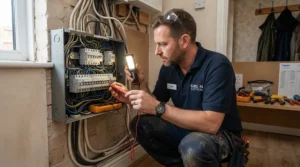
Blackout lighting UK households need depends on what causes the cut. Government guidance says severe weather or a major technical failure could cause a large-scale power cut lasting several hours or, in serious cases, a few days. It would also hit phone lines, mobile charging and internet access, which is why light and a charged phone matter together.
For most people, the realistic scenario is a short local fault or storm damage lasting a few hours. For those, any decent lantern is plenty. The tail risk is the multi-day outage, and that’s where low-light mode runtime and charging routes decide whether you cope or struggle.
Safety first: avoid candles and paraffin lights, which councils relaying National Grid advice describe as a fire hazard. A lantern with a hook and stable base is far safer in a house with children or pets. Buy products carrying UKCA or CE marking, and use the supplied charger or a reputable replacement, because cheap chargers and damaged cables are the realistic electrical risk with rechargeable kit.
When the lights go out, check whether neighbours are affected, then report or check status on 105. Switch one mains light on so you’ll notice when the power returns, and unplug sensitive appliances to avoid surge damage, as local resilience guidance advises.
Storm Preparedness Lantern: A Plan for Winter Gales
A storm preparedness lantern is only as useful as the plan around it. The cheapest preparation is timing: use Met Office warnings as your trigger.
When a Warning Is Issued
- Fully charge every lantern, head torch and power bank.
- Move lanterns to where you’ll need them, one per floor.
- Put the charging cables and a spare plug in the same box.
- Check you have spare AAs if any light uses them.
During the Storm
Use the lowest comfortable setting and reserve the brightest mode for specific jobs, such as checking the fuse box. Keep the Lepro 1300LM or LE 1000LM in the main living space and save smaller lights such as the Ledlenser ML4 Mini for bedrooms. If the cut stretches on, rotate lanterns so you recharge one from a power bank while another is in use.
Afterwards
Recharge everything immediately, even if it still shows plenty. A lantern topped up the day after a storm is a lantern ready for the next one.
Emergency Kit Essentials: What Goes Alongside Your Lantern
Emergency kit essentials are broader than lighting, and the checklists from councils and fire services are remarkably consistent:
- A rechargeable lantern for power cuts plus a spare light, ideally a head torch for hands-free tasks.
- A charged power bank and charging cables.
- Spare batteries for any AA-powered gear.
- A wind-up or battery radio, because online radio won’t work without Wi-Fi.
- First aid kit, essential medication and toiletries.
- Bottled water and long-life food that needs no cooking.
- Blankets and warm layers.
- A written list of key numbers, starting with 105.
Keep it all in one box or bag in a known place. Put a date on the lantern, and add a note in your phone to check the kit before winter. The Mesqool CL1000 earns a spot because it covers phone and light in a squeeze, and the Ledlenser ML4 Mini earns one because it fits in a coat pocket or glove compartment.
Rechargeable Lantern vs Candles, Wind-Up Torches and Battery Lanterns
| Option | Light Quality | Safety | Runtime | Upkeep | Best For |
|---|---|---|---|---|---|
| Rechargeable lantern (e.g. LE 1000LM) | Wide, dimmable | Low risk | Hours to days | Top up every 8-12 weeks | Whole-room light |
| Candles | Weak, flickering | Fire hazard | Short per candle | Buy and store | Not recommended |
| Wind-up torch (e.g. Mesqool CL1000 crank) | Directional, modest | Low risk | Minutes per crank | Little | Last resort |
| AA lantern | Varies | Low risk | Good with fresh cells | Replace cells | Backup stock |
| Phone torch | Narrow beam | Low risk | Drains your lifeline | None | Brief checks only |
A rechargeable lantern wins on light quality and safety, but it needs a top-up routine, while AA lanterns have no such weakness if you rotate fresh cells. The smartest kit combines both, which is exactly why the Ledlenser ML4 Mini is appealing. Candles lose on every safety measure the guidance cares about.
Frequently Asked Questions
❓ How many lumens do I need in a rechargeable lantern for power cuts?
❓ How often should I top up an emergency lantern for home storage?
❓ Is a rechargeable lantern safer than candles during a blackout?
❓ Is a hand-crank lantern worth buying for blackout lighting UK homes?
❓ Are cheap 2,000-lumen lanterns really that bright?
Conclusion
The best rechargeable lantern for power cuts isn’t the brightest one. It’s the one that’s charged, findable and comfortable to live with for hours. For a premium, set-and-forget choice, the Ledlenser ML6 stands out, thanks to its transport lock and indicator. For value, the LE 1000LM and Lepro 1300LM deliver wide light on a budget. For resilience, pair either with the Mesqool CL1000 for crank backup, the Glocusent Survival Camping Light for damp spaces, or the Ledlenser ML4 Mini for its AA fallback. The Blukar K9156 suits those who want aimable light indoors.
Buy two lights, not one: a big room lantern and a small fallback. Top them up every 8-12 weeks, keep the cable in the same box, and run a one-evening test on the lowest setting. Make the 105 number a contact in your phone, and if anyone in your home relies on medical equipment, sign up for the free Priority Services Register so you get extra support during an outage.
✨ Ready to Be Blackout-Proof?
🔦 Pick the lantern that suits your home, check current pricing and availability, and set your first top-up reminder today. A few minutes of preparation now means calm, well-lit evenings when the lights go out!
Recommended for You
- Rechargeable Camping Lantern: 7 Best Budget Picks (2026)
- Gas Lantern For Night Fishing: 7 Smart Picks For UK Anglers (2026)
- Butane Camping Lantern: 7 Brilliant Picks For UK Campers (2026)
Disclaimer: This article contains affiliate links. As an Amazon Associate, I earn from qualifying purchases. If you purchase products through these links, we may earn a small commission at no additional cost to you.
✨ Found this helpful? Share it with your friends! 💬🤗
