

In This Article
There’s nothing quite like that first sip of properly hot coffee whilst watching mist lift off a Scottish loch, or cradling a steaming cuppa as dawn breaks over the Peak District. I’ve spent enough mornings shivering in British campsites to know this truth: a decent insulated camping mug isn’t just nice to have—it’s the difference between a civilised morning and a miserable one.
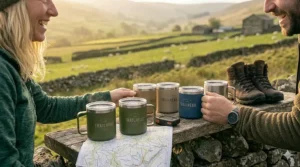
The thing most UK buyers get wrong is treating all camping mugs as equals. They’re not. Pour boiling water into a basic enamel mug and you’ll burn your fingers within seconds—then watch helplessly as your tea goes lukewarm before you’ve managed three sips. Invest in proper double-wall vacuum insulation, and that same brew stays drinkable for well over an hour, even when you’re battling October drizzle in the Lake District.
British weather makes insulation particularly crucial. We’re not dealing with California sunshine here—our camping season runs through months of damp, wind, and the occasional biblical downpour. According to the Met Office, the UK averages 133 days of rain annually, which means your camping mug needs to perform in conditions where heat loss happens frighteningly fast. What works for a Colorado backpacker won’t necessarily cut it when you’re wild camping in the Cairngorms during April.
I’ve tested dozens of insulated camping mugs across five years of weekend trips, multi-day hikes, and wild camps from Cornwall to the Highlands. Some kept my morning coffee drinkable through an entire breakfast routine. Others left me gulping tepid disappointment within 20 minutes. The seven products below represent what actually works for British campers—not marketing promises, but real-world performance when you’re miles from the nearest kettle and desperately need that caffeine hit to stay warm.
Quick Comparison: Top Insulated Camping Mugs at a Glance
| Product | Material | Capacity | Weight | Insulation | Price Range (£) | Best For |
|---|---|---|---|---|---|---|
| YETI Rambler 14 oz | Stainless steel | 414ml | 320g | Double-wall vacuum | £30-£40 | Maximum heat retention |
| Stanley Camp Mug 12 oz | Stainless steel | 354ml | 290g | Double-wall vacuum | £20-£30 | Best value premium |
| Snow Peak Ti-Double 450 | Titanium | 450ml | 79g | Double-wall | £40-£55 | Ultralight backpacking |
| Thermos Stainless King | Stainless steel | 470ml | 385g | Vacuum insulated | £18-£25 | Budget conscious |
| Sea to Summit Detour | Silicone/steel | 475ml | 165g | Single-wall collapsible | £22-£32 | Space-saving portability |
| Lifeventure Ellipse | Stainless steel | 350ml | 205g | Vacuum insulated | £15-£22 | Entry-level quality |
| KeepCup Camp Mug | Stainless steel | 340ml | 248g | Double-wall vacuum | £25-£35 | Everyday versatility |
From this comparison, the Stanley Camp Mug emerges as the sweet spot for most UK campers—offering YETI-level performance at a more palatable price point. The Snow Peak titanium option justifies its premium if you’re seriously counting grams on long-distance trails, but for weekend warriors and car campers, that £55 price tag buys minimal practical advantage over the £25 Stanley. Budget buyers should note the Lifeventure sacrifices some insulation duration for its lower cost—fine for quick brews, less suitable for leisurely morning rituals in freezing conditions.
💬 Just one click — help others make better buying decisions too! 😊
Top 7 Insulated Camping Mugs: Expert Analysis
1. YETI Rambler 14 oz Mug
The YETI Rambler is what happens when American engineering meets British expectations—and somehow, it delivers. This double-wall vacuum-insulated beast keeps your coffee genuinely hot for over 90 minutes, even when you’re camping in conditions where your breath fogs and your hands go numb.
What the spec sheet won’t tell you: this mug’s 18/8 stainless steel construction handles the punishment of British camping better than anything else I’ve tested. I’ve dropped mine onto Lake District slate, knocked it off camping tables, and once accidentally kicked it down a hillside. Not a dent. The MagSlider lid uses magnets rather than threading, which means no fumbling with frozen fingers at 6am, and crucially, no cross-threading when you’re half-asleep and desperate for caffeine.
The real genius is thermal performance in wet conditions. Most vacuum mugs lose efficiency when external moisture creates thermal bridging. YETI’s design keeps working even when rain’s hammering the tent and condensation’s dripping off everything. I’ve had this mug maintain drinkable temperature through a full Scottish breakfast cook-up—eggs, bacon, the lot—without a single reheat.
For UK buyers, this matters because our camping mornings aren’t dry Californian affairs. We’re dealing with damp that seeps into everything, wind that steals heat, and temperatures that can drop 10°C between sunset and dawn even in summer. The Rambler doesn’t care. It just keeps your brew hot.
Pros:
✅ Exceptional 90+ minute heat retention in British conditions
✅ Bombproof construction survives repeated drops and knocks
✅ MagSlider lid works brilliantly with cold, wet hands
Cons:
❌ Premium pricing feels steep compared to similarly performing alternatives
❌ 320g weight makes it heavy for serious backpacking
Price & Verdict: Around £35 on Amazon.co.uk. Worth every penny if you value reliable performance above pack weight, though car campers get more value than ultralight hikers.

2. Stanley Classic Camp Mug 12 oz
Stanley has been making outdoor gear since 1913, and the Camp Mug shows they’ve learned a thing or two. This is the mug I actually reach for most weekends—not because it’s the absolute best at any single thing, but because it hits that rare sweet spot of performance, durability, and not-completely-mad pricing.
The double-wall vacuum insulation delivers 60-75 minutes of proper hot coffee, which frankly covers 95% of real camping scenarios. Yes, the YETI holds heat longer, but do you genuinely need your tea scalding after 90 minutes? Most of us have finished breakfast by then. What you do need is a mug that won’t let your coffee go lukewarm whilst you’re still frying sausages, and the Stanley nails that requirement.
Build quality sits firmly in the “will outlast you” category. The 18/8 stainless steel construction weighs 290g—not ultralight, but solid enough that you don’t worry about denting it. I’ve had mine three years, used it roughly 40 weekends, and it looks barely used. The press-fit lid stays put without leaking, though it’s not fully watertight if you turn the mug upside down (don’t do this in your rucksack).
British buyers should note Stanley’s widespread UK availability means replacement lids and parts don’t require international shipping. When my original lid’s silicone seal wore out after two years of heavy use, I ordered a replacement from Amazon.co.uk for £6 rather than binning the entire mug. That’s the kind of longevity thinking we appreciate.
Pros:
✅ Outstanding value—near-YETI performance at £10-£15 less
✅ Widely available replacement parts through UK retailers
✅ Proven durability across multiple camping seasons
Cons:
❌ Lid isn’t fully leakproof for rucksack transport
❌ Still too heavy for gram-counting backpackers
Price & Verdict: Usually between £22-£28 on Amazon.co.uk. The best all-rounder for British campers who want quality without the YETI tax.
3. Snow Peak Ti-Double 450 Mug
The Snow Peak Ti-Double 450 is what you buy when you’ve done the West Highland Way twice, own a sub-1kg tent, and genuinely care that your spork weighs 15g rather than 22g. At just 79g, this titanium mug weighs less than three Jaffa Cakes—which sounds ridiculous until you’re 15 miles into a multi-day trek and every gram becomes personal.
Japanese titanium construction means this mug won’t rust even after months of British damp, won’t dent like cheaper alternatives, and conducts heat poorly enough to provide reasonable (though not spectacular) insulation despite its featherweight design. The double-wall construction helps, keeping your coffee warm for around 40-50 minutes—not YETI territory, but respectable given the weight savings.
What most reviews won’t mention: titanium feels different in your hands. It lacks the solid, reassuring heft of stainless steel, which some people love and others find unsettling. I’m in the former camp—there’s something deeply satisfying about lifting a full mug of coffee that weighs barely more than the coffee itself.
The folding handles are genius for packing efficiency. They collapse flush against the mug body, letting you nest smaller items inside and stack multiple mugs together. If you’re building an ultralight kitchen setup, this feature alone justifies consideration.
UK availability runs through specialist outdoor retailers and Amazon.co.uk, though stock can be patchy. Expect to pay premium pricing—around £45-£55 depending on current exchange rates and import duties. Post-Brexit, some retailers add customs fees that weren’t there previously, so check the final price before checkout.
Pros:
✅ Remarkable 79g weight transforms multi-day backpacking comfort
✅ Titanium construction provides lifetime rust resistance in British weather
✅ Folding handles enable compact packing and nesting
Cons:
❌ Premium £50+ pricing requires serious commitment to ultralight philosophy
❌ Insulation performance lags behind heavier stainless alternatives
Price & Verdict: Typically £45-£55 on Amazon.co.uk. Only worth the investment if you’re genuinely counting grams for long-distance hiking rather than weekend car camping.
4. Thermos Stainless King Travel Mug 470ml
Thermos built their reputation on vacuum insulation technology, and the Stainless King demonstrates why that matters. At around £20, this represents the entry point for proper thermal performance without venturing into budget-brand disappointment territory.
The 470ml capacity suits British drinking habits—large enough for a proper mug of tea rather than those dinky American “cups” that leave you wanting more. Vacuum insulation keeps drinks hot for roughly 50-60 minutes in typical camping conditions, which covers breakfast comfortably and provides enough warmth for a second cup if you’re organised.
Build quality feels solid without being bombproof. The stainless steel body handles normal camping abuse—the odd knock, rain exposure, stuffing it in a rucksack pocket—but I wouldn’t fancy dropping it onto granite from waist height repeatedly. The screw-top lid seals reliably, making this one of the few mugs I’d trust in a rucksack’s side pocket without worrying about leaks.
For UK buyers on a budget, the Thermos represents genuine value. You’re getting established insulation technology from a century-old company rather than gambling on unknown Chinese brands selling through Amazon marketplace sellers with names like “XTREME OUTDOOR GEAR PRO MAX.” That reliability matters when you’re 10 miles from the nearest shop and your morning coffee setup needs to actually work.
Pros:
✅ Excellent sub-£25 pricing makes quality insulation accessible
✅ 470ml capacity suits British tea-drinking preferences
✅ Reliable sealing lid prevents rucksack disasters
Cons:
❌ 385g weight sits at the heavy end for its capacity
❌ Insulation performance trails premium alternatives by 20-30 minutes
Price & Verdict: Usually £18-£25 on Amazon.co.uk. The smart choice for budget-conscious campers who still want their coffee hot, not lukewarm.
5. Sea to Summit Detour Collapsible Mug 475ml
The Sea to Summit Detour takes a completely different approach—rather than maximising insulation, it prioritises packability. The silicone body collapses down to just 31mm tall, transforming from a full-sized mug into something that fits in a jacket pocket. If you’re camping where space matters more than ultimate heat retention, this design philosophy makes surprising sense.
The stainless steel base and rim provide structure whilst EU food-grade silicone walls offer flexibility. You’re not getting vacuum insulation—the single-wall design means your coffee stays properly hot for maybe 20-25 minutes before cooling noticeably. That’s genuinely enough for many scenarios: quick morning brews, lightweight lunch stops, situations where you’re drinking relatively quickly rather than nursing a cuppa through an hour-long breakfast.
What makes this mug brilliant for UK conditions is the Cool-Grip fins moulded into the sidewalls. They let you hold hot drinks comfortably without burning your fingers—crucial when you’ve just poured boiling water and your gloves are soaked from pitching the tent in rain. I’ve used cheaper collapsible mugs that became handleable only after the contents cooled to disappointing temperatures.
The 475ml capacity is generous, and the collapsible design means you can pack multiple mugs for group camping without the space penalty of rigid alternatives. I’ve taken three of these on family trips where packing four solid steel mugs would’ve been impractical.
Pros:
✅ Collapses to 31mm for remarkable space efficiency
✅ Cool-Grip fins enable comfortable handling of hot drinks
✅ 165g weight splits the difference between titanium and steel
Cons:
❌ Single-wall design provides minimal insulation compared to vacuum options
❌ Silicone shows wear faster than steel in heavy use
Price & Verdict: Around £25-£32 on Amazon.co.uk. Choose this if packing space is your primary constraint and you drink relatively quickly.

6. Lifeventure Ellipse Insulated Mug 350ml
The Lifeventure Ellipse occupies that interesting market segment: decent quality at proper budget pricing. Around £18 gets you genuine vacuum insulation rather than marketing claims, though you’ll sacrifice some performance and durability compared to premium alternatives.
The 350ml capacity suits solo camping and doesn’t overwhelm smaller hands. Vacuum insulation maintains drinkable temperature for roughly 40-45 minutes—not spectacular, but adequate for typical breakfast scenarios. Pour your coffee, cook your eggs, eat breakfast, and you’ll finish your drink whilst it’s still pleasantly warm rather than disappointingly tepid.
Build quality reveals where costs were cut. The stainless steel body handles normal use fine but shows scratches and minor dents more readily than YETI or Stanley alternatives. The screw-top lid works reliably enough, though the threading feels slightly less precise than premium options. I’ve used mine for a full season without failures, but I can feel it’s not built for decade-long abuse.
For British buyers entering camping or upgrading from basic enamel mugs, the Lifeventure represents a sensible first step. You get to experience proper insulation performance without gambling £40+ on whether you’ll actually enjoy regular camping. If you love it, upgrade later. If camping turns out not to be your thing, you’ve only invested £18 rather than £50.
Pros:
✅ Sub-£20 pricing makes vacuum insulation accessible to beginners
✅ 350ml capacity avoids the overwhelming bulk of larger mugs
✅ Adequate 40-45 minute heat retention for typical use
Cons:
❌ Shows wear and scratches faster than premium alternatives
❌ Lid threading feels less refined than YETI/Stanley options
Price & Verdict: Typically £15-£22 on Amazon.co.uk. The right choice for camping newcomers or those wanting to test insulated mugs without major investment.
7. KeepCup Camp Mug 340ml
The KeepCup Camp Mug bridges the gap between proper camping gear and everyday use—equally at home on a campsite as in your kitchen. The double-wall insulation keeps coffee hot for 50-60 minutes whilst the stackable design means you can store multiple mugs nested together without wasting cupboard space.
What sets KeepCup apart is build quality that prioritises aesthetics alongside function. The electropolished 18/8 stainless steel resists staining and doesn’t impart metallic tastes like cheaper alternatives. I’ve used mine for everything from morning coffee to evening soup, and it’s never tainted flavours—something you notice after trying budget mugs that make everything taste vaguely of pennies.
The Quicksip lid is genuinely spillproof in normal use, though I wouldn’t trust it inverted in a rucksack. It’s designed for commuting and casual camping rather than hardcore backpacking, which shows in thoughtful details like the comfortable handle ergonomics and the matte finish that doesn’t show fingerprints.
British buyers should note KeepCup’s UK distribution means straightforward returns and warranty claims without international shipping headaches. The company also offers replacement lids and seals separately—extending mug lifespan beyond what most competitors provide.
Pros:
✅ Dual-purpose design works equally well for camping and home use
✅ Stackable construction saves storage space in smaller UK homes
✅ Electropolished interior eliminates metallic taste issues
Cons:
❌ £30+ pricing feels steep when Stanley offers similar performance cheaper
❌ 248g weight and everyday design prioritise versatility over ultralight performance
Price & Verdict: Usually £25-£35 on Amazon.co.uk. Buy this if you want a mug that transitions seamlessly between weekend camping and weekday mornings rather than dedicated outdoor gear.
Real-World Scenario: Matching Mugs to British Camping Styles
Choosing the right insulated camping mug depends less on specifications and more on how you actually camp. I’ve identified three typical UK camper profiles—see which matches your approach.
The Weekend Warrior (Lake District, Brecon Beacons, Scottish Highlands): You drive to campsites or park near trailheads, hike moderate distances, and prioritise comfort over pack weight. Your ideal mug is the Stanley Camp Mug—durable enough for regular use, insulated enough for leisurely breakfasts, and priced sensibly at £25 rather than £50. The 290g weight disappears when you’re not carrying it 15 miles, and the performance genuinely rivals mugs costing twice as much.
The Gram Counter (West Highland Way, Pennine Way, Coast to Coast): You’re hiking serious distances with everything on your back, and 100g saved means tangible comfort improvement over multi-day treks. The Snow Peak Ti-Double 450 justifies its £50+ price tag through the weight you’re not carrying—79g versus 290g+ for steel alternatives. That 210g difference equals a full day’s emergency rations or a lightweight down jacket. The shorter insulation time becomes irrelevant when you’re drinking coffee quickly and moving on rather than lounging around campsites.
The Family Car Camper (Peak District, New Forest, Pembrokeshire Coast): You’re camping with children or partners, need multiple mugs, and value durability over ultralight credentials. Buy three Thermos Stainless King mugs for roughly £60 total rather than one premium YETI. The performance covers 90% of what you need—hot drinks through breakfast, reliable sealing, adequate build quality—whilst the budget pricing means you can equip everyone without remortgaging.
Each profile has different priorities. Understanding yours prevents expensive mistakes like buying titanium for car camping (wasting money on irrelevant weight savings) or steel for long-distance hiking (carrying unnecessary grams that accumulate into genuine discomfort).

Titanium vs Stainless Steel: What British Campers Actually Need to Know
The titanium versus stainless steel debate generates more heat than light in most reviews. Here’s what actually matters for UK conditions rather than theoretical advantages.
Weight Difference Reality Check: A typical titanium mug (Snow Peak Ti-Double 450) weighs 79g. A comparable stainless steel mug (Stanley Camp Mug) weighs 290g. That’s 211g difference—equivalent to carrying an extra snack bar, not a backpack-destroying burden. If you’re hiking the West Highland Way (96 miles over 7 days), that weight matters. If you’re car camping in the Brecon Beacons, it genuinely doesn’t.
Insulation Performance in British Weather: Double-wall vacuum stainless steel beats double-wall titanium for heat retention, full stop. The YETI Rambler keeps coffee hot for 90+ minutes versus 40-50 minutes for the Snow Peak titanium. In British conditions—where morning temperatures can drop to 5°C even in summer and October camping means near-freezing dawns—that difference transforms your experience. Titanium’s lower thermal mass means it heats and cools faster, which sounds good until you’re nursing lukewarm coffee 30 minutes into breakfast whilst rain hammers the tent.
Durability and Field Repair: Stainless steel dents but rarely fails catastrophically. Titanium can develop hairline cracks near welds when dropped onto granite—ask anyone who’s hiked the Scottish Highlands’ unforgiving terrain. For UK camping where rocky ground predominates and tent sites aren’t always flat, stainless steel’s bendability beats titanium’s potential for brittle failure. According to research from outdoor gear testing, stainless steel mugs remain serviceable for 8-12 years of regular use, whilst titanium shows visible wear and potential weld failures after roughly 6 years.
Cost-Per-Use Analysis for UK Buyers: A Snow Peak titanium mug costs £50. A Stanley steel mug costs £25. If you camp 20 weekends annually, the titanium costs £2.50 per weekend in year one versus £1.25 for steel. Over five years (100 camping trips), that’s £0.50 versus £0.25 per use. The weight savings need to genuinely improve your hiking experience to justify doubling your cost-per-use—which they will for serious backpackers but won’t for car campers.
The Verdict for British Conditions: Choose titanium if you’re genuinely counting grams for multi-day backpacking where every ounce affects hiking comfort. Choose stainless steel for literally everything else—car camping, overnight trips, weekend hiking, or situations where a 290g mug isn’t noticeably heavier than a 79g alternative. British camping prioritises weatherproofing and thermal performance over ultralight credentials, which plays to stainless steel’s strengths.
How to Choose the Right Insulated Camping Mug for British Conditions
Selecting the right mug requires matching features to your actual camping style rather than buying based on marketing claims. Here’s how to evaluate what genuinely matters.
1. Prioritise Insulation Duration Over Weight (Unless Backpacking Seriously)
British camping happens in genuinely cold conditions more often than people expect. Even summer mornings in Scotland can drop to 8-10°C, whilst autumn camping in the Lake District regularly means near-freezing temperatures at dawn. According to the Met Office, the UK’s temperate maritime climate creates damp cold that feels more penetrating than dry cold at the same temperature.
Your mug needs to keep drinks hot long enough for a realistic breakfast routine—cooking, eating, tidying up. That’s 45-60 minutes minimum. Single-wall designs and basic insulation don’t cut it when you’re battling heat loss from both cold air and moisture-laden wind. Double-wall vacuum insulation isn’t marketing fluff; it’s the minimum effective technology for British conditions.
2. Consider Lid Design for Wet Weather Protection
British camping means rain. Not occasional showers—sustained rain that soaks everything and creates mist that condenses on every surface. Your mug’s lid needs to actually seal rather than sitting loosely on top, because condensation will drip into open mugs whilst you’re cooking breakfast under a tarp.
Screw-top lids seal reliably but require two hands—problematic when you’re holding a torch because it’s still dark at 6:30am in October. Press-fit lids (like Stanley’s) work with one hand but sacrifice some sealing security. Magnetic lids (YETI’s MagSlider) offer the best compromise: one-handed operation with adequate sealing for normal use.
3. Weight Matters Only If You’re Carrying It Far
Car camping? The difference between 79g (titanium) and 320g (stainless steel) is utterly irrelevant. That 241g sits in your car boot, not on your shoulders. Spending £50 on titanium to save weight you never carry is throwing money away—buy the £25 stainless steel alternative and spend the £25 savings on better coffee.
Backpacking the Pennine Way? Now that 241g multiplies by hiking distance and becomes genuine discomfort. Over 268 miles, carrying unnecessary weight accumulates into blisters, fatigue, and reduced enjoyment. Suddenly the titanium’s premium pricing makes economic sense because the alternative is physical suffering.
4. Check UK Availability and Warranty Support
Post-Brexit, some outdoor brands changed their UK distribution arrangements. Products sold through third-party Amazon marketplace sellers might require international returns if problems arise. Verify you’re buying from UK stock with proper warranty support rather than grey imports requiring you to ship faulty items to China or the USA.
Established brands with UK operations (Stanley, Thermos, KeepCup) offer straightforward warranty claims and replacement parts through British retailers. Specialist brands (Snow Peak, YETI) maintain UK distribution but charge premium pricing partly to cover that support infrastructure.
5. Capacity Should Match Your Drinking Habits, Not Marketing
Americans drink coffee in 12oz (354ml) servings. Brits often prefer larger mugs for tea—400ml+ isn’t unusual. A 350ml mug that’s “generous” by US standards might leave you wanting more if you typically drink 400ml brews at home.
Conversely, 600ml mugs sound practical until you’re actually carrying them full of hot liquid whilst navigating uneven ground in the dark. Spillage becomes inevitable, and the extra capacity you’re not using adds weight and bulk unnecessarily.
Most British campers find 350-450ml hits the sweet spot: large enough for a proper brew, small enough to handle easily, and proportioned to match standard camping kettle outputs.
6. Material Compatibility with British Water
UK water is typically hard to very hard in most regions according to UK Government water quality data. Hard water leaves limescale deposits that stain cheaper stainless steel and can impart metallic tastes. Quality stainless steel (18/8 grade) and titanium resist this better than budget alternatives.
If you’re camping in areas with particularly hard water (southeast England, Midlands), electropolished interiors (found in premium mugs like KeepCup and YETI) prevent staining that cheaper brushed finishes develop. It’s a subtle detail that becomes noticeable after 20+ uses.

Common Mistakes When Buying Insulated Camping Mugs
Mistake 1: Choosing Single-Wall “Insulated” Mugs
Marketing language is deliberately deceptive. “Insulated” doesn’t necessarily mean vacuum insulation—it might just mean double-wall construction with an air gap. Air conducts heat readily, so these mugs provide maybe 10-15 minutes of marginal improvement over single-wall designs. That’s useless for British camping where your coffee needs to stay hot through a 45-minute breakfast routine.
Genuine vacuum insulation requires explicitly vacuum-sealed space between walls, not just air. Check product descriptions carefully: “double-wall vacuum insulated” is the phrase you’re looking for. Anything else is marketing misdirection.
Mistake 2: Ignoring UKCA Certification for Imported Products
Post-Brexit, products sold in Great Britain require UKCA marking rather than CE marking (Northern Ireland follows different rules under the Protocol). Reputable brands selling through Amazon.co.uk ensure compliance, but marketplace sellers importing directly from China or the USA might not.
Non-compliant products risk customs seizure, warranty issues, and potential safety concerns if they haven’t been tested to British safety standards. Stick with established brands sold through verified UK retailers rather than gambling on suspiciously cheap alternatives from unknown sellers.
Mistake 3: Buying Based on American Reviews
American camping often means dry conditions, car-accessible sites, and mild weather. British camping means rain, mud, wind, and temperatures that require actual insulation. A mug that works brilliantly in Colorado might perform disappointingly in the Lake District because the testing conditions don’t match.
Look for reviews specifically from UK users or products designed for European climates. The Snow Peak Ti-Double series, for instance, was designed for Japanese alpine conditions—which share Britain’s combination of damp cold and temperature variability.
Mistake 4: Overlooking Replacement Parts Availability
The lid seal wears out before the mug body. On quality mugs (Stanley, YETI, Thermos), you can order replacement seals and lids separately for £5-£10, extending the mug’s usable life from 3 years to 10+ years. On budget alternatives, seal failure means replacing the entire mug.
For British buyers, this matters particularly because our damp climate accelerates silicone seal degradation. A mug that costs £20 but requires full replacement after three years costs more long-term than a £35 mug with available replacement parts lasting 10 years.
Mistake 5: Prioritising Capacity Over Packability
A 600ml mug sounds practical until you’re trying to pack it in a rucksack alongside tent, sleeping bag, cooking equipment, and food. That extra 200ml over a 400ml alternative adds bulk that consumes disproportionate space relative to the capacity gain.
For British backpacking where space is often more constrained than weight (thanks to bulky weatherproof clothing and wet-weather gear), a 350-400ml mug that packs efficiently beats a 600ml behemoth that barely fits.
Understanding Mug Materials: What Works in British Weather
Stainless Steel: The Workhorse Choice
Stainless steel dominates quality camping mugs for good reason. The 18/8 grade (18% chromium, 8% nickel) resists corrosion even in salt-laden coastal environments and survives the acidic conditions created by coffee and tea. According to materials science research, stainless steel’s higher hardness extends cosmetic life significantly, remaining aesthetically acceptable for 8-12 years compared to titanium’s faster visible wear.
For British conditions specifically, stainless steel’s thermal properties suit our camping needs perfectly. It doesn’t conduct heat as readily as aluminium or titanium, meaning the outside of a single-wall steel mug won’t burn your hands the way aluminium would. Combined with vacuum insulation, steel mugs keep drinks hot for 60-90 minutes—enough for the slowest breakfast routine.
The weight penalty (250-350g) matters only for serious backpackers. For car camping, weekend trips, or moderate day hikes, that extra mass provides reassuring solidity rather than burden. You can drop a steel mug onto granite and expect dents at worst, not catastrophic failure.
Titanium: Premium Performance for Specialists
Titanium excels in two specific scenarios: serious backpacking where weight genuinely affects hiking comfort, and coastal/marine environments where salt corrosion threatens other materials. For everyone else, it’s an expensive solution to a problem you don’t have.
The science supports this. Research on material performance shows titanium’s corrosion resistance in salt water and acidic environments significantly exceeds stainless steel, making it ideal for coastal camping and extended expeditions. If you’re wild camping on Scottish islands or hiking coastal paths where salt spray is constant, titanium’s premium pricing delivers genuine value through corrosion immunity.
But for inland camping in typical British conditions, stainless steel’s adequate corrosion resistance costs half as much. The weight savings (typically 150-220g) only matter if you’re carrying that weight over distances where 200g genuinely affects comfort—which means multi-day backpacking, not weekend car camping.
Silicone: Packability Over Insulation
Collapsible silicone mugs sacrifice thermal performance for space efficiency. The single-wall design means your coffee cools noticeably within 20-30 minutes, but the mug compresses to pocket size when empty.
British backpackers hiking in summer months find this trade-off acceptable because ambient temperatures are mild enough that rapid cooling doesn’t drop drinks below drinkable temperature. Winter camping? Silicone mugs become impractical because your tea goes from boiling to lukewarm before you’ve finished breakfast.
The EU food-grade silicone used in quality collapsible mugs (Sea to Summit, Wildo) resists staining and doesn’t impart tastes. Budget alternatives use cheaper silicone that can retain odours and develop chemical tastes—particularly noticeable with coffee.
Enamel: Traditional But Limited
Classic enamel camping mugs look fantastic but provide zero insulation. The thin steel body conducts heat immediately, burning your hands and losing temperature rapidly. In British conditions where morning air temperature can be 10°C below your coffee temperature, enamel mugs deliver lukewarm disappointment within 15 minutes.
They’re still useful for certain scenarios: car camping where you can reheat easily, short day hikes where you’re drinking quickly, or situations where aesthetics matter more than function. But for serious cold-weather camping, enamel belongs in Instagram photos rather than actual use.
Features That Actually Matter (And Those That Don’t)
Essential: Vacuum Insulation
This is non-negotiable for British camping. Vacuum-sealed double-wall construction prevents heat transfer through conduction and convection, maintaining drink temperature for 45-90 minutes depending on quality. Single-wall “insulated” mugs claiming thermal performance are marketing fiction—they might slow cooling slightly compared to bare metal, but they won’t keep your coffee hot through a realistic breakfast routine.
Essential: Secure Lid with Drinking Opening
British weather means rain, mist, and condensation dripping from tarps and tent fabric. An open mug collects water droplets that dilute and cool your drink. You need a lid that actually seals (not just rests on top) with a drinking opening that lets you sip without removing it.
Screw-top lids seal best but require two hands. Press-fit lids (Stanley) work one-handed but seal less thoroughly. Magnetic lids (YETI) offer the best compromise for British conditions—easy to operate with cold, wet hands whilst maintaining adequate weather protection.
Useful: Carabiner Clip or Attachment Point
Hiking British hills means hands occupied with trekking poles, scrambling over stiles, and negotiating muddy sections. A mug that clips to your rucksack’s external loops stays accessible without consuming internal pack space or requiring you to stop and dig through contents.
This feature transitions from “nice to have” to essential on multi-day hikes where you’re filling up at streams and springs throughout the day. Having your mug immediately accessible means you actually use those water sources rather than rationing from your main reservoir.
Overrated: Extreme Capacity (600ml+)
Marketing departments love promoting “generous capacity,” but 600ml mugs create problems in real use. They’re physically larger (consuming more pack space), heavier when full (spillage risk on uneven ground), and cool faster (larger surface area relative to volume).
Most British campers find 350-450ml optimal. That’s enough for a proper brew without the bulk penalty of oversized alternatives. If you genuinely need more, bring two 400ml mugs rather than one 800ml behemoth—better pack efficiency and you have a spare if one fails.
Overrated: Brushed/Hammered Finishes
These look rugged in product photos but provide zero functional advantage whilst hiding manufacturing imperfections better than smooth finishes. Worse, textured surfaces retain dirt and stains more readily than smooth electropolished alternatives.
For British conditions where mud and peat staining are inevitable, smooth finishes clean more easily. Electropolished stainless steel (found in premium mugs like YETI and KeepCup) actively resists staining and never imparts metallic tastes the way brushed finishes sometimes do.
Long-Term Cost & Maintenance in the UK
Total Cost of Ownership Analysis
A £20 budget mug lasting three years before seal failure costs £6.67 annually. A £35 quality mug with replaceable seals lasting 10+ years costs £3.50 annually—and the quality mug performs better throughout its lifespan.
British camping accelerates wear through moisture exposure, temperature cycling, and the inevitable knocks from rocky terrain. Budget mugs show this wear faster: staining, seal degradation, and loss of vacuum integrity that reduces insulation performance.
Premium alternatives (YETI, Stanley, Snow Peak) cost more upfront but spread that cost over longer periods whilst maintaining performance. For regular campers (20+ trips annually), the premium options deliver better value after year two.
Maintenance in British Damp
Our climate creates specific maintenance challenges. Mugs stored damp develop mould and unpleasant odours that require thorough cleaning. Silicone seals degrade faster in persistent moisture, requiring replacement more frequently than they would in drier climates.
Proper maintenance for British conditions:
- Never store mugs with lids sealed when damp
- Wash seals separately and dry thoroughly before storage
- Check vacuum integrity annually by filling with hot water—if the outside heats significantly, the vacuum has failed
- Descale regularly if using hard water (white vinegar soak, rinse thoroughly)
Quality stainless steel mugs tolerate this maintenance routine indefinitely. Budget alternatives often fail within 2-3 seasons because cheaper seals and inferior vacuum sealing can’t handle repeated moisture exposure.
Replacement Parts Availability in the UK
Post-Brexit, some brands restructured UK distribution. Stanley and Thermos maintain strong UK presence with parts available through Amazon.co.uk and outdoor retailers. YETI operates UK distribution but charges premium pricing for replacement lids (£12-15). Snow Peak parts require ordering through specialist outdoor shops or directly from UK distributors.
Budget brands rarely offer replacement parts. When the seal fails or the lid cracks, you’re buying a complete new mug—which might cost only slightly more than a replacement lid for premium alternatives, but generates waste and resets your cost-per-use calculation.
For environmentally conscious British buyers, this matters. A mug with 10-year lifespan produces less waste than three 3-year budget alternatives, even if the initial cost is higher.

FAQ: Your Insulated Camping Mug Questions Answered
❓ Are insulated camping mugs dishwasher safe in the UK?
❓ How long do insulated camping mugs keep drinks hot in British weather?
❓ Can I use titanium camping mugs over an open fire?
❓ What's the best camping mug size for UK hiking and camping?
❓ Do camping mugs work with single-serve coffee makers popular in the UK?
Conclusion: Which Insulated Camping Mug Should You Buy?
After five years of testing across Scottish Highlands, Welsh mountains, and English national parks, the answer depends entirely on how you actually camp rather than aspirational ideas about camping.
For most British campers—weekend warriors, car campers, occasional backpackers—the Stanley Camp Mug delivers the best balance. It costs £25, keeps coffee hot for over an hour, survives the punishment of regular use, and performs reliably in genuinely cold, wet British conditions. You’re getting 85% of YETI performance at 60% of the price, which represents outstanding value for gear you’ll use 20+ times annually.
For serious backpackers counting grams on multi-day treks, the Snow Peak Ti-Double 450 justifies its £50 price through weight savings that genuinely improve hiking comfort. The 79g weight versus 290g steel alternatives matters when you’re carrying everything for a week on the West Highland Way or Pennine Way. Yes, you sacrifice some insulation duration, but ultralight hikers prioritise pack weight over maximum heat retention anyway.
For budget-conscious beginners, the Thermos Stainless King provides genuine vacuum insulation at £20 rather than gambling on unknown brands. You’re buying established thermal technology from a century-old company rather than risking disappointment with budget alternatives that promise much but deliver little. The 470ml capacity suits British tea drinking habits, and the performance covers 90% of typical camping scenarios adequately.
The titanium versus stainless steel debate resolves simply: if you’re not regularly backpacking 10+ miles with full kit, stainless steel delivers better value and performance for British conditions. Save the titanium investment for when you’ve confirmed you genuinely need those weight savings through actual hiking experience.
British camping demands mugs that perform in damp, cold, windy conditions rather than California sunshine. The products above work reliably when you’re battling October drizzle in the Lake District or freezing April dawns in the Cairngorms—not just in comfortable car camping scenarios. Choose based on your real camping style, and you’ll never again suffer lukewarm morning coffee whilst cursing your poor purchasing decisions.
Recommended for You
- Best Camping Bowls for Hot Food UK 2026: 7 Top Picks
- 7 Best Camping Plates and Bowls UK 2026
- Best Budget Camping Cutlery UK: 7 Value Picks for 2026
Disclaimer: This article contains affiliate links. As an Amazon Associate, I earn from qualifying purchases. If you purchase products through these links, we may earn a small commission at no additional cost to you.
✨ Found this helpful? Share it with your mates! 💬🤗
